

Holy Trinity Church Greek Orthodox Church
Publish Date: 2026-11-15
Bulletin Contents

Organization Icon
Holy Trinity Church Greek Orthodox Church

General Information

  • Phone:
  • (706) 724-1087
  • Fax:
  • (706) 724-3621
  • Street Address:

  • 953 Telfair Street

  • Augusta, GA 30901


Contact Information


Services Schedule

SUNDAY SERVICES ORTHROS 9AM

DIVINE LITURGY 10AM

Weekly Services begin at 9:00 AM


Past Bulletins


THE VOICE OF THE HOLY TRINITY/WEEKLY ENEWS/ BULLETIN

    Sunday Bulletin

    Sunday Bulletin

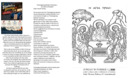
    November 15, 2026 NATIVITY FAST BEGINS


    Parent's Night Out

    Parent's Night Out

    PARENTS NIGHT OUT!


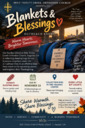
    Blankets & Blessings

    Blankets & Blessings

    Blankets & Blessings


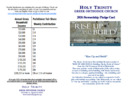
    2026 Pledge Card/Stewardship

    2026 Pledge Card/Stewardship

    Biblical stewardship means recognizing that everything belongs to God (the ultimate owner), and humans are managers (stewards) of His resources, including time, talents, money, people, and the Earth, to use for His glory and the betterment of creation


Hymns of the Day

Resurrectional Apolytikion in the Grave Mode

Thou didst abolish death by Thy Cross; Thou didst open Paradise to the thief; Thou didst transform the myrrh-bearers' lamentation, and didst bid Thine Apostles to preach that Thou art risen, O Christ God, granting great mercy to the world.

Apolytikion for Martyrs Gouria, Shamuna, and Habib in the Plagal First Mode

Since Thou hast given us the miracles of Thy holy Martyrs as an invincible battlement, by their entreaties, scatter the counsels of the heathen, O Christ our God, and strengthen the faith of Orthodox Christians, since Thou alone art good and the Friend of man.

Apolytikion for the Church in the First Mode

O Blessed are you, O Christ Our God, who by sending down the Holy Spirit upon them, made the fisherman wise and through them illumine the world and to You the universe was ever drawn all glory to You O Lord.


Seasonal Kontakion in the Fourth Mode

Today, the most pure temple of the Savior, the precious bridal chamber and Virgin, the sacred treasure of God, enters the house of the Lord, bringing the grace of the Divine Spirit. The Angels of God praise her. She is the heavenly tabernacle.


Gospel and Epistle Readings

Matins Gospel Reading

Second Orthros Gospel
The Reading is from Mark 16:1-8

When the Sabbath was past, Mary Magdalene, and Mary the mother of James and Salome, bought spices, so that they might go and anoint Jesus. And very early on the first day of the week they went to the tomb when the sun had risen. And they were saying to one another, "Who will roll away the stone for us from the door of the tomb?" And looking up, they saw that the stone was rolled back - it was very large. And entering the tomb, they saw a young man sitting on the right side, dressed in a white robe; and they were amazed. And he said to them, "Do not be amazed; you seek Jesus of Nazareth, who was crucified. He has risen, He is not here; see the place where they laid Him. But go, tell His disciples and Peter that He is going before you to Galilee; there you will see Him, as He told you." And they went out and fled from the tomb, for trembling and astonishment had come upon them; and they said nothing to anyone, for they were afraid.


Epistle Reading

Prokeimenon. Grave Mode. Psalm 28.11,1.
The Lord will give strength to his people.
Verse: Bring to the Lord, O sons of God, bring to the Lord honor and glory.

The reading is from St. Paul's Letter to the Ephesians 2:14-22.

Brethren, Christ is our peace, who has made us both one, and has broken down the dividing wall of hostility, by abolishing in his flesh the law of commandments and ordinances, that he might create in himself one new man in place of the two, so making peace, and might reconcile us both to God in one body through the cross, thereby bringing the hostility to an end. And he came and preached peace to you who were far off and peace to those who were near; for through him we both have access in one Spirit to the Father. So then you are no longer strangers and sojourners, but you are fellow citizens with the saints and members of the household of God, built upon the foundation of the apostles and prophets, Christ Jesus himself being the cornerstone, in whom the whole structure is joined together and grows into a holy temple in the Lord; in whom you also are built into it for a dwelling place of God in the Spirit.


Gospel Reading

8th Sunday of Luke
The Reading is from Luke 10:25-37

At that time, a lawyer stood up to put Jesus to the test, saying, "Teacher, what shall I do to inherit eternal life?" He said to him, "What is written in the law? How do you read?" And he answered, "You shall love the Lord your God with all your heart, and with all your soul, and with all your strength, and with all your mind; and your neighbor as yourself." And he said to him, "You have answered right; do this, and you will live."

But he, desiring to justify himself, said to Jesus, "And who is my neighbor?" Jesus replied, "A man was going down from Jerusalem to Jericho, and he fell among robbers, who stripped him and beat him, and departed, leaving him half dead. Now by chance a priest was going down that road; and when he saw him he passed by on the other side. So likewise a Levite, when he came to the place and saw him, passed by on the other side. But a Samaritan, as he journeyed, came to where he was; and when he saw him, he had compassion, and went to him and bound up his wounds, pouring on oil and wine; then he set him on his own beast and brought him to an inn, and took care of him. And the next day he took out two denarii and gave them to the innkeeper, saying, 'Take care of him; and whatever more you spend, I will repay you when I come back.' Which of these three, do you think, proved neighbor to the man who fell among the robbers?" He said, "The one who showed mercy on him." And Jesus said to him, "Go and do likewise."


Wisdom of the Fathers

When a man reveres God with all his heart and with faith, he receives through God's providence the power to control anger and desire; for it is desire and anger which are the cause of all evils.
St. Antony the Great
On the Character of Men no. 12, Philokalia Vol. 1 edited by Palmer, Sherrard and Ware; Faber and Faber pg. 331, 4th century

'The Lord your God is one Lord' (cf. Deut. 6:4), revealed in the Father, Son and Holy Spirit: in the unbegotten Father; in the Son, who is begotten eternally, timelessly and impassibly as the Logos, and who through Himself anointed that which He assumed from us and so is called Christ; and in the Holy Spirit, who also comes forth from the Father, not begotten, but proceeding. This alone is God and alone is true God, the one Lord in a Trinity of Hypostases, undivided in nature, will, glory, power, energy, and all the characteristics of divinity. Him alone shall you love and Him alone shall you worship with all your mind and with all your heart and with all your strength.
St. Gregory Palamas
A New Testament Decalogue no. 1, Philokalia Vol. 4 edited by Palmer, Sherrard and Ware; Faber and Faber pg. 323, 14th century


Saints and Feasts

November 15

8th Sunday of Luke


November 15

Nativity Fast Begins

The Nativity Fast is one of four main fast periods throughout the ecclesiastical year. Beginning on November 15 and concluding on December 24, the Nativity Fast gives individuals the opportunity to prepare for the Feast of the Nativity of Our Lord and Savior in the Flesh on December 25. By abstaining from certain food and drink, particularly from meat, fish, dairy products, olive oil, and wine, as well as focusing more deeply on prayer and almsgiving, we can find that the primary aim of fasting is to make us conscious of our dependence upon God.


November 15

Guria, Shamuna, and Habib, Martyrs and Confessors of Edessa

Of these most illustrious Martyrs of the city of Edessa in Syria, Guria and Shamuna contested during the reign of Diocletian, in 288; after many tortures, they were cast into prison, then beheaded. Saint Habib, a deacon, contested in the days of Licinius, in the year 316, and was burned alive; he was buried with Saints Guria and Shamuna. The three have one common feast, and it is always together that they are portrayed in icons and invoked by the faithful. On account of a renowned miracle they worked, they are invoked for help in marital difficulties. A certain Goth had come with the Roman army to Edessa and was quartered in the house of a pious widow named Sophia. The Goth asked Sophia for the hand of her daughter, Euphemia; after resisting for a long time, Sophia at last agreed. When it was time for the army to return home, Sophia made the Goth vow by the power in the holy Martyrs Shamuna, Guria, and Habib, to keep Euphemia as the apple of his eye. As he was nearing his home, however, the treacherous man revealed to Euphemia that he already had a wife. Euphemia was compelled to serve the Goths wife, who dealt with her mercilessly. After extreme sufferings, which included being sealed alive in a tomb and left there to die, Euphemia was miraculously conveyed to Edessa, to the very shrine of the holy Martyrs whose surety they had taken, and was reunited with her mother through their holy prayers.


Ecumenical Patriarchate News

The Church should neither withdraw nor accommodate, Orthodox speakers say

11/09/2026

More than 250 participants gathered Nov. 6-7 for a two-day educational conference on the social ethos of the Orthodox Church. The event, titled “For the Life of the World,” took place at the St. Gregory Palamas Educational and Cultural Foundation of the Holy Metropolis of Thessaloniki.

Attendees included 40 priests, 110 parish catechists, 75 schoolteachers and 25 theology students. The conference centered on the Ecumenical Patriarchate’s document For the Life of the World: Toward a Social Ethos of the Orthodox Church. Organizers sought to explore how its theological principles and pastoral vision can inform the Church’s educational, cultural and catechetical ministries, and how they can respond to the challenges facing humanity today.

Opening and Participants

His Eminence Metropolitan Philotheos of Thessaloniki offered welcoming remarks. Greetings followed from representatives of theological and ecclesiastical circles in the Church of Greece. They included the Fr. Athanasios Gikas, dean of the Faculty of Theology at Aristotle University of Thessaloniki; Professor Elias Evangelou, chair of the Department of Theology; and Professor Emeritus Theodoros Giagkos of the Department of Social Theology and Christian Culture.

Fr. John Chryssavgis, Archdeacon of the Ecumenical Throne, professor at Holy Cross Greek Orthodox School of Theology, and Executive Director of the Huffington Ecumenical Institute, also brought greetings. His Eminence Metropolitan Apostolos of Miletus, Abbot of the Patriarchal and Stavropegic Monastery of St. Anastasia, attended throughout.

Fr. John Chryssavgis speaks at an educational conference entitled “For the Life of the World,” hosted at the St. Gregory Palamas Educational and Cultural Foundation of the Holy Metropolis of Thessaloniki. (Metropolis of Thessaloniki)

Associate Professor Stavros Yangazoglou of the National and Kapodistrian University of Athens moderated the opening session. That evening, a musical tribute honored the late Professor Chrysostomos Stamoulis. The “Voices” Mixed Choir of St. Barbara’s Church in Thessaloniki, conducted by Konstantinos Diminakis, performed.

Presentations and Workshops

The conference program had two parts. Theologians from the universities of Thessaloniki and Athens presented on the eight central themes of For the Life of the World: the social character of Orthodox Christian ethics; the Church in the public sphere; the course of human life; poverty, wealth, and civil justice; war, peace, and violence; ecumenical and interreligious relations; Orthodoxy and human rights; and science, art, and the natural environment.

Nine interactive workshops followed, led by theologians, educators, and advisors. They turned the document’s themes into practical teaching approaches on social justice, Christian witness in public life, the search for meaning, reconciliation and nonviolence, ecumenical and interreligious dialogue, human rights, technology, and environmental responsibility. Workshop titles included “The Art of Reconciliation in a World of Conflict and Violence” and “Our Gift, Our Responsibility: From the Climate Crisis to an Ethos of Shared Responsibility.”

Clergy attend an educational conference entitled “For the Life of the World,” hosted at the St. Gregory Palamas Educational and Cultural Foundation of the Holy Metropolis of Thessaloniki. (Metropolis of Thessaloniki)

Drawing on biblical and patristic sources, iconography, literature, and art, the workshops provided resources for parish catechesis and secondary education. Organizers placed particular emphasis on methods that connect the Church’s tradition with the experience of children, adolescents, and the wider community.

Charity and Justice

Speakers said the Church’s social responsibility is rooted in the creation of every person in the image and likeness of God, the communion of love revealed in the Holy Trinity, and the Eucharistic and ascetical life of the Church. Participants said that while charity remains indispensable, Orthodox social teaching also calls for addressing the structures and causes of injustice, poverty, exclusion, and exploitation. They drew a distinction between charity and justice, and said the Church must speak prophetically, even when its message challenges those holding political or economic power.

Presenters cited Christ’s identification with the hungry, the suffering, the incarcerated, and the marginalized in Matthew 25. They also said the Divine Liturgy does not end at the church doors–the Eucharistic celebration continues in the daily struggle for justice and compassion.

Human Rights, Dialogue, and Creation

On human rights, presenters said the Orthodox Church supports the protection of fundamental and inalienable rights, as affirmed by the Holy and Great Council of Crete in 2016 and by His All-Holiness Ecumenical Patriarch Bartholomew in a 2017 address in Germany. 

The conference also considered pastoral questions such as family life, child protection, sexuality, abortion, suicide, and end-of-life care. Participants called for a pastoral approach marked by theological integrity, compassion, discernment, realism, and sensitivity.

For the Life of the World was presented as an invitation to cooperation between Christians and people of other faiths on peacebuilding, social justice, environmental protection, and human dignity. 

Care for creation was described as an essential expression of Christian faith tied to Eucharistic spirituality and the Incarnation. Participants said catechesis should cultivate gratitude, restraint, shared responsibility, and active care for the environment.

Looking ahead

Speakers said the Church should neither withdraw from society nor simply accommodate prevailing attitudes. Participants called for wider study of the document in theological schools, seminaries, parishes, youth ministries and religious education programs. 

The conference closed with a plenary discussion on applying its insights in parish and educational settings. In closing remarks, Metropolitan Philotheos thanked the organizers, presenters, facilitators and participants. He expressed hope that For the Life of the World, the fruit of a synodal process within the Ecumenical Patriarchate, would receive a creative response across the Church, including in catechesis, pastoral ministry, theological education and public witness.

The post The Church should neither withdraw nor accommodate, Orthodox speakers say appeared first on Orthodox Observer.

More than 250 participants gathered Nov. 6-7 for a two-day educational conference on the social ethos of the Orthodox Church. The event, titled “For the Life of the World,” took place at the St. Gregory […]

The post The Church should neither withdraw nor accommodate, Orthodox speakers say appeared first on Orthodox Observer.


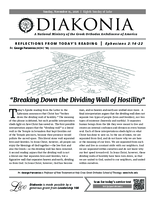
Diakonia Newsletter

BACK TO TOP