Holy Trinity Church Greek Orthodox Church
Publish Date: 2026-10-11
Bulletin Contents

Organization Icon
Holy Trinity Church Greek Orthodox Church

General Information

  • Phone:
  • (706) 724-1087
  • Fax:
  • (706) 724-3621
  • Street Address:

  • 953 Telfair Street

  • Augusta, GA 30901


Contact Information


Services Schedule

SUNDAY SERVICES ORTHROS 9AM

DIVINE LITURGY 10AM

Weekly Services begin at 9:00 AM


Past Bulletins


THE VOICE OF THE HOLY TRINITY/WEEKLY ENEWS/ BULLETIN

    Sunday Bulletin

    Sunday Bulletin

    It is Wednesday morning. The day the Church reminds us of Judas’s betrayal holds up a mirror to us, not a stone to cast. Let us not be quick to say, "I would never have done such a thing!" We may not sell Him for thirty pieces of silver, yet we sell the truth for our own peace of mind, our conscience for personal gain, and our faith for the approval of others. We kiss the icon, yet hours later, with that same mouth, we may crush the person beside us. We fast from food, but we do not fast from malice. What good is it for the stomach to know it is Wednesday if the soul lives as if God does not exist? Today, let us not make grand promises to Christ. Let us offer Him something concrete: a lie abandoned, an act of injustice halted, a temptation rejected. Lord, do not let our lips be close to Your icon while our lives remain far from Your Gospel.


    Parent's Night Out

    Parent's Night Out

    Need a night out! This is the time!


    FALL FESTIVAL

    FALL FESTIVAL

    Fall Festival Costume Reminder! 🎃 Dear Parents, We’re excited to celebrate our upcoming Fall Festival at church! We invite all children to come dressed in fun, family-friendly, and age-appropriate costumes. Please remember: Costumes should be appropriate AND please avoid scary, violent, or overly frightening costumes. We can’t wait to see all the kids dressed up and ready for a fun Sunday Afternoon of fellowship, games, and treats! 🍁🎃 Thank you for helping us make this a joyful and family-friendly celebration! Happy Fall Festival!


    Sunday September 13/ Sunday School Begins

    Sunday September 13/ Sunday School Begins

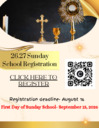
    Dear Sunday School Families, We are so excited to welcome you all back to Sunday School starting next Sunday, September 13! Our team has been preparing for a wonderful year ahead, and we are thrilled to introduce a new curriculum, welcome new teachers, and see both returning and new student faces in our classrooms. To help ensure this year is the best possible for our youth, please review the following reminders and details: Attached Resources: Please find attached our tentative Sunday School calendar for the year, as well as our class rosters at a glance. If you notice anyone who was left off or has not registered yet, please pass the word along! Attendance: Regular attendance matters! Bringing your child to church every Sunday ensures they won't miss out on important teaching, learning, and building friendships with their church community. Class Schedule & Safety: Class Time: Sunday School typically runs from 11:15 AM to 11:45 AM. To avoid distractions and maximize learning time, please do not interrupt classes while they are in session. Restroom Reminder (Pre-K/Kindergarten): Please have younger students use the restroom prior to drop-off so we can make the most of our lesson time together. Dismissal Safety: For our younger classes, students will not be dismissed until a parent or guardian comes to pick them up directly. Snack Donations & Coordinator: We have approximately 24 to 27 Sunday School sessions throughout the year with snacks served every Sunday- and our students often love seconds! All snacks must be peanut-free. We are also looking for donations of water and juice boxes. We are excited to have Ms. Anna Uldrick serving as our Snack Coordinator this year. She is copied on this email, but prefers text messages. Please text her at (803) 671-2330 if you are able to sign up or contribute. Classroom Cleaning & Hygiene Supplies: Our classrooms are currently fully stocked with paper towels, bleach wipes, Lysol spray, and other essentials, but we tend to run low as the year unfolds. If you would like to donate cleaning supplies to keep our classrooms clean and healthy, please text Florina Rogers at (803) 474-3182. Communication & Staying Connected: TeamReach App: This year, we are moving away from Remind and will be using the TeamReach app for quick communications and announcements. Please download the app and join our group using code: SS@953HTGOC. Facebook: Be sure to follow our church Facebook page for highlights and snippets of our time together in Sunday School! Thank you for your ongoing support, dedication, and partnership. We look forward to seeing everyone next Sunday, September 13! With Love in Christ, Florina Rogers Sunday School Director Holy Trinity Greek Orthodox Church of Augusta 953 Telfair St, Augusta, GA 30901


    2026 Pledge Card/Stewardship

    2026 Pledge Card/Stewardship

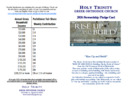
    Biblical stewardship means recognizing that everything belongs to God (the ultimate owner), and humans are managers (stewards) of His resources, including time, talents, money, people, and the Earth, to use for His glory and the betterment of creation


Hymns of the Day

Resurrectional Apolytikion in the Second Mode

When Thou didst descend unto death, O Life Immortal, then didst Thou slay Hades with the lightning of Thy Divinity. And when Thou didst also raise the dead out of the nethermost depths, all the powers in the Heavens cried out: O Life-giver, Christ our God, glory be to Thee.

Apolytikion for Sun. of the 7th Ecumenical Council in the Plagal Fourth Mode

Most glorified art Thou, O Christ our God, Who hast established our Fathers as luminous stars upon the earth, and through them didst guide us all to the true Faith. O Most Merciful One, glory be to Thee.

Apolytikion for the Church in the First Mode

O Blessed are you, O Christ Our God, who by sending down the Holy Spirit upon them, made the fisherman wise and through them illumine the world and to You the universe was ever drawn all glory to You O Lord.


Seasonal Kontakion in the Second Mode

O Protection of Christians that cannot be put to shame, mediation unto the creator most constant: O despise not the voices of those who have sinned; but be quick, O good one, to come unto our aid, who in faith cry unto thee: Hasten to intercession and speed thou to make supplication, O thou who dost ever protect, O Theotokos, them that honor thee.


Gospel and Epistle Readings

Matins Gospel Reading

Eighth Orthros Gospel
The Reading is from John 20:11-18

At that time, Mary stood weeping outside the tomb, and as she wept she stooped to look into the tomb, and she saw two angels in white, sitting where the body of Jesus has lain, one at the head and one at the feet. They said to her, "Woman, why are you weeping?" She said to them, "Because they have taken away my Lord, and I do not know where they have laid Him." Saying this, she turned round and saw Jesus standing, but she did not know that it was Jesus. Jesus said to her, "Woman, why are you weeping? Whom do you seek?" Supposing Him to be the gardener, she said to Him, "Sir, if you have carried Him away, tell me where you have laid Him, and I will take Him away." Jesus said to her, "Mary." She turned and said to Him in Hebrew, "Rabboni," which means Teacher. Jesus said to her, "Do not touch Me, for I have not yet ascended to the Father; but go to My brethren and say to them, I am ascending to My Father and your Father, to My God and your God." Mary Magdalene went and said to the disciples, "I have seen the Lord," and she told them that He had said these things to her.


Epistle Reading

Prokeimenon. Fourth Mode. Daniel 3.26,27.
Blessed are you, O Lord, the God of our fathers.
Verse: For you are just in all you have done.

The reading is from St. Paul's Letter to Titus 3:8-15.

Titus, my son, the saying is sure. I desire you to insist on these things, so that those who have believed in God may be careful to apply themselves to good deeds; these are excellent and profitable to men. But avoid stupid controversies, genealogies, dissensions, and quarrels over the law, for they are unprofitable and futile. As for a man who is factious, after admonishing him once or twice, have nothing more to do with him, knowing that such a person is perverted and sinful; he is self-condemned.

When I send Artemas or Tychicos to you, do your best to come to me at Nicopolis, for I have decided to spend the winter there. Do your best to speed Zenas the lawyer and Apollos on their way; see that they lack nothing. And let our people learn to apply themselves to good deeds, so as to help cases of urgent need, and not to be unfruitful.

All who are with me send greeting to you. Greet those who love us in the faith. Grace be with you all. Amen.


Gospel Reading

Sunday of the 7th Ecumenical Council
The Reading is from Luke 8:5-15

The Lord said this parable: "A sower went out to sow his seed; and as he sowed, some fell along the path, and was trodden under foot, and the birds of the air devoured it. And some fell on the rock; and as it grew up, it withered away, because it had no moisture. And some fell among thorns; and the thorns grew with it and choked it. And some fell into good soil and grew, and yielded a hundredfold." And when his disciples asked him what this parable meant, he said, "To you it has been given to know the secrets of the kingdom of God; but for others they are in parables, so that seeing they may not see, and hearing they may not understand. Now the parable is this: The seed is the word of God. The ones along the path are those who have heard; then the devil comes and takes away the word from their hearts, that they may not believe and be saved. And the ones on the rock are those who, when they hear the word, receive it with joy; but these have no root, they believe for a while and in time of temptation fall away. And as for what fell among the thorns, they are those who hear, but as they go on their way they are choked by the cares and riches and pleasures of life, and their fruit does not mature. And as for that in the good soil, they are those who, hearing the word, hold it fast in an honest and good heart, and bring forth fruit with patience." As he said these things, he cried out "He who has ears to hear, let him hear."


Wisdom of the Fathers

When you see life's pleasures, beware that they might not distract you, for they conceal death's snares. Likewise a fisherman casts not his hook to no purpose. As bait for his hook, the enemy uses the delusion of sensuality to arouse desire, that he might thereby catch men's souls and subject them to himself. A soul which has been caught to serve the enemy's will then serves as a snare for other souls, for it conceals the grief of sin with its apparent delight.
St. Ephraim the Syrian
A Spiritual Psalter no 43, pg. 74, 4th century

Since there are certain people who find great fault with us for adoring and honoring both the image of the Savior and that of our Lady, as well as those of the rest of the saints and servants of Christ, let them hear how from the beginning God made man to His own image. For what reason, then, do we adore one another, except because we have been made to the image of God? As the inspired Basil, who is deeply learned in theology, says: "the honor paid to the image conveys to the original.," and the original is the thing imaged from which the copy is made.
St. John of Damascus
The Orthodox Faith, 4.16. Catholic University of America Press in Washington D.C. Translated by Frederic H. Chase, Jr. volume 37, page 370., 8th Century


Saints and Feasts

October 11

Sunday of the 7th Ecumenical Council

On the Sunday that falls on or immediately after the eleventh of this month, we chant the Service to the 350 holy Fathers of the Seventh Ecumenical Council, which gathered in Nicaea in 787 under the holy Patriarch Tarasius and during the reign of the Empress Irene and her son, Constantine Porphyrogenitus, to refute the Iconoclast heresy, which had received imperial support beginning with the Edict issued in 726 by Emperor Leo the Isaurian. Many of the holy Fathers who condemned Iconoclasm at this holy Council later died as Confessors and Martyrs for the holy Icons during the second assult of Iconoclasm in the ninth century, especially during the reigns of Leo the Armenian and Theophilus.


October 11

Philip the Apostle of the 70, one of the 7 Deacons

Saint Philip, who had four daughters that prophesied, was from Caesarea of Palestine. He preached throughout Samaria; it was he also who met the eunuch of Candace, the Queen of the Ethiopians, as the eunuch was reading the Prophet Esaias, and he instructed and baptized him (Acts 8:26-39). He reposed in Tralles of Asia Minor while preaching the Gospel.


October 11

Theophanes the Confessor, Bishop of Nicaea

Saint Theophanes, the brother of Saint Theodore the Branded, was a Palestinian by race. Both were monks at the Monastery of Saint Sabbas. They were called "the Branded" because Theophilus, the last of the Iconoclast emperors, had twelve iambic verses branded by hot irons on their foreheads and then sent them into exile, where Theodore died in the year 838. After the death of Theophilus in 842, Theophanes was elected Bishop of Nicaea. Both brothers composed many canons and hymns, thereby adorning the services of the Church.


Ecumenical Patriarchate News

Fourth Synaxis of Hierarchs of the Ecumenical Patriarchate in the U.S.A. convened in Pittsburgh

10/07/2026

On Tuesday, October 6, 2026, following the 15th Assembly meeting of the Assembly of Canonical Orthodox Bishops of the U.S.A., hierarchs of the Ecumenical Patriarchate met in Pittsburgh, PA, under the presidency of His Eminence Archbishop Elpidophoros of America for the Fourth Synaxis of Hierarchs of the Ecumenical Patriarchate in the U.S.A. 12 hierarchs attended the gathering, representing the various eparchies under the jurisdiction of the Ecumenical Patriarchate in the U.S.A., namely the Greek Orthodox Archdiocese of America, the American Carpatho-Russian OrthodoxDiocese of North America, the Ukrainian Orthodox Church of the USA, and the Albanian Orthodox Diocese of the Americas. 

In his message to the Hierarchs, His All-Holiness Ecumenical Patriarch Bartholomew underscored: “The development of fraternal relationships among the Hierarchs of the Ecumenical Patriarchate also strengthens their common contribution to the work of the Assembly of Bishops there and to broader cooperation with the other Orthodox communities throughout the country. The unity of the Church constitutes a lofty and abiding responsibility of the local Orthodox Hierarchs. For the Hierarchs of the First Throne of Orthodoxy, the guarantor of unity, this constitutes a sacred obligation and duty. Every step toward cultivating mutual trust, every common effort to address pastoral concerns, and every tangible expression of love, strengthen our witness to the world.” 

Photo courtesy of Presb. Theophani Sarigianis

In his opening address to the Synaxis, Archbishop Elpidophoros noted that “First of all, thanks to all of you for making the effort to participate in this Fifteenth Assembly of Bishops Meeting. As Bishops of the Mother Church of Constantinople, we have a duty and a responsibility to uphold the decisions that have been inaugurated and effectuated by the Great Church. One can wonder about the effectiveness of certain Assemblies worldwide, but one thing is sure, our Assembly in the United States is deeply engaged in the lives of our Faithful, through a whole host of ministries and services. I hope that each of us takes full advantage of this multifaceted diakonia, for it can only enhance our Archpastoral efforts.”

Following the opening remarks, hierarchs discussed and shared information about their respective eparchies and other ministries. The Vicariate for the Palestinian/Jordanian Orthodox Christian Communities was represented by Rev. Protopresbyter George Jweinat. His Grace Bishop-Elect Alexander of Nicopolis presented the latest developments in the life of the Slavic Orthodox Vicariate. V. Rev. Archimandrite Chrysostom Onyekakeyah gave an update on the Mission and Outreach Ministry towards African-Americans. 

The following hierarchs of the Ecumenical Patriarchate participated in the Synaxis: His Eminence (H.E.) Archbishop Elpidophoros of America, H.E. Metropolitan Savas of Pittsburgh, H.E. Metropolitan Sevastianos of Atlanta, H.E. Metropolitan Athenagoras of New Jersey, H.E. Archbishop Daniel of Pamphilon, H.E. Metropolitan Gregory of Nyssa, His Grace (H.G.) Bishop Spyridon of Amastris, H.G. Bishop Ioannis of Phocaea, H.G. Bishop Theophan of Philomelion, H.G. Bishop Nektarios of Diokleia, H.G. Bishop Anthony of Synada, and H.G. Bishop-Elect Alexander of Nicopolis. 

The post Fourth Synaxis of Hierarchs of the Ecumenical Patriarchate in the U.S.A. convened in Pittsburgh appeared first on Orthodox Observer.


On Tuesday, October 6, 2026, following the 15th Assembly meeting of the Assembly of Canonical Orthodox Bishops of the U.S.A., hierarchs of the Ecumenical Patriarchate met in Pittsburgh, PA, under the presidency of His Eminence […]

The post Fourth Synaxis of Hierarchs of the Ecumenical Patriarchate in the U.S.A. convened in Pittsburgh appeared first on Orthodox Observer.


Ecumenical Patriarch: Freedom is more than ‘doing whatever you want’

10/05/2026

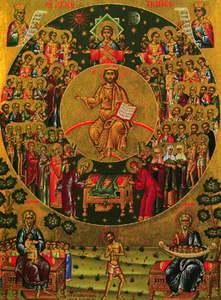
As he received an honorary doctorate at the University of Chichester on September 16, 2026, His All-Holiness Ecumenical Patriarch Bartholomew offered the new graduates of the university, and the world at large, a series of powerful and deeply compelling reflections upon the true nature of freedom and the principles that should guide one’s choices in life.

Speaking to the graduates movingly about his own youth, His All-Holiness stated: “We too, my own generation, were once young, and we lived through the contradictions of our society, its challenges, but also its positive prospects, its disappointments and its hopes.”

His All-Holiness explained that “youth is a period of intense inner crisis for the human person, and the soul of the young person is a sensitive seismograph of developments. The crisis of youth, which is ‘normal’ from an anthropological perspective, is intensified by the external circumstances of each age. Today especially, you young men and women face unprecedented developments in the field of scientific knowledge, momentous changes in the course of history, and continuous ‘digital leaps.’”

His All-Holiness said that like himself and the young people of his age, “you too, the promising young men and women of today, are called to build your present and your future within a civilization which you did not yourselves create.” He admonished the graduates, and all young people, not to neglect the most important questions regarding the meaning of life itself. “Amid the turmoil of human affairs,” he said, “no human being—and certainly not you, young men and women—can push away the ultimate questions about the meaning of existence, about life and death, about happiness and misery, about right and wrong, about good and evil, about the perplexities of our freedom.”

Reminding the graduates that “the human being is not merely a biological entity, nor merely a citizen of the world,” His All-Holiness stated that the human being “is a spiritual being with an exalted vocation. The underestimation or rejection of spiritual values and traditions has gravely negative consequences for every dimension of personal and social life.” He observed that “the fascination with technological achievements leads to the identification of development with technological progress,” and noted also that “the growth of scientific knowledge does not keep pace with the development of the moral sensibilities of the human person.”

This, His All-Holiness, explained, demonstrated the need for religion. “Religion,” he said, “remains of critical importance for contemporary man” because in an age in which the ‘existential vacuum’ is a global phenomenon, amid the pervasive anthropological confusion and the mutually contradictory proposals for the meaning of life, religion is the answer to the ultimate questions of human existence, which stir our minds and souls.” He pointed out that “we cannot imagine a human being who does not ask about the meaning of his life. Religion constitutes ‘a constant of human existence,’ while the suppression of the religious need and its expression provokes profound alienations in the human person.”

The Ecumenical Patriarch also said that “religion is of central importance not only for the personal orientation of life, but also for the identity of peoples and cultures. This became particularly evident at the end of the twentieth century when, after the fall of the Eastern Bloc, the religious self-awareness of its peoples, repressed for decades, re-emerged. Atheist ideology and prohibitions failed to uproot a religious identity bound up directly with the cultural distinctiveness of those peoples. A wholly secularised society, cut off from its religious roots, cannot possibly preserve its humanistic orientation.”

His All-Holiness also pointed out another neglected and often overlooked fact that demonstrates the importance of religion: “Within religious traditions, the greatest achievements of civilization and of particular cultures, their fundamental values, and their ordering of those values were born, shaped, and preserved. With the religions is bound up the great spiritual heritage of humanity. Nothing of significance in the course of human history can be understood without regard to its religious roots. Whatever is most precious among the things that peoples have preserved is connected with their religion or religions. Religious treasures and artefacts fill museums; the religiosity of peoples reveals central aspects of their culture.”

Another “essential function of religion,” His All-Holiness stated, “is its peacemaking power and mission. From Professor Hans Küng comes the phrase: ‘No peace among the nations without peace among the religions. No world peace without peace among the religions. No peace among the religions without dialogue among the religions.’”

“No one can deny,” said the Ecumenical Patriarch, “that today we are living through a profound ‘crisis of freedom.’” He observed that “individual and collective life has become, for the human being, more demanding and more difficult.” Amid these difficulties, “the central question of human existence is the understanding and use of our freedom. Unfortunately, it is proclaimed today with a loud voice that freedom is ‘the art of avoiding commitment.’ The impression has been skillfully planted in our young people that commitment means adaptation to outdated patterns of life, confinement within obsolete schemes. Freedom is very widely identified with the possibility of choice. Yet the truth of our freedom is judged not by the fact that we choose, but by what we choose. The issue that remains is the linking of freedom with responsibility. Freedom understood as responsibility is Ariadne’s thread, which leads us out of our intricate existential labyrinths.”

In line with this understanding of freedom, His All-Holiness told the graduates: “Studying the concept of freedom as autonomy, in the Kantian sense, I came to understand that autonomous freedom does not mean doing whatever I desire; it is not to be identified with a self-sufficient and arrogant self-determination, but is obedience to the moral law, which is the foundation of human dignity, that is, of the absolute worth of the human person. As Kant makes clear, what befits the human being is not the attitude of the arrogant volunteer, who has no need of the idea of duty in order to do good since he does it of his own inclination and initiative, but the attitude of indebtedness and obligation.”

The insight of this philosopher coincided with those of Saint Paul: “We recall here the great theologian of freedom, the Apostle Paul, according to whom the renewal of the human being in Christ is, and is experienced as, liberation and freedom. Freedom, which is a gift from above and not a human achievement, is expressed as the indissoluble unity of faith in God and love for one’s fellow human being, one’s brother.”

His All-Holiness explained that “these two aspects of freedom, the philosophical and the Christian, with their differences but also with their common character as a refusal of the self-deification of the human being and as absolute commitment, together form a robust existential possibility for the creative combination of the identity of the contemporary responsible and free human being with the quality of the believer.” Accordingly, His All-Holiness concluded: “The human being ‘honored with freedom’ has a higher destiny than simply to do ‘whatever he wants.’”

May we all prove worthy of this immense responsibility and honor.

The post Ecumenical Patriarch: Freedom is more than ‘doing whatever you want’ appeared first on Orthodox Observer.

As he received an honorary doctorate at the University of Chichester on September 16, 2026, His All-Holiness Ecumenical Patriarch Bartholomew offered the new graduates of the university, and the world at large, a series of […]

The post Ecumenical Patriarch: Freedom is more than ‘doing whatever you want’ appeared first on Orthodox Observer.



Assembly of Bishops News

AoB XV Concludes; Hierarchs Approve American Sign Language Lexicon and Continue Working on a Common Catechism

10/06/2026

Opening Remarks of the Chairman at Assembly of Bishops XV

10/05/2026

Local Parishes and Organization Share their Culture with the Assembly of Bishops

10/04/2026

On Sunday, October 4th, the community of Holy Cross Greek Orthodox Church of Pittsburgh, PA welcomed Hierarchs from the Assembly of Canonical Orthodox Bishops of the United States of America for a reception and performances spotlighting local cultural dance troupes and choirs along with testimonies highlighting the work of the Assembly’s Agencies.

Assembly of Bishops Concelebrate the Divine Liturgy in Pittsburgh, PA

10/04/2026

On Sunday, October 4th, the community of St. Nicholas Greek Orthodox Cathedral of Pittsburgh, PA welcomed Hierarchs from the Assembly of Canonical Orthodox Bishops of the United States of America for a pan-Orthodox Hierarchical concelebration of the Divine Liturgy.

Chairman's Remarks at the Conclusion of Divine Liturgy

10/04/2026


Diakonia Newsletter

BACK TO TOP