Dormition of the Theotokos Greek Orthodox Church
Publish Date: 2026-09-20
Bulletin Contents

Organization Icon
Dormition of the Theotokos Greek Orthodox Church

General Information

  • Phone:
  • (802) 862-2155
  • Fax:
  • (802) 881-0717
  • Street Address:

  • 600 South Willard Street

  • Burlington, VT 05401


Contact Information


Services Schedule

Sundays10:00 AM - DIVINE LITURGY, preceded by Orthros at 9:00 AM

Holy Days: 9:00 AM - DIVINE LITURGY


Past Bulletins


This Week

Saturday, 19 September
5:00 PMGreat Vespers

Sunday after the Holy Cross20 September
9:00 AM: Orthros (Matins & Lauds), followed by 10:00 AM: DIVINE LITURGY

Saturday, 26 September
5:00 PMGreat Vespers

1st Sunday of Luke27 September
9:00 AM: Orthros (Matins & Lauds), followed by 10:00 AM: DIVINE LITURGY

Fasting this Week:

Wed: Wine & Oil Allowed; Fri: Strict Fasting; All Other Days: No Fasting


Upcoming Calendar

  • Parish Calendar

    September 20 to October 18, 2026

    Sunday, September 20

    Sunday after the Elevation

    9:00AM Orthros (Matins+Lauds)

    10:00AM Divine Liturgy

    Saturday, September 26

    5:00PM Great Vespers

    Sunday, September 27

    1st Sunday of Luke

    9:00AM Orthros (Matins+Lauds)

    10:00AM Divine Liturgy

    Saturday, October 3

    10:00AM Rutland Divine Liturgy

    5:00PM Great Vespers

    Sunday, October 4

    2nd Sunday of Luke

    9:00AM Orthros (Matins+Lauds)

    10:00AM Divine Liturgy

    Saturday, October 10

    5:00PM Great Vespers

    Sunday, October 11

    Sunday of the 7th Ecumenical Council

    9:00AM Orthros (Matins+Lauds)

    10:00AM Divine Liturgy

    Saturday, October 17

    5:00PM Great Vespers

    Sunday, October 18

    Apostle & Evangelist Luke

    9:00AM Orthros (Matins+Lauds)

    10:00AM Divine Liturgy


Announcements & Future Events

Special Collection Tray: the Philoptochos Society will pass the tray this Sunday for benefit of Hellenic College / Holy Cross School of Theology.

Philoptochos News: Philoptochos' first meeting of the ecclesiastical year is this Sunday after coffee hour. All women of our parish are invited. Philoptochos' mission is to “help the poor, the destitute, the hungry, the aged, the sick, the unemployed, the orphaned, the imprisoned, the widowed, the handicapped, the victims of disasters, to undertake the burial of impoverished persons and to offer assistance to anyone who may need the help of the Church through fundraising efforts; to promote the charitable, benevolent, and philanthropic purposes of the Greek Orthodox Archdiocese of America, through instructional programs, presentations, lectures, seminars and other educational resources; to preserve and perpetuate Orthodox Christian concepts and the Orthodox Christian Family, and through them, to promote the Greek Orthodox Faith and traditions, in accordance with its doctrines, canons, discipline, divine worship, usages and customs; to promote participation in the activities of the Greek Orthodox community, with the cooperation of the Parish Priest and the Parish Council.”


Hymns of the Day

Resurrectional Apolytikion in the Grave Mode

By Your cross, O Lord, You shattered death; to the thief You opened paradise. You transformed the Myrrhbearers' lamentation, and commanded Your Apostles to proclaim that You arose, Christ our God, granting to the world Your great mercy.
Κατέλυσας τῷ Σταυρῷ σου τὸν θάνατον, ἠνέῳξας τῷ Λῃστῇ τὸν Παράδεισον, τῶν Μυροφόρων τὸν θρῆνον μετέβαλες, καὶ τοῖς σοῖς Ἀποστόλοις κηρύττειν ἐπέταξας, ὅτι ἀνέστης Χριστὲ ὁ Θεός, παρέχων τῷ κόσμῳ τὸ μέγα ἔλεος.

Apolytikion for Afterfeast of the Holy Cross in the First Mode

Save, O Lord, Your people and bless Your inheritance, granting victory to the faithful over the enemy, and by Your Cross protecting Your commonwealth.
Σώσον Κύριε τόν λαόν σου καί ευλόγησον τήν κληρονομίαν σου, νίκας τοίς Βασιλεύσι κατά βαρβάρων δωρούμενος καί τό σόν φυλάττων διά τού Σταυρού σου πολίτευμα.

Apolytikion for Martyr Eustathius and His Companions in the Fourth Mode

Your Martyrs, O Lord, were worthily awarded by You the crowns of incorruption, in that they contested for You our immortal God. Since they possessed Your power, they defeated the tyrants, dashing the demons’ powerless displays of defiance. O Christ God, at their fervent entreaties, save our souls.
Οι Μάρτυρές σου, Κύριε, εν τή αθλήσει αυτών, στεφάνους εκομίσαντο τής αφθαρσίας, εκ σού τού Θεού ημών, σχόντες γάρ τήν ισχύν σου, τούς τυράννους καθείλον, έθραυσαν καί δαιμόνων, τά ανίσχυρα θράση. Αυτών ταίς ικεσίαις, Χριστέ ο Θεός, σώσον τάς ψυχάς ημών.

Apolytikion of Church of the Dormition in the First Mode

In giving birth you did retain your virginity. In your repose, you did not forsake the world, O Theotokos. You have passed into life, you that are the Mother of Life. And by your intercessions, you redeem our souls from death. 

Ἐν τῇ Γεννήσει τὴν παρθενίαν ἐφύλαξας, ἐν τῇ Κοιμήσει τὸν κόσμον οὐ κατέλιπες Θεοτόκε. Μετέστης πρὸς τὴν ζωήν, μήτηρ ὑπάρχουσα τῆς ζωῆς, καὶ ταῖς πρεσβείαις ταῖς σαῖς λυτρουμένη, ἐκ θανάτου τὰς ψυχὰς ἡμῶν.

Seasonal Kontakion in the Fourth Mode

You who were lifted on the cross voluntarily, O Christ our God, bestow Your tender compassions upon Your new community to which You gave Your name. Cause our faithful emperors to be glad in Your power, granting them the victories against their adversaries. And for an ally, Lord, may they have You, peace as their armor, the trophy invincible.
Ο υψωθείς εν τώ Σταυρώ εκουσίως, τή επωνύμω σου καινή πολιτεία, τούς οικτιρμούς σου δώρησαι, Χριστέ ο Θεός, Εύφρανον εν τή δυνάμει σου, τούς πιστούς Βασιλείς ημών, νίκας χορηγών αυτοίς, κατά τών πολεμίων, τήν συμμαχίαν έχοιεν τήν σήν, όπλον ειρήνης, αήττητον τρόπαιον.


Gospel and Epistle Readings

Epistle Reading

Prokeimenon. Grave Mode. Psalm 28.11,1.
The Lord will give strength to his people.
Verse: Bring to the Lord, O sons of God, bring to the Lord honor and glory.

The reading is from St. Paul's Letter to the Galatians 2:16-20.

Brethren, knowing that a man is not justified by works of the law but through faith in Jesus Christ, even we have believed in Christ Jesus, in order to be justified by faith in Christ, and not by works of the law, because by works of the law shall no one be justified. But if, in our endeavor to be justified in Christ, we ourselves were found to be sinners, is Christ then an agent of sin? Certainly not! But if I build up again those things which I tore down, then I prove myself a transgressor. For I through the law died to the law, that I might live to God. I have been crucified with Christ; it is no longer I who live, but Christ who lives in me; and the life I now live in the flesh I live by faith in the Son of God, who loved me and gave himself for me.

Προκείμενον. Grave Mode. ΨΑΛΜΟΙ 28.11,1.
Κύριος ἰσχὺν τῷ λαῷ αὐτοῦ δώσει.
Στίχ. Ἐνέγκατε τῷ Κυρίῳ υἱοὶ Θεοῦ, ἐνέγκατε τῷ Κυρίῳ δόξαν καὶ τιμήν.

τὸ Ἀνάγνωσμα Πρὸς Γαλάτας 2:16-20.

Ἀδελφοί, εἰδότες ὅτι οὐ δικαιοῦται ἄνθρωπος ἐξ ἔργων νόμου, ἐὰν μὴ διὰ πίστεως Ἰησοῦ Χριστοῦ, καὶ ἡμεῖς εἰς Χριστὸν Ἰησοῦν ἐπιστεύσαμεν, ἵνα δικαιωθῶμεν ἐκ πίστεως Χριστοῦ, καὶ οὐκ ἐξ ἔργων νόμου· διότι οὐ δικαιωθήσεται ἐξ ἔργων νόμου πᾶσα σάρξ. Εἰ δέ, ζητοῦντες δικαιωθῆναι ἐν Χριστῷ, εὑρέθημεν καὶ αὐτοὶ ἁμαρτωλοί, ἆρα Χριστὸς ἁμαρτίας διάκονος; Μὴ γένοιτο. Εἰ γὰρ ἃ κατέλυσα, ταῦτα πάλιν οἰκοδομῶ, παραβάτην ἐμαυτὸν συνίστημι. Ἐγὼ γὰρ διὰ νόμου νόμῳ ἀπέθανον, ἵνα θεῷ ζήσω. Χριστῷ συνεσταύρωμαι· ζῶ δέ, οὐκέτι ἐγώ, ζῇ δὲ ἐν ἐμοὶ Χριστός· ὃ δὲ νῦν ζῶ ἐν σαρκί, ἐν πίστει ζῶ τῇ τοῦ υἱοῦ τοῦ θεοῦ, τοῦ ἀγαπήσαντός με καὶ παραδόντος ἑαυτὸν ὑπὲρ ἐμοῦ.


Gospel Reading

Sunday after Holy Cross
The Reading is from Mark 8:34-38; 9:1

The Lord said: "If anyone wishes to come after me, let him deny himself and take up his cross and follow me. For whoever would save his life will lose it; and whoever loses his life for my sake and the gospel's will save it. For what does it profit a man, to gain the whole world and forfeit his life? For what can a man give in return for his life? For whoever is ashamed of me and my words in this adulterous and sinful generation, of him will the Son of man also be ashamed, when he comes in the glory of his Father with the holy angels." And he said to them, "Truly, I say to you, there are some standing here who will not taste death before they see the kingdom of God come with power."

Sunday after Holy Cross
Κατὰ Μᾶρκον 8:34-38, 9:1

Εἶπεν ὁ Κύριος· Εἴ τις θέλει ὀπίσω μου ἐλθεῖν, ἀπαρνησάσθω ἑαυτὸν καὶ ἀράτω τὸν σταυρὸν αὐτοῦ, καὶ ἀκολουθείτω μοι. ὃς γὰρ ἂν θέλῃ τὴν ψυχὴν αὐτοῦ σῶσαι, ἀπολέσει αὐτήν· ὃς δ᾿ ἂν ἀπολέσῃ τὴν ἑαυτοῦ ψυχὴν ἕνεκεν ἐμοῦ καὶ τοῦ εὐαγγελίου, οὗτος σώσει αὐτήν. τί γὰρ ὠφελήσει ἄνθρωπον ἐὰν κερδήσῃ τὸν κόσμον ὅλον, καὶ ζημιωθῇ τὴν ψυχὴν αὐτοῦ; ἢ τί δώσει ἄνθρωπος ἀντάλλαγμα τῆς ψυχῆς αὐτοῦ; ὃς γὰρ ἐὰν ἐπαισχυνθῇ με καὶ τοὺς ἐμοὺς λόγους ἐν τῇ γενεᾷ ταύτῃ τῇ μοιχαλίδι καὶ ἁμαρτωλῷ, καὶ ὁ υἱὸς τοῦ ἀνθρώπου ἐπαισχυνθήσεται αὐτὸν ὅταν ἔλθῃ ἐν τῇ δόξῃ τοῦ πατρὸς αὐτοῦ μετὰ τῶν ἀγγέλων τῶν ἁγίων. Καὶ ἔλεγεν αὐτοῖς· ἀμὴν λέγω ὑμῖν ὅτι εἰσί τινες τῶν ὧδε ἑστηκότων, οἵτινες οὐ μὴ γεύσωνται θανάτου ἕως ἂν ἴδωσι τὴν βασιλείαν τοῦ Θεοῦ ἐληλυθυῖαν ἐν δυνάμει.


Saints and Feasts

September 20

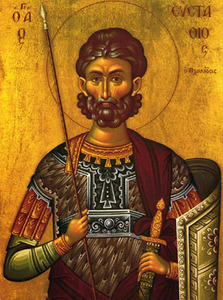
Eustathius the Great Martyr, his wife and two children

The holy Martyr Eustathius before his baptism was an illustrious Roman general named Placidas in the days of the Emperor Trajan. While hunting in the country one day, he was converted to the Faith of Christ through the apparition of an uncommonly majestic stag, between whose antlers he saw the Cross of Christ, and through which the Lord spoke to him with a human voice. Upon returning home, he learned that his wife Tatiana had also had a vision in which she was instructed to become a Christian. They sought out the Bishop of the Christians and were baptized, Placidas receiving the name Eustathius, and Tatiana the name Theopiste; their two sons were baptized Agapius and Theopistus. The family was then subjected to such trials as Job endured. Their servants died, all their goods were stolen, and on a pilgrimage to Jerusalem they were scattered abroad, each not even knowing if the others were still alive. By the providence of God, they were united again after many years, and returned to Rome in glory. Nevertheless, when they refused to sacrifice to the idols-a public sacrifice from which no Roman general could be absent-the Emperor Hadrian, who had succeeded Trajan, had them put into a large bronze device in the shape of a bull, which was heated with fire until they died. When their holy bodies were removed, they were found to be without harm. They suffered martyrdom about the year 126.


September 21

Jonah the Prophet

The Prophet Jonah, the son of Amathi, of the town of Geth-hopher (IV Kings 14:25), was of the tribe of Zabulon; he prophesied during the years 838-810 before Christ. God commanded him to go to Nineveh, the great city of the Assyrians, and to proclaim that its destruction was nigh at hand because of the sins of its people. But he, as a Prophet who knew the great compassion of God, feared that at his preaching the Ninevites would repent; that God, accepting their repentance in His love for man, would not fulfill Jonah' threats; and that he would be branded a false prophet. So he disobeyed the divine command, and boarded a ship and departed elsewhere. Yet, the sudden and fearful sea-storm and the revelation of Jonah' disbedience caused the sailors to cast him into the sea. A great sea-monster appeared straightway by divine providence, and swallowed him up. For three days and nights he was found in its belly and he prayed, saying the words, "I cried aloud in my affliction unto the Lord my God..." (Jonah 2:3, the Sixth ode of the Holy Psalter). The sea-monster then vomited him up on dry land and he again heard God's command. Wherefore, he went and preached, saying, "In three days, Nineveh shall be destroyed." The people became terrified and all repented. The great, the small, babes at the breast, and even the irrational beasts themselves fasted, and thus, having found mercy from God, they were spared His wrath. Jonah' book of prophecy is divided into four chapters, and is placed fifth in order among the twelve minor Prophets. His three-day sojourn in the sea-monster's belly is an image of our Saviour's three-day burial and His life-bringing Resurrection (Matt. 12:39-40). His name means "dove."


September 22

Phocas the Martyr, Bishop of Sinope

This saint was known for the many miracles he worked and for his apostolic zeal in shepherding the flock of Sinope. He contested for the Faith during the reign of the Emperor Trajan, in the year 102, when he was burned to death in a bath-house. A homily in his honour was composed by Saint John Chrysostom. The translation of his holy relics is celebrated on July 23.


September 23

The Conception of St. John the Baptist

This came to pass fifteen months before the birth of Christ, after the vision of the Angel that Zacharias, the father of the Forerunner, saw in the Temple while he executed the priest's office in the order of his course during the feast of the Tabernacles, as tradition bears witness. In this vision, the Archangel Gabriel appeared to Zacharias and said to him, "Thy prayer is heard; and thy wife Elizabeth shall bear thee a son, and thou shalt call his name John" (Luke 1:13). Knowing that Elizabeth was barren, and that both he and she were elderly, Zacharias did not believe what the Angel told him, although he had before him the example of Abraham and Sarah, of Hannah, mother of the Prophet Samuel, and of other barren women in Israel who gave birth by the power of God. Hence, he was condemned by the Archangel to remain speechless until the fulfilment of these words in their season, which also came to pass (Luke 1:7-24).


September 24

Thekla the Protomartyr & Equal-to-the-Apostles

This saint was from the city of Iconium. When she was eighteen years of age, she was instructed in the Faith of Christ and the hope of the resurrection by the Apostle Paul, whom also she followed, forsaking her betrothed and espousing a life of virginity for the sake of the Heavenly Bridegroom. Having preached Christ in various cities and suffered many things, she reposed in Seleucia of Cilicia at the age of 90.


September 26

The Falling Asleep of St. John the Evangelist and Theologian

This Apostle was from Bethsaida of Galilee, and was the son of Zebedee and Salome, and the brother of James the elder. First a fisherman by trade, he became an Apostle and the beloved Disciple of Christ. Only he of all the Disciples followed Him even to the Cross, and was entrusted with the care of our Saviour's Mother, as it were another son to her, and a brother of Christ the Teacher. After this, he preached throughout Asia Minor, especially in Ephesus. When the second persecution against the Christians began in the year 96 during the reign of Domitian, he was taken in bonds to Rome, and there was cast into a vat filled to the brim with boiling oil. Coming forth therefrom unharmed, he was exiled to the island of Patmos, where he wrote the Book of Revelation. Returning again to Ephesus after the death of the tyrant, he wrote his Gospel (after the other Evangelists had already written theirs) and his three Catholic Epistles. In all, he lived ninety-five years and fell asleep in the Lord during the reign of Trajan in the year 100. He was called Theologian because he loftily expounded in his Gospel the theology of the inexpressible and eternal birth of the Son and Word of God the Father. It is for this cause that an eagle-a symbol of the Holy Spirit, as Saint Irenaeus says-is depicted in his icon, for this was one of the four symbolic living creatures that the Prophet Ezekiel saw (Ezek. 1:10).


Wisdom of the Fathers

The key to knowledge is the humility of Christ. The door of the Kingdom of Heaven is open, not to those who only know in their learned minds the mysteries of faith and the commandments of their Creator, but to those who have progressed far enough to live by them.
St. Bede the Venerable
Unknown, 8th century

To deny oneself means to give up one's bad habits; to root out of the heart all that ties us to the world; not to cherish bad thoughts and desires; to suppress every evil thought; to avoid occasions of sin; not to desire or to do anything out of self-love, but to do everything out of love for God. To deny oneself, according to St. Paul means "to be dead to sin. . . but alive to God."
St. Innocent of Alaska
The Lenten Spring, SVS Press, p. 147, 19th Century

A Christian's . . . duty is to "take up his cross." The word cross means sufferings, sorrows and adversities. To take up one's cross means to bear without grumblings everything unpleasant, painful, sad, difficult and oppressive that ay happen to us in life. . .without expecting any earthly reward in return, but bear it all with love, with joy and with courageous strength.
St. Innocent of Alaska
The Lenten Spring, SVS Press, p. 147, 19th Century

If you would be victorious, taste the suffering of Christ in your person, that you may be chosen to taste His glory. For if we suffer with Him, we shall also be glorified with Him. Blessed are you if you suffer for righteousness' sake. Behold, for years and generations the way of God has been made smooth through the Cross and by death. The way of God is a daily Cross. The Cross is the gate of mysteries.
St. Isaac the Syrian
The Orthodox Way: Revised Edition, SVS Press, p. 129


Archdiocese News

Archbishop Elpidophoros arrives in Alaska for consecration

09/17/2026

Yesterday, His Eminence Archbishop Elpidophoros of America arrived in Anchorage, Alaska, where he will preside over the consecration of Holy Transfiguration Greek Orthodox Church on Saturday, September 19.

Traveling alongside the Archbishop are His Eminence Metropolitan Gerasimos of San Francisco; His Grace Bishop Athenagoras of Nazianzos; His Grace Bishop Ioannis of Phocaea; and Dimitri Katsiklis, Master Chanter at St. Nicholas Greek Orthodox Church and National Shrine.

The group was greeted by members of the parish, including Fr. Vasili Hillhouse, Holy Transfiguration Church’s parish priest. In the evening, the church’s parish council shared a welcome dinner with the guests.

Ahead of Saturday’s consecration, the Archbishop will also attend a Founding Families dinner and spend time in the Alaskan landscape, visiting the nearby Portage Glacier.

The post Archbishop Elpidophoros arrives in Alaska for consecration appeared first on Orthodox Observer.


Yesterday, His Eminence Archbishop Elpidophoros of America arrived in Anchorage, Alaska, where he will preside over the consecration of Holy Transfiguration Greek Orthodox Church on Saturday, September 19. Traveling alongside the Archbishop are His Eminence […]

The post Archbishop Elpidophoros arrives in Alaska for consecration appeared first on Orthodox Observer.


Celebrate National Church Music Sunday this October

09/17/2026

The National Forum of Greek Orthodox Church Musicians will celebrate National Church Music Sunday on October 4, 2026.

This annual celebration occurs the first Sunday after the observance of the feast day of St. Romanos, the patronsSaint of the National Forum and church musicians, which falls on October 1st  and continues throughout the month of October.   The Greek Orthodox Archdiocese of America sets this day aside each year to recognize and honor all of its church musicians. 

The National Forum invites parishes throughout the Archdiocese to celebrate their musicians. Materials to celebrate National Church Music Sunday are made available to parish priests, choirs directors, parish council and Philoptochos, with the National Forum website listing 21 celebration ideas, commemoratives available from the National Forum, prayers for church musicians, and additional materials that support the development and education of church musicians, including many materials created specifically for youth.

> Access these materials and more at www.churchmusic.goarch.org 

This is a particularly special year for the National Forum of Greek Orthodox Church Musicians as it celebrates its 50th Anniversary.

The mission of the National Forum is to enhance and perpetuate the liturgical music of the Greek Orthodox Church, serving as the voice of church musicians, providing learning activities that strengthen church musicians spiritually, musically and educationally.

The National Forum also addresses specific church music needs of clergy, choir directors, organists, choir members, composers, church schools and congregations. As the musical arm of the Archdiocese, the National Forum also collaborates with other Archdiocesan departments to address church music needs. 

The National Forum has developed a number of new initiatives this year.

The Parish Music Leadership Initiative (commonly known as the MELI project) is an online program designed to educate and train the full gamut of our church musicians, youth and clergy. This program was recently debuted at the 2026 Clergy Laity Congress and received rave reviews, stressing the necessary step this is for our Archdiocese. This program will also be incorporated by Hellenic College Holy Cross, working in partnership with the National Forum and utilizing an endowment provided by the National Forum.

Additionally, the youth portion of MELI will become part of the Archdiocese’s new Department of Religious Education (DRE) Kids Sunday Series hymn track.

Another major youth initiative established by the National Forum is the Saint Romanos Church Music Festival. Patterned after the successful Saint John Chrysostom Oratorical Festival, this festival will focus on the sacred hymnology of our church, creating the next generation of choir directors, choir members and chanters. This innovative program was enthusiastically approved by the Holy Eparchial Synod for Archdiocese-wide implementation.

> Previously: Saint Romanos Church Music Festival to celebrate youth musical excellence

These programs join the many others which the National Forum supports year after year. 

The post Celebrate National Church Music Sunday this October appeared first on Orthodox Observer.


The National Forum of Greek Orthodox Church Musicians will celebrate National Church Music Sunday on October 4, 2026. This annual celebration occurs the first Sunday after the observance of the feast day of St. Romanos, […]

The post Celebrate National Church Music Sunday this October appeared first on Orthodox Observer.


Legacy of Ecumenical Patriarch Bartholomew honored at HEI colloquium

09/16/2026

On September 14-15, the Huffington Ecumenical Institute (HEI) at Hellenic College Holy Cross, in partnership with the Greek Orthodox Archdiocese of America and the Archons of the Ecumenical Patriarchate, hosted an interdisciplinary colloquium in recognition of His All-Holiness Ecumenical Patriarch Bartholomew’s unprecedented thirty-five-year tenure as Archbishop of Constantinople.

The colloquium, hosted at the Maliotis Cultural Center, featured expert panel presentations on the ecclesial, social, and pastoral dimensions of Ecumenical Patriarch Bartholomew’s ministry as “First Among Equals” shepherding the global Orthodox Church.

Rev. Dr. John Chryssavgis, Executive Director of HEI, opened the colloquium by expressing his personal admiration for the Ecumenical Patriarch. As Archdeacon of the Ecumenical Throne, Fr. Chryssavgis has worked closely with Ecumenical Patriarch Bartholomew over the past four decades: editing three volumes of his collected speeches, recording his remarkable life’s story, and serving as his advisor on environmental issues.

From his enthronement in 1991, His All-Holiness “did not procrastinate in assessing the past and pointing the way of the future,” Fr. Chryssavgis said. “He landed with his feet running…deeply rooted in the present and forward looking to the Kingdom.” Few spiritual leaders, Fr. Chryssavgis observed, have so ably executed the “consistent fulfillment of an aspiration articulated from the outset of their tenure.”

While offering his archiepiscopal blessing for the colloquium, His Eminence Archbishop Elpidophoros characterized Ecumenical Patriarch Bartholomew with the reverence of a spiritual son for his “father in Christ.” This bond of “filial devotion,” stretching back more than twenty-five years, has been the “ground and inspiration” of His Eminence’s ministry as a deacon, priest, hierarch, and exarch of the Ecumenical Throne. Whereas other religious leaders may seek “secular power, ephemeral glory, and financial gain,” His All-Holiness’s tenure has been marked by “fidelity, canonicity, and morality.”

The first panel of presenters, chaired by Rev. Dr. Philip Zymaris, Professor of Liturgics at Hellenic College Holy Cross, focused on the Ecumenical Patriarch’s approach to Church leadership. His Grace Bishop Maxim, Eparch of Western America of the Serbian Orthodox Church, spoke first on Ecumenical Patriarch Bartholomew’s chairmanship of the Holy and Great Council (2016).  When repeatedly faced by moments of “paralysis” during the Council, the Ecumenical Patriarch proposed person-oriented solutions rooted in “procedures, patience, and persuasion.” For the Ecumenical Patriarch, “unity is not uniformity imposed from above” but communion forged in the fire of love for the other.

The post Legacy of Ecumenical Patriarch Bartholomew honored at HEI colloquium appeared first on Orthodox Observer.


On September 14-15, the Huffington Ecumenical Institute (HEI) at Hellenic College Holy Cross, in partnership with the Greek Orthodox Archdiocese of America and the Archons of the Ecumenical Patriarchate, hosted an interdisciplinary colloquium in recognition […]

The post Legacy of Ecumenical Patriarch Bartholomew honored at HEI colloquium appeared first on Orthodox Observer.


Annunciation Church in NYC begins Greek School September 19

09/14/2026

Annunciation Greek Orthodox Church New York City is kicking off its Greek School (Pre-K to 12) on Saturday, September 19th. Every Saturday, the Greek School will teach 2 sessions based on levels on Saturdays from 10:00AM-11:30AM and 11:30AM-1:00PM. Tuition cost will be $1,550 for 1st child, $1,500 for 2nd child, and $1,450 for 3rd child. The Greek School begins September 19, 2026 and ends June 12, 2026. Graduation will be on Sunday, June 13th.

“The goal of Annunciation Church’s Greek School is to teach the Greek language while fostering a strong connection to Hellenic heritage. Our curriculum is designed to accommodate students of diverse backgrounds and varying levels of language proficiency,” said Fr. Sotirios Michalatos, parish priest of Annunciation Church. “In addition to language instruction, the program emphasizes Greek history and culture, helping students thrive in American society while taking pride in their Greek roots.”

Annunciation Greek Orthodox Church New York City is located on Manhattan’s Upper West Side at West End Avenue and 91st Street. For more information on Annunciation Greek Orthodox Church New York City, visit www.annunciation-nyc.org, email [email protected], or call (212) 724-2070.

The post Annunciation Church in NYC begins Greek School September 19 appeared first on Orthodox Observer.


Annunciation Greek Orthodox Church New York City is kicking off its Greek School (Pre-K to 12) on Saturday, September 19th. Every Saturday, the Greek School will teach 2 sessions based on levels on Saturdays from […]

The post Annunciation Church in NYC begins Greek School September 19 appeared first on Orthodox Observer.


Chicago parish on the shore of Lake Michigan celebrates historic milestone

09/14/2026

Saint Andrew’s Greek Orthodox Church—located at the beginning of Chicago’s famed DuSable Lake Shore Drive—is celebrating its 100th anniversary.

The church’s first Divine Liturgy took place on Christmas Day, 1926. In 1955, the growing parish built its permanent home, which is recognized throughout Chicago due its iconic location and beautiful architecture.  

Exterior of St. Andrew’s Greek Orthodox Church with 100-year banners. Photo by Nick Karafotias

Like many other enduring parishes throughout the Archdiocese, Greek immigrants were instrumental in founding and sustaining St. Andrew’s during its early years, inspired by their faith and united in purpose, under the guidance of their parish priest.

Their legacy of service continues today as the dedicated clergy and laity of St. Andrew’s work to honor the parish’s first 100 years and look with joy towards the future.

Saint Andrew’s Church invites you to join us for our Centennial Gala on October 10, 2026 at The Westin O’Hare, located in Rosemont, Illinois. Tickets for this once-in-a-lifetime event are selling quickly. Reserve yours today! 

The St. Andrew’s 100th Anniversary Gala will be a truly special occasion. Come celebrate the faith, family, and ministry that have made St. Andrew’s Chicago the vital cornerstone it is today—and let’s look forward to the next 100 years! 

To RSVP, please visit www.StAndrewOrthodox.church/centennial-gala or call our church office at 773-334-4515.

If you are unable to attend but would like to support our Centennial Vision Fund, aimed at restoring and revitalizing our beloved St. Andrew’s for the next century–your generosity is appreciated! Please click here.


The post Chicago parish on the shore of Lake Michigan celebrates historic milestone appeared first on Orthodox Observer.


Saint Andrew’s Greek Orthodox Church—located at the beginning of Chicago’s famed DuSable Lake Shore Drive—is celebrating its 100th anniversary. The church’s first Divine Liturgy took place on Christmas Day, 1926. In 1955, the growing parish […]

The post Chicago parish on the shore of Lake Michigan celebrates historic milestone appeared first on Orthodox Observer.


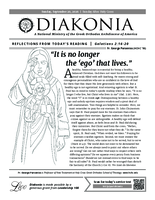
Diakonia Newsletter


Ecumenical Patriarchate News

Ecumenical Patriarch Bartholomew emphasizes religious, ethical dimensions of the ecological threat

09/17/2026

His All-Holiness Ecumenical Patriarch Bartholomew on September 1, 2026 celebrated the beginning of the Indiction, the ecclesiastical New Year, as well as the Day of Prayer for the Protection of the Natural Environment, as Ecumenical Patriarch Demetrios of blessed memory designated it in 1989. On the same day, he issued a Patriarchal Message for the Beginning of the Ecclesiastical Year and the Solemn Day of Prayers for Natural Environment, reiterating his pioneering commitment to the preservation of the natural environment as a core Christian duty, and articulating “new paths and prospects for addressing” this immense challenge.

In that message, His All-Holiness emphasized that the environmental crisis affects all areas of human endeavor: “The multidimensional contemporary ecological crisis is a crisis of human freedom, of our religion and philosophy, of our ethos and our culture.” He explained that “what comes first is the ‘harmful alteration’ of our freedom — our severance and alienation from the Source of Life; what follows is conduct destructive of the natural environment.”

In response to this crisis, the Ecumenical Patriarch said that there was an “imperative need for a ‘Copernican Turn’ in our understanding of the idea of progress and in humanity’s attitude towards nature, as well as in the actions of those engaged in political, economic, and social life, of the Churches and religions, of science and technology, and of those responsible for the education of the younger generation.”

In pursuit of this transformation in the general understanding of the environment and its relationship to human activity, he pledged to “continue, in word and deed, to promote the ecological vision of the Holy Great Church of Christ and the eco-friendly dynamism of the eucharistic, ascetic, and doxological relationship with creation, always underscoring that careful theological work is needed for the elucidation of the authentic ecological message of our Orthodox faith and tradition, for the benefit of creation, which is ‘very good.’”

While the environmental crisis is usually understood solely in utilitarian terms, His All-Holiness stated that “we are convinced that highlighting the religious and ethical dimensions of the ecological threat will lead to an awareness of the pivotal importance of ‘ecological responsibility.’” He declared that “humanity must at last cease acting as though it does not know and definitively cast aside the illusion that planet Earth can in perpetuity withstand the burdens and destruction caused by human activity, or that nature has the power to renew itself of its own accord.”

Once that illusion has been definitively seen for what it is and rejected, His All-Holiness continued, “the ethos of responsibility for the protection of the natural environment must find expression at the global, national, local, and personal levels.” This multifaceted response is an urgent necessity: “We reiterate once again that the cultivation of ecological responsibility is a ‘categorical imperative’ for humanity as it confronts the greatest threat it has ever been called to face throughout the entire course of its history.”

His All-Holiness enunciated a prophetic condemnation of the heedless culture of abundance, saying: “It is abundantly clear that, so long as the dominant anthropological model is represented by the ‘foolish rich man’ of the Gospel (Luke 12:17–21), with his declaration, ‘I will pull down my barns and build greater; and there I will store all my crops and my goods,’ and his words, ‘Soul, you have many goods laid up for many years; take your ease, eat, drink, and be merry,’ humanity will continue to undermine its future and annihilate its own ‘home.’”

Continuing his critique of contemporary attitudes toward the environment, the Ecumenical Patriarch stated: “The ‘sins of modernity’ have created — and continue to create — new divisions and ruptures between humanity and nature. The contemporary ‘man-god’ persists in geocide, disregarding every measure and limit in the name of geopolitical designs and economic interests, of consumerism and of the satisfaction of essentially insatiable needs, but also, on a deeper level, because of an overturning of inner lived experience and values.”

A restoration of rightly ordered inner values will therefore lead to a proper understanding of the need to care for the natural environment. Otherwise, said His All-Holiness, “the consequences of the global dominance of the desire to manipulate, instrumentalize, and exploit nature will prove to be tragic for life on our planet.”

His All-Holiness concluded by stating that “respect for the core pillars of ecological civilization can restrain environmentally destructive tendencies and open the ‘sole ecological path,’ that of sustainable development.” He also once again situated the problem of the environment in a larger context: “More broadly, humanity needs to reach agreement upon a body of common fundamental values which, in a world marked by conflict and polarization, will serve as a compass for the journey towards the future.” He stated: “We regard the principle of solidarity as the central axis of this body of values: solidarity as a source of shared responsibility, dialogue, and sincere reciprocity, together with collective responsibility for the protection of the natural environment. Respect in practice for the sacredness of the human person and care for the integrity of creation are, from a Christian perspective, vital manifestations of the eucharistic realization of the Church and of human being’s call to become the ‘priest’ of creation.”

May we all strive to cultivate that principle of solidarity within ourselves and in our relationships with others.

The post Ecumenical Patriarch Bartholomew emphasizes religious, ethical dimensions of the ecological threat appeared first on Orthodox Observer.

His All-Holiness Ecumenical Patriarch Bartholomew on September 1, 2026 celebrated the beginning of the Indiction, the ecclesiastical New Year, as well as the Day of Prayer for the Protection of the Natural Environment, as Ecumenical […]

The post Ecumenical Patriarch Bartholomew emphasizes religious, ethical dimensions of the ecological threat appeared first on Orthodox Observer.


BACK TO TOP