


October 25






Greek National Opera brings Crete and Kazantzakis to Carnegie Hall
10/24/2026
The Greek National Opera chose to place Crete and Nikos Kazantzakis at the center of its landmark, debut performance in New York City at the historic Carnegie Hall. The work of the celebrated author served as a source of inspiration for a number of composers, while several of his books are familiar to the American public through English translations, and most notably through the iconic film adaptation Zorba the Greek. Artistic Director Giorgos Koumendakis—himself a native of Crete—leveraged the New York audience’s familiarity with Kazantzakis’s legacy to curate a program that converses deeply with three of the author’s primary thematic pillars: the search for identity, the relationship with the divine, and the pursuit of both national and existential freedom.
The concert naturally opened with a tribute to the legendary Greek musician whose career was inextricably linked with Carnegie Hall: Dimitri Mitropoulos (1896–1960). The iconic conductor, who served for 11 years as Music Director of the New York Philharmonic, stood on the podium of Carnegie Hall for the last time on the afternoon of Sunday, January 24, 1960, just months before his untimely passing. Beyond his conducting legacy, Mitropoulos was also a composer, with one of his early works drawing directly from Cretan tradition. Cretan Feast was originally composed for piano in 1919 and orchestrated a decade later by another legendary—and tragically short-lived—Greek composer, Nikos Skalkottas (1904–1949).

Skalkottas likewise delved deeply into Greek folk tradition, transforming it through his unique modernist idiom in his 36 Greek Dances. Three Cretan-inspired dances were performed during the evening, allowing the audience to recognize the distinctive rhythm of the Pentozali and the folk melody “The Maidens of Crete.” The interpretation by the conductor and the orchestra highlighted the intricate details and folk elements of the score, emphasizing their rhythmic vitality and symphonic richness.
The program continued with Giorgos Koumendakis’s Amor Fati. Composed in 2007 to mark the 50th anniversary of Nikos Kazantzakis’s death, the work represents—in the composer’s own words—a personal exploration of tradition and the existential questions central to Kazantzakis’s oeuvre. Koumendakis approaches “love of fate” not as fatalism, but as “a deeply active stance toward life—an acceptance of what cannot be changed while maintaining the inner drive to struggle, create, and move forward.” The evocative strings gradually guided the piece into silence, a mood respected by the audience, who allowed several seconds to pass before breaking into applause.
Following the intermission, the Manos Hadjidakis Ensemble took the stage alongside soprano Maria Kostraki to perform Hadjidakis’s Captain Michalis, inspired by Kazantzakis’s novel. The work reflects not only the struggle for Cretan freedom, but also Kazantzakis’s existential quests, his homeland, and his relationship with the divine. Conducting a small ensemble—an uncommon practice in Greek music—proved particularly impactful: Vassilis Christopoulos brought precision, cohesion, and sonic refinement to the performance, highlighting the contrasting moods of the score. In seamless synergy with the conductor, Maria Kostraki delivered a soulful and nuanced interpretation in what proved to be a highlight of the evening, earning well-deserved applause.

The full orchestra then returned to the stage, joined by acclaimed Georgian mezzo-soprano Anita Rachvelishvili and bouzouki virtuosos Vangelis Trigas and Paris Perysinakis, to perform selections from Mikis Theodorakis’s ballet Zorba the Greek (composed in 1987, when the composer revisited the themes and material of his famous 1964 film score).Here again, the orchestra under Christopoulos revealed the multi-layered depth and richness of Theodorakis’s music far beyond its famous motif, filling the Stern Auditorium with a sound world that masterfully bridges classical composition with Greek folk tradition.
At the first appearance of the iconic melody, members of the audience briefly broke concert etiquette and began to clap along. Recognizing that the piece still held more musical development, Christopoulos turned to the hall with a characteristic gesture to restrain—or rather delay—their enthusiasm. Rachvelishvili, a star of the world’s major opera houses including the Metropolitan Opera, has performed frequently in Greece with the Greek National Opera; through this collaboration, she sought to deepen her connection with the institution and the Greek public.
As the piece surged toward its climax, Christopoulos invited the audience’s rhythmic clapping, joined from the stage by Rachvelishvili. The applause accompanied the music through its final bars, culminating in an enthusiastic ovation honoring the Orchestra of the Greek National Opera.
Following the performance, conductor Vassilis Christopoulos spoke to the Orthodox Observer about the experience: “It was a great joy and honor for me to present an anthology of Greek music inspired by Crete and Kazantzakis with my beloved Orchestra of the Greek National Opera and the Manos Hadjidakis Ensemble at the legendary Carnegie Hall, experiencing both the enthusiasm of the American public and the deep emotion of the New York Greek-American community.”
The post Greek National Opera brings Crete and Kazantzakis to Carnegie Hall appeared first on Orthodox Observer.
The Greek National Opera chose to place Crete and Nikos Kazantzakis at the center of its landmark, debut performance in New York City at the historic Carnegie Hall. The work of the celebrated author served […]
The post Greek National Opera brings Crete and Kazantzakis to Carnegie Hall appeared first on Orthodox Observer.
Archbishop tells Jordan church ‘all suffer together’ after Hamoud shooting
10/23/2026
NEW YORK — His Eminence Archbishop Elpidophoros of America wrote on Friday to the Patriarchate of Jerusalem’s representative in Amman, offering the prayers of the Greek Orthodox Archdiocese of America after gunmen killed at least seven people at a funeral in a Greek Orthodox church in southern Jordan. The letter was addressed to His Eminence Archbishop Christophoros of Kyriakoupolis, who has served since 2018 as Patriarchal Commissioner in Amman and pastor of the city’s Orthodox community.
Archbishop Elpidophoros called the shooting at St. George Greek Orthodox Church in the village of Hamoud a “shameful terrorist attack,” stating that no words could describe the shock felt by Orthodox Christians “and all people of faith and goodwill around the world.”
Speaking for the hierarchs, clergy, and faithful of the Archdiocese, Archbishop Elpidophoros extended condolences to Archbishop Christophoros and his flock, praying for the repose of the dead and the recovery of the wounded.
“In a spirit of compassion and solidarity, we commit to continue to pray and work for peace in the world – a peace grounded in dialogue, mutual understanding, and coexistence,” he wrote.
The shooting took place on Friday in Karak governorate, about 110 miles south of Amman, as mourners gathered for a funeral. Security camera footage aired by the state broadcaster Al-Mamlaka showed three men firing at the church from a sidewalk, taking cover behind trees and a low wall, then running for the entrance. Witnesses told the station the gunfire went on for several minutes. One said that between 150 and 200 people were inside and around the church, and that most of the victims were between 50 and 70 years old.
Jordanian officials put the number of wounded at 34, while the health minister said 40 had been hurt. Officials described the attack as terrorism carried out by extremists but said it was too early to know whether the gunmen had ties to any organized group. No one had claimed responsibility by Friday evening, and security forces were still searching for the attackers.
The Patriarchate of Jerusalem, in a statement issued on behalf of His Beatitude Patriarch Theophilos III, the Holy Synod and Archbishop Christophoros, condemned what it called a “vile, cowardly, and bloody act.” It voiced confidence that Jordan’s security services would bring the attackers to justice and said the killings would only strengthen the bond between the country’s Christians and Muslims. The Patriarchate also answered any suggestion that violence could drive Christians from the Holy Land. “We shall remain here as witnesses to the faith, regardless of how great the challenges or how severe the trials may be,” the statement said.
King Abdullah II traveled to Karak hours after the shooting. “The terrorist attack against Karak will be met with the harshest retaliation,” the King said in a statement. The government declared three days of national mourning. António Guterres, the United Nations Secretary-General, condemned the killings and said attacks on civilians and places of worship were unacceptable.
In a message to Archbishop Elpidophoros, the Very Reverend Protopresbyter George Jweinat, Archiepiscopal Vicar of the Vicariate of the Palestinian and Jordanian Orthodox Christian Communities in America, condemned the “acts of terrorism and violence against innocent people” around the world, above all the attack in Hamoud. He also thanked His Eminence for his “continued fatherly care and spiritual leadership.” The Vicariate’s parishes are under the jurisdiction of the Greek Orthodox Archdiocese of America.
In his own letter to Amman, Archbishop Elpidophoros asked God to comfort those in mourning and to “preserve the Hashemite Kingdom of Jordan in peace and harmony always.” He drew on St. Paul’s First Epistle to the Corinthians: “If one member suffers, all suffer together with it.”
With reports from Reuters, The Associated Press, Agence France-Presse and The Washington Post.
The post Archbishop tells Jordan church ‘all suffer together’ after Hamoud shooting appeared first on Orthodox Observer.
NEW YORK — His Eminence Archbishop Elpidophoros of America wrote on Friday to the Patriarchate of Jerusalem’s representative in Amman, offering the prayers of the Greek Orthodox Archdiocese of America after gunmen killed at least […]
The post Archbishop tells Jordan church ‘all suffer together’ after Hamoud shooting appeared first on Orthodox Observer.
Greek Orthodox women’s charity joins Constantinople pilgrimage
10/23/2026
With deep reverence and gratitude, the National Philoptochos Society joined clergy, faithful, and pilgrims from around the world at the Ecumenical Patriarchate to celebrate the 35th anniversary of the enthronement of His All-Holiness Ecumenical Patriarch Bartholomew. Representing National Philoptochos were National President Debbie George and First Vice President Anita Kartalopoulos, who took part in the historic commemoration at the Mother Church of Orthodoxy.
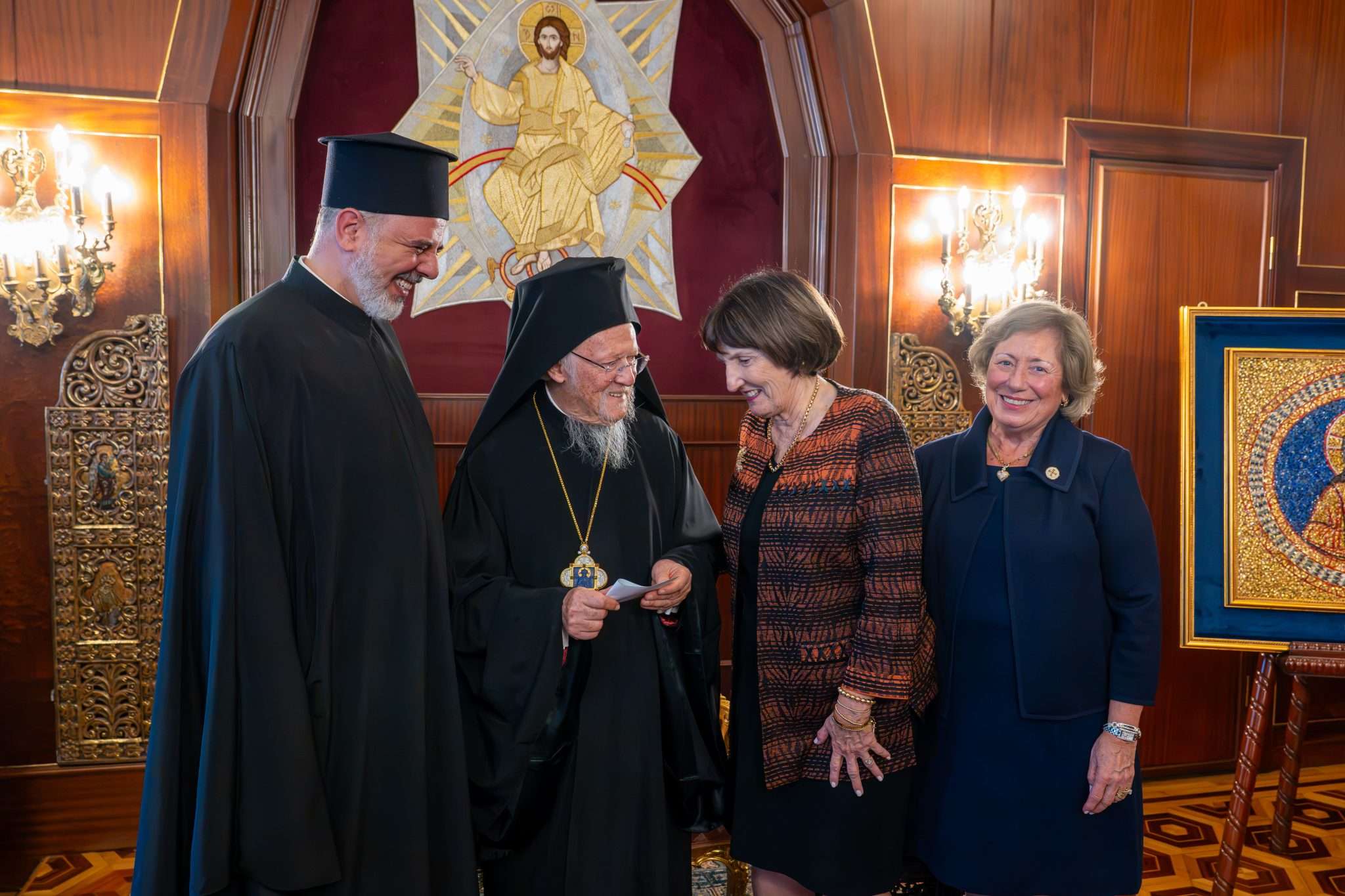
The celebration coincided with the anniversary pilgrimage led by His Eminence Archbishop Elpidophoros of America, held October 19–23, 2026. For the National Philoptochos delegation, being present in the Queen of Cities, Constantinople, was both a profound honor and a deeply spiritual moment. His All-Holiness granted a private audience to the Philoptochos delegation and the Archon Delegation from the United States and shared in his remarks:
“Throughout these years, you have stood faithfully beside us. Our predecessor Patriarch Athenagoras came to this Venerable See from your Archdiocese, and two of the institutions (National Philoptochos and The Order of Saint Andrew) so worthily represented here bear his imprint. As Archbishop of North and South America, he founded the Philoptochos—“friends of the poor”—a title that is itself a rule of life….To the National Philoptochos, in the persons of your National President and First Vice President, we owe particular gratitude. The strength of a community is revealed in the care it extends to its most vulnerable members; your sisterhood has made that principle visible in countless towns and cities from coast to coast, and in your generous support of the Mother Church.”
In recognition of this milestone, National Philoptochos presented His All-Holiness with a gift of $35,000; one thousand dollars for each year of his ministry as Ecumenical Patriarch. The offering reflects the Society’s enduring love for the Mother Church and its gratitude for His All-Holiness’s steadfast shepherding of the Orthodox faithful throughout the world.
“On behalf of the Greek Orthodox National Philoptochos Executive Board and our entire membership across the United States, we extend our most sincere wishes as you celebrate the 35th Anniversary of your Election and Enthronement,” said National President Debbie George. “We are profoundly honored and humbled to participate in this momentous and historical occasion. We hold both you and His Eminence Archbishop Elpidophoros of America in the deepest reverence. Though the Phanar, our Mother Church, has always been in our hearts, with Archbishop Elpidophoros’ leadership and guidance, it is always a top priority for National Philoptochos.”
Since his enthronement on November 2, 1991, His All-Holiness has become the longest-serving Ecumenical Patriarch in the history of the Church. Throughout his ministry, he has been a tireless voice for Christian unity, religious freedom, and the care of God’s creation. For the women of Philoptochos, whose ministry is rooted in love and service to those in need, his example continues to inspire our work in parishes and communities across the country.
The Greek Orthodox Ladies Philoptochos Society, Inc. is the philanthropic arm of the Greek Orthodox Archdiocese of America. With over 90 years of experience, Philoptochos has served communities in need through fundraising and charitable programs. The Society includes more than 400 active chapters nationwide. Learn more at www.philoptochos.org.
The post Greek Orthodox women’s charity joins Constantinople pilgrimage appeared first on Orthodox Observer.
With deep reverence and gratitude, the National Philoptochos Society joined clergy, faithful, and pilgrims from around the world at the Ecumenical Patriarchate to celebrate the 35th anniversary of the enthronement of His All-Holiness Ecumenical Patriarch […]
The post Greek Orthodox women’s charity joins Constantinople pilgrimage appeared first on Orthodox Observer.
Divine Liturgy marks Ecumenical Patriarch’s 35-year tenure
10/22/2026
On Thursday, October 22, 2026, a Patriarchal Divine Liturgy in the most venerable Patriarchal Church of Saint George at the Phanar celebrated the completion of 35 years of the patriarchal ministry of His All-Holiness Ecumenical Patriarch Bartholomew. His All-Holiness presided, concelebrating with His Eminence Archbishop Elpidophoros of America and other hierarchs.
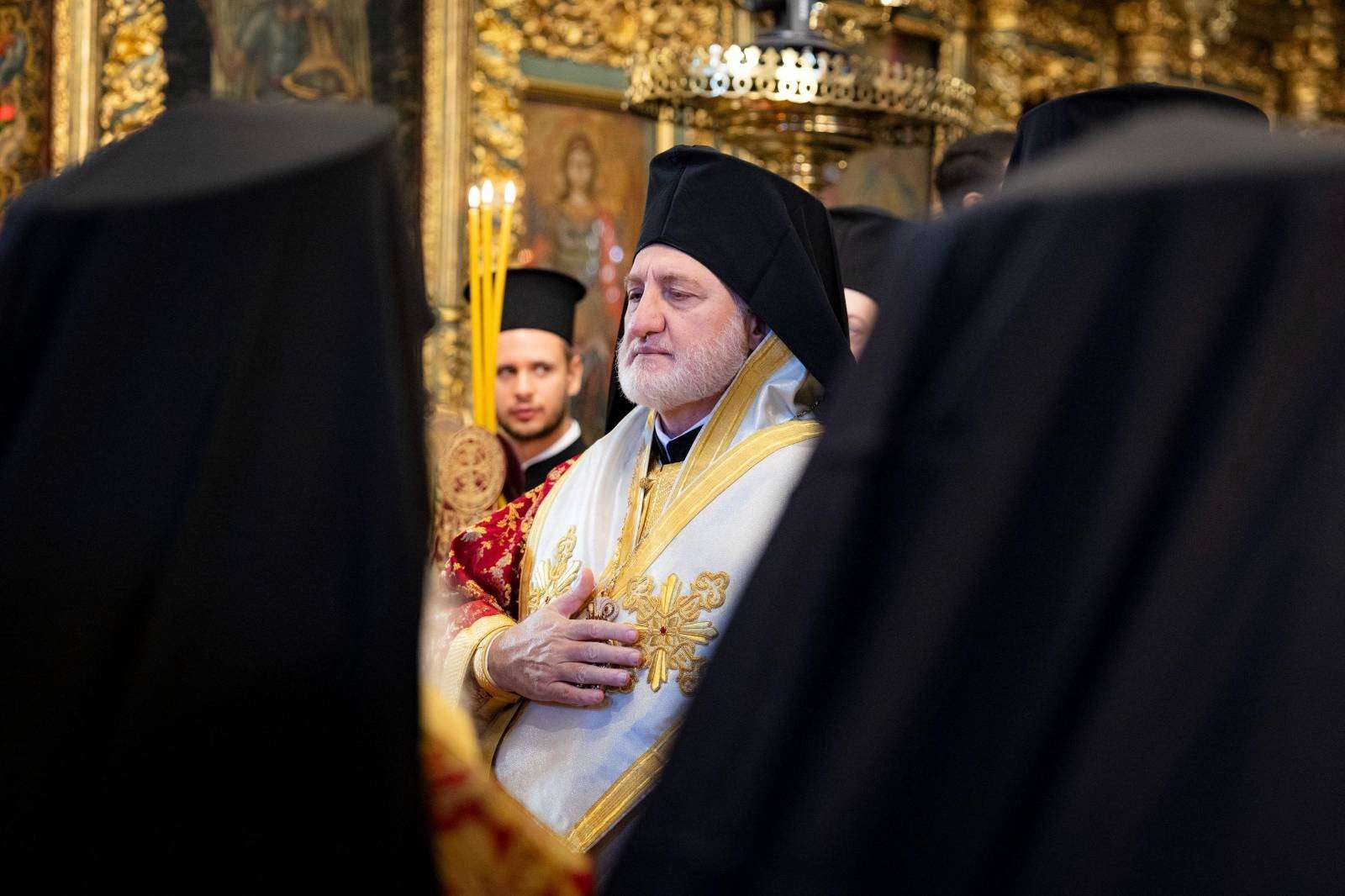
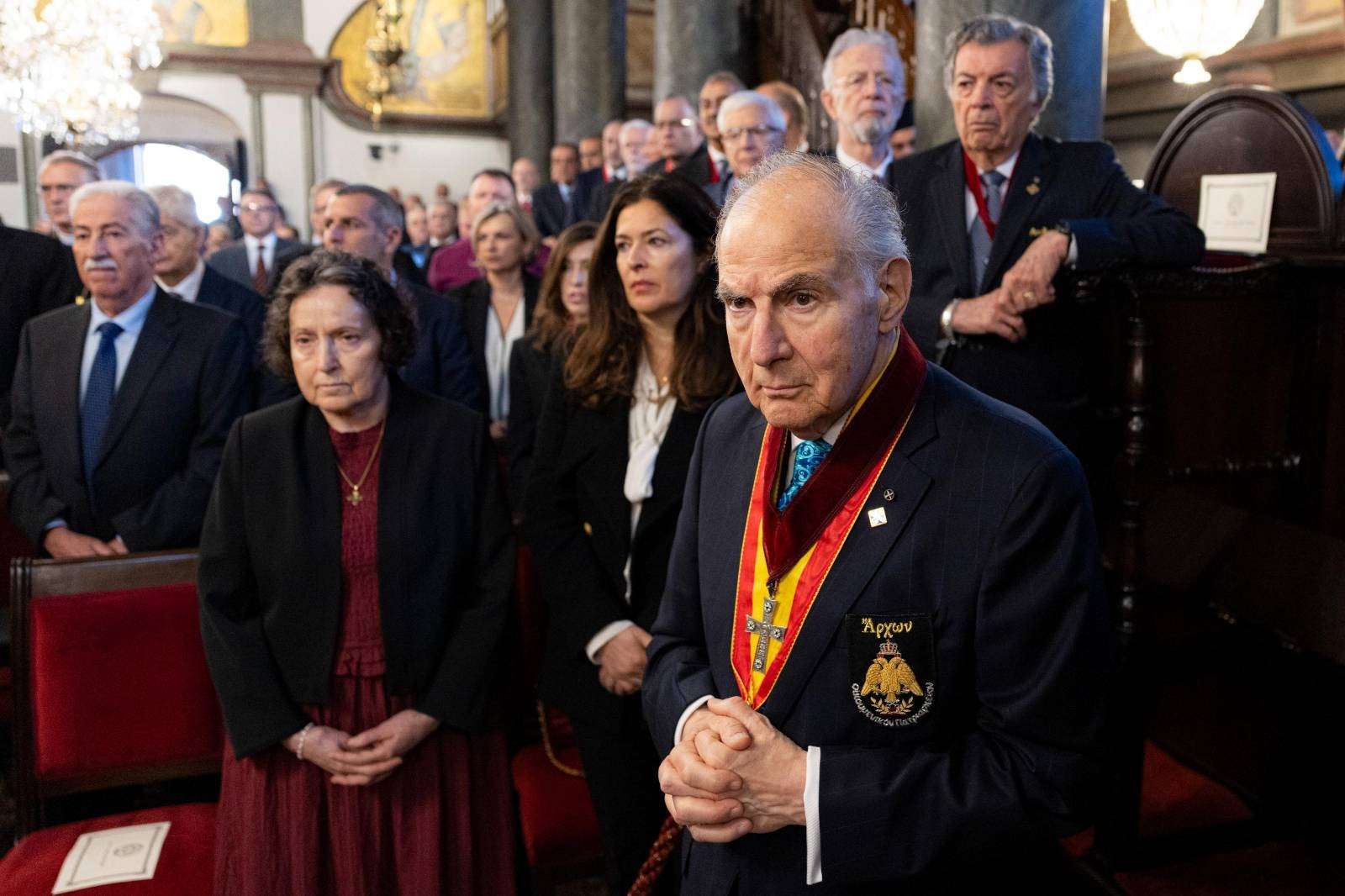
Although the anniversary celebration the evening before at the Hilton Istanbul Bosphorus, at which His All Holiness was the final speaker, ran late into the night, the Ecumenical Patriarch was in the Patriarchal Church from early in the morning. Attending the Divine Liturgy were the Archons of the Ecumenical Patriarchate, a great many Greeks of the diaspora, and numerous clergy from the United States, Australia, Europe and other parts of the world, together with many of the “Romioi,” the city’s own Greek Orthodox.
Minister of Culture Lina Mendoni represented the Greek government. Also present was the shipowner Athanasios Martinos, Archon Exarchos of the Holy and Great Church of Christ and Great Benefactor of the Ecumenical Patriarchate.
The post Divine Liturgy marks Ecumenical Patriarch’s 35-year tenure appeared first on Orthodox Observer.
On Thursday, October 22, 2026, a Patriarchal Divine Liturgy in the most venerable Patriarchal Church of Saint George at the Phanar celebrated the completion of 35 years of the patriarchal ministry of His All-Holiness Ecumenical […]
The post Divine Liturgy marks Ecumenical Patriarch’s 35-year tenure appeared first on Orthodox Observer.
Greek Orthodox faithful repudiate religious hate at St. Nicholas Shrine
10/22/2026
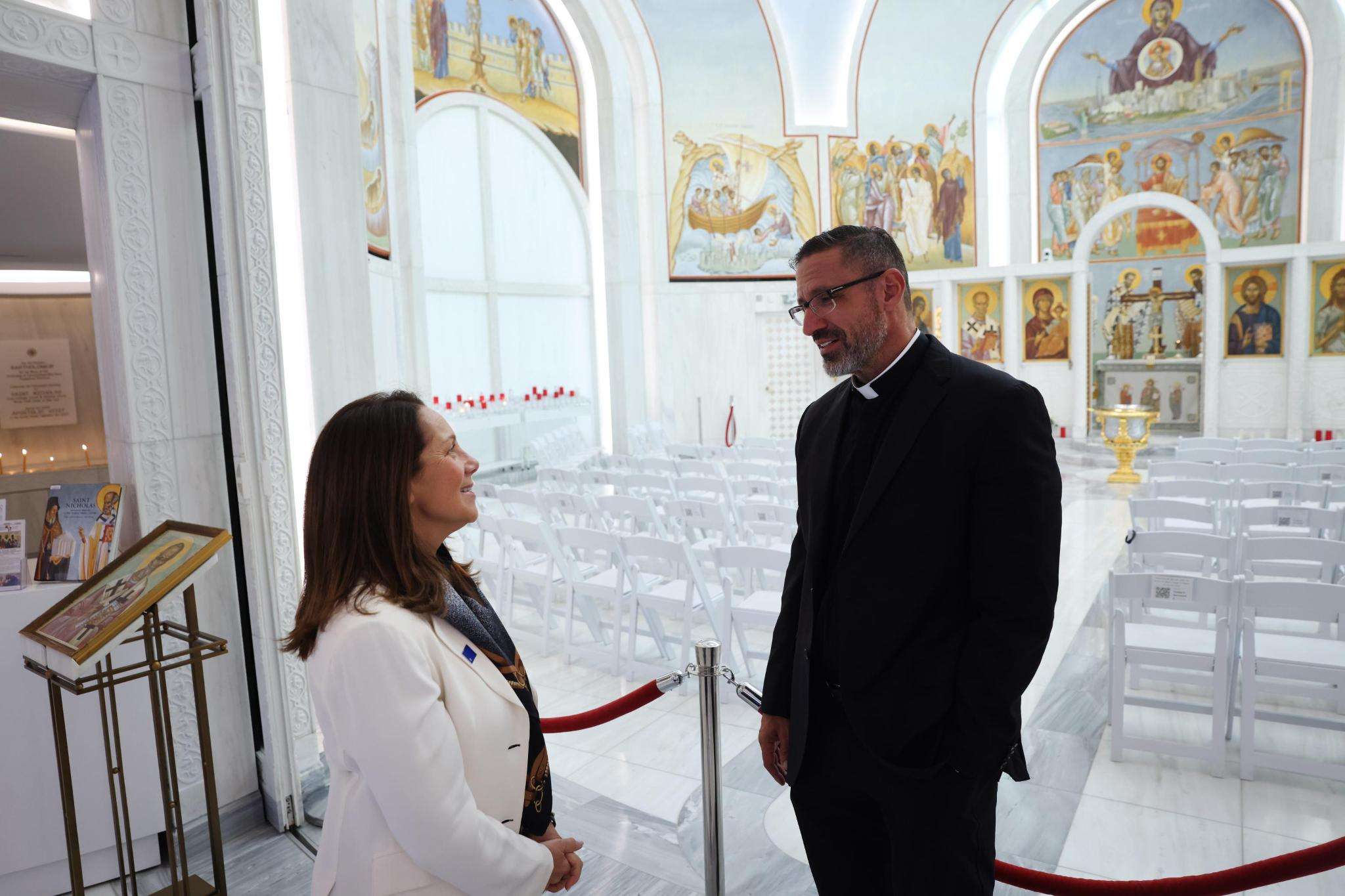
St. Nicholas Greek Orthodox Church and National Shrine joined houses of worship across the country on Sunday, Oct. 18, to speak out against antisemitism and all forms of faith-based hate.
The shrine, the only house of worship destroyed in the 9/11 terrorist attacks, was one of several prominent sites in “Stand Up Sunday,” a national day of action organized by the Blue Square Alliance Against Hate and the Appeal of Conscience Foundation. Organizers said this year’s observance, themed “United in Faith, United Against Hate,” reached more than two million Americans, up from 1.5 million congregants in more than 30 states last year.
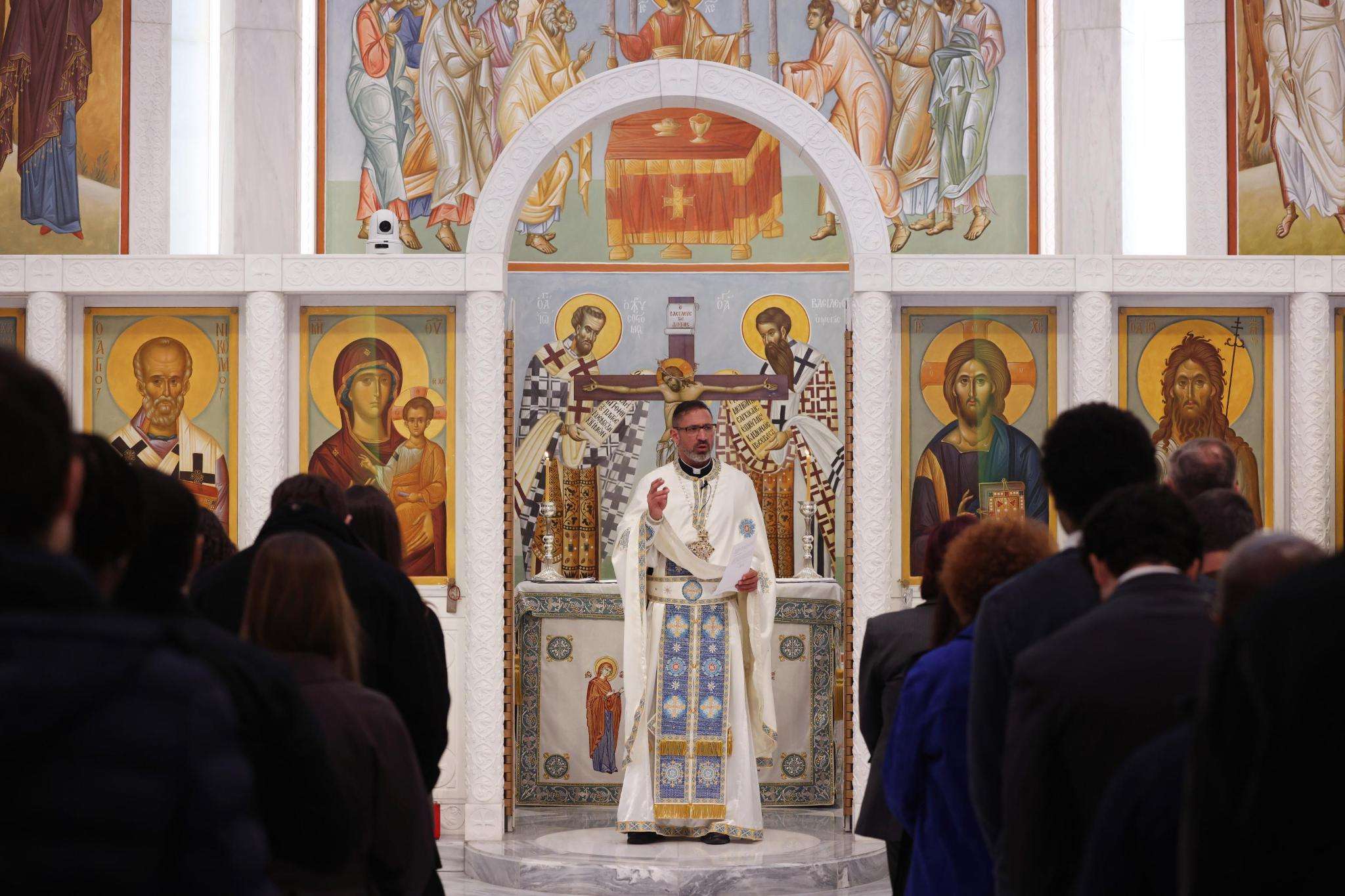
On the same day, separate Stand Up Sunday services were held at other prominent houses of worship, including St. Patrick’s Cathedral in Manhattan, BAPS Swaminarayan Akshardham in Robbinsville, N.J., and St. Luke’s Methodist Church in Oklahoma City, where the initiative began in 2024.
In an encyclical read on Oct. 18 in participating Greek Orthodox parishes, His Eminence Archbishop Elpidophoros noted that it was the Archdiocese’s second consecutive year in the observance and called antisemitism “one of the world’s gravest examples of how human dignity can be clouded by hatred and suspicion.”
“Any form of discrimination and hatred against any community, no matter their background, race, or creed, is a direct affront to all people, our shared dignity, and the image of God that we all bear,” Archbishop Elpidophoros wrote.
He cited Ecumenical Patriarch Bartholomew, who has urged the faithful to “look beyond the color of their skin, the creed or faith they adhere to” and to transform such crises into “an opportunity for building bridges, for practicing solidarity, for changing hearts.”
“Stand Up Sunday reminds us that love, not hatred, is our identity and our mission,” Archbishop Elpidophoros wrote, closing with a prayer that the faithful “work together as peacemakers and architects of a world free of hate.”
> Read the full encyclical from His Eminence Archbishop Elpidophoros of America
“At Saint Nicholas, we know the pain that hatred can leave behind,” said Fr. Andreas Vithoulkas, the shrine’s proistamenos. “Our responsibility is to bear witness to what love can rebuild.”
Fr. Andreas said the Orthodox belief that every person bears the image of God compels Orthodox Christians to come to the defense of people regardless of religion. “That dignity does not depend on whether someone shares our faith,” Fr. Andreas said. “When our Jewish, Muslim, or other neighbors are threatened because of their beliefs, our Orthodox faith calls us to stand beside them.”
“Here at Ground Zero, remembrance must move us to action,” Fr. Andreas said. “Honoring those we lost means choosing, every day, to become people who bring peace.”
The observance comes amid rising instances of religious hate crimes. Citing federal data, organizers said religious-based hate crimes in the United States increased 136 percent between 2015 and 2024, while antisemitic incidents rose nearly 900 percent over the same period. The FBI’s 2025 statistics recorded a record number of hate crimes against Jewish people, accounting for 63 percent of all religious-based hate crimes.
The participating houses of worship joined the national, interreligious stand against that rise. Attendees received the Blue Square, the alliance’s symbol of solidarity against antisemitism and hatred of all kinds.
Voices From Across Faiths
“Amid rising hate and division, Stand Up Sunday serves as a critical reminder: we are strongest when we stand united,” said Adam Katz, president of the Blue Square Alliance Against Hate.
Karen Dresbach, executive vice president of the Appeal of Conscience Foundation, said, “We are all God’s children, together we can silence the voices of hate and the perpetrators of violence.”
The coalition also included parishes from the Catholic Archdioceses of New York, Newark, Washington and Boston and the Diocese of Brooklyn, as well as the Armenian Diocese of America, BAPS Swaminarayan Sanstha, and African Methodist Episcopal, Presbyterian, evangelical and nondenominational congregations.
“In a recent meeting with interreligious leaders, Pope Leo XIV reminded us, ‘To invoke God’s name in order to justify violence or oppression is to profane that name,'” said Bishop Edmund Whalen, vicar general of the Archdiocese of New York.
Stand Up Sunday is connected to the Appeal of Conscience Foundation’s “Respect the Other” campaign. The foundation was established in 1965 by Rabbi Arthur Schneier to promote religious freedom and protect houses of worship.
The post Greek Orthodox faithful repudiate religious hate at St. Nicholas Shrine appeared first on Orthodox Observer.
https://orthodoxobserver.org/greek-orthodox-faithful-repudiate-religious-hate-at-st-nicholas-shrine/
St. Nicholas Greek Orthodox Church and National Shrine joined houses of worship across the country on Sunday, Oct. 18, to speak out against antisemitism and all forms of faith-based hate. The shrine, the only house […]
The post Greek Orthodox faithful repudiate religious hate at St. Nicholas Shrine appeared first on Orthodox Observer.
Join Loukoumi for Make a Difference Day
10/22/2026
On Saturday, October 24, 2026, children and young adults around the world will come together for Loukoumi’s Make a Difference Day, a global initiative that empowers children and young adults to make a positive impact through acts of kindness and service. Over the years, the annual initiative has engaged more than 150,000 children and young adults across 35 countries, inspiring them to give back to their communities and support causes about which they are passionate. Through service projects and community outreach, participants will demonstrate how even small acts of kindness can make a lasting difference in the lives of others.
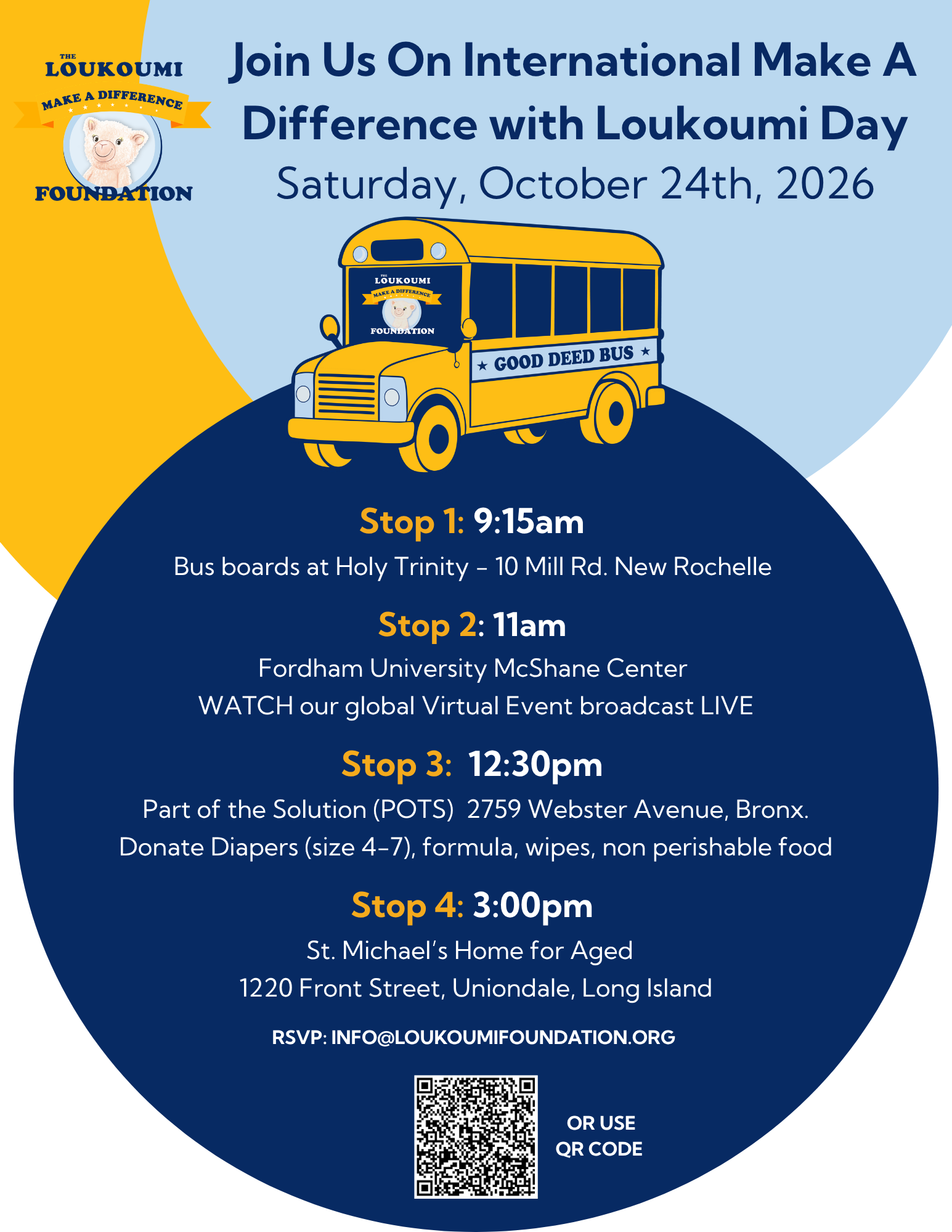
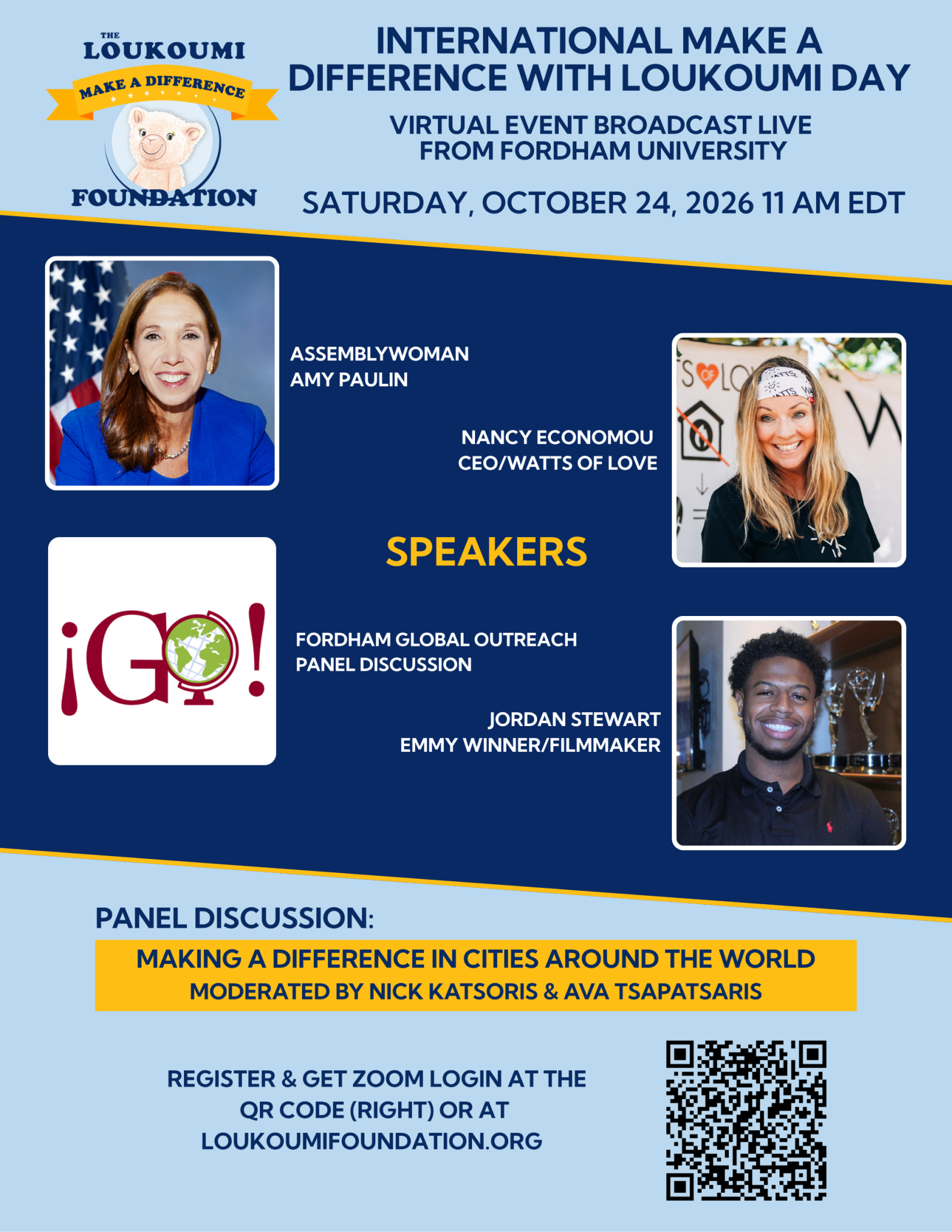
In New York, the “Loukoumi Good Deeds Bus” will depart from Holy Trinity Greek Orthodox Church at 9:15 a.m. and travel to Fordham University’s Rose Hill campus in the Bronx. The day’s activities will include a panel discussion titled “Making a Difference in Cities Around the World,” moderated by Nick Katsoris, president, founder and executive director of the Loukoumi Foundation, and Ave Tsapatsares.
Scheduled panelists include New York State Assemblywoman Amy Paulin; Nancy Economou, CEO of WATTS OF LOVE; and Jordan Stewart, an Emmy Award-winning filmmaker. Participants may attend the discussion in person at Fordham’s McShane Center or watch virtually beginning at 11 a.m. by registering at https://twstgroup.zoom.us/webinar/register/WN_RNr7nURlQoyaHeDv7–Jhg.
Following the panel discussion, children and other participants will board the bus and visit POTS (Part of the Solution), a Bronx-based organization serving individuals and families in need. There, they will donate essential supplies, including diapers, infant formula, wipes and nonperishable food, helping support the organization’s work in the community.
The group will then travel to St. Michael’s Home for the Aged in Uniondale, Long Island, where participants will pledge to raise $50,000 to sponsor a “Loukoumi” lounge. The planned space will provide residents and their families with a welcoming place to spend time together for years to come. More information about the initiative is available at https://www.loukoumifoundation.org/st-michaels.
In addition to the New York initiative, four other “Loukoumi Good Deeds Buses” will depart from Athens, Greece; Cologne, Germany; Deerfield, Illinois; and Gander, Newfoundland, Canada. Each bus will visit designated locations to carry out service projects and provide assistance to individuals and communities in need, extending Make a Difference Day across international borders.
The Loukoumi Foundation has become recognized internationally for its work in encouraging children and young adults to make a difference in the world around them. Through its programs, participants not only learn the importance of helping others but also discover the personal fulfillment that comes from serving their communities.
According to Nick Katsoris, research conducted by the Loukoumi Foundation that was published by Fordham University, found that among more than 1,000 children and young adults across 20 countries, more than 90 % reported feeling happier when doing good.
“Our findings reveal that children are eager to make a difference,” Katsoris said. “These results stand as a hopeful reminder that children want to do good, and when channeling their kindness into causes that resonate with them, the impact is life-changing. I invite you all to join us.”
Through Make a Difference Day, the foundation continues to encourage young people to turn compassion into action, demonstrating that service and generosity can transcend geographic and cultural boundaries.
For more information or to participate in Loukoumi’s Make a Difference Day, visit www.loukoumifoundation.org or email [email protected].
The post Join Loukoumi for Make a Difference Day appeared first on Orthodox Observer.
On Saturday, October 24, 2026, children and young adults around the world will come together for Loukoumi’s Make a Difference Day, a global initiative that empowers children and young adults to make a positive impact […]
The post Join Loukoumi for Make a Difference Day appeared first on Orthodox Observer.
Ecumenical Patriarch: Each of us is a drop, the Patriarchate the ocean
10/21/2026
ECUMENICAL PATRIARCHATE OF CONSTANTINOPLE—Near the close of his remarks at the Phanar, His All-Holiness Ecumenical Patriarch Bartholomew offered his guests an image whose plainness was the point. “Each one of us is a drop,” he said. “The ocean is the Ecumenical Patriarchate.” Spoken by the leader of the Church who has now completed thirty-five years on the Ecumenical Throne, it was self-effacement of a deliberate kind.
The anniversary of his election and enthronement brought His Eminence Archbishop Elpidophoros of America and the Archons of the Ecumenical Patriarchate of Constantinople, to Istanbul. They came on a pilgrimage organized jointly by the Greek Orthodox Archdiocese of America and the Order of Saint Andrew the Apostle, which runs from October 20 to 25, 2026.
His Eminence spoke first. Surveying three and a half decades of patriarchal ministry, he singled out the Ecumenical Patriarch’s initiatives for the unity of Orthodoxy, his dialogue with the wider Christian world, and his long work for the protection of the environment. A ministry like this one, the Archbishop said, should be measured by its quality and its reach as much as by its length, and he admitted that its accomplishments were difficult even to list.
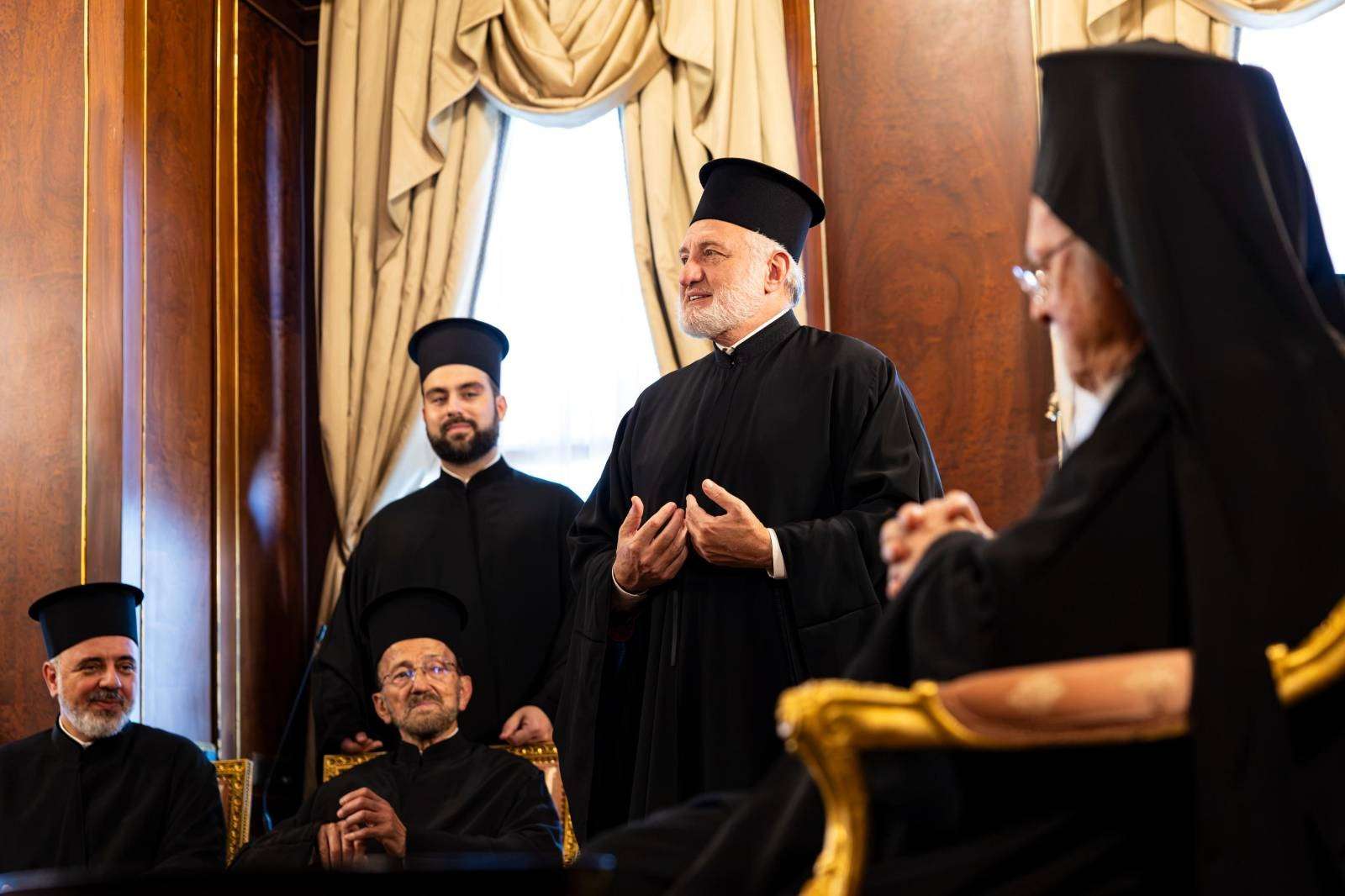
He then conveyed the love and support of the Greek American faithful. “Your All Holiness, in America you have wonderful people, all of them faithful to you,” he said. “They admire you, they love you, they respect you, they pray for your long life and your health, and they always want to be at your side.” He added: “Whatever work you have in mind, we are here to support you, Your All Holiness.”
On the bond between the Archdiocese and the Ecumenical Patriarchate, His Eminence was explicit. “We are grateful to the Mother Church,” he said. “We know that everything we have, everything we enjoy in the United States — the respect, the standing that the Greek Orthodox Archdiocese has in the United States — is a light that comes from you. We simply reflect the light from the Phanar.”
He went further, tying the Archdiocese’s place in American life to its canonical home. “If we were not under the jurisdiction of the Ecumenical Patriarchate, I do not believe that the Greek Orthodox Archdiocese or the Greek Orthodox community in the United States would enjoy the degree of respect and attention that we have, not only from the political authorities, but also from all the other Christian authorities and Churches.”
His All Holiness answered the image of reflected light with a story. He recalled a visit to the United States by Metropolitan Meliton of Chalcedon, of blessed memory, who had been his spiritual father. Metropolitan Meliton had come at the invitation of Archbishop Iakovos, so that the two hierarchs could celebrate Holy Week and Pascha together. Addressing a gathering of the Greek American community, he thanked his hosts for their warm hospitality and admired what they had accomplished, the great institutions above all, while insisting that the source of it all was the Mother Church.
The Patriarch then recounted what his spiritual father had gone on to say. “Metropolitan Meliton of Chalcedon also said something else, and I do not know whether Archbishop Iakovos liked it at the time: that if Archbishop Iakovos has this glory and these honors, and comes and goes at the White House, it is because he is a hierarch of the Ecumenical Throne.”
Then, he went on: “For Archbishop Iakovos, and Archbishop Elpidophoros, and Patriarch Bartholomew, and all of us, as individual persons, may have virtues, abilities, responsibilities, but whatever we enjoy, in the final analysis, we owe to this institution of seventeen hundred years,” he said. “As persons, we are nothing before this institution, which has endured so many centuries.” It was then that he arrived at the drop and the ocean.
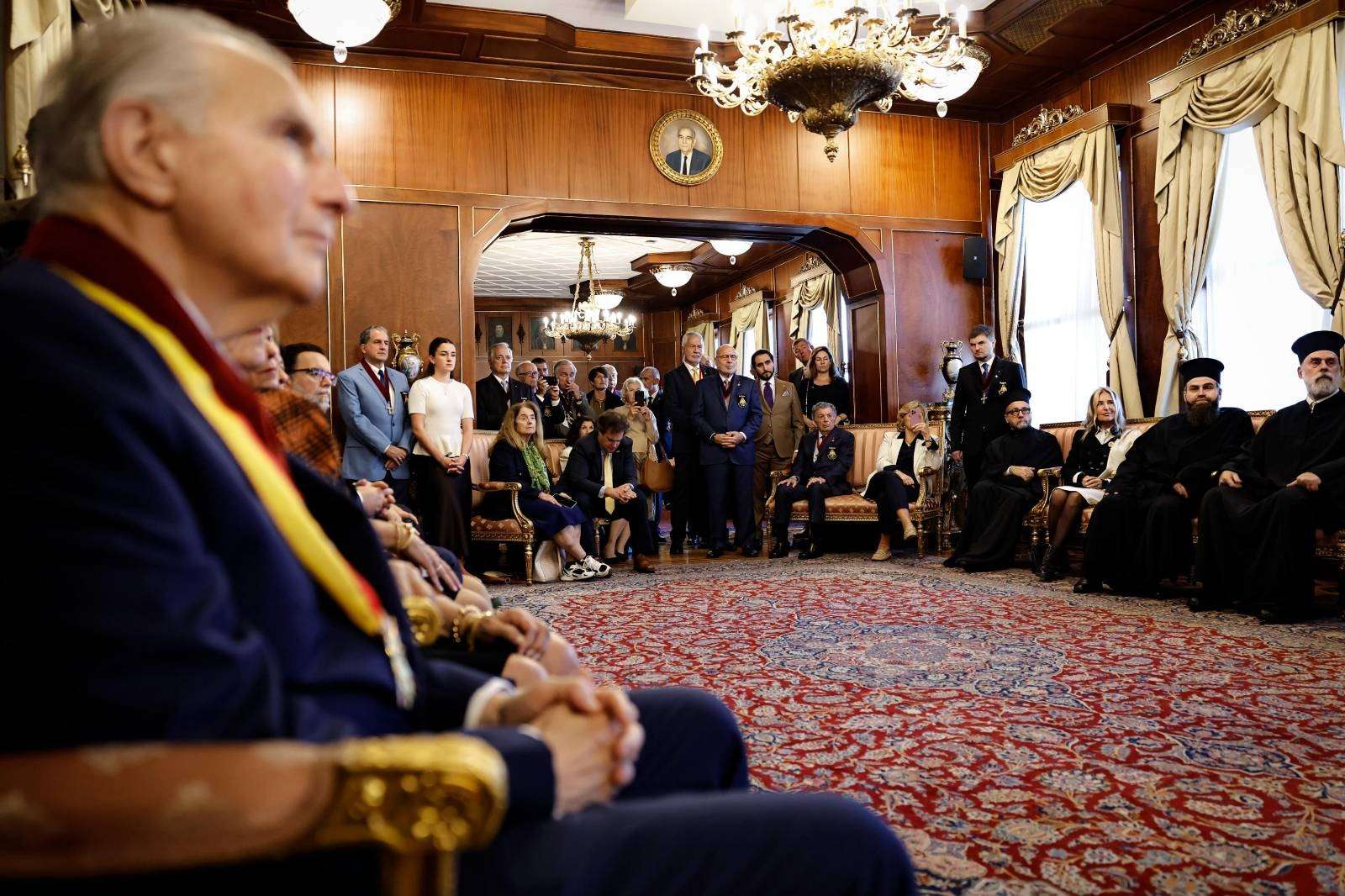
When he had finished, the Ecumenical Patriarch exchanged gifts with Archbishop Elpidophoros and the other hierarchs present. Before the delegation left the Patriarchate, he invited His Eminence into his office and gave him two books: a collection of his selected articles, and the volume Thirty Years of Patriarchate: The Human Face of an Ancient Institution, edited by Archdeacon John Chryssavgis.
The anniversary volume Thirty-Five Years of Patriarchate includes a personal testimony by Archbishop Elpidophoros, who looks back on how he came to know His All Holiness and sets down his own memories of thirty-five years of patriarchal ministry.
The pilgrimage had opened with a dinner on its first evening, at which Archbishop Elpidophoros paid special tribute to His Eminence Metropolitan Gerasimos of San Francisco. The Metropolitan had made the journey from his Metropolis to celebrate his name day in Constantinople, close to the Ecumenical Patriarchate.
The next day, the Archons set out for three places that hold the memory of the City’s Greek Orthodox: Panagia Baloukliotissa, the shrine of the Life-Giving Spring at Baloukli; the Chora Monastery; and the Church of the Theotokos at Blachernae. It was a walk through the faith and the long history of the Greeks of the City, whose memory there remains a living one.
That evening, the anniversary celebrations continued at the Hilton Istanbul Bosphorus, where His All Holiness addressed the guests. They watched excerpts from a documentary on his patriarchal journey made by ERT, the Greek public broadcaster, along with a video produced by the Greek Orthodox Archdiocese of America. The music was by Evanthia Reboutsika, who also composed the score for the ERT film.
The post Ecumenical Patriarch: Each of us is a drop, the Patriarchate the ocean appeared first on Orthodox Observer.
ECUMENICAL PATRIARCHATE OF CONSTANTINOPLE—Near the close of his remarks at the Phanar, His All-Holiness Ecumenical Patriarch Bartholomew offered his guests an image whose plainness was the point. “Each one of us is a drop,” he […]
The post Ecumenical Patriarch: Each of us is a drop, the Patriarchate the ocean appeared first on Orthodox Observer.
Ecumenical Patriarch welcomes viewers into his Imbros home
10/21/2026
An ERT documentary traces the life and ministry of His All-Holiness Ecumenical Patriarch Bartholomew, marking 35 years since his election. The film will air Thursday, Oct. 22, 2026, at 10 p.m. Greece time on ERT3, ERT Cosmos and ERTFLIX. ERT Cosmos will rebroadcast it Oct. 23 at 2 p.m. Greece time.
In conversation with journalist Pierros Tzanetakos, His All-Holiness reflects on his journey from Imbros to the Phanar. In his home village of Agioi Theodoroi, he welcomes viewers into his house and visits his father’s café and the cemetery where his parents are buried. He recalls his childhood, his earliest experiences of the Church and his love of learning, along with his spiritual father’s counsel: “Walk with your eyes fixed only on Jesus.”
The film explores his efforts to revive the island’s Greek community after the persecutions of 1964, focusing on reopened Greek schools and the young people he sees as the hope for Hellenism’s future.
At the Phanar, he discusses Church unity, dialogue among Christians, interfaith understanding and environmental protection, recalling meetings with popes and world leaders. He also addresses divisions within Orthodoxy, reaffirming the Ecumenical Patriarchate’s enduring primacy and its role in coordinating the Churches’ common work. He emphasizes synodality, with particular reference to the Holy and Great Council held in Crete in 2016.
He also describes the ties linking Constantinople’s Greek Orthodox community to the Patriarchate. At Halki, where he studied, he expresses hope that the Theological School will reopen soon.
Filmed in Imbros, Constantinople and Halki, the documentary is directed by Manolis Papanikitas and features an original score by Evanthia Reboutsika, performed by ERT’s Contemporary Music Orchestra.
The post Ecumenical Patriarch welcomes viewers into his Imbros home appeared first on Orthodox Observer.
An ERT documentary traces the life and ministry of His All-Holiness Ecumenical Patriarch Bartholomew, marking 35 years since his election. The film will air Thursday, Oct. 22, 2026, at 10 p.m. Greece time on ERT3, […]
The post Ecumenical Patriarch welcomes viewers into his Imbros home appeared first on Orthodox Observer.
Leadership 100’s contribution to the American experiment
10/21/2026
As the United States marks 250 years since the Declaration of Independence, we at Leadership 100, advancing Orthodoxy and Hellenism in America, pay proper tribute and express profound gratitude for this historic and successful experiment of a democratic constitutional republic, founded in individual liberty, economic opportunity, religious freedom, and equal justice under the law unlike any other nation that has ever existed.
Our American founding fathers reached for Greek words before they ever met a Greek Orthodox parish: politics, democracy, aristocracy, tyranny: the lexicon of self-government was borrowed from Athens centuries before Ellis Island ever opened its gates. Classical Greece eventually gave way to immigrant Greeks, beginning in the mid-1700s and growing rapidly in numbers in the 1800s and early 1900s, steeped in faith, family, education, and hard work as the pathway to a new and better life than the impoverishment of their homeland in those challenging times.

The first Greek Orthodox Church in the United States was established in New Orleans in 1864. Since then, Greek Orthodox immigrants have built parishes across the country. Beyond serving for the liturgical worship of the Divine Liturgy, these parishes provided Greek-language schools, community associations, and cultural connections to life and family back in distant Greece, more than 5,000 miles away.
Religious liberty in America provided the foundation for these early Greek Orthodox communities to thrive. Orthodoxy’s sacramental theology, liturgical traditions, and vast calendar of fasts and feasts found fertile soil in community after community, and in state after state. The durable bonds of faith and family, coupled with the educational and economic opportunities abounding in America, provided the platform for extraordinary professional success in the private sector, the arts, and in government for generation after generation of Greek Americans.
By 1922, the establishment of the Greek Orthodox Archdiocese of America provided institutional strength and a structural ballast to what had earlier been a loose network of Greek Orthodox parishes. Our church prospered in those early decades of the 20th century, helping the immigrants who had been arriving for decades more confidently assimilate into American society dominated by mainline Protestantism and an emerging Roman Catholic church.
Official government acknowledgement of the growing importance of Greek Orthodox communities nationwide was manifested in 1949, when President Harry S. Truman had the newly-elected Ecumenical Patriarch Athenagoras, for eighteen years the Greek Orthodox Archbishop of North and South America, flown from Washington to Istanbul on the presidential aircraft. The White House was concerned that the Turkish government would not permit Patriarch Athenagoras to enter Turkey to assume his leadership position. By dispatching his presidential aircraft to transport the Patriarch into Turkey, President Truman ensured there would be no obstacles put up by Ankara against a Greek Orthodox churchman shaped by, and openly devoted to, the United States.
In 1965, amid severe civil rights tensions in America, Archbishop Iakovos flew to Selma, Alabama to attend the memorial service of a minister beaten to death for marching with black demonstrators. The Archbishop walked side-by-side with Rev. Dr. Martin Luther King Jr., at that time far more controversial a figure than the lionized leader he is seen as today. Archbishop Iakovos was the only hierarch of his stature from any Christian confession in America willing to make that walk, despite the death threats from strangers and also from fellow Greek Orthodox in the segregated South and beyond. He responded with the reminder that the Greek Orthodox people suffered under centuries of Ottoman oppression and should understand the importance of individual sacrifice and the responsibility of the Orthodox Church founded by Christ to stand for and uphold human dignity.
In 1984, Archbishop Iakovos founded Leadership 100, asking the Greek Orthodox faithful to each commit $100,000 (about $322,000 in 2026 dollars) over the course of ten years to a permanent endowment to support the Church’s national ministries and to advance Orthodoxy and Hellenism in America. That call to transcend the caricature of the Greek Orthodox as merely an ethnic immigrant community was carried forward by Leadership 100 in its close collaboration with Archbishop Spyridon, Archbishop Demetrios, and—since 2019—with His Eminence Archbishop Elpidophoros of America.

At the 2026 White House Greek Independence Day celebration, Archbishop Elpidophoros noted how that historic events of 1821 bind America and Greece in a “strategic alliance beyond friendship and mutual respect,” founded upon individual liberty and equal justice under the law as our God-given and inalienable rights within this experiment in self-governance, from the world’s first democracy in Greece to the world’s greatest democracy here in the United States.
He reminded the audience inside the White House, or watching virtually in Greece and around the world, that the first clause of the Bill of Rights’ First Amendment to the U.S. Constitution—ahead of free speech, a free press, the right to peaceably assemble or to petition the government—is the right to freely exercise one’s religion. Furthermore, he emphasized that in the Divine Liturgy of the Orthodox Church, we pray in every parish, during every service, “for our Country, the President (regardless of party), all those in public service, and our armed forces everywhere.”
These are the Orthodox bonds that continue to connect our Greek American community from within, and also to our national celebration this 250th anniversary year of the Declaration of Independence. Leadership 100 is proud to stand tall as a uniquely American endowment, advancing the Gospel of Jesus Christ while incorporated in New York State as a 501(c)(3) federal tax-exempt organization. This has provided the sure, steady, and always transparent foundation to Leadership 100 to welcome more than 1,400 members today, building an endowment exceeding $100 million, the largest in the Greek American community, and distributing nearly $90 million in grants sustaining Orthodox education, clergy formation, and Hellenic heritage programs nationwide.
A cornerstone of this investment is Leadership 100’s long-standing support of Hellenic College Holy Cross (HCHC), the only Greek Orthodox theological school in the United States. Through its Seminarian Scholarship Program, Leadership 100 continues to alleviate the financial burden of theological education, enabling students to fully dedicate themselves to academic and spiritual formation. In the fall 2025 semester, more than 50 seminarians received funding to cover a substantial portion of tuition and fees.
To date, Leadership 100 has provided $29 million in scholarships for seminarians within total grants of $32 million to Holy Cross. The long-term impact is profound: a majority of Leadership 100 scholarship recipients go on to serve the Greek Orthodox Church, with many becoming ordained clergy or actively engaged in parish life and ministry. We have substantially supported the national ministries of the Archdiocese, every Metropolis, and the many pan-Orthodox organizations and humanitarian initiatives that have requested our financial support.
Leadership 100 exemplifies Greek Orthodox lay leadership in America. We are the sons and daughters descended of families who built their first Greek Orthodox parish halls amid the hope of fresh roots and a new life in this great land of religious freedom, individual liberty, economic opportunity, and equal justice under the law.
Today, Leadership 100 stands tall as a powerful, influential, and highly sought-after philanthropic institution, a magnificent testament to the faith, family, education, and hard work values that define the Greek American community and that deeply and firmly embed the national Greek Orthodox presence, inspired by the Gospel of Christ, in every walk of American life, culture, and society forged by the courageous Declaration of Independence 250 years ago.
This article is published as part of the America at 250: Orthodoxy in a New Homeland media initiative co-organized by the Orthodox Observer and the Department of Inter-Orthodox, Ecumenical, and Interfaith Relations of the Greek Orthodox Archdiocese of America to honor the contributions and experience of Orthodox Christianity in America and celebrate 250th anniversary of America’s founding.
The post Leadership 100’s contribution to the American experiment appeared first on Orthodox Observer.
As the United States marks 250 years since the Declaration of Independence, we at Leadership 100, advancing Orthodoxy and Hellenism in America, pay proper tribute and express profound gratitude for this historic and successful experiment […]
The post Leadership 100’s contribution to the American experiment appeared first on Orthodox Observer.
Icon Museum and Study Center marks 20th anniversary with rare loans, scholarly symposium
10/20/2026
The Icon Museum and Study Center marked its 20th anniversary Oct. 15 with the opening of the exhibition Light from the East: Masterpieces from the Ikonen-Museum Recklinghausen and the start of a two-day symposium, Encountering the Sacred Image: Highlights from the Icon Museum and Study Center.
The only specialized museum for icons and Eastern Christian art in the U.S., the Icon Museum and Study Center opened Oct. 15, 2006, then dedicated solely to Russian iconography. In recent years, the museum has begun diversifying its collection to include Greek, Veneto-Cretan, and Ethiopian works as well.

Germany’s Ikonen-Museum Recklinghausen holds the largest and most important collection of Orthodox icons in Western Europe, and Light from the East shows pieces from the Recklinghausen in the U.S. for the first time. According to the museum, it is the first U.S. exhibition devoted to the post-Byzantine legacies of both Slavic and Greek traditions.
A tour of the exhibition
The day began with a tour led by Elliot Mackin, Associate Curator and Study Center Manager. Mackin told attendees they were the first members of the public to see the exhibition.
“What [the exhibition] became was a story of Orthodox iconography from the fall of Constantinople in 1453 through the Bolshevik Revolution in 1917,” Mackin said, sharing the exhibition tells its story in reverse. As visitors enter the space, they first encounter an early 20th-century Old Believer icon painted just before the Russian Revolution before moving back in time. One half of the gallery follows Moscow and the rise of Imperial Russia back to medieval Novgorod; the opposite wall presents icons from the Greek-speaking world, generally from Crete.
A film premiere
Attendees also saw the U.S. premiere of the documentary Living Prayer in Christianity, directed by the late Jean-Claude Lubtchansky. The film explores Orthodox contemplative practice, focusing on St. Catherine’s Monastery at Mount Sinai, Mount Athos, and various sites in Russia. Introducing the film, Richard Temple of London’s Temple Gallery described it as both a documentary and “a work of art” that needs little introduction.
Symposium presentations
Each speaker on the first day focused on an icon in the museum’s collection.

Eva Haustein-Bartsch of the Ikonen-Museum Recklinghausen presented a 16th-century icon the museum acquired at an Italian auction in 2023. The small panel pairs the Mother of God Tenderness with Christ, Man of Sorrows. Haustein-Bartsch said the pointed top of the panel is highly unusual for an icon in the Cretan style, and is more typical of 13th- and 14th-century Italian painting. She traced comparable Byzantine and post-Byzantine works and concluded that a Western patron likely requested the format. Traces of mountings on both sides indicate the panel was the center of a private devotional diptych. Its side panels have not been found, but, Haustein-Bartsch said, “it’s not out of the question that they may show up one day.”
Irina Shalina, head researcher at the State Russian Museum in St. Petersburg, discussed the museum’s icon for the month of February, one of 12 icons that made up a calendar of saints and feasts. The set was installed in 1569 in the Dormition Cathedral of the Monastery of St. Joseph of Volokolamsk near Moscow. Inscriptions on the backs of two panels name Archbishop Lavrentiy of Kazan, a former abbot of the monastery, as donor. Shalina said an epidemic that killed dozens of the monastery’s monks around that time may also have inspired the commission.
Justin Willson, Assistant Professor at Yale University and the museum’s former curator, presented the Mother of God, the Life-Giving Spring, donated to the museum in 2022. Removing a layer of varnish revealed the signature of Frangias Kavertzas, a Cretan painter active in Heraklion between 1615 and 1647, whose life Willson reconstructed from Venetian notarial records. Willson dated the piece to the late 1630s and said it shows the painter moving toward the experiments of the late 16th century while remaining rooted in earlier models. Kavertzas, he said, was “stable but not really rigid.”
Second day and looking ahead
The symposium continued Oct. 16 with presentations by Maria Vassilaki of the University of Thessaly, Wendy Salmond of Chapman University, Athanasios Semoglou of the University of Thessaloniki, independent scholar Natalia Komashko, Evan Freeman of Simon Fraser University, and Mackin. Attendees were also invited to explore the museum’s galleries and collections storage.
The Icon Museum’s Executive Director Simon Morsink also announced the museum will present an exhibition of post-Byzantine icons in America, opening in October 2028. The show will follow Byzantium After Byzantium at the Metropolitan Museum of Art, which closes in September 2028.
“We’ll keep the fire burning,” Morsink said.
The post Icon Museum and Study Center marks 20th anniversary with rare loans, scholarly symposium appeared first on Orthodox Observer.
The Icon Museum and Study Center marked its 20th anniversary Oct. 15 with the opening of the exhibition Light from the East: Masterpieces from the Ikonen-Museum Recklinghausen and the start of a two-day symposium, Encountering […]
The post Icon Museum and Study Center marks 20th anniversary with rare loans, scholarly symposium appeared first on Orthodox Observer.