


September 13







Astoria Agiasmos offers spiritual inauguration for the academic year
09/10/2026
On the morning of September 10, 2026, His Eminence Archbishop Elpidophoros of America was greeted by students outside of the St. Demetrios and Greek American School of Astoria. Within the historic St. Demetrios Cathedral, as well as at Saints Catherine and George Greek Orthodox Church, His Eminence gave the Agiasmos for the new school year, blessing the community’s students and families, alongside school faculty and staff.

His Eminence offered the blessing as St. Demetrios School opens its doors to hundreds of students this year, with the mission of preserving the Greek language and Hellenic identity. The St. Demetrios School is the only institution in the United States offering a Greek Orthodox K–12 education, inspiring the next generation of Greek American families to live as faithful Orthodox Christians.
Parents and community members filled in the standing room of St. Demetrios Cathedral to witness the blessing, many of whom are themselves alumni of the school which is so central to the Astoria Greek American community. The event served as the spiritual inauguration to the start of the academic year.
Also present for the blessing were prominent school leaders, as well as the Consul General of Greece in New York, Iphigenia Kanara, and Consul General of Cyprus in New York, Kyriakos Pogiatzis.
The post Astoria Agiasmos offers spiritual inauguration for the academic year appeared first on Orthodox Observer.
On the morning of September 10, 2026, His Eminence Archbishop Elpidophoros of America was greeted by students outside of the St. Demetrios and Greek American School of Astoria. Within the historic St. Demetrios Cathedral, as […]
The post Astoria Agiasmos offers spiritual inauguration for the academic year appeared first on Orthodox Observer.
Op-Ed | St. Nicholas Church and National Shrine is a bridge from tragedy to hope
09/10/2026
“Agape mou” … my love.
Those are the words my brother John would whisper whenever he hugged me. It has been more than two decades since I last heard them.
John was killed on September 11, 2001, while working on the 104th floor of the World Trade Center. Like so many families, ours was forever changed. I miss him every day.
But through that loss, I have also found comfort, faith, and hope at St. Nicholas Greek Orthodox Church and National Shrine. The rebuilding of St. Nicholas has been, for me, a bridge from tragedy to hope. This ground is sacred. It is where my brother and thousands of other innocent souls were lost, including the site of the original St. Nicholas Church, where John would often stop before or after work to light a candle, say a prayer, attend a service—or perhaps meet a pretty girl.
John was known as “Johnny Bodacious”—adventurous, funny, fearless, and always the life of the party. He loved to dance, and he had a larger-than-life personality. But beneath that joyful spirit was a deep faith and an extraordinary light that I was blessed to experience for 31 years.
Although I can no longer hug my brother, I still feel his presence at St. Nicholas—in the prayers offered each day, in the candles that are lit, and in the people who enter carrying burdens and leave with renewed hope.

What was destroyed was resurrected. What represented grief became a source of healing. And St. Nicholas has become part of some of my happiest memories. In 2023, I had my wedding service there. In the very place that once represented unimaginable loss, God blessed me with new life, new joy, and a new beginning.
That is the power of St. Nicholas. It is a Greek Orthodox church, but it is also a National Shrine open to everyone—people of every faith, people of no faith, those carrying grief, those seeking peace, and anyone looking for a place to pray, reflect, heal, or simply breathe. As our nation commemorates the 25th anniversary of September 11th, St. Nicholas carries an especially powerful message. It reminds us that even after our darkest days, we can rise with faith, courage, and hope. Faith can overcome fear. Light can overcome darkness. Love can overcome hate. Every day, people from across our nation and around the world walk through the doors of St. Nicholas and discover that sense of peace and hope. Since opening in December 2022, over 650,000 visitors have had that experience, made possible because of faithful supporters who believe in its mission. That is why I am asking you to become a National Supporter of St. Nicholas. Your generosity will help preserve a spiritual home for worshippers, a place of remembrance for families like mine, and mission driven ministries for the community at large.
Become a National Supporter of St. Nicholas today with your $100 gift. Please click here for more information. Let’s keep the light of St. Nicholas shining brightly in memory of loved ones, for the future of our nation, and the world.


The post Op-Ed | St. Nicholas Church and National Shrine is a bridge from tragedy to hope appeared first on Orthodox Observer.
“Agape mou” … my love. Those are the words my brother John would whisper whenever he hugged me. It has been more than two decades since I last heard them. John was killed on September […]
The post Op-Ed | St. Nicholas Church and National Shrine is a bridge from tragedy to hope appeared first on Orthodox Observer.
Metropolis of New Jersey holds clergy meeting in Wilmington, Delaware
09/10/2026
More than fifty clergy of the Metropolis of New Jersey gathered at Holy Trinity Cathedral in Wilmington, Delaware, on Wednesday, September 9, 2026, to welcome His Eminence Archbishop Elpidophoros of America for a luncheon and clergy meeting.
The Archbishop was greeted by the Acting Chancellor of the Metropolis of New Jersey, Protopresbyter of the Ecumenical Throne Fr. Elias Villis, Cathedral Dean Very Rev. Fr. Christoforos Oikonomidis, and clergy from throughout the Metropolis. The gathering began with a prayer service inside the cathedral, where the clergy assembled beneath the church’s beautifully adorned iconography for a blessing.

Following the service, Holy Trinity Cathedral hosted a luncheon that provided an opportunity for fellowship and discussion among the clergy. In his Archpastoral Exhortation, Archbishop Elpidophoros reflected on the recent departure of former Metropolitan Apostolos of New Jersey, who was elected Archbishop of Canada, and addressed the current period of transition within the Metropolis. He also prayed for Fr. Andrew Eugenis, Fr. John Manuel and Presbytera Flora Chioros who fell asleep in the Lord over the summer.
Acknowledging the important role of parish clergy during such moments, the Archbishop emphasized that the faithful look to their priests for guidance and stability. “They look to you in every parish to be the example of stability and continuity,” he said, assuring the clergy that the Metropolis would continue to move forward “with confidence in the efficient and effective operation of the Metropolis.”
The Archbishop also encouraged the clergy to remain steadfast in their ministry while maintaining a strong spiritual foundation. Urging them to “carry on with the work of the Church on every level,” he reminded them not to lose sight of their own spiritual growth amid the demands of parish life and administration.
“We can become caught up in the details of parish and general administration so much that we forget time for prayer, for meditation, and for the reading of Sacred Scripture, the Church Fathers, and the Lives of the Saints,” Archbishop Elpidophoros said. “We must nourish our own souls so that we may nourish others.”
Also addressing the gathering, Fr. Christoforos welcomed the visiting clergy and expressed gratitude to Archbishop Elpidophoros and Fr. Villis for their leadership and pastoral care of the Metropolis during this transitional period.
“It is reassuring to know that our Archbishop is close to his clergy and willing to listen to the concerns, challenges, and hopes that we carry in our pastoral ministry,” Fr. Christoforos said.
Additional remarks were offered by Acting Chancellor Fr. Elias Villis, Vice President of the Metropolis Council Fr. John Katsoulis, and President of the Archdiocesan Presbyters Council Fr. Peter Orphanakos. The meeting concluded with a spirit of unity, fraternity, and shared commitment as the clergy continued discussions on the life and ministry of the Church throughout the Metropolis of New Jersey.
The post Metropolis of New Jersey holds clergy meeting in Wilmington, Delaware appeared first on Orthodox Observer.
More than fifty clergy of the Metropolis of New Jersey gathered at Holy Trinity Cathedral in Wilmington, Delaware, on Wednesday, September 9, 2026, to welcome His Eminence Archbishop Elpidophoros of America for a luncheon and […]
The post Metropolis of New Jersey holds clergy meeting in Wilmington, Delaware appeared first on Orthodox Observer.
Archbishop Elpidophoros presides over liturgy at the Cathedral of Saint John the Forerunner in Brooklyn
09/09/2026
On Sunday, His Eminence Archbishop Elpidophoros of America presided over the Divine Liturgy at the Cathedral of Saint John the Forerunner in Brooklyn, New York, commemorating the 70th birthday of Rev. Protopresbyter of the Ecumenical Throne Oleksandr Belya.

Concelebrating with His Eminence were His Grace Bishop Athenagoras of Nazianzus, His Grace Bishop Nektarios of Diokleia, Archimandrite Alexander Belya, Vicar of the Slavic Orthodox Vicariate of America, Bishop-elect of Nicopolis; Protopresbyter Olexander Belya, rector of the cathedral; as well as Protopresbyters Borys Babeshko, Ivan Voloshchuk, Igor Tarasov, Vasyl Deiak, Rostislav Zadorozhnyy, Petr Prakaptsou, Maksim Pliskou; Archimandrite Tikhon Gaifudinov; the guest of the celebration, Father Anatoly; Archdeacon Dionysios Papiris; and Protodeacon Volodymyr Oliynyk.

Following the Divine Liturgy, Archbishop Elpidophoros awarded Fr. Oleksandr the Medal of Saint Paul, the highest honor of the Greek Orthodox Archdiocese of America. The Medal of Saint Paul is awarded to individuals who demonstrate exemplary leadership and dedication at the local parish level or the national stage.
“You see, we are here at the Divine Liturgy, the icon of the Wedding Banquet of the Son of God. We are all invited guests. Unlike the characters in the Parable who did not want to attend, we have made a conscious choice to be present and to participate,” Archbishop Elpidophoros said. “The truth is, we do not understand with complete realization all of our motivations. And there are many! But somehow, our presence within the Church is always enough to commence the spiritual path.”
The post Archbishop Elpidophoros presides over liturgy at the Cathedral of Saint John the Forerunner in Brooklyn appeared first on Orthodox Observer.
On Sunday, His Eminence Archbishop Elpidophoros of America presided over the Divine Liturgy at the Cathedral of Saint John the Forerunner in Brooklyn, New York, commemorating the 70th birthday of Rev. Protopresbyter of the Ecumenical […]
The post Archbishop Elpidophoros presides over liturgy at the Cathedral of Saint John the Forerunner in Brooklyn appeared first on Orthodox Observer.
Archbishop-elect Apostolos of Canada honored at farewell banquet
09/09/2026
Last night, His Eminence Archbishop Elpidophoros of America and the Metropolis of New Jersey hosted a farewell banquet honoring the ministry of His Eminence Apostolos, newly-elected Archbishop of Canada and former Metropolitan of New Jersey.
> Previously: Archbishop Elpidophoros extends congratulations to Archbishop-elect Apostolos of Canada
The event was held at the Venetian in Garfield, New Jersey.
Archbishop-elect Apostolos offered a farewell address, expressing gratitude to God for giving him the strength and energy to serve the Metropolis of New Jersey. He closed his remarks with a message to the faithful:
“I will never forget my ministry in the New Jersey Metropolis,”Archbishop-elect Apostolos said. “You’re amazing people … Don’t lose your faith. Keep your faith strong and your ministry visible to everyone in this beautiful Metropolis. I love you and I pray for you.”
> Read: Communiqué of the Holy Eparchial Synod, 22 July 2026

Archbishop Elpidophoros also offered remarks, thanking Archbishop-elect Apostolos for his service to the Archdiocese of America and wishing him prayers for his ministry in the Archdiocese of Canada.
“We all send with Your Eminence our fervent and heartfelt prayers for your every success–both spiritual and material–in your coming Archpastoral Ministry in Canada,” Archbishop Elpidophoros said. “But in sending with you our prayers and best wishes, we also ask that you not forget us, for your six-year ministry in this Metropolis was fruitful, and the seeds that you planted will continue, by God’s mercy and grace, to grow and to thrive.”
The event featured a special video presentation, and Archbishop Elpidophoros also presented him with gifts of a hierarchical staff and an engolpion.
Additional speakers included the Honorable Iphigenia Kanara, Consul General of Greece in New York; the Honorable Kyriakos Pogiatzis, Consul General of Cyprus in New York; Fr. Peter Delvizis, Representative of the Metropolis Clergy Syndesmos; John Vasilioiu, President of the Federation of Hellenic-American Societies of Philadelphia and the Greater Delaware Valley; Dr. Panos Stavrianidis, President of the Hellenic Federation of New Jersey; Eleni Constantinides, President of the Metropolis of New Jersey Philoptochos; and the Honorable H. James Polos, who served as Master of Ceremonies.
Archbishop-elect Apostolos’s enthronement will take place on Saturday, 19 September 2026, at the Greek Orthodox Cathedral of St. Nicholas in Toronto, Ontario. His Eminence Archbishop Nikitas of Thyateira and Great Britain will preside at the enthronement.
The post Archbishop-elect Apostolos of Canada honored at farewell banquet appeared first on Orthodox Observer.
Last night, His Eminence Archbishop Elpidophoros of America and the Metropolis of New Jersey hosted a farewell banquet honoring the ministry of His Eminence Apostolos, newly-elected Archbishop of Canada and former Metropolitan of New Jersey. […]
The post Archbishop-elect Apostolos of Canada honored at farewell banquet appeared first on Orthodox Observer.
Is ecumenism worthwhile? A seminarian’s reflection on NATI-RETI | Op-Ed
09/09/2026
Many Orthodox Christians are wary of ecumenical spaces. Some believe ecumenism is a great heresy, erroneously equating it with religious syncretism. Still others believe the project is completely pointless. In the early years of the ecumenical movement, many worked in joyful anticipation that, by God’s grace, the numerous fractures and schisms in Christianity might finally be healed. Now, however, the dream of full eucharistic communion between disparate Christian communities seems increasingly unrealizable. The upshot is that many Orthodox Christians struggle to see the value of ecumenism. Many ask, ‘Is ecumenism worthwhile?’
This question was at the forefront of my mind when Fr. Bartholomew Mercado, the chaplain at Hellenic College Holy Cross (HCHC), encouraged me to participate in a new ecumenical initiative. A program co-sponsored by the World Council of Churches, the Canadian Council of Churches, and the National Council of the Churches of Christ in the USA. The initiative I’m referring to is the North American-Turtle Island Regional Ecumenical Theological Institute (or NATI-RETI). The ambitious goal of this program was as follows. From August 3rd–16th, 2026 NATI-RETI would gather together a cohort of emerging theologians from various Christian communities in the United States and Canada. Phase one would take place in Detroit and phase two in Toronto. The participants would live in a tight-knit community for two weeks and undergo an intense, immersive study program focused on the overarching question, ‘Where Now for Visible Justice?’
I elected to attend NATI-RETI because I was intrigued by both the unique format of the program and the timely topics it would address. Importantly, I also hoped I might discover an answer to the vexing question posed above: ‘Is ecumenism worthwhile?’
After spending fourteen days fully immersed in an ecumenical space, rigorously exploring the most pressing social issues of our time, I have arrived at the following conclusion: ecumenism is, indeed, a worthwhile and absolutely vital endeavor. To understand why I think this, allow me to summarize some of my experiences at NATI-RETI.
During the training, we explored six pressing issues facing Christians living in North America: Climate Justice, Secularism and Laicity, Racism and Anti-Racism, Interfaith Dialogue, Solidarity with Indigenous Communities, and Wealth Disparity and Poverty. We explored these topics in a variety of creative ways. Numerous hours were dedicated to reading and discussing scholarly articles and books. Breaking up into smaller study groups, we analysed both Christian and non-Christian responses to these problems. We also attended multiple plenary sessions, led by leading academics.
Additionally, we participated in special exercises and site visits to supplement the academic activities. Notably, we visited the Freedom Dreams EcoVillage in Detroit and discovered how a small group of dedicated volunteers are transforming abandoned lots and piles of rubble into vibrant community gardens. We visited several historically significant destinations associated with the Underground Railroad, such as the Second Baptist Church of Detroit and Sandwich Baptist Church in Windsor and learned about their contribution to abolitionism. We visited the Toronto Bahá’i Center and engaged in complex interfaith dialogue. We walked through a former Mohawk residential school, now turned into a museum, and read first-hand accounts of survivors who had been ripped out of their homes and forced to undergo the most dehumanizing abuses and tortures imaginable.
These experiences helped me to identify four reasons why it’s vital for Orthodox Christians to remain involved in ecumenical work. First, we can learn a lot in ecumenical spaces. I learned how a small group of passionate Christians can slowly resurrect a dying community by teaching its young people carpentry and gardening skills and lovingly using these skills to transform a desolate neighborhood into a beautiful oasis. Imagine if Orthodox parishes invested in their communities in this way? I engaged in an in-depth discussion with members of the Bahá’i community and learned many practical ways we might better foster a sense of belonging in our churches. I learned from the lived experiences and perspectives of Indigenous people who continue to exemplify compassion, hope, and love despite the horrors of colonialism.
Second, we can share our rich theological and spiritual heritage in ecumenical spaces. Despite the rising number of inquirers flocking to our parishes, most people are still unfamiliar with Orthodoxy. At NATI-RETI, I got the chance to discuss the cosmological theology of St. Maximus the Confessor, the ecotheology of His All-Holiness Ecumenical Patriarch Bartholomew, and the inspiring (noncolonial) missionary efforts of St. Herman of Alaska. I was also able to introduce the members of my cohort to our spiritual and liturgical tradition by reading the Trisagian prayers in Greek, and teaching everyone how to sing a Byzantine hymn. Virtually none of my cohort had encountered Orthodoxy before meeting me.
Third, we can model Christian love by participating in ecumenical spaces. In an increasingly polarized world filled with profound injustices, the Church should be at the front lines, teaching society how to show love and respect to those with whom we disagree. Actions, as they say, speak louder than words. We can preach to others, imploring them to be quick to listen and slow to speak. But it’s far more effective to exemplify this behavior. Orthodox Christians can model this by personally connecting with and building genuine friendships with people of different faith backgrounds.
Finally, we can partner with non-Orthodox people to address societal problems. We shall never achieve visible justice without working alongside others. We may not agree with our neighbors on essential matters, such as church polity or biblical interpretation or dogma. But we can still work together to feed and cloth the homeless, to be a voice for the marginalized and persecuted, and to stand up to bigotry and hatred in all its nefarious forms.
NATI-RETI showed me that ecumenism is most certainly worthwhile.
The post Is ecumenism worthwhile? A seminarian’s reflection on NATI-RETI | Op-Ed appeared first on Orthodox Observer.
Many Orthodox Christians are wary of ecumenical spaces. Some believe ecumenism is a great heresy, erroneously equating it with religious syncretism. Still others believe the project is completely pointless. In the early years of the […]
The post Is ecumenism worthwhile? A seminarian’s reflection on NATI-RETI | Op-Ed appeared first on Orthodox Observer.
Moscow Patriarchate incorporates Russian state’s military narrative into religious life
09/09/2026
In a recent article for Carnegie Politika, historian Alexander Zanemonets examines the increasingly close relationship between the Russian Orthodox Church and the Kremlin’s war effort in Ukraine. He argues that the Moscow Patriarchate has progressively incorporated the Russian state’s military and patriotic narrative into its religious life, weakening the distinction between the Church’s spiritual mission and the political objectives of the state.
Zanemonets focuses on the recent uncovering of the relics of St. Dmitry Donskoy, the medieval prince celebrated for his military victories, and the decision to send a fragment of those relics to Russian forces fighting in Ukraine. He sees the episode as part of a broader effort to deploy Orthodox saints, relics, icons, prayers, and clergy in support of the war and to portray Russia’s military campaign as a defense of the homeland.
The article places this practice within a longer Russian tradition of using historical and religious figures as symbols of national struggle. Zanemonets draws parallels with the Soviet promotion of St. Alexander Nevsky during World War II and notes that Dmitry Donskoy himself became associated with wartime patriotism when a Soviet tank column financed by the Moscow Patriarchate was named after him in 1944.
The larger issue, according to Zanemonets, is the diminishing capacity of the Russian Orthodox Church to speak independently of state power. He argues that a Church should be able to remind political authorities of Christian moral principles—including the protection of civilians and prisoners, the rejection of looting and cruelty, and Christ’s call to peacemaking—even during wartime. Instead, he contends, the Moscow Patriarchate has increasingly reinforced the Kremlin’s interpretation of Russia, its history, and the war.
Zanemonets concludes that this convergence carries consequences for the Church itself. If its public message becomes largely indistinguishable from the patriotism and historical narrative promoted by the Russian state, he asks what distinctive spiritual role the Church continues to offer Russian society.
The post Moscow Patriarchate incorporates Russian state’s military narrative into religious life appeared first on Orthodox Observer.
In a recent article for Carnegie Politika, historian Alexander Zanemonets examines the increasingly close relationship between the Russian Orthodox Church and the Kremlin’s war effort in Ukraine. He argues that the Moscow Patriarchate has progressively […]
The post Moscow Patriarchate incorporates Russian state’s military narrative into religious life appeared first on Orthodox Observer.
Opinion | Carrying the Clergy-Laity Congress forward
09/09/2026
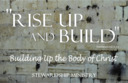
Several months ago, I wrote on this site about the vision for the 2026 Clergy-Laity Congress and our hope that this year’s gathering would be different. Now, having returned from Cleveland earlier this summer, I believe we can say with confidence that something important happened there. More than 2,000 faithful from across the Greek Orthodox Archdiocese of America came together under the theme “Rise & Build,”inspired by Nehemiah’s words. They came together to pray, to learn, to listen, to deliberate, to reconnect with old friends, to make new ones, and, most importantly, to strengthen the Church they love.
The success of this Congress was not simply measured by attendance or by the number of sessions offered. Its success was found in a renewed understanding of what the Clergy-Laity Congress can actually be. Certainly, the Congress has a responsibility to conduct the business of our Archdiocese. Budgets must be reviewed, resolutions must be considered, reports must be presented, and decisions must be made. That administrative responsibility is important and should never be diminished. But the Church is so much more than its business.
The Clergy-Laity Congress should be a gathering of the πλήρωμα τῆς Ἐκκλησίας, the fullness of the Church.

That means creating a place where the clergy and laity who make up our parishes can come together not only to govern the national Church, but to learn how to better serve the local Church. It means recognizing that the people sitting in those seats are not simply delegates with votes. They are Sunday School teachers, parish council members, youth workers, musicians, stewardship leaders, educators, parents, young adults, ministry leaders, priests, presvyteres, and volunteers who go home and make the life of our parishes possible.
Cleveland showed us the tremendous potential that exists when we bring those people together.
Oun National Ministries were not simply invited to present their work or display their resources. They were given a central role in educating and equipping the people of our parishes. The Ministry Pavilion brought Archdiocesan departments, institutions, partners, and organizations together with the people they serve. But even more importantly, the Congress offered specialized educational opportunities, including dedicated tracks for Sunday School teachers and church musicians. These were not simply opportunities to hear about what someone else is doing. They were opportunities to learn, to develop skills, to exchange ideas, and to take something practical home.
That is an important distinction.
Our goal should not simply be to tell our parishes what the Archdiocese is doing. Our goal should be to help our parishes do more.
A Sunday School teacher should be able to return home with a new idea that can make a difference in the classroom. A church musician should return with something new to bring to the worshipping life of the community. A youth worker should discover a resource or a relationship that can help engage young people. A parish leader should encounter another parish that has found a solution to a challenge they are facing. A priest should be able to return home renewed by the fellowship and experience of his brother clergy.
When that happens, the Clergy-Laity Congress becomes more than an event. It becomes an investment in every parish represented.
This is what I believe Cleveland demonstrated so clearly: the Congress of the future must be both a place where we strengthen our administrative unity and a place where we strengthen the people who make up our parishes. We need both. We need the serious work of governance, and we need the practical work of ministry. We need to make decisions together, but we also need to learn together. We need to deliberate together, but we also need to grow together.

The new plenary model was part of that same vision. By moving the reports of Archdiocesan departments, ministries, institutions, and organizations into digital formats, we created an opportunity for those ministries to tell their stories more fully, using video and other resources, while allowing the Plenary Session to concentrate on the business that actually required the attention of the Congress. Participants could review reports and presentations before, during, and after the Congress, rather than trying to absorb them in a few minutes from a podium.
The same philosophy guided the new approach to the financial process. Before coming to Cleveland, clergy and lay leaders had opportunities to review financial information through online presentations and participate in question-and-answer sessions. Full financial statements, proposed budgets, and other materials were made available for review. Then, at the Congress, the Finance Committee presented its report and the delegates had the opportunity for discussion and deliberation before voting.
This is what greater transparency should look like. It is not simply about putting documents online. It is about giving people the opportunity to understand, ask questions, participate, and ultimately take responsibility for the decisions of their Church.
The CARA Survey was an important part of this process as well. Thousands of faithful throughout our Archdiocese took the time to tell us what they see, what they need, and what they believe should be our priorities. Those voices helped inform the direction of the proposed national budget. The result is a stronger connection between what our people are telling us in our parishes and the priorities we establish at the national level.
That is conciliar life.
We listen to one another. We learn from one another. We disagree at times, but we remain together. We deliberate. We pray. And then we move forward together.
Not everyone saw what happened in Cleveland that way. In the days surrounding the Congress, some commentary suggested that little of substance took place. It is difficult, however, to understand how one could reach that conclusion without actually being there. The Congress was not simply something to observe from a distance. It was something to experience.
More than 2,000 people traveled to Cleveland. Hundreds of volunteers gave their time. Clergy and lay leaders spent hours in workshops and discussions. Ministries shared their resources. Parish leaders exchanged ideas. Delegates participated in the formal work of the Archdiocese. Priests prayed together. Families gathered. Old friendships were renewed and new relationships were formed.
It is easy to criticize something from the outside. It is much harder to give of your time, to sit in a room with people who may have different opinions, to listen to one another, to find common ground, and to do the sometimes difficult work of building up the Church.
It is easy to throw stones from the outside; it is much more challenging to pick one up and help build. That is what the people who came to Cleveland chose to do.
And perhaps that is the greatest lesson of this year’s Congress. The real measure of its success will not ultimately be found in what happened during those three days in Cleveland. It will be found in what happens afterward.
When a parish council uses something it learned in a workshop, the Congress continues.
When a Sunday School teacher starts teaching from the new curriculum, the Congress continues.
When a youth ministry launches a new initiative because of an idea shared in Cleveland, the Congress continues.
When a priest calls another priest for advice because of a relationship formed at the Congress, the Congress continues.
When a parish becomes stronger, more welcoming, more engaged, and more capable of sharing the Gospel because someone came home from Cleveland with a new tool or a renewed sense of purpose, then the Congress has accomplished what it was intended to accomplish.
That is why I believe the 2026 Clergy-Laity Congress was not simply one of our most successful Congresses. It provided a model for what our Congresses can become moving forward.
We should continue to conduct the important business of our national Church. We should continue to strengthen our administrative unity, improve our transparency, exercise responsible stewardship, and make decisions together. But we should also recognize the extraordinary opportunity we have when thousands of faithful people gather in one place.
Those days are precious.
We have to use them to educate. To equip. To inspire. To connect. To build relationships. To share resources. To strengthen ministries. To give our people practical tools they can take home and use immediately in the life of their parish.
Because the Clergy-Laity Congress is not simply a meeting of representatives.
It is the gathering of the Church, it is the πλήρωμα τῆς Ἐκκλησίας coming together.
And when the fullness of the Church gathers, we should leave better equipped to serve the Church we love.
Cleveland reminded us that we are capable of doing this. It showed us that our clergy and laity want to learn. They want to participate. They want to serve. They want their parishes to thrive. And they want an Archdiocese that supports them in that work.
So now, the question is not whether we can do it again.
The question is how much further we can take it.
The work of Cleveland does not end with the closing of the Congress. It begins when everyone goes home.
The tools are in our hands. The relationships have been formed. The ideas have been shared. The challenge has been placed before us.
Now we have to build.
Together.
Rise & Build.
This article is published as part of the America at 250: Orthodoxy in a New Homeland media initiative co-organized by the Orthodox Observer and the Department of Inter-Orthodox, Ecumenical, and Interfaith Relations of the Greek Orthodox Archdiocese of America to honor the contributions and experience of Orthodox Christianity in America and celebrate 250th anniversary of America’s founding.
The post Opinion | Carrying the Clergy-Laity Congress forward appeared first on Orthodox Observer.
Several months ago, I wrote on this site about the vision for the 2026 Clergy-Laity Congress and our hope that this year’s gathering would be different. Now, having returned from Cleveland earlier this summer, I […]
The post Opinion | Carrying the Clergy-Laity Congress forward appeared first on Orthodox Observer.
Archbishop Elpidophoros gives benediction at Port Authority Memorial dedication
09/08/2026
As the nation begins a week of remembrance marking the 25th anniversary of the September 11, 2001 terrorist attacks, His Eminence Archbishop Elpidophoros of America joined public officials, Port Authority police officers, and community leaders for the dedication of the new Port Authority Memorial in Lower Manhattan. The memorial stands beside the St. Nicholas Greek Orthodox Church and National Shrine, overlooking the 9/11 Memorial at Ground Zero.
Among those attending the ceremony were New York Governor Kathy Hochul, Port Authority Executive Director Kathryn Garcia, Port Authority Board Chairman Kevin O’Toole, Congressman Dan Goldman, State Senator Brian Kavanagh, Assemblymember Grace Lee, Manhattan Borough President Brad Hoylman-Sigal, World Trade Center Memorial Fund President Paul Iannacone, as well as current and retired Port Authority police officers, family members, friends, and supporters.

The ceremony opened with the Presentation of Colors and the singing of the National Anthem, followed by remarks from civic and community leaders. Several speakers reflected on the symbolic location of the memorial, situated beside St. Nicholas National Shrine, the only house of worship destroyed in the attacks of September 11, and overlooking the footprints of the former World Trade Center.
Speaking before hundreds gathered beneath a clear September sky, Archbishop Elpidophoros reflected on the lives lost that day and the enduring responsibility to honor their memory. He emphasized the courage of those who placed the safety of others above their own during the attacks and acknowledged the families who have carried the weight of loss for a quarter century.

“It is deeply meaningful that we gather here beside our Saint Nicholas National Shrine,” the Archbishop said. “This little church was itself lost on September 11. Today, it stands again overlooking Ground Zero, not as though the tragedy never happened, but precisely because it did.”
Drawing a connection between the rebuilding of St. Nicholas and the resilience of the city and nation, Archbishop Elpidophoros described the shrine as a powerful symbol of hope born from tragedy.
“Saint Nicholas stands here as a witness that destruction need not have the final word; that from the deepest wounds can come renewed purpose; and that remembrance, joined with faith, can become hope,” he said. “As we dedicate this memorial and prepare to mark twenty-five years since that terrible day, we remember the sacrifice of those who ran toward danger to save others, the lives that were forever changed, and the enduring spirit that continues to unite us. It is in that hope, and in that spirit of remembrance, that we now pray.”
The new memorial will serve as a permanent tribute to the Port Authority police officers and all those whose lives were affected by the attacks, ensuring that their sacrifice and service remain part of the nation’s collective memory for generations to come.
The post Archbishop Elpidophoros gives benediction at Port Authority Memorial dedication appeared first on Orthodox Observer.
As the nation begins a week of remembrance marking the 25th anniversary of the September 11, 2001 terrorist attacks, His Eminence Archbishop Elpidophoros of America joined public officials, Port Authority police officers, and community leaders […]
The post Archbishop Elpidophoros gives benediction at Port Authority Memorial dedication appeared first on Orthodox Observer.
Cardinal Dolan, Archbishop Emeritus of New York, to receive 2026 Athenagoras Human Rights Award
09/08/2026
With the blessings of His All-Holiness Ecumenical Patriarch Bartholomew and the approval of His Eminence Archbishop Elpidophoros of America, the Archons of the Ecumenical Patriarchate are pleased to announce that the 2026 Athenagoras Human Rights Award will be presented to His Eminence Cardinal Timothy Dolan, Archbishop Emeritus of New York. The Award will be presented on Saturday, October 17, 2026 at the AEP’s annual Athenagoras Human Rights Award black-tie banquet at the New York Hilton Midtown Hotel in New York City.
Dr. Anthony J. Limberakis, the Archon Grand Aktouarios and National Commander of the Archons of the Ecumenical Patriarchate, stated: “Throughout his sixteen years as Archbishop of New York, Cardinal Timothy Dolan consistently demonstrated heartfelt and deeply informed concern for the human rights and human dignity, and particularly the well-being of all the Christians and people of other faiths around the world who are suffering for exercising their religious freedom. He has been a true friend and ecumenical partner of the Greek Orthodox Archdiocese of America, laboring indefatigably to strengthen the relationship between our Sister Churches. Cardinal Dolan’s long and distinguished record of defense of human rights make him a most worthy recipient of the Athenagoras Human Rights Award.”
Cardinal Dolan has exemplified the highest values of leadership to improve the global human condition. His service on the U.S. Conference of Catholic Bishops’ Committee for Religious Liberty and the Justice Department’s Religious Liberty Commission, among many other actions for religious freedom, demonstrate his lifelong commitment to the all-important cause of defending the freedom of conscience and the dignity before God of every human being.
Established in 1986, the Athenagoras Human Rights Award is given in honor of Ecumenical Patriarch Athenagoras, who served as Archbishop of the Americas for 18 years before being elected Ecumenical Patriarch in 1948. He was universally acknowledged as a visionary leader and worked for peace among Churches and people throughout his life.
Previous recipients include Russian dissident Yulia Navalnaya; the Prince’s Trust (now the King’s Trust), an international youth charity founded by King Charles III while he was Prince of Wales; His Beatitude Theodore II, Pope and Patriarch of Alexandria and All Africa; His Beatitude Epiphaniy, Metropolitan of Kyiv and All Ukraine; President Joseph Biden (when he was vice president); former President Jimmy Carter; former President George H. W. Bush and First Lady Barbara Bush; Nobel Laureate and former Soviet leader Mikhail Gorbachev; Nobel laureate Elie Wiesel; Mother Teresa of Calcutta; former Secretary of State Mike Pompeo; and the scientists who developed COVID vaccines and treatments. View a list of previous recipients.
See the original article here.
The post Cardinal Dolan, Archbishop Emeritus of New York, to receive 2026 Athenagoras Human Rights Award appeared first on Orthodox Observer.
With the blessings of His All-Holiness Ecumenical Patriarch Bartholomew and the approval of His Eminence Archbishop Elpidophoros of America, the Archons of the Ecumenical Patriarchate are pleased to announce that the 2026 Athenagoras Human Rights […]
The post Cardinal Dolan, Archbishop Emeritus of New York, to receive 2026 Athenagoras Human Rights Award appeared first on Orthodox Observer.