


St. Nicholas Greek Orthodox Church
Publish Date: 2026-08-30
Bulletin Contents

Organization Icon
St. Nicholas Greek Orthodox Church

General Information

  • Phone:
  • (772) 464-7194
  • Fax:
  • (772) 464-5595
  • Street Address:

  • 2525 South 25th Street

  • Fort Pierce, FL 34981


Contact Information


Services Schedule

Sunday Services:

Orthros 8:45 a.m.

Divine Liturgy 10:00 a.m.


Past Bulletins


Christ is in our midst! He is and ever shall be!

Welcome!  

 Join us for Orthodox Divine Liturgy every Sunday at 10:00 a.m.

 Our services are streamed live on the internet
at our Saint Nicholas website
https://stnicholasfp.com/
and on our Facebook page


This Week and Upcoming Events

This Week:

Sunday, August 30               13th Sunday of Matthew
                                                    Orthros 8:45 am, Divine Liturgy 10:00 am
                                                  Ministry signups for the new Ecclesiastical Year


Next Week and Upcoming Events:

Sunday, September 6          14th Sunday of Matthew
                                                    Orthros 8:45 am, Divine Liturgy 10:00 am
                                                  Ministry signups for the new Ecclesiastical Year

Monday, September 7         Labor Day
                                                 
F.I.S.H.E.R. Men

Tuesday, September 8        The Nativity of the Theotokos
                                                    Orthros 9:00 am, Divine Liturgy 10:00 am

Wednesday, September 9  Bible Study 10:30 am

Saturday, September 12     Philoptochos 10:00 am
                                                  District GOYA at Boomers, Boca Raton 12-5 pm


**********

BEING A GOOD AND FAITHFUL STEWARD

As a member of our Church Family, please remember to support our
Church and all our ministries by keeping up to date in giving
your steward donations to the Church.

Thank you for your continued generosity and love of
St. Nicholas Church

If you have not completed a 2026 Stewardship Form, please do so at
Your earliest convenience.

With love and gratitude in Christ,
Sharon Colonis 


THANK YOU STEWARDS, you are our Saint Nicholas Church family and your generous donations of TIME, TALENT & TREASURE make a significant difference!


**********


The Diakonia Newsletter in our Bulletin Builder Weekly Bulletin was added this year.
It continues during the summer and has a special children's page:
A premier, weekly educational resource designed to enrich us with deep spiritual nourishment. 
Each week, the Diakonia Newsletter provides high-quality, impactful content that highlights the beauty of our Orthodox Christian faith and Hellenistic tradition.  


*************************************************************************************


Our mission is to proclaim the Gospel of Christ, to teach and spread the Orthodox Christian faith, to energize, cultivate and guide the life of the Church according to the Orthodox Christian faith and Sacred Tradition.  The Church serves as a beacon, carrier and witness of the message of Christ to all persons in the community, through Divine Worship, preaching, teaching and living the Orthodox faith.


************************************************************************************

“Father Andrew will never ask for gift cards for assisting people in need by
text message.  Never respond to this kind of ask from anyone who requests
that you buy cards and send them the code numbers of the cards.”


Hymns of the Day

Resurrectional Apolytikion in the Fourth Tone

When the tidings of the Resurrection from the glorious Angel was proclaimed unto the women disciples and our ancestral sentence also had been abolished. To the Apostles with boasting did they proclaim that death is vanquished evermore and Christ our God has risen from the dead and granted to the world His great mercy.
Τὸ φαιδρὸν τῆς Ἀναστάσεως κήρυγμα, ἐκ τοῦ Ἀγγέλου μαθοῦσαι αἱ τοῦ Κυρίου Μαθήτριαι, καὶ τὴν προγονικὴν ἀπόφασιν ἀπορρίψασαι, τοῖς Ἀποστόλοις καυχώμεναι ἔλεγον· Ἐσκύλευται ὁ θάνατος, ἠγέρθη Χριστὸς ὁ Θεός, δωρούμενος τῷ κόσμῳ τὸ μέγα ἔλεος.

Apolytikion for Apodosis of the Forerunner in the Second Tone

The memory of the just is observed with hymns of praise; for you suffices the testimony of the Lord, O Forerunner. You have proved to be truly more ven’rable than the Prophets, since you were granted to baptize in the river the One whom they proclaimed. Therefore, when for the truth you had contested, rejoicing, to those in Hades you preached the Gospel, that God was manifested in the flesh, and takes away the sin of the world, and grants to us the great mercy.
Μνήμη δικαίου μέτ' ἐγκωμίων, σοὶ δὲ ἀρκέσει ἡ μαρτυρία τοῦ Κυρίου Πρόδρομε, ἀνεδείχθης γὰρ ὄντως καὶ Προφητῶν σεβασμιώτερος, ὅτι καὶ ἐν ῥείθροις βαπτίσαι κατηξιώθης τὸν κηρυττόμενον. Ὅθεν τῆς ἀληθείας ὑπεραθλήσας, χαίρων εὐηγγελίσω καὶ τοὶς ἐν ἅδῃ, Θεὸν φανερωθέντα ἐν σαρκί, τὸν αἴροντα τὴν ἁμαρτίαν τοῦ κόσμου, καὶ παρέχοντα ἡμῖν τὸ μέγα ἔλεος.

Seasonal Kontakion in the Fourth Tone

Both Joachim and Anna from their sterility’s stigma, and Adam and Eve from their mortality’s ruin have been set free, O immaculate Maid, by your holy nativity. For this do your people hold celebration, redeemed from the guilt of transgression as they cry to you, “The barren one bears the Theotokos, the nourisher of our Life.”
Ιωακείμ καί Άννα όνειδισμού ατεκνίας, καί Αδάμ καί Εύα, εκ τής φθοράς τού θανάτου, ηλευθερώθησαν, Άχραντε, εν τή αγία γεννήσει σου, αυτήν εορτάζει καί ο λαός σου, ενοχής τών πταισμάτων, λυτρωθείς εν τώ κράζειν σοι, Η στείρα τίκτει τήν Θεοτόκον, καί τροφόν τής ζωής ημών.


Gospel and Epistle Readings

Matins Gospel Reading

Second Orthros Gospel
The Reading is from Mark 16:1-8

When the Sabbath was past, Mary Magdalene, and Mary the mother of James and Salome, bought spices, so that they might go and anoint Jesus. And very early on the first day of the week they went to the tomb when the sun had risen. And they were saying to one another, "Who will roll away the stone for us from the door of the tomb?" And looking up, they saw that the stone was rolled back - it was very large. And entering the tomb, they saw a young man sitting on the right side, dressed in a white robe; and they were amazed. And he said to them, "Do not be amazed; you seek Jesus of Nazareth, who was crucified. He has risen, He is not here; see the place where they laid Him. But go, tell His disciples and Peter that He is going before you to Galilee; there you will see Him, as He told you." And they went out and fled from the tomb, for trembling and astonishment had come upon them; and they said nothing to anyone, for they were afraid.

Second Orthros Gospel
Κατὰ Μᾶρκον 16:1-8

Διαγενομένου τοῦ Σαββάτου, Μαρία ἡ Μαγδαληνὴ καὶ Μαρία ἡ τοῦ Ἰακώβου καὶ Σαλώμη ἠγόρασαν ἀρώματα, ἵνα ἐλθοῦσαι ἀλείψωσιν τὸν Ἰησοῦν. Καὶ λίαν πρωῒ τῇ μιᾷ τῶν σαββάτων ἔρχονται ἐπὶ τὸ μνημεῖον ἀνατείλαντος τοῦ ἡλίου. Καὶ ἔλεγον πρὸς ἑαυτάς· Τίς ἀποκυλίσει ἡμῖν τὸν λίθον ἐκ τῆς θύρας τοῦ μνημείου; καὶ ἀναβλέψασαι θεωροῦσιν ὅτι ἀποκεκύλισται ὁ λίθος· ἦν γὰρ μέγας σφόδρα. Καὶ εἰσελθοῦσαι εἰς τὸ μνημεῖον, εἶδον νεανίσκον καθήμενον ἐν τοῖς δεξιοῖς, περιβεβλημένον στολήν λευκήν, καὶ ἐξεθαμβήθησαν· ὁ δὲ λέγει αὐταῖς· Μὴ ἐκθαμβεῖσθε, Ἰησοῦν ζητεῖτε τὸν Ναζαρηνὸν τὸν ἐσταυρωμένον, ἠγέρθη, οὐκ ἔστιν ᾧδε· ἴδε, ὁ τόπος ὅπου ἔθηκαν αὐτόν, ἀλλ' ὑπάγετε, εἴπατε τοῖς μαθηταῖς αὐτοῦ καὶ τῷ Πέτρῳ, ὅτι προάγει ὑμᾶς εἰς τὴν Γαλιλαίαν· ἐκεῖ αὐτὸν ὄψεσθε, καθὼς εἶπεν ὑμῖν. Καὶ ἐξελθοῦσαι ταχὺ ἔφυγον ἀπὸ τοῦ μνημείου, εἶχε δὲ αὐτὰς τρόμος καὶ ἔκστασις, καὶ οὐδενὶ οὐδὲν εἶπον· ἐφοβοῦντο γάρ.


Epistle Reading

Prokeimenon. Fourth Tone. Psalm 103.24,1.
O Lord, how manifold are your works. You have made all things in wisdom.
Verse: Bless the Lord, O my soul.

The reading is from St. Paul's First Letter to the Corinthians 16:13-24.

Brethren, be watchful, stand firm in your faith, be courageous, be strong. Let all that you do be done in love. Now, brethren, you know that the household of Stephanas were the first converts in Achaia, and they have devoted themselves to the service of the saints; I urge you to be subject to such men and to every fellow worker and laborer. I rejoice at the coming of Stephanas and Fortunatus and Achaicos, because they have made up for your absence; for they refreshed my spirit as well as yours. Give recognition to such men. The churches of Asia send greetings. Aquila and Prisca, together with the church in their house, send you hearty greetings in the Lord. All the brethren send greetings. Greet one another with a holy kiss. I, Paul, write this greeting with my own hand. If any one has no love for the Lord, let him be accursed. Our Lord, come! The grace of the Lord Jesus be with you. My love be with you all in Christ Jesus. Amen.

Προκείμενον. Fourth Tone. ΨΑΛΜΟΙ 103.24,1.
Ὡς ἐμεγαλύνθη τὰ ἔργα σου Κύριε, πάντα ἐν σοφίᾳ ἐποίησας.
Στίχ. Εὐλόγει ἡ ψυχή μου τὸν Κύριον.

τὸ Ἀνάγνωσμα Πρὸς Κορινθίους α' 16:13-24.

Ἀδελφοί, γρηγορεῖτε, στήκετε ἐν τῇ πίστει, ἀνδρίζεσθε, κραταιοῦσθε. Πάντα ὑμῶν ἐν ἀγάπῃ γινέσθω. Παρακαλῶ δὲ ὑμᾶς, ἀδελφοί - οἴδατε τὴν οἰκίαν Στεφανᾶ, ὅτι ἐστὶν ἀπαρχὴ τῆς Ἀχαΐας, καὶ εἰς διακονίαν τοῖς ἁγίοις ἔταξαν ἑαυτούς - ἵνα καὶ ὑμεῖς ὑποτάσσησθε τοῖς τοιούτοις, καὶ παντὶ τῷ συνεργοῦντι καὶ κοπιῶντι. Χαίρω δὲ ἐπὶ τῇ παρουσίᾳ Στεφανᾶ καὶ Φουρτουνάτου καὶ Ἀχαϊκοῦ, ὅτι τὸ ὑμῶν ὑστέρημα οὗτοι ἀνεπλήρωσαν. Ἀνέπαυσαν γὰρ τὸ ἐμὸν πνεῦμα καὶ τὸ ὑμῶν· ἐπιγινώσκετε οὖν τοὺς τοιούτους. Ἀσπάζονται ὑμᾶς αἱ ἐκκλησίαι τῆς Ἀσίας· ἀσπάζονται ὑμᾶς ἐν κυρίῳ πολλὰ Ἀκύλας καὶ Πρίσκιλλα, σὺν τῇ κατʼ οἶκον αὐτῶν ἐκκλησίᾳ. Ἀσπάζονται ὑμᾶς οἱ ἀδελφοὶ πάντες. Ἀσπάσασθε ἀλλήλους ἐν φιλήματι ἁγίῳ. Ὁ ἀσπασμὸς τῇ ἐμῇ χειρὶ Παύλου. Εἴ τις οὐ φιλεῖ τὸν κύριον Ἰησοῦν Χριστόν, ἤτω ἀνάθεμα. Μαρὰν ἀθά. Ἡ χάρις τοῦ κυρίου Ἰησοῦ Χριστοῦ μεθʼ ὑμῶν. Ἡ ἀγάπη μου μετὰ πάντων ὑμῶν ἐν Χριστῷ Ἰησοῦ. Ἀμήν.


Gospel Reading

13th Sunday of Matthew
The Reading is from Matthew 21:33-42

The Lord said this parable, "There was a householder who planted a vineyard, and set a hedge around it, and dug a wine press in it, and built a tower, and let it out to tenants, and went into another country. When the season of fruit drew near, he sent his servants to the tenants, to get his fruit; and the tenants took his servants and beat one, killed another, and stoned another. Again he sent other servants, more than the first; and they did the same to them. Afterward he sent his son to them, saying 'They will respect my son.' But when the tenants saw the son, they said to themselves, 'This is the heir; come, let us kill him and have his inheritance.' And they took him and cast him out of the vineyard and killed him. When therefore the owner of the vineyard comes, what will he do to those tenants?" They said to him, "He will put those wretches to a miserable death, and let out the vineyard to other tenants who will give him the fruits in their seasons." Jesus said to them, "Have you never read in the scriptures: 'The very stone which the builders rejected has become the head of the corner; this was the Lord's doing, and it is marvelous in our eyes?'"

13th Sunday of Matthew
Κατὰ Ματθαῖον 21:33-42

Εἶπεν ὁ Κύριος τήν παραβολὴν ταύτην· ῎Αλλην παραβολὴν ἀκούσατε. ἄνθρωπός τις ἦν οἰκοδεσπότης, ὅστις ἐφύτευσεν ἀμπελῶνα καὶ φραγμὸν αὐτῷ περιέθηκε καὶ ὤρυξεν ἐν αὐτῷ ληνὸν καὶ ᾠκοδόμησε πύργον, καὶ ἐξέδοτο αὐτὸν γεωργοῖς καὶ ἀπεδήμησεν. ὅτε δὲ ἤγγισεν ὁ καιρὸς τῶν καρπῶν, ἀπέστειλε τοὺς δούλους αὐτοῦ πρὸς τοὺς γεωργοὺς λαβεῖν τοὺς καρποὺς αὐτοῦ. καὶ λαβόντες οἱ γεωργοὶ τοὺς δούλους αὐτοῦ ὃν μὲν ἔδειραν, ὃν δὲ ἀπέκτειναν, ὃν δὲ ἐλιθοβόλησαν. πάλιν ἀπέστειλεν ἄλλους δούλους πλείονας τῶν πρώτων, καὶ ἐποίησαν αὐτοῖς ὡσαύτως. ὕστερον δὲ ἀπέστειλε πρὸς αὐτοὺς τὸν υἱὸν αὐτοῦ λέγων· ἐντραπήσονται τὸν υἱόν μου. οἱ δὲ γεωργοὶ ἰδόντες τὸν υἱὸν εἶπον ἐν ἑαυτοῖς· οὗτός ἐστιν ὁ κληρονόμος· δεῦτε ἀποκτείνωμεν αὐτὸν καὶ κατάσχωμεν τὴν κληρονομίαν αὐτοῦ. καὶ λαβόντες αὐτὸν ἐξέβαλον ἔξω τοῦ ἀμπελῶνος, καὶ ἀπέκτειναν. ὅταν οὖν ἔλθῃ ὁ κύριος τοῦ ἀμπελῶνος, τί ποιήσει τοῖς γεωργοῖς ἐκείνοις; λέγουσιν αὐτῷ· κακοὺς κακῶς ἀπολέσει αὐτούς, καὶ τὸν ἀμπελῶνα ἐκδώσεται ἄλλοις γεωργοῖς, οἵτινες ἀποδώσουσιν αὐτῷ τοὺς καρποὺς ἐν τοῖς καιροῖς αὐτῶν. λέγει αὐτοῖς ὁ ᾿Ιησοῦς· οὐδέποτε ἀνέγνωτε ἐν ταῖς γραφαῖς, λίθον ὃν ἀπεδοκίμασαν οἱ οἰκοδομοῦντες, οὗτος ἐγενήθη εἰς κεφαλὴν γωνίας· παρὰ Κυρίου ἐγένετο αὕτη, καὶ ἔστι θαυμαστὴ ἐν ὀφθαλμοῖς ἡμῶν;


Memorials and Trisagions

Trisagion

10 years ~ Panagiotis Argitakos


Wisdom of the Fathers

Many things does He intimate by this parable, God's providence, which had been exercised towards them from the first; their murderous disposition from the beginning; that nothing had been omitted of whatever pertained to a heedful care of them;...
St. John Chrysostom
Homily 68 on Matthew 21, 4th Century

And observe also both His great care, and the excessive idleness of these men for what pertained to the husbandmen, He Himself did ... and He left little for them to do; to take care of what was there, and to preserve what was given to them.
St. John Chrysostom
Homily 68 on Matthew 21, 4th Century

And where do they take counsel to kill Him? "Out of the vineyard." Do you see how He prophesies even the place where He was to be slain. "And they cast Him out, and slew Him."
St. John Chrysostom
Homily 68 on Matthew 21, 4th Century

... that even when prophets had been slain, He had not turned away from them, but had sent His very Son; that the God both of the New and of the Old Testament was one and the same; that His death should effect great blessings; that they were to endure extreme punishment for the crucifixion.
St. John Chrysostom
Homily 68 on Matthew 21, 4th Century


Saints and Feasts

August 30

13th Sunday of Matthew


August 30

Apodosis of the Feast of the Forerunner


August 30

Alexander, John, and Paul the New, Patriarchs of Constantinople

Saint Alexander was sent to the First Ecumenical Council in Nicaea as the delegate of Saint Metrophanes, Bishop of Constantinople (see June 4), to whose throne he succeeded in the year 325. When Arius had deceitfully professed allegiance to the Council of Nicaea, Saint Alexander, knowing his guile, refused to receive him into communion; Arius' powerful partisans threatened that they would use force to bring Arius into the communion of the Church the following day. Saint Alexander prayed fervently that God might spare the Church; and as Arius was in a privy place relieving nature, his bowels gushed forth with an effusion of blood, and the arch-heresiarch died the death of Judas. Saint Alexander was Bishop from 325 until 337, when he was succeeded by Saint Paul the Confessor, who died a martyr's death at the hands of the Arians (see Nov. 6). The Saint John commemorated here appears to be the one who was Patriarch during the years 562-577, surnamed Scholasticus, who is also commemorated on February 21. He was from Antioch, where he had been a lawyer (scholasticus); he was made presbyter, then was sent to Constantinople as representative (apocrisiarius) of the Patriarch of Antioch, and was appointed Patriarch of Constantinople by the Emperor Justinian. Saint Paul was Bishop of Constantinople during the years 687 - 693, in the reign of Emperor Justinian II, and presided over the Quinisext Council in 692.


August 30

The Synaxis of the Holy Hierarchs of Serbia

The Synaxis of the Holy Hierarchs of Serbia: The Saints commemorated on this day are: Sabbas, First Archbishop and enlightener of Serbia (see Jan. 14); Arsenius, his successor, a great hierarch and wonderworker; Sabbas II, son of Saint Stephen, the first-crowned King of Serbia; Nicodemus, Abott of Hilandar, later Archbishop of Serbia; Joannicius, Archbishop, later Patriarch from 1346 to 1349; Patriarch Ephraim, an ascetic, who crowned Prince Lazarus, and later left the patriarchate to live in solitude; Spyridon, Ephraim's successor, who reposed in 1388; Macarius, who printed many church books in Serbia and abroad, was very zealous in renovating and adorning churches, and reposed in 1574; Gabriel, Archbishop, who took part in the Church Council of Moscow during the patriarchate of Nicon, for which the Turks accused him of treason and hanged him in Prusa in the year 1656. Also commemorated are Eustathius, James, Daniel, Sabbas III, Gregory, Cyril (Patriarch), John, Maximus, and Nicon. Many of them labored in asceticism on the Holy Mountain, and all were "good and faithful servants, good labourers in the vineyard of the Lord".


August 31

The Placing of the Honorable Sash of the Most Holy Theotokos

Although the historical accounts differ somewhat, the Deposition that is celebrated today took place most likely during the reign of Emperor Arcadius (395-408), when the precious Cincture of the Mother of God was brought from Zela of Cappadocia to Constantinople, and placed in the Church of the Theotokos in the section of Chalcopratia.


August 31

Cyprian the Hieromartyr & Bishop of Carthage

Saint Cyprian was born of pagan parents in Carthage of Roman Africa about the year 190. An eloquent teacher of rhetoric, he was converted and baptized late in life, and his conversion from a proud man of learning to a humble servant of Christ was complete; he sold his great possessions and gave them to the poor, and because of his zeal and virtue, was ordained presbyter in 247, then Bishop of Carthage in 248. He was especially steadfast in defending the sanctity and uniqueness of the Baptism of the Church of Christ against the confusion of those who would allow some validity to the ministrations of heretics; his writings continue to guide the Church even in our own day. Having survived the persecution of Decius about the year 250, he was beheaded in confession of the Faith during the persecution of Valerian in 258, on September 14; that day being the feast of the Exaltation of the Cross, his feast is kept today.


September 01

Ecclesiastical New Year

For the maintenance of their armed forces, the Roman emperors decreed that their subjects in every district should be taxed every year. This same decree was reissued every fifteen years, since the Roman soldiers were obliged to serve for fifteen years. At the end of each fifteen-year period, an assessment was made of what economic changes had taken place, and a new tax was decreed, which was to be paid over the span of the fifteen years. This imperial decree, which was issued before the season of winter, was named Indictio, that is, Definiton, or Order. This name was adopted by the emperors in Constantinople also. At other times, the latter also used the term Epinemisis, that is, Distribution (Dianome). It is commonly held that Saint Constantine the Great introduced the Indiction decrees in A.D. 312, after he beheld the sign of the Cross in heaven and vanquished Maxentius and was proclaimed Emperor in the West. Some, however (and this seems more likely), ascribe the institution of the Indiction to Augustus Caesar, three years before the birth of Christ. Those who hold this view offer as proof the papal bull issued in A.D. 781 which is dated thus: Anno IV, Indictionis LIII -that is, the fourth year of the fifty-third Indiction. From this, we can deduce the aforementioned year (3 B.C.) by multiplying the fifty-two complete Indictions by the number of years in each (15), and adding the three years of the fifty-third Indiction. There are three types of Indictions: 1) That which was introduced in the West, and which is called Imperial, or Caesarean, or Constantinian, and which begins on the 24th of September; 2) The so-called Papal Indiction, which begins on the 1st of January; and 3) The Constantinopolitan, which was adopted by the Patriarchs of that city after the fall of the Eastern Empire in 1453. This Indiction is indicated in their own hand on the decrees they issue, without the numeration of the fifteen years. This Indiction begins on the 1st of September and is observed with special ceremony in the Church. Since the completion of each year takes place, as it were, with the harvest and gathering of the crops into storehouses, and we begin anew from henceforth the sowing of seed in the earth for the production of future crops, September is considered the beginning of the New Year. The Church also keeps festival this day, beseeching God for fair weather, seasonable rains, and an abundance of the fruits of the earth. The Holy Scriptures (Lev. 23:24-5 and Num. 29:1-2) also testify that the people of Israel celebrated the feast of the Blowing of the Trumpets on this day, offering hymns of thanksgiving. In addition to all the aforesaid, on this feast we also commemorate our Saviour's entry into the synagogue in Nazareth, where He was given the book of the Prophet Esaias to read, and He opened it and found the place where it is written, "The Spirit of the Lord is upon Me, for which cause He hath anointed Me..." (Luke 4:16-30).

It should be noted that to the present day, the Church has always celebrated the beginning of the New Year on September 1. This was the custom in Constantinople until its fall in 1453 and in Russia until the reign of Peter I. September 1 is still festively celebrated as the New Year at the Patriarchate of Constantinople; among the Jews also the New Year, although reckoned according to a moveable calendar, usually falls in September. The service of the Menaion for January 1 is for our Lord's Circumcision and for the memorial of Saint Basil the Great, without any mention of its being the beginning of a new year.


September 01

Jesus (Joshua) of Navi

Jesus (Joshua) of Navi was born of the tribe of Ephraim in Egypt, in the seventeenth century before Christ. When he was eighty-five years of age, he became Moses' successor. He restrained the River Jordan's flow and allowed the Israelites to cross on foot. He caused the sun to stop in its course when he was waging war against the Amorites. He divided the Promised Land among the Twelve Tribes of Israel and governed them for twenty-five years. He wrote the Old Testament book that bears his name, and having lived 110 years in all, he reposed in the sixteenth century before Christ. His name means "God saves."


September 01

Symeon the Stylite

Our righteous Father Symeon was born about the year 390 in a certain village named Sis, in the mountain region of Cilicia and Syria. Having first been a shepherd, he entered the monastic discipline at a young age. After trying various kinds of ascetical practices, both in the monastery and then in the wilderness, he began standing on pillars of progressively greater height, and heroically persevered in this for more than forty years; the greater part of this time he spent standing upright, even when one of his feet became gangrenous, and other parts of his body gave way under the strain. He did not adopt this strange way of life out of vainglory, a charge that some of his contemporaries made against him at the first: because he was already famous for his asceticism and holiness before ascending his first pillar (in Greek, style, whence he is called "Stylite"), many pious people came to him wishing to touch his garments, either for healing or for a blessing; to escape the continual vexation they caused, he made a pillar about ten feet high, and then higher and higher, until the fourth and last was about fifty feet high. The Church historian Theodoret of Cyrrhus, an eyewitness of his exploits who wrote of him while Symeon was yet alive, called him "the great wonder of the world." God gave him the grace to persevere in such an astonishing form of asceticism that multitudes came to see him from Persia, Armenia, South Arabia, Georgia, Thrace, Spain, Italy, Gaul, and the British Isles. Theodoret says that he became so famous in Rome that the Nomadic Arabs by the thousands believed in Christ and were baptized because of him; the King of Persia sent envoys to inquire into his way of life, and the Queen asked to be sent oil that he had blessed. He also was a great defender of sound doctrine, and confirmed the Orthodoxy of the Holy Council of Chalcedon for many who had been beguiled by the teachings of the Monophysites, including the Empress Eudocia, widow of Theodosius the Younger. After a life of unheard-of achievements and struggles, he reposed in peace at the age of sixty-nine, in the year 459.


September 01

The 40 Holy Ascetic Virgin Martyrs of Thrace and their Teacher Ammon the Deacon


September 01

Synaxis of the Recovery of the Icon of the Most Holy Theotokos

The Synaxis of the Most Holy Theotokos of Miasenae is celebrated today because of the wonder that was wrought when her holy icon, which was cast into the lake call Zaguru in order to prevent it from being desecrated by the Iconoclast, miraculously arose intact from the depths of the lake after many years.

September 02

Mammas the Martyr

Saint Mammas was from Gangra of Paphlagonia. He was born in prison, where his parents were suffering for Christ's sake and ended their lives. He was named Mammas because, after he had long remained without speaking, he addressed his foster mother Ammia as "mamma." He contested for Christ about the year 275.


September 02

John the Abstainer, Patriarch of Constantinople

Saint John became Patriarch during the reign of Tiberius, in the year 582, governed the Church for thirteen years and five months, and reposed in peace in 595. It was during this Patriarch's reign, in the year 586, that the title "Ecumenical Patriarch," not used before this, came to be instituted.


September 03

Anthimos, Bishop of Nicomedea

After the death of the 20,000 Martyrs of Nicomedia, their Bishop Anthimus fled to a certain village to care for his remaining flock. The Emperor Maximian sent men in search of him. When they found him, he promised to show Anthimus to them, but first took them in as guests, fed them, and only then made himself known to them. Amazed at his kindness, the soldiers promised him to tell Maximian that they had not found him. But Anthimus went willingly with them, and converting them by his admonitions, baptized them on the way. He boldly confessed his Faith before Maximian, and after frightful tortures was beheaded in the year 303 or 304.


September 03

Holy Father Theoctistus and his fellow struggler Euthymius the Great

Saint Theoctistus, a monk at the Palestinian lavra of Pharan, embraced a more severe life in the wilderness with his friend Saint Euthymius the Great. They founded a monastery, of which Theoctistus was the abbot. He reposed in deep old age in 451.


September 04

Babylas the Holy Martyr

Saint Babylas was the twelfth Bishop of Antioch, being the successor of Zebinus (or Zebinas); he was beheaded during the reign of Decius, in the year 250, and at his own request was buried in the chains with which he was bound. The Emperor Gallus (reigned 351-354) built a church in his honour at Daphne, a suburb of Antioch, to put an end to the demonic oracles at the nearby temple of Apollo. When Julian the Apostate came in 362 to consult the oracle about his campaign against the Persians, the oracle (that is, the demon within it) remained dumb until at last, answering Julian's many sacrifices and supplications, it told him, "The dead prevent me from speaking." It told Julian to dig up the bones and move them. Julian, then, in the words of Saint John Chrysostom, "leaving all the other dead, moved only that Martyr." He commanded the Christians to take away Saint Babylas' bones, which they did with great solemnity and triumph. When this had been done, a thunderbolt fell from heaven destroying with fire the shrine of Apollo, which Julian did not dare rebuild. Saint John Chrysostom preached a sermon on this within a generation after.


September 04

Moses the Prophet & Godseer

The Prophet Moses-whose name means "one who draws forth," or "is drawn from," that is, from the water-was the pinnacle of the lovers of wisdom, the supremely wise lawgiver, the most ancient historian of all. He was of the tribe of Levi, the son of Amram and Jochabed (Num. 26:59). He was born in Egypt in the seventeenth century before Christ. While yet a babe of three months, he was placed in a basket made of papyrus and covered with pitch, and cast into the streams of the Nile for fear of Pharaoh's decree to the mid-wives of the Hebrews, that all the male children of the Hebrews be put to death. He was taken up from the river by Pharaoh's daughter, became her adopted son, and was reared and dwelt in the King's palace for forty years. Afterward, when he was some sixty years old, he fled to Madian, where, on Mount Horeb, he saw the vision of the burning bush. Thus he was ordained by God to lead Israel and bring it out of the land of Egypt. He led Israel through the Red Sea as it were dry land and governed the people for forty years. He wrought many signs and wonders, and wrote the first five books of the Old Testament, which are called the Pentateuch. When he reached the land of Moab, he ascended Mount Nabau, on the peak called Phasga, and there, by divine command, he reposed in the sixteenth century before Christ, having lived for some 120 years. The first two Odes of the Old Testament, "Let us sing to the Lord" and "Attend, O heaven, and I will speak," were written by him. Of these hymns, the first was chanted by the shore of the Red Sea as soon as the Israelites had crossed it; the second, in the land of Moab, a few days before his repose. The Holy High Priest Aaron was the elder brother of the Holy Prophet Moses. He was appointed by God to serve as the spokesman of Moses before the people, and also before Pharaoh, in Egypt. Afterwards, in the wilderness, he was called to the ministry of the high priesthood, as narrated in the books of Exodus, Leviticus, and Numbers in the Old Testament. The name Aaron means "enlightened."


September 04

Hermione the Martyr, daughter of St. Philip the Deacon


September 05

Zacharias the Prophet & Righteous Elizabeth, parents of St. John the Baptist

According to the opinion of many Fathers of the Church, based on an ancient tradition, this is the Zacharias whom, as our Lord said, the Jews slew between the temple and the altar (Matt. 23:35), first, because even after the Virgin Mary gave birth, he continued to refer to her as virgin and number her among the virgins; second, because Zacharias' son John was not found during the slaughter of the Innocents, since the elderly Elizabeth had taken him and carefully hid him while he was yet an infant, in an unnamed place somewhere in the desert, where, according to the Evangelist, "the child grew, and waxed strong in spirit, and was in the deserts till the day of his showing unto Israel" (Luke 1:80). When the child was not found, his father was slain by Herod's command.


September 05

Elizabeth, Mother of the Forerunner


Saint Nicholas News and Events

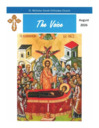
    The Voice, August 2026

    The Voice, August 2026

    Our monthly publication, The Voice, is available for your viewing in full color at our website, https://stnicholasfp.com. We have printed copies at the Pangari in the Narthex for those who do not have internet access.


    District GOYA Kick-Off Event

    District GOYA Kick-Off Event

    September 12 at Boomers in Boca Raton


    2026 Stewardship Program

    2026 Stewardship Program

    O Lord our God, You created us and brought us into this life. You showed us the way to salvation and have granted us the revelation of the heavenly mysteries. Accept our Stewardship Offering as an acceptable sacrifice and in return send down upon us the grace of your Holy Spirit. Look down on us, O Lord, and accept our Stewardship Commitment as You accepted the gifts of Abel, the offerings of Noah, the burnt offerings of Abraham, the priestly sacrifices of Moses and Aaron and the peace offerings of Samuel. Accept also now, in your goodness, O Lord, these gifts from the hands of us sinners, making us worthy of the reward of the faithful and wise stewards on the fearful day of Your just judgment. For You are the God of mercy, love and salvation and we glorify You, the Father, the Son and the Holy Spirit, now and forever and to the ages of ages. Amen.


    Discover Orthodoxy

    Discover Orthodoxy

    6:30 pm on the 2nd and 4th Monday of each month! Welcome! Check our monthly publication, The Voice, for specific dates and the Sunday Bulletin on our website, or as you enter the church, for scheduling updates.


    Bible Study

    Bible Study

    Join us the 2nd and 4th Wednesday of each month at 10:30 am for Bible Study. Check the published calendar each month for any changes.


    Orthodox Family Life Ministry

    Orthodox Family Life Ministry

    Spiritual nourishment for families, couples, and individuals walking in the ancient faith.


    Online Learning Opportunities from Hellenic College/Holy Cross

    Online Learning Opportunities from Hellenic College/Holy Cross

    Are you ready to take the Leap for Faith? Learning has never been easier! With Hellenic College Holy Cross online offerings, you can now learn and grow in your faith from convenience of home. We offer a wide range of educational opportunities spanning a variety of subjects.


    The Liturgical Arts Academy

    The Liturgical Arts Academy

    Learn Byzantine Music and Byzantine Iconography with intensive in-person training at our Diakonia Retreat Center.


Metropolis of Atlanta News

Metropolitan Sevastianos' Message

My dear brothers and sisters in Christ,

This coming Tuesday, September 1st, we will be blessed to celebrate a new Ecclesiastical Year. This date comes to us from the ancient Byzantine practice which established this harvest day as a day of taxation. Therefore, it is beautiful that this Sunday’s Gospel takes place in a vineyard and involves workers. In our Lord’s parable, however, the tenants of the vineyard do not behave honorably. 

When the owner of the vineyard wishes to inspect the harvest, and to receive His rightful fruit, He sends servants to represent Him. However, the tenants beat one, stone another, and kill the last. Again, the owner wishes to contact His tenants, and so He sends more servants—but these shameful actions are repeated. Finally, the owner reasons that they will respect His Son, but when His Son arrives, the tenants see a way to steal his inheritance, and so they murder Him too.

The vineyard, of course, is earth, whose owner is God, and the tenants to whom he lets out the property were then the Israelites. Just as the owner wished to communicate with His tenants, God sent His servants, the prophets, to deliver His Word. This Saturday, we will observe a solemn event which reflects the mistreatment of God’s last prophet, the Beheading of John the Baptist. In showing the abuse of the Prophets, Christ is not only criticizing the rejection of God’s Word, but as the Son of the Vineyard Owner, He is also prophesying His own Crucifixion.

However, the people to whom He is speaking still grasp the meaning of the parable, even without understanding their role in it. When He asks what the owner will do to the wicked tenants, the listeners correctly say that the owner will “…put those wretches to a miserable death, and let out the vineyard to other tenants who will give him the fruits in their seasons" (Matthew 21:41). Christ ends His preaching quoting Psalm 118 which predicts that the rejected stone shall become the chief cornerstone, encouraging all to turn to Him.

My brothers and sisters, as we prepare to begin this Ecclesiastical New Year, I pray that we all take the remaining days of this month of August to examine what spiritual fruits we have produced for the Glory of God. The meaning of this parable was not simply historical; we too can reject our Creator’s message, by not only disobeying His commandments, but by failing to cultivate a spirit of prayerful humility, and by rejecting those who come to us in a time of need. Christ makes it very clear that the gifts His Father bestowed can be easily taken from us and given to others who prove more worthy of them. Let us work to ensure that we will be able to give a good account to the owner of the Vineyard when He returns to receive His fruit.

                                                                       +SEVASTIANOS
                                                                      Metropolitan of Atlanta

______________________________________________________________________________________

New - National Sunday School Curriculum

Weekly Lesson Plans and Resources Designed to Help Educators

Form the Next Generation of Orthodox Christians

The National Sunday School Curriculum is organized into five developmental levels that span Kindergarten through High School. Each level contains multiple curriculum years, units, lesson plans, and supporting resources designed to help students grow in their understanding of the Orthodox Faith.

 Read More

______________________________________________________________________________________


Are you a registered Youth Worker, Clergy, Parish
or Metropolis Council Member? 

Check your compliance.
Login to your Existing Account

Click on My Compliance Report
Click on Print My Compliance Certificate 

Background Check (every 2 years)
Training (every year)

Not Registered?
Register as a First-Time Registrant


Diakonia Newsletter


Archdiocese News

Archbishop Elpidophoros attends Appeal of Conscience Foundation gathering on safeguarding religious freedom

08/28/2026

WASHINGTON D.C. — His Eminence Archbishop Elpidophoros of America joined religious leaders representing multiple faith traditions at the U.S. Department of Justice on August 27 for a high-level gathering focused on strengthening protections for houses of worship, safeguarding religious freedom and confronting religious hatred. 

The gathering, convened by the Appeal of Conscience Foundation and Assistant Attorney General for Civil Rights Harmeet Dhillon of the U.S. Department of Justice, brought together Christian, Jewish, Muslim, Sikh and Hindu leaders, along with representatives of the Department of Justice and the Appeal of Conscience Foundation. 

Archbishop Elpidophoros, a trustee of the Appeal of Conscience Foundation, emphasized the importance of solidarity among religious communities in the face of threats and violence. 

His Eminence Archbishop Elpidophoros of America joined religious leaders representing multiple faith traditions following a high-level meeting at the U.S. Department of Justice, Thursday, Aug. 27, 2026, in Washington. (Photo courtesy of the Appeal of Conscience Foundation)

“It is in this spirit of mutual concern that we gather today, united not by fear, but by love—love for our own faithful and for our neighbor,” Archbishop Elpidophoros said. “By seeking to ensure that all places of worship are protected, and that our freedom to worship is safeguarded, we choose to remain resolute in the face of fear, hatred, and violence.” 

The meeting, held on the first anniversary of the attack at Annunciation Church in which two children were killed and 21 people were injured, focused on threats facing religious communities and the responsibility of faith leaders to stand together when any religious community is targeted. Participants also discussed steps that religious institutions and government can take collectively to protect houses of worship and combat religious hatred. 

> Read: Church leaders mourn victims of mass shooting in Minneapolis  

The program included remarks from representatives of the Department of Justice and the Appeal of Conscience Foundation, a panel discussion for faith leaders, an invocation, the issuance of a public statement by participating religious leaders and a benediction by His Eminence Archbishop Elpidophoros. 

The public statement called for stronger legislation to protect houses of worship and the creation of an ongoing body of religious leaders to monitor threats and work with the Department of Justice to help ensure that people of faith can worship safely. The participating leaders also reaffirmed that the protection of religious liberty and the free exercise of religion are fundamental First Amendment rights. 

The gathering was held at the Department of Justice in Washington, D.C., amid continuing concern over attacks against churches, synagogues, mosques, temples and other houses of worship across the United States.  

Participants included Harmeet Dhillon, Assistant Attorney General for Civil Rights; H.E. Archbishop Gabriele Caccia, Apostolic Nuncio of the Holy See to the United States; His Grace Bishop Irinej Dobrijevic, Serbian Orthodox Church; Rev. Hovsep Harapetyan Easter Diocese of the Armenian Church of America; and representatives of Jewish, Muslim, Sikh, Hindu and other Christian communities.

> Find a full list of the attendees here.  

The Appeal of Conscience Foundation, founded in 1965 by Rabbi Arthur Schneier, has worked on behalf of religious freedom, human rights and the protection of houses of worship. The Foundation advocates for mutual understanding and cooperation among people of faith and against bias, hatred and division. 

The post Archbishop Elpidophoros attends Appeal of Conscience Foundation gathering on safeguarding religious freedom appeared first on Orthodox Observer.


WASHINGTON D.C. — His Eminence Archbishop Elpidophoros of America joined religious leaders representing multiple faith traditions at the U.S. Department of Justice on August 27 for a high-level gathering focused on strengthening protections for houses […]

The post Archbishop Elpidophoros attends Appeal of Conscience Foundation gathering on safeguarding religious freedom appeared first on Orthodox Observer.


Celebrate the anniversary of His All-Holiness’s enthronement in Constantinople

08/27/2026

Faithful are invited to join His Eminence Archbishop Elpidophoros of America from Monday, October 19 through Friday, October 23, 2026 as he leads a historic pilgrimage commemorating the 35th anniversary of the enthronement of His All-Holiness Ecumenical Patriarch Bartholomew.

His Eminence will be joined by Archon National Commander Dr. Anthony J. Limberakis and the Archons of the Ecumenical Patriarchate.

Plans for this special pilgrimage are currently being finalized, with additional details to be announced in the coming weeks. Mark your calendars!

The post Celebrate the anniversary of His All-Holiness’s enthronement in Constantinople appeared first on Orthodox Observer.


Faithful are invited to join His Eminence Archbishop Elpidophoros of America from Monday, October 19 through Friday, October 23, 2026 as he leads a historic pilgrimage commemorating the 35th anniversary of the enthronement of His […]

The post Celebrate the anniversary of His All-Holiness’s enthronement in Constantinople appeared first on Orthodox Observer.


Archbishop Elpidophoros meets with Assistant Secretary Riley Barnes

08/27/2026

WASHINGTON, D.C — At the invitation of Assistant Secretary of State for Democracy, Human Rights, and Labor Riley Barnes, His Eminence Archbishop Elpidophoros of America visited the U.S. Department of State for a substantive and constructive meeting on issues of mutual concern.

There was a warm discussion on the protection and advancement of religious freedom, the longstanding efforts and very hopeful advancements in securing the reopening of the historic Theological School of Halki, and the importance of safeguarding the rights and institutions of religious communities throughout the world. His Eminence underscored the significance of Halki not only for the Ecumenical Patriarchate and global Orthodoxy, but also as an enduring matter of religious liberty and human rights.

The Archbishop and Assistant Secretary Barnes also discussed the situation facing Christians in the Middle East and the importance of ensuring the protection, security, and religious freedom of the region’s historic Christian communities. Their discussion emphasized the need to preserve the Christian presence in the lands where Christianity has flourished since apostolic times and to safeguard the ability of these communities to live, worship, and serve freely and in peace.

His Eminence expressed his appreciation to Assistant Secretary Barnes for the invitation and for the United States Government’s continued attention to matters affecting the Ecumenical Patriarchate and religious freedom more broadly. The meeting concluded with a mutual commitment to continued dialogue and closer engagement, as well as to identifying concrete opportunities for cooperation on matters of shared concern.

The post Archbishop Elpidophoros meets with Assistant Secretary Riley Barnes appeared first on Orthodox Observer.


WASHINGTON, D.C — At the invitation of Assistant Secretary of State for Democracy, Human Rights, and Labor Riley Barnes, His Eminence Archbishop Elpidophoros of America visited the U.S. Department of State for a substantive and […]

The post Archbishop Elpidophoros meets with Assistant Secretary Riley Barnes appeared first on Orthodox Observer.


Greek Orthodox Church of Greater Salt Lake seeks restoration proposals

08/26/2026

The Greek Orthodox Church of Greater Salt Lake is seeking qualified proposals from experienced Iconographers, Iconostasis Makers, and Pangari Makers for a major restoration and renovation project at Holy Trinity Greek Orthodox Cathedral in Salt Lake City, Utah. 

In 2020, the Cathedral sustained structural damage that necessitates a comprehensive seismic upgrade. As part of this historic project, the Cathedral will be replacing its sacred iconography, iconostasis (icon screen), and pangaria located in the narthex. 

Interested individuals, studios, and firms are invited to review the Request for Proposal (RFP) and project specifications. 

For complete project details and RFP documents, visit:
www.gocslc.org/formsandnotices 

We welcome inquiries and proposals from qualified professionals with experience in Orthodox ecclesiastical art and craftsmanship. 

The post Greek Orthodox Church of Greater Salt Lake seeks restoration proposals appeared first on Orthodox Observer.


The Greek Orthodox Church of Greater Salt Lake is seeking qualified proposals from experienced Iconographers, Iconostasis Makers, and Pangari Makers for a major restoration and renovation project at Holy Trinity Greek Orthodox Cathedral in Salt […]

The post Greek Orthodox Church of Greater Salt Lake seeks restoration proposals appeared first on Orthodox Observer.


Young orator speaks on personal encounter with martyrdom at National Oratorical Festival

08/25/2026

Most Orthodox Christians in America have little experience of martyrdom. Inalienable religious freedom is a given. Almost all believers feel safe parking their cars outside of their churches, hanging crosses around their necks, and speaking openly about God in public.

But some are an exception. Elian Alkhoury knows martyrdom personally.

Born in Syria and now a Texan, Elian is an incoming college freshman at the University of Texas at Austin and a member of Holy Trinity Greek Orthodox Church in Dallas. This year, he competed in the senior division of the national St. John Chrysostom Oratorical Festival, held in Northridge, California in June. His speech—which he delivered in competition against eight other high school-aged national finalists—received an honorable mention, and responded to the prompt: “How does the witness of martyrs, both ancient and contemporary, strengthen and guide the Church today?”

Elian was drawn to the topic by a poignant personal connection.

In 2012 while living in Syria, Elian’s father was kidnapped off the street while leaving his dental clinic and detained. He was told that if he wished to be released, he must deny his Christian faith. He refused to do so. Eventually, family members paid a ransom to the kidnappers to free him, and he later moved to the United States with his wife and children.

Elian’s speech recounted his father’s story and through it, explored the meaning of martyrdom in the Orthodox Church. He reminded listeners of the striking, imperative reality of persecution, even though it often seems distant to twenty-first century Americans. Although his speech did not win a medal, it was received by those in attendance of the Festival with particular enthusiasm. Audience members found themselves deeply moved by the story and impressed by the 18-year-old’s eloquence.

When asked why he chose to speak on this topic, Elian remarked, “I’m passionate about it. This one stood out to me because I had a personal connection with it. From the beginning, I was just like, ‘Okay, this is my story. I’m telling [my audience] a story.’”

The St. John Chrysostom Oratorical Festival offers middle- and high school-aged Orthodox Christians a space in which they can delve into Faith as it applies to them individually, and where those stories are shared with peers, family, clergy, and the greater Orthodox community.This space continues to prove fruitful year after year. The young speakers of the Festival value this opportunity to declare Christ as they know Him, especially alongside one another. “We were all similar with our faith, we wanted to share our faith,” Elian said of his rivals at the national competition. “We felt passionate about speaking. Everyone was very strong. It was a great experience to get to know everyone and build a community.”

Composing a speech deeply rooted in his family’s story developed Elian’s personal faith, too. “I was able to process the nostalgic feelings of trusting God when my dad was kidnapped, and how my family had faith during his persecution. The speech showed me that we are really following our faith, and we have to trust it. It does make us stronger.”

“[I’m] going to a big college where you’re going to see literally every religion in the world, but the speech has brought me confidence in myself and confidence in my faith. I’m not going to lose sight.”

For most Orthodox Christians living in America, the thought of martyrdom doesn’t arise often. The conveniences of freedom of religion— blessings though they are— often leave the Church forgetful of the persecutions in her history and in her present. Elian’s speech reminded listeners that for 2,000 years, countless Christian like his father have risked everything for their Faith in the face of persecution.

“It’s really important for the young generation to understand how Orthodox Christians have lived throughout the years,” Elian remarked. “It’s important that we know our history. Our Church is a very strong Church.”

The opportunity to share his father’s story at the national Oratorical Festival has given Elian confidence and courage, he said. “It has made me even more sure about our faith, made me closer to our faith every single day.”

The post Young orator speaks on personal encounter with martyrdom at National Oratorical Festival appeared first on Orthodox Observer.


Most Orthodox Christians in America have little experience of martyrdom. Inalienable religious freedom is a given. Almost all believers feel safe parking their cars outside of their churches, hanging crosses around their necks, and speaking […]

The post Young orator speaks on personal encounter with martyrdom at National Oratorical Festival appeared first on Orthodox Observer.


OCPM announces new podcast ‘Prison Ministry Diaries’ coming this fall

08/24/2026

On Aug. 22, 2026, Orthodox Christian Prison Ministry (OCPM) announced the upcoming launch of its new podcast, Prison Ministry Diaries. The announcement reads:

Not only is Prison Ministry Diaries the first-ever podcast of OCPM; it’s unlike anything else out there.

Fr. John Kowalczyk and Fr. Stephen Powley, OCPM Co-Directors of Training and Spiritual Care, are ready to share from their decades of experience at every security level. Even among the darkness of prison, Christ’s light is shining all the more. From navigating gang culture to what it takes to found a monastery in maximum security (true story), Fr. John and Fr. Stephen are your best possible coaches for how to do this ministry well. Tune in for sincere and often lighthearted conversations about what matters most.

New episodes air every two weeks. Subscribe to the podcast at https://ocpm.substack.com.

The post OCPM announces new podcast ‘Prison Ministry Diaries’ coming this fall appeared first on Orthodox Observer.


On Aug. 22, 2026, Orthodox Christian Prison Ministry (OCPM) announced the upcoming launch of its new podcast, Prison Ministry Diaries. The announcement reads: Not only is Prison Ministry Diaries the first-ever podcast of OCPM; it’s unlike anything […]

The post OCPM announces new podcast ‘Prison Ministry Diaries’ coming this fall appeared first on Orthodox Observer.


Ecumenical Patriarchate News

Prot. No. 668

† B A R T H O L O M E W
BY THE MERCY OF GOD
ARCHBISHOP OF CONSTANTINOPLE–NEW ROME
AND ECUMENICAL PATRIARCH
GRACE, PEACE, AND MERCY
UNTO THE ENTIRE PLENITUDE OF THE CHURCH
FROM THE FASHIONER OF ALL CREATION
OUR LORD AND GOD AND SAVIOUR JESUS CHRIST

* * *

       Most Reverend and Right Reverend Brother Hierarchs, and blessed children in the Lord,

     By the grace of God, the giver of all good things, we enter today into the new ecclesiastical year, honouring and celebrating at its commencement, in psalms and hymns and spiritual songs, the “Day of Prayer for the Protection of the Natural Environment.”

       The multidimensional contemporary ecological crisis is a crisis of human freedom, of our religion and philosophy, of our ethos and our culture. What comes first is the "harmful alteration” of our freedom — our severance and alienation from the Source of Life; what follows is conduct destructive of the natural environment. We feel profound gratitude that the pioneering initiatives and interventions of the Ecumenical Patriarchate, carried out without interruption since 1989 have not only revealed the spiritual aspects of the ecological problem, but have also opened new paths and prospects for addressing it. The ecological symposia, the related inter-Christian and interreligious dialogues, the specific recommendations of the Great Church concerning environmental matters, the emphasis placed upon the social dimensions and consequences of the ecological crisis, and other such efforts together constitute a robust environmental proposal, which emphasizes the imperative need for a “Copernican Turn” in our understanding of the idea of progress and in humanity’s attitude towards nature, as well as in the actions of those engaged in political, economic, and social life, of the Churches and religions, of science and technology, and of those responsible for the education of the younger generation.

      We shall continue, in word and deed, to promote the ecological vision of the Holy Great Church of Christ and the eco-friendly dynamism of the eucharistic, ascetic, and doxological relationship with creation, always underscoring that careful theological work is needed for the elucidation of the authentic ecological message of our Orthodox faith and tradition, for the benefit of creation, which is “very good.”

     We are convinced that highlighting the religious and ethical dimensions of the ecological threat will lead to an awareness of the pivotal importance of “ecological responsibility.” Humanity must at last cease acting as though it does not know and definitively cast aside the illusion that planet Earth can in perpetuity withstand the burdens and destruction caused by human activity, or that nature has the power to renew itself of its own accord. The ethos of responsibility for the protection of the natural environment must find expression at the global, national, local, and personal
levels. We reiterate once again that the cultivation of ecological responsibility is a “categorical imperative” for humanity as it confronts the greatest threat it has ever been called to face throughout the entire course of its history.

    It is abundantly clear that, so long as the dominant anthropological model is represented by the “foolish rich man” of the Gospel (Luke 12:17–21), with his declaration, “I will pull down my barns and build greater; and there I will store all my crops and my goods,” and his words, “Soul, you have many goods laid up for many years; take your ease, eat, drink, and be merry,” humanity will continue to undermine its future and annihilate its own “home.” The “sins of modernity” have created—and continue to create—new divisions and ruptures between humanity and nature. The contemporary “man-god” persists in genocide, disregarding every measure and limit in the name of geopolitical designs and economic interests, of consumerism and of the satisfaction of essentially insatiable needs, but also, on a deeper level, because of an overturning of inner lived experience and values. The consequences of the global dominance of the desire to manipulate, instrumentalize, and exploit nature will prove to be tragic for life on our planet.

      The growing acceptance and official establishment of 1 September as the Day for the Protection of the Natural Environment throughout the Christian world bears particular significance today as a symbol and practical promotion of the unity of Christians. Moreover, the glorification of the “Fashioner of all creation” at the beginning of the Indiction in our liturgical tradition constitutes a precious inheritance, as an invitation and exhortation to respect creation, which suffers the consequences of an unseemly, human-caused assault.

        Most Honourable Brethren and dearly beloved children,

      Respect for the core pillars of ecological civilization can restrain environmentally destructive tendencies and open the “sole ecological path,” that of sustainable development. More broadly, humanity needs to reach agreement upon a body of common fundamental values which, in a world marked by conflict and polarization, will serve as a compass for the journey towards the future. We regard the principle of solidarity as the central axis of this body of values: solidarity as a source of shared responsibility, dialogue, and sincere reciprocity, together with collective responsibility for the protection of the natural environment. Respect in practice for the sacredness of the human person and care for the integrity of creation are, from a Christian perspective, vital manifestations of the eucharistic realisation of the Church and of human being’s call to become the “priest” of creation.

         In this spirit, as we pray that the new ecclesiastical year may be favourable and fruitful in works that are good and pleasing to God, we invoke upon all of you, through the intercessions and mediation of the Most-Holy Theotokos Pammakaristos—whose most sacred icon we reverently keep in the Venerable Patriarchal Church and embrace “with mouth and heart and will”—the grace and mercy of our Lord and God and Saviour Jesus Christ, Whose All-Holy Name be blessed and glorified, now and ever, and unto the endless ages. Amen!

                                                                                  1 September 2026
                                                                     † Bartholomew of Constantinople
                                                                     Your fervent supplicant before God


BACK TO TOP