


Saint Catherine Greek Orthodox Church
Publish Date: 2026-08-16
Bulletin Contents

Organization Icon
Saint Catherine Greek Orthodox Church

General Information

  • Phone:
  • (561) 833-6387
  • Fax:
  • (561) 833-6391
  • Street Address:

  • 110 Southern Blvd.

  • West Palm Beach, FL 33405


Contact Information


Services Schedule

Sunday Services:

  8:45 am     Orthros

10:00 am     Divine Liturgy


Sunday School Classes: 

11:15 am     After Holy Communion


Past Bulletins


This Week and Upcoming Events

 Christ is in our midst!  He is and ever shall be!

 Our services are streamed live on the internet.
at our Saint Catherine website - www.stcatherine-wpb.org
 

Join us for Orthodox Divine Liturgy every Sunday at 10:00 a.m.

Light a candle and offer a prayer at Saint Catherine (click above).
The online form sends the names of your family and friends
direct to Father Chrysostom at the altar;prayers are offered
during the Proskomidi in preparation for the Divine Liturgy! 


August 16, 2026

Translation of the Image of Our Lord and God and Savior, Jesus Christ
Afterfeast of the Dormition of our Most Holy Lady the Theotokos
and Ever Virgin Mary
Diomedes the Physician & Martyr of Tarsus
Gerasimus of Cephalonia
Joseph the Hesychast

Links to the service text:  Links to the service texts are through the Digital Chant Stand of our Archdiocese.  For optimal viewing select the "GR-EN Text/Music" link for Matins (Orthros) and Divine Liturgy. Apps may be downloaded for your phone or tablet. Link to the Digital Chant Stand 

Holy Communion:  Holy Communion is reserved for baptized and chrismated Orthodox Christians only.  If you are interested in becoming an Orthodox Christian, please contact Father Chrysostom Mitchell at (561) 320-1224 or [email protected].

Coffee and Fellowship:  Please join us for coffee and fellowship in the Large Hall of the Hellenic Cultural Center immediately following the Divine Liturgy.

____________ 

This Week

Sunday, August 16     11th Sunday of Matthew
     8:45 am  Orthros / 10:00 am  Divine Liturgy

   Outreach Ministry making sandwiches for the homeless
   HDF dance practice begins
   Cretan Voice General Assembly meeting

Monday, August 17
     9:30 am  Outreach Ministry serving the homeless @ St. Ann's
     6:30 pm  YAL Dinner Meeting

Wednesday, August 19
   10:30 am  Mommy & Me

Thursday, August 20
     6:30 pm  Parish Council Meeting

Next Week and Highlights of Upcoming Services and Events

Sunday, August 23     12th Sunday of Matthew
     8:45 am  Orthros / 10:00 am  Divine Liturgy
   Ministry & Organization Fair
   Sunday School Begins & Blessing of the Backpacks

Saturday, August 29     Beheading of St. John the Baptist
   9:00 am  Orthros / 10:00 am  Liturgy
____________

Stewardship: 

2026 Stewardship Theme:  “Rise Up and Build” Nehemiah 2:18

“Whatever blessings we receive, we are to multiply them. We were given our church – our local parish – built by our ancestors and all who have gone before us. We are to grow it – to multiply it, by adding to the number of faithful and growing her ministries.” – goarch.org

Your active participation through your stewardship of Time, Talent & Treasure is a blessing that is magnified through Christ! Attending Church services, volunteering through the various ministries offered here at Saint Catherine and your generous donations have made a tremendous impact! We thank you and are so very grateful for each of you! May the dear Lord continue to shine his light through you and your good works!

We invite you to join our Saint Catherine Church Family & Become a 2026 Steward today!

Donate Online Today & Throughout the Year:
https://www.stcatherine-wpb.org/stewardship

The Donate buttons here and on our website lead to our online giving site.
Again, thank you for your support!


Youth Safety Resources:  We’re committed to connecting young people with Jesus Christ. To do that, we need to create ministry environments that are safe and healthy. For more on how you can help, please visit our Youth Safety website: goarch.org/safety.


Church Services Streamed:  Many of our Divine Liturgies have been recorded and can be viewed at www.youtube.com.  Subscribe to our YouTube channel; you will be notified when we begin a live stream.

Saint Catherine Greek Orthodox Church (Services from 2020 until now)

Saint Catherine Greek Orthodox Church (Selected services from 2015-2019)


Gospel and Epistle Readings

Matins Gospel Reading

Eleventh Orthros Gospel
The Reading is from John 21:14-25

At that time, Jesus revealed himself to the disciples after he was raised from the dead. And he said to Simon Peter, "Simon, son of John, do you love me more than these?" He said to him, "Yes, Lord; you know that I love you." He said to him, "Feed my lambs." A second time he said to him, "Simon, son of John, do you love me?" He said to him, "Yes, Lord; you know that I love you." He said to him, "Tend my sheep." He said to him the third time, "Simon, son of John, do you love me?" Peter was grieved because he said to him the third time, "Do you love me?" And he said to him, "Lord, you know everything; you know that I love you." Jesus said to him, "Feed my sheep. Truly, truly, I say to you, when you were young, you girded yourself and walked where you would; but when you are old, you will stretch out your hands, and another will gird you and carry you where you do not wish to go." (This he said to show by what death he was to glorify God.) And after this he said to him, "Follow me." Peter turned and saw following them the disciple whom Jesus loved, who had lain close to his breast at the supper and had said, "Lord, who is it that is going to betray you?" When Peter saw him, he said to Jesus, "Lord, what about this man?" Jesus said to him, "If it is my will that he remain until I come, what is that to you? Follow me!" The saying spread abroad among the brethren that this disciple was not to die; yet Jesus did not say to him that he was not to die, but, "If it is my will that he remain until I come, what is that to you?" This is the disciple who is bearing witness to these things, and who has written these things; and we know that his testimony is true. But there are also many other things which Jesus did; were every one of them to be written, I suppose that the world itself could not contain the books that would be written. Amen.


Epistle Reading

Prokeimenon. Second Tone. Psalm 117.14,18.
The Lord is my strength and my song.
Verse: The Lord has chastened me sorely.

The reading is from St. Paul's First Letter to the Corinthians 9:2-12.

Brethren, you are the seal of my apostleship in the Lord. This is my defense to those who would examine me. Do we not have the right to our food and drink? Do we not have the right to be accompanied by a wife, as the other apostles and the brothers of the Lord and Cephas? Or is it only Barnabas and I who have no right to refrain from working for a living? Who serves as a soldier at his own expense? Who plants a vineyard without eating any of its fruit? Who tends a flock without getting some of the milk? Do I say this on human authority? Does not the law say the same? For it is written in the law of Moses, "You shall not muzzle an ox when it is treading out the grain." Is it for oxen that God is concerned? Does he not speak entirely for our sake? It was written for our sake, because the plowman should plow in hope and the thresher thresh in hope of a share in the crop. If we have sown spiritual good among you, is it too much if we reap your material benefits? If others share this rightful claim upon you, do not we still more? Nevertheless, we have not made use of this right, but we endure anything rather than put an obstacle in the way of the gospel of Christ.


Gospel Reading

11th Sunday of Matthew
The Reading is from Matthew 18:23-35

The Lord said this parable: "The kingdom of heaven may be compared to a king who wished to settle accounts with his servants. When he began the reckoning, one was brought to him who owed him ten thousand talents; and as he could not pay, his lord ordered him to be sold, with his wife and children and all that he had, and payment to be made. So the servant fell on his knees, imploring him, 'Lord, have patience with me, and I will pay you everything.' And out of pity for him the lord of that servant released him and forgave him the debt. But that same servant, as he went out, came upon one of his fellow servants who owed him a hundred denarii; and seizing him by the throat he said, 'Pay what you owe.' So his fellow servant fell down and besought him, 'Have patience with me, and I will pay you.' He refused and went and put him in prison till he should pay the debt. When his fellow servants saw what had taken place, they were greatly distressed, and they went and reported to their lord all that had taken place. Then his lord summoned him and said to him, 'You wicked servant! I forgave you all that debt because you besought me; and should not you have had mercy on your fellow servant, as I had mercy on you?' And in anger his lord delivered him to the torturers, till he should pay all his debt. So also my heavenly Father will do to every one of you, if you do not forgive your brother from your heart."


Memorials and Trisagions

Memorials

5 Years ~ Richard Triconi
Friend of Emmanuel & Emilia Thomas

11 Years ~ Konstantinos Argiros
Grandfather of Andonis and Costas Leventakos

21 Years ~ Elefteria Troullinos
30 Years ~ Ioannis Troullinos
Parents of Nikolaos (Theodora)
Grandparents of Ioannis and Sofia


Saints and Feasts

August 16

11th Sunday of Matthew


August 16

Translation of the Image of Our Lord and God and Savior, Jesus Christ

When the fame of our Lord Jesus Christ came to Abgar, the ruler of Edessa, who was suffering from leprosy, Abgar sent a messenger named Ananias, through him asking the Savior to heal him of his disease, while bidding Ananias bring back a depiction of Him. When Ananias came to Jerusalem, and was unable to capture the likeness of our Lord, He, the Knower of hearts, asked for water, and having washed His immaculate and divine face, wiped it dry with a certain cloth, which He gave to Ananias to take to Abgar; the form of the Lord's face had been wondrously printed upon the cloth. As soon as Abgar received the cloth, which is called the Holy Napkin (Mandylion), he reverenced it with joy, and was healed of his leprosy; only his forehead remained afflicted. After the Lord's Death, Resurrection, and Ascension, the Apostle Thaddaeus (see Aug. 21) came to Edessa, and when he had baptized Abgar and all his men, Abgar's remaining leprosy also was healed. Abgar had the holy image of our Savior fixed to a board and placed at the city gate, commanding that all who entered the city reverence it as they passed through. Abgar's grandson, however, returned to the worship of the idols, and the Bishop of Edessa learned of his intention to replace the Holy Napkin with an idol. Since the place where it stood above the city gate was a rounded hollow, he set a burning lamp before the Holy Napkin, put a tile facing it, then bricked up the place and smoothed it over, so that the holy icon made without hands was no longer to be seen, and the ungodly ruler gave no further thought to it.

With the passage of time, the hidden icon was forgotten, until the year 615, when Chosroes II, King of Persia, was assaulting the cities of Asia, and besieged Edessa. The Bishop of Edessa, Eulabius, instructed by a divine revelation, opened the sealed chamber above the city gate and found the Holy Napkin complete and incorrupt, the lamp burning, and the tile bearing upon itself an identical copy of the image that was on the Holy Napkin. The Persians had built a huge fire outside the city wall; when the Bishop approached with the Holy Napkin, a violent wind fell upon the fire, turning it back upon the Persians, who fled in defeat. The Holy Napkin remained in Edessa, even after the Arabs conquered it, until the year 944, when it was brought with honor and triumph to Constantinople in the reign of Romanus I, when Theophylact was Ecumenical Patriarch. The Holy Napkin was enshrined in the Church of the most holy Theotokos called the Pharos. This is the translation that is celebrated today.


August 16

Diomedes the Physician & Martyr of Tarsus

The holy Martyr Diomedes was from Tarsus in Cilicia, a physician who treated bodies with his healing art and souls with his piety. In the days of the Emperor Diocletian, about the year 288, Diomedes left Tarsus and came to Nicaea, where he benefited many both as a physician and as a preacher of the Faith. He was accused to Diocletian, who sent men to fetch him. When they arrived, although finding that he had already given up his soul to the Lord, they cut off his head to take it to the Emperor, and because of their inhumanity were stricken with blindness. When Diocletian saw the Saint's head, he commanded them to take it back and put it on the body in its place; when they had done so, they received their sight again. Saint Diomedes is one of the Holy Unmercenaries.


August 16

Gerasimus of Cephalonia

Saint Gerasimus was from the Peloponnesus, the son of Demetrius and Kale, of the family of Notaras. He was reared in piety by them and studied the Sacred writings. He left his country and went throughout various lands, and finally came to Cephalonia, where he restored a certain old church and built a convent around it, where it stands to this day at the place called Omala. He finished the course of his life there in asceticism in the year 1570. His sacred relics, which remain incorrupt, are kept there for the sanctification of the faithful.


August 16

Joseph the Hesychast


August 16

Afterfeast of the Dormition of our Most Holy Lady the Theotokos and Ever Virgin Mary


August 17

Myron the Martyr of Cyzicus

Saint Myron was a priest during the reign of Decius, when Antipater was ruler of Achaia. On the day of our Lord's Nativity, Antipater entered the church to seize the Christians and punish them. Saint Myron, kindled with holy zeal, roundly insulted Antipater, for which he was hung up and scraped, then cast into a raging furnace, but was preserved unharmed. When Myron refused to worship the idols, Antipater commanded that strips be cut in the Saint's flesh from his shoulders to his feet; the Saint took one of the strips of his flesh and flung it in the tyrant's face. He was beaten, and scraped again upon his beaten flesh; then he was thrown to wild beasts, but when Antipater saw them leaving off their fierce nature and protecting the Saint from harm, he was overcome with unbearable shame and slew himself. The Saint was then sent to Cyzicus, where the proconsul had him beheaded, about the year 250.


August 17

Afterfeast of the Dormition of our Most Holy Lady the Theotokos and Ever Virgin Mary


August 18

Floros & Lauros the Monk-martyrs of Illyria

These Martyrs were twin brothers, and stonemasons. After the martyrdom of their teachers Proclus and Maximus, they left Byzantium and came to the city of Ulpiana in Illyricum, where a certain Licinius hired them to build a temple for the idols. The wages he gave them, they distributed to the poor, and when the temple was built, Floros and Lauros gathered the paupers, and with their help put ropes about the necks of the idols, pulled them to the ground, and furnished the temple as a church. When Licinius learned of this, he had the paupers burned alive in a furnace. Floros and Lauros were tormented, then cast into a deep well, where they gave up their souls to the Lord. When their holy relics were recovered years later, they poured forth myrrh and worked many miracles; they were enshrined in Constantinople.


August 18

Relics of Arsenios the Righteous of Paros


August 18

Afterfeast of the Dormition of our Most Holy Lady the Theotokos and Ever Virgin Mary


August 19

Andrew the General & Martyr & his 2,593 soldiers

During the reign of Maximian, about the year 289, Antiochus the Commander-in-Chief of the Roman forces sent Andrew with many other soldiers against the Persians, who had overrun the borders of the Roman dominion. Saint Andrew persuaded his men to call upon the Name of Christ, and when they had defeated the Persians with unexpected triumph, his soldiers believed in Christ with him. Antiochus, learning of this, had them brought before him. When they confessed Christ to be God, he had Andrew spread out upon a bed of iron heated fiery hot, and had the hands of his fellow soldiers nailed to blocks of wood. Antiochus then commanded some thousand soldiers to chase the Saints beyond the borders of the empire. Through the instructions of Saint Andrew, these soldiers also believed in Christ. At the command of Antiochus, they were all beheaded in the mountain passes of the Taurus mountains of Cilicia.


August 19

Theophanes the New Wonderworker of Macedonia


August 19

Afterfeast of the Dormition of our Most Holy Lady the Theotokos and Ever Virgin Mary


August 20

Samuel the Prophet

This most holy man, a Prophet of God from childhood, was the last judge of the Israelite people, and anointed the first two Kings of Israel. He was born in the twelfth century before Christ, in the city of Armathaim Sipha, from the tribe of Levi, the son of Elkanah and Hannah (Anna). He was the fruit of prayer, for his mother, being barren, conceived him only after she had supplicated the Lord with many tears; wherefore she called him Samuel, that is, "heard by God." As soon as Hannah had weaned him, she brought him to the city of Silom (Shiloh), where the Ark was kept, and she consecrated him, though yet a babe, to the service of God, giving thanks to Him with the hymn found in the Third Ode of the Psalter: "My heart hath been established in the Lord . . ." Samuel remained in Silom under the protection of Eli the priest. He served in the Tabernacle of God, and through his most venerable way of life became well-pleasing to God and man (I Kings 2: 26). While yet a child, sleeping in the tabernacle near the Ark of God, he heard the voice of God calling his name, and foretelling the downfall of Eli; for although Eli's two sons, Ophni and Phineas, were most lawless, and despisers of God, Eli did not correct them. Even after Samuel had told Eli of the divine warning, Eli did not properly chastise his sons, and afterwards, through various misfortunes, his whole house was blotted out in one day.

After these things came to pass, Samuel was chosen to be the protector of the people, and he judged them with holiness and righteousness. He became for them an example of all goodness, and their compassionate intercessor before God: "Far be it from me that I should sin against the Lord in ceasing to pray for you; yea, I will serve the Lord, and show you the good and the right way" (ibid. 12:23). When he asked them -- having God as witness -- if he ever wronged anyone, or took anyone's possessions, or any gift, even so much as a sandal, they answered with one voice: "Thou hast not defrauded us, nor oppressed us, nor afflicted us, neither hast thou taken anything from anyone's hand" (ibid. 12:4). When Samuel was old, the people asked him for a king, but he was displeased with this, knowing that God Himself was their King. But when they persisted, the Lord commanded him to anoint them a king, saying, "They have not rejected thee, but they have rejected Me from reigning over them" (ibid. 8:7); so Samuel anointed Saul. But Saul transgressed the command of God repeatedly, so Samuel anointed David. Yet, since Samuel was a man of God, full of tender mercy, when the Lord told him that He had rejected Saul, Samuel wept for him the whole night long (ibid. 15:11); and later, since he continued to grieve, the Lord said to him, "How long wilt thou mourn for Saul?" (ibid. 16:1). Having lived blamelessly some ninety-eight years, and become an example to all of a God-pleasing life, he reposed in the eleventh century before Christ. Many ascribe to him the authorship of the Books of judges, and of Ruth, and of the first twenty-four chapters of the First Book of Kings (I Samuel).


August 20

Afterfeast of the Dormition of our Most Holy Lady the Theotokos and Ever Virgin Mary


August 21

Thaddeus the Apostle of the 70

The Apostle Thaddaeus was from Edessa, a Jew by race. When he came to Jerusalem, he became a disciple of Christ, and after His Ascension he returned to Edessa. There he catechized and baptized Abgar (see Aug. 16). Having preached in Mesopotamia, he ended his life in martyrdom. Though some call him one of the Twelve, whom Matthew calls "Lebbaeus, whose surname was Thaddaeus" (Matt. 10:3), Eusebius says that he is one of the Seventy: "After [Christ's] Resurrection from the dead, and His ascent into Heaven, Thomas, one of the twelve Apostles, inspired by God, sent Thaddaeus, one of the seventy disciples of Christ, to Edessa as a preacher and evangelist of Christ's teaching" (Eccl. Hist. 1: 13).


August 21

Bassa the Martyr of Edessa & her sons Theogonius, Agapius & Pistus

The Martyrs were from Edessa of Macedonia. Bassa was the wife of a certain Valerian, a priest of the idols, to whom she bore three sons and raised them in piety. She was betrayed with her sons to the proconsul by her own husband; each of her sons was tormented before her and beheaded. For refusing to worship the idols, she was imprisoned, cast into water and then fire, was stoned, and remaining unharmed, was brought to the temple to worship the idols. Laying hold upon the idol of Zeus, she overturned it and broke it to pieces. After being preserved through further torments, she was beheaded, about the year 290, in the reign of Maximian.


August 21

Afterfeast of the Dormition of our Most Holy Lady the Theotokos and Ever Virgin Mary


August 22

Agathonikos the Martyr of Nicomedea & his Companion Martyrs

The Martyr Agathonicus, because he converted pagans to Christ, was seized in Nicomedia, violently beaten, haled about in bonds, and beheaded in Selyvria, during the reign of Maximian, in the year 298.


August 22

The Synaxis of the Icon of the Mother of God of Prusa

The wonderworking icon of the Mother of God of Prusa was saved from destruction at the hands of the Iconoclasts in the ninth century, when a certain nobleman of Prusa (near Constantinople) brought it secretly to Greece. There he lost the icon, but it miraculously appeared in a cave in the area of Litza and Agrapha, where the monastery and the shrine of the icon are presently found. The feast today was established in commemoration of the many signs and healings that the holy Theotokos has wrought through the icon.


August 22

Afterfeast of the Dormition of our Most Holy Lady the Theotokos and Ever Virgin Mary


Wisdom of the Fathers

Do we forgive our neighbors their trespasses? God also forgives us in His mercy. Do we refuse to forgive? God, too, will refuse to forgive us. As we treat our neighbors, so also does God treat us. The forgiveness, then, of your sins or unforgiveness, and hence also your salvation or destruction, depend on you yourself, man. For without forgiveness of sins there is no salvation.
St. Tikhon of Zadonsk
Unknown, 18th century

Wherefore then did He not do this, nor forgive the debt before the account? Desiring to teach him, from how many obligations He is delivering him, that in this way at least he might become more mild towards his fellow servant .... He gave more than he asked, remission and forgiveness of the entire debt.
St. John Chrysostom
Homily 61 on Matthew 18, 4th Century


Saint Catherine News and Events

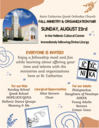
    Fall Ministry & Organization Fair

    Fall Ministry & Organization Fair

    Everyone is invited! Enjoy a fellowship meal and fun while learning about offering your time and talents with the ministries and organizations here at Saint Catherine.


    YAL Family Movie Night

    YAL Family Movie Night

    Young Adults invite you to FAMILY Movie Night! Bring your family & friends.


    Home/Business Blessings

    Home/Business Blessings

    Fr. Chrysostom would like to come and bless your home and/or business as we begin the new calendar year and celebrate Epiphany. Please let him know if you would like him to visit your home or business.


Metropolis of Atlanta News

My dear brothers and sisters in Christ,

This Sunday’s Parable from the Gospel of Matthew contains an important lesson for all of us, if we are truly to unite ourselves to our Creator and to our brothers and sisters in Christ.

The Lord tells us of a king who wished to settle accounts with his servants. When he approached a servant to whom he had loaned 10,000 talents, and that servant could not pay him, the king ordered that he should be sent into debtor’s prison along with his wife, children, and all his possessions. The servant fell at his master’s feet, begging for time, and so the king showed him mercy. However, this same servant later approached one of his coworkers, who owed him 100 denarii. When his fellow servant also begged for the same mercy, the Wicked Servant refused and had him thrown into prison.

Other servants saw this, and they reported the Wicked Servant to the King. Naturally, the King was furious, and when he summoned the servant who owed him 10,000 talents, he said, 'You wicked servant! I forgave you all that debt because you besought me; and should not you have had mercy on your fellow servant, as I had mercy on you?' (Matthew 18:32-33) Christ finishes this parable by explaining that the Wicked Servant’s punishment (with the prison as a symbol for Hades) will befall us too, “if you do not forgive your brother from your heart” (Matthew 18:35).

There are a few details we can examine to show the Wicked Servant’s hardness of heart. In saying the Wicked Servant owed 10,000 talents, the Lord is exaggerating. If we begin with the understanding that a denarius was the daily wage of a worker, and that one single talent could equal up 10,000 denarii, we understand the Wicked Servant’s trouble: he must work for 200,000 years to repay everything! By comparison, the fellow Servant’s 100 denarii is a very small amount. Also, remember that nowhere in the Bible is prison spoken of as a punishment for debt. Our Lord is instead using the language of Roman law to demonstrate that unlike the legalistic spirit of the pagans, even as sinful beings, we can hope only for God’s mercy to save us.

My brothers and sisters in Christ, as we prepare to celebrate the Feast of the Dormition this Saturday, let us not be like the Wicked Servant. Let us instead use the humility of the Virgin Mary as an example, so that we may be able to soften our imperfect human hearts, willingly forgiving our brothers and sisters for the wrongs they have done to us. Only when we practice the acceptance shown by the Theotokos, all the days of her life, will we truly imitate the perfectness of our Father who is in Heaven. My best wishes for many more years, especially for Marias, Panagiotis, Panagiotas, and all who celebrate!

 +SEVASTIANOS
Metropolitan of Atlanta


Archdiocese News

Archbishop Elpidophoros marks end of Dormition Fast

08/14/2026

This morning, His Eminence Archbishop Elpidophoros of America marked the end of the Dormition Fast with the following social media post:

Tomorrow we transit from the Fast to the Feast of the Dormition, our solemn observance of her passage from death to eternal life. Our cessation from fasting is more than an occasion for feasting. Our embrace of the Virgin’s crossing over into the infinite Kingdom of God is an acknowledgment of our own destiny. She traverses perfectly the Way, the Truth, and the Life, pointing us in the direction of eternity.

She is the model for every one of us, for within her holy womb, she bore the Lord Incarnate, and in our lives, we are also called to bring forth the Lord Christ through our thoughts, our intentions, and our actions. May our celebrations of her Holy Dormition be a renewal of our own journey heavenward, with the Panagia as our guide, our protector, and our most loving Mother.

Χρόνια Πολλά!

See the original post on Facebook and Instagram.

The post Archbishop Elpidophoros marks end of Dormition Fast appeared first on Orthodox Observer.


This morning, His Eminence Archbishop Elpidophoros of America marked the end of the Dormition Fast with the following social media post: Tomorrow we transit from the Fast to the Feast of the Dormition, our solemn […]

The post Archbishop Elpidophoros marks end of Dormition Fast appeared first on Orthodox Observer.


No such thing as a ‘holy war,’ says Ecumenical Patriarch Bartholomew

08/12/2026

In the historic Church of St. Paraskevi in Constantinople on its patronal feast, July 26, 2026, His All-Holiness Ecumenical Patriarch Bartholomew spoke movingly about the holy martyrs, and reflected upon the grim reality of the persecution of Christians today.

In the course of his remarks, the Ecumenical Patriarch lamented once again that the Russian government is waging an unjust war against its “Orthodox neighbor,” Ukraine, with the full approval of the Moscow Patriarchate, which has even blessed the conflict as a “holy war.” His All-Holiness has warned on numerous occasions that the concept of a “holy war” is incoherent, and that there can never be such a war.

His All-Holiness declared forthrightly that “truth is under attack. The followers of the Risen Lord are once again being persecuted, especially in the Middle East, the cradle of Christianity, which continues to give birth to new martyrs of the faith in our own time.” He noted disapprovingly that some have even dared to wage war in the name of the “Prince of Peace,” and continue to do so today.

It was tragic, said the Ecumenical Patriarch, that “the Orthodox Russian Federation turned against its Orthodox neighbor,” and that the Moscow Patriarchate described this conflict, a product of Russian aggression, as a “holy war,” even going so far as to bless weapons and promise eternal life to Russian Orthodox soldiers who fought against “their Ukrainian brothers.”

On May 20, 2026, His All-Holiness further explained the absolute incompatibility between the concepts of holiness and war: “The new creation bestowed upon us by the risen Lord allows no room for hatred and enmity, only love, love without limits, compassion and understanding. By this shall all know that we are true disciples of the risen one: if we have love for one another and for all people. We must always proclaim peace and brotherhood among peoples and nations, not war, even if we baptize it as ‘holy’ to please an authoritarian secular power. There has never been, nor will there ever be, a ‘holy war’! Holiness and war are, by their very nature, mutually incompatible concepts incapable of coexisting in any form!”

In remarks on March 24, 2026, the eve of the Feast of the Annunciation, His All-Holiness called upon the faithful to beseech the Most Holy Theotokos for an end to wars: “Let us fervently implore the Virgin Mary tonight to drive wars away from our world. May she bring an end to bloodshed, atrocities, violence, and our inhumanity. Her virtue and intercession can restrain human wickedness, for she was deemed worthy by God to take an active part in the salvation of us all. Today, the Theotokos becomes the new earth and the new heaven, from which a new world arises—a world of beauty, virtue, and salvation.”

His All-Holiness added: “May the joy of the Incarnation of the Word of God spread everywhere, so that peoples may advance in harmony and brotherhood and walk together toward enduring love, true justice, and the longed-for peace. Only these bring lasting and inalienable joy to humanity and to the nations of the earth—this is the message proclaimed by the Church: ‘Rejoice, O earth, with great joy; praise, O heavens, the glory of God!’”

The Ecumenical Patriarch concluded with a thoughtful reference to the Feast of the Annunciation: “The Annunciation is a consoling teaching, a voice of optimism, a proclamation of joy—the glad tidings of God’s goodwill and peace on earth.” The peace that the Annunciation brings to the earth is antithetical to the very ethos of war. War is, therefore, fundamentally opposed to the Christian Faith.

“History,” said the Ecumenical Patriarch in August 2025, “is replete with violence and cruelty,” but “never before has humanity been able to destroy so many lives and so much of the planet’s resources simultaneously.” He accordingly called upon Christians to reject war “as a political and national necessity,” saying that peace was “an existential and spiritual demand.”

“Peace,” he said, “always—and ultimately—starts in the heart. It takes time, toil, and tears. Nevertheless, it is our only hope for survival as individuals, as nations, and as a species.”

His All-Holiness reminded his audience of the Lord Jesus’ words: “Blessed are the peacemakers, for they shall be called children of God” (Matthew 5:9). Let us meditate upon these words anew in light of his explanation of them: “To be ‘peacemakers’ is to move away from what serves our own interests to what embraces the rights of others.” To do that consistently and in a thoroughgoing manner would indeed transform the world.

See the original article here.

The post No such thing as a ‘holy war,’ says Ecumenical Patriarch Bartholomew appeared first on Orthodox Observer.

In the historic Church of St. Paraskevi in Constantinople on its patronal feast, July 26, 2026, His All-Holiness Ecumenical Patriarch Bartholomew spoke movingly about the holy martyrs, and reflected upon the grim reality of the […]

The post No such thing as a ‘holy war,’ says Ecumenical Patriarch Bartholomew appeared first on Orthodox Observer.


Ecumenical Patriarchate News

No such thing as a ‘holy war,’ says Ecumenical Patriarch Bartholomew

08/12/2026

In the historic Church of St. Paraskevi in Constantinople on its patronal feast, July 26, 2026, His All-Holiness Ecumenical Patriarch Bartholomew spoke movingly about the holy martyrs, and reflected upon the grim reality of the persecution of Christians today.

In the course of his remarks, the Ecumenical Patriarch lamented once again that the Russian government is waging an unjust war against its “Orthodox neighbor,” Ukraine, with the full approval of the Moscow Patriarchate, which has even blessed the conflict as a “holy war.” His All-Holiness has warned on numerous occasions that the concept of a “holy war” is incoherent, and that there can never be such a war.

His All-Holiness declared forthrightly that “truth is under attack. The followers of the Risen Lord are once again being persecuted, especially in the Middle East, the cradle of Christianity, which continues to give birth to new martyrs of the faith in our own time.” He noted disapprovingly that some have even dared to wage war in the name of the “Prince of Peace,” and continue to do so today.

It was tragic, said the Ecumenical Patriarch, that “the Orthodox Russian Federation turned against its Orthodox neighbor,” and that the Moscow Patriarchate described this conflict, a product of Russian aggression, as a “holy war,” even going so far as to bless weapons and promise eternal life to Russian Orthodox soldiers who fought against “their Ukrainian brothers.”

On May 20, 2026, His All-Holiness further explained the absolute incompatibility between the concepts of holiness and war: “The new creation bestowed upon us by the risen Lord allows no room for hatred and enmity, only love, love without limits, compassion and understanding. By this shall all know that we are true disciples of the risen one: if we have love for one another and for all people. We must always proclaim peace and brotherhood among peoples and nations, not war, even if we baptize it as ‘holy’ to please an authoritarian secular power. There has never been, nor will there ever be, a ‘holy war’! Holiness and war are, by their very nature, mutually incompatible concepts incapable of coexisting in any form!”

In remarks on March 24, 2026, the eve of the Feast of the Annunciation, His All-Holiness called upon the faithful to beseech the Most Holy Theotokos for an end to wars: “Let us fervently implore the Virgin Mary tonight to drive wars away from our world. May she bring an end to bloodshed, atrocities, violence, and our inhumanity. Her virtue and intercession can restrain human wickedness, for she was deemed worthy by God to take an active part in the salvation of us all. Today, the Theotokos becomes the new earth and the new heaven, from which a new world arises—a world of beauty, virtue, and salvation.”

His All-Holiness added: “May the joy of the Incarnation of the Word of God spread everywhere, so that peoples may advance in harmony and brotherhood and walk together toward enduring love, true justice, and the longed-for peace. Only these bring lasting and inalienable joy to humanity and to the nations of the earth—this is the message proclaimed by the Church: ‘Rejoice, O earth, with great joy; praise, O heavens, the glory of God!’”

The Ecumenical Patriarch concluded with a thoughtful reference to the Feast of the Annunciation: “The Annunciation is a consoling teaching, a voice of optimism, a proclamation of joy—the glad tidings of God’s goodwill and peace on earth.” The peace that the Annunciation brings to the earth is antithetical to the very ethos of war. War is, therefore, fundamentally opposed to the Christian Faith.

“History,” said the Ecumenical Patriarch in August 2025, “is replete with violence and cruelty,” but “never before has humanity been able to destroy so many lives and so much of the planet’s resources simultaneously.” He accordingly called upon Christians to reject war “as a political and national necessity,” saying that peace was “an existential and spiritual demand.”

“Peace,” he said, “always—and ultimately—starts in the heart. It takes time, toil, and tears. Nevertheless, it is our only hope for survival as individuals, as nations, and as a species.”

His All-Holiness reminded his audience of the Lord Jesus’ words: “Blessed are the peacemakers, for they shall be called children of God” (Matthew 5:9). Let us meditate upon these words anew in light of his explanation of them: “To be ‘peacemakers’ is to move away from what serves our own interests to what embraces the rights of others.” To do that consistently and in a thoroughgoing manner would indeed transform the world.

See the original article here.

The post No such thing as a ‘holy war,’ says Ecumenical Patriarch Bartholomew appeared first on Orthodox Observer.


In the historic Church of St. Paraskevi in Constantinople on its patronal feast, July 26, 2026, His All-Holiness Ecumenical Patriarch Bartholomew spoke movingly about the holy martyrs, and reflected upon the grim reality of the […]

The post No such thing as a ‘holy war,’ says Ecumenical Patriarch Bartholomew appeared first on Orthodox Observer.


Assembly of Bishops News


Diakonia Newsletter

BACK TO TOP