St. Alexis of Wilkes-Barre Orthodox Church
Publish Date: 2026-08-23
Bulletin Contents

Organization Icon
St. Alexis of Wilkes-Barre Orthodox Church

General Information

  • Phone:
  • 860-664-9434
  • Street Address:

  • PO Box 134, 108 E Main St

  • Clinton, CT 06413-0134


Contact Information


Services Schedule

Please see our online calendar for dates and times of Feast Day services.


Past Bulletins


Welcome

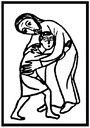
Jesus Christ teaches us to love and serve all people, regardless of their ethnicity or nationality. To understand this, we need to look no further than to the Parable of the Good Samaritan (Luke 10:25-37). Every time we celebrate the Divine Liturgy, it is offered "on behalf of all, and for all." As Orthodox Christians we stand against racism and bigotry. All human beings share one common identity as children of God. "There is neither Jew nor Greek, slave nor free, male nor female, for you are all one in Christ Jesus" (Galatian 3:28)

To Our Guests
Throughout our services, we use the more formal "thy" and "thou" or what is commonly referred to as King Jamesean English.  The Lord's Prayer is recited as follows:

Our Father, who art in heaven, hallowed be thy Name,
Thy Kingdom come, Thy Will be done, as on earth as it is in heaven,
Give us this day our daily bread, and forgive us our debts, as we forgive our debtors,
Lead us not into temptation but deliver us from the Evil One.

Please join us after Liturgy for refreshments and hospitality.

Pastoral Care - General Information

Emergency Sick Calls can be made at any time. Please call Fr Steven at (860) 322-2906, when a family member is admitted to the hospital.
Anointing in Sickness: The Sacrament of Unction is available in Church, the hospital, or your home, for anyone who is sick and suffering, however severe. 
Marriages and Baptisms require early planning, scheduling and selections of sponsors (crown bearers or godparents). See Father before booking dates and reception halls!
Funerals are celebrated for practicing Orthodox Christians. Please see Father for details. The Church opposes cremation; we cannot celebrate funerals for cremations.

Members of our Parish Council are:

Marlene Melesko - President
Sarah Senetcen - Member at Large
Boris Doph - Treasurer
Dierdre Cottergarfield - Vice President
Luba Martins - Secretary

Mission Statement
St. Alexis Orthodox Christian Church is a local English speaking community of the Orthodox Church in America (OCA) on the shoreline of Connecticut.

St. Alexis exists to:

  • Call all people to Christ
  • Worship as a community 
  • Experience the joy of Christ in our lives 
  • Share this joy with those around us 
  • Educate people about the Truth and Presence of Orthodoxy 
  • We offer the love of Christ to those in need, both in word and action.


Announcements

Parish Picnic

The weather does not look overly accommodating for Sunday's scheduled picnic. I will make the final determination early Sunday morning as to whether we still attend at Clinton Beach. If not, we will have coffee hour as usual.

Be sure to check your email or the parish web page for specifics.

AED Use

Video instructions for the use of the Automated Electronic Defibulators can be found here:

https://drive.google.com/open?id=1Qas3q7O3mletF8ceJOq9g4uQzReii8GG&usp=drive_fs

Filesharing

https://sites.google.com/stalexischurch.net/parish/home

If you are asked to enter a username and password, please contact Fr Steven via email.

If you would like to update yourself on the current status of the Strategic Planning, please use the following link.

https://sites.google.com/stalexischurch.net/parish/strategic-planning


Prayers, Intercessions and Commemorations

Again we pray that we may be made worthy of founding in our Diocese a monastery in honor
of our Most Holy Lady the Theotokos and Ever-Virgin Mary, let us pray to the Lord!

Pray for: All those confined to hospitals, nursing homes, and their own homes due to illness; for all those who serve in the armed forces; widows, orphans, prisoners, victims of violence, and refugees;

All those suffering chronic illness, financial hardship, loneliness, addictions, abuse, abandonment and despair; those who are homeless and dispossesed, those who are institutionalize, those who have no one to pray for them;

All Orthodox seminarians & families; all Orthodox monks and nuns, and all those considering monastic life; all Orthodox missionaries and their families.

All those who have perished due to hatred, intolerance, predjudice; pestilence and natural disaster; all those departed this life in the hope of the Resurrection.

Please let Fr. Steven know via email if you have more names for which to pray.

  • Departed:  Maria
  • Clergy and their families: Fr Sergei B, Fr Vladimir, Fr Vladimir, Fr John, Fr Alexander
  • ​Catechumen: Joshua Figueroa
  • Individuals and Families: Luba, Suzanne, Rosemary,  Daniel & Dayna, Kristen, Victor, Susan, Gregory, Nina
  • Birthdays and Name’s Days this Month: Michael Kuziak (8/4), Douglas Kuziak (8/12), Stasia PenkoffLedbeck (8/16), Samual Jankura (8/18), Kyle Hollis (8/23), Susan Egan (8/24), Anastasia Littlefield (8/30)
  • Anniversaries this Month:  Valery and Jason Danilack-Federer (7/7) Anne & Fr Steven Hosking (8/24), Maureen and Dn Timothy Skuby (8/30)
  • ​Expecting and Newborn:  
  • Traveling: 
  • Sick and those in distress: Nancy, Boris, Glenn, John, Joan, Sharon, William, Sharon, Alexander, Olga, Christine, Tatianna, Stormy, Vassily

Today’s commemorated feasts and saints

12th SUNDAY AFTER PENTECOST — Tone 3. Leavetaking of the Dormition. Prousiotissa Icon of the Mother of God. Martyr Lupus, slave of St. Demetrius of Thessalonica (4th c.). Hieromartyr Irenæus, Bishop of Lyons (202). Ss. Eutychius (ca. 540) and Florentius (547), of Nursia. . St. Callinicus, Patriarch of Constantinople (705).

Again we pray for those who have lost their lives because of the wars in Ukraine and in the Middle East: that the Lord our God may look upon them with mercy, and give them rest where there is neither sickness, or sorrow, but life everlasting.

Again we pray for mercy, life, peace, health, salvation, for those who are suffering, wounded, grieving, or displaced because of the wars in Ukraine and in the Middle East.

Again we pray for a cessation of the hostilities against Ukraine and the Middle East, and that reconciliation and peace will flourish there, we pray thee, hearken and have mercy.

Again we pray thee, O Lord our God: We are all called to be the branches of the spiritual vine that grew from the seeds of the Orthodox Faith that our missionary fathers, Herman and Innocent and their companions, planted and nurtured among the native peoples of Alaska, a vine that bears fruit to this day throughout our land, as we imitate the virtues of those husbandmen, of the many saints known only to God, of the Martyr Peter the Aleut, and of our Mother Olga of Kwethluk; through their intercessions, O Lord, hear us and have mercy!

Again we pray thee, O God our Savior: Look with favor upon us, the families and spiritual children of the peoples who came to our land from the old world and brought with them the Orthodox Faith, which they held fast and nurtured in their labors in the mines and mills and on the farms of this new land, and among the challenges of its great cities; we pray thee, O Lord, hear us and have mercy!

Again we pray thee, O Lord our God: We have thy Mother as the Protectress of Orthodox Christians in our North American lands; as we joyfully celebrate her patronage and her miracles, we pray thee, O Lord, through her intercessions, in all our challenges, hear us and have mercy!


Parish Calendar

  • St Alexis Parish

    August 23 to August 31, 2026

    Sunday, August 23

    12th Sunday after Pentecost

    Kyle Hollis

    Kaitlyn Luft

    9:15AM 3rd Hour

    9:30AM Divine Liturgy

    11:30AM Parish Picnic

    Monday, August 24

    Susan Egan

    Hieromartyr Eutychius; Trans. Rel. Peter, Metr. Kiev

    6:00PM Diocesan Council meeting

    Tuesday, August 25

    Relics of Apostle Bartholomew

    8:30AM Daily Matins

    6:00PM Strategic Planning Mtg

    Wednesday, August 26

    Martyrs Adrian and Natalia; Vladimir Icon

    Ed Hayes

    Thursday, August 27

    Ven. Poemen the Great

    8:30AM Daily Matins

    Friday, August 28

    Ven. Job of Pochaev

    Saturday, August 29

    Beheading of St John the Baptist

    3:30PM Wedding Rehearsal

    5:30PM Great Vespers

    Sunday, August 30

    Anastasia Littlefield - B

    13th Sunday after Pentecost

    Skuby - A

    9:15AM 3rd Hour

    9:30AM Divine Liturgy

    3:30PM Wedding

    Monday, August 31

    The Placing of the Honorable Sash of the Most Holy Theotokos

    Sash of the Theotokos

    Irene Kaiser - B


Saints and Feasts

August 23

Apodosis of the Dormition of our Most Holy Lady the Theotokos and Ever Virgin Mary

Concerning the Dormition of the Theotokos, this is what the Church has received from ancient times from the tradition of the Fathers. When the time drew nigh that our Savior was well-pleased to take His Mother to Himself, He declared unto her through an Angel that three days hence, He would translate her from this temporal life to eternity and bliss. On hearing this, she went up with haste to the Mount of Olives, where she prayed continuously. Giving thanks to God, she returned to her house and prepared whatever was necessary for her burial. While these things were taking place, clouds caught up the Apostles from the ends of the earth, where each one happened to be preaching, and brought them at once to the house of the Mother of God, who informed them of the cause of their sudden gathering. As a mother, she consoled them in their affliction as was meet, and then raised her hands to Heaven and prayed for the peace of the world. She blessed the Apostles, and, reclining upon her bed with seemliness, gave up her all-holy spirit into the hands of her Son and God.

With reverence and many lights, and chanting burial hymns, the Apostles took up that God-receiving body and brought it to the sepulchre, while the Angels from Heaven chanted with them, and sent forth her who is higher than the Cherubim. But one Jew, moved by malice, audaciously stretched forth his hand upon the bed and immediately received from divine judgment the wages of his audacity. Those daring hands were severed by an invisible blow. But when he repented and asked forgiveness, his hands were restored. When they had reached the place called Gethsemane, they buried there with honor the all-immaculate body of the Theotokos, which was the source of Life. But on the third day after the burial, when they were eating together, and raised up the artos (bread) in Jesus' Name, as was their custom, the Theotokos appeared in the air, saying "Rejoice" to them. From this they learned concerning the bodily translation of the Theotokos into the Heavens.

These things has the Church received from the traditions of the Fathers, who have composed many hymns out of reverence, to the glory of the Mother of our God (see Oct. 3 and 4).


August 23

Our Holy Father Irenaeus, Bishop of Lyons

The Holy Hieromartyr Irenaeus was born in Asia Minor about the year 120, and in his youth was a disciple of Saint Polycarp, Bishop of Smyrna. Saint Irenaeus was sent to Lyons in Gaul, to be a fellow labourer of Pothinus, Bishop of Lyons (celebrated June 2), who had also been a disciple of Saint Polycarp. After the martyrdom of Saint Pothinus, Saint Irenaeus succeeded him as Bishop of Lyons. Besides the assaults of paganism, Irenaeus found himself compelled to do battle with many Gnostic heresies, against which he wrote his greatest work, A Refutation and Overthrow of Knowledge Falsely So Called . He was also a peace-maker within the Church. When Victor, Bishop of Rome, was prepared to excommunicate the Christians of Asia Minor for following a different tradition celebrating Pascha, Irenaeus persuaded him to moderate his zeal, and mediated peace. He made Lyons an illustrious bastion of Orthodoxy and a school of piety, and sealed his confession with martyrdom about the year 202, during the reign of Septimius Severus. He is not to be confused with Saint Irenaeus, Bishop of Sirmium, also celebrated today, who was beheaded and cast into a river in 304 under Diocletian.


August 24

Eutyches the Hieromartyr & Disciple of St. John the Theologian

Saint Eutyches was a disciple of Saint John the Theologian and a fellow laborer of the holy Apostle Paul. He preached the Gospel in many places, pulled down the idols' temples, and suffered imprisonments and many torments at the hands of the idolaters. He finally reposed in peace in deep old age in his native city of Sebastia, near Tarsus.


August 25

Return of the Body of Bartholomew the Glorious Apostle

Concerning the Apostle Bartholomew, see June 11


August 27

Poimen the Great

Saint Pimen was from Egypt and shone forth in the ascetical life in Scete in the fourth century; he was renowned for his discretion. Many of his sayings and deeds are preserved in the Paradise of the Fathers and the Sayings of the Fathers.


August 28

Moses the Black of Scete

Saint Moses, who is also called Moses the Black, was a slave, but because of his evil life, his master cast him out, and he became a ruthless thief, dissolute in all his ways. Later, however, coming to repentance, he converted, and took up the monastic life under Saint Isidore of Scete. He gave himself over to prayer and the mortification of the carnal mind with such diligence that he later became a priest of exemplary virtue. He was revered by all for his lofty ascetical life and for his great humility. Once the Fathers in Scete asked Moses to come to an assembly to judge the fault of a certain brother, but he refused. When they insisted, he took a basket which had a hole in it, filled it with sand, and carried it on his shoulders. When the Fathers saw him coming they asked him what the basket might mean. He answered, "My sins run out behind me, and I do not see them, and I am come this day to judge failings which are not mine." When a barbarian tribe was coming to Scete, Moses, conscious that he himself had slain other men when he was a thief, awaited them and was willingly slain by them with six other monks, at the end of the fourth century. He was a contemporary of Saint Arsenius the Great (see May 8).


August 29

Beheading of the Holy and Glorious Prophet, Forerunner and Baptist John

The divine Baptist, the Prophet born of a Prophet, the seal of all the Prophets and beginning of the Apostles, the mediator between the Old and New Covenants, the voice of one crying in the wilderness, the God-sent Messenger of the incarnate Messiah, the forerunner of Christ's coming into the world (Esaias 40: 3; Mal. 3: 1); who by many miracles was both conceived and born; who was filled with the Holy Spirit while yet in his mother's womb; who came forth like another Elias the Zealot, whose life in the wilderness and divine zeal for God's Law he imitated: this divine Prophet, after he had preached the baptism of repentance according to God's command; had taught men of low rank and high how they must order their lives; had admonished those whom he baptized and had filled them with the fear of God, teaching them that no one is able to escape the wrath to come if he do not works worthy of repentance; had, through such preaching, prepared their hearts to receive the evangelical teachings of the Savior; and finally, after he had pointed out to the people the very Savior, and said, "Behold the Lamb of God, Which taketh away the sin of the world" (Luke 3:2-18; John 1: 29-36), after all this, John sealed with his own blood the truth of his words and was made a sacred victim for the divine Law at the hands of a transgressor.

This was Herod Antipas, the Tetrarch of Galilee, the son of Herod the Great. This man had a lawful wife, the daughter of Arethas (or Aretas), the King of Arabia (that is, Arabia Petraea, which had the famous Nabatean stone city of Petra as its capital. This is the Aretas mentioned by Saint Paul in II Cor. 11:32). Without any cause, and against every commandment of the Law, he put her away and took to himself Herodias, the wife of his brother Philip, to whom Herodias had borne a daughter, Salome. He would not desist from this unlawful union even when John, the preacher of repentance, the bold and austere accuser of the lawless, censured him and told him, "It is not lawful for thee to have thy brother's wife" (Mark 6: 18). Thus Herod, besides his other unholy acts, added yet this, that he apprehended John and shut him in prison; and perhaps he would have killed him straightway, had he not feared the people, who had extreme reverence for John. Certainly, in the beginning, he himself had great reverence for this just and holy man. But finally, being pierced with the sting of a mad lust for the woman Herodias, he laid his defiled hands on the teacher of purity on the very day he was celebrating his birthday. When Salome, Herodias' daughter, had danced in order to please him and those who were supping with him, he promised her -- with an oath more foolish than any foolishness -- that he would give her anything she asked, even unto the half of his kingdom. And she, consulting with her mother, straightway asked for the head of John the Baptist in a charger. Hence this transgressor of the Law, preferring his lawless oath above the precepts of the Law, fulfilled this godless promise and filled his loathsome banquet with the blood of the Prophet. So it was that that all-venerable head, revered by the Angels, was given as a prize for an abominable dance, and became the plaything of the dissolute daughter of a debauched mother. As for the body of the divine Baptist, it was taken up by his disciples and placed in a tomb (Mark 6: 21 - 29). Concerning the finding of his holy head, see February 24 and May 25.


Hymns of the Day

Tone 3    Troparion    (Resurrection)
Let the heavens rejoice!
Let the earth be glad!
For the Lord has shown strength with His arm.
He has trampled down death by death.
He has become the first born of the dead.
He has delivered us from the depths of hell,
and has granted to the world//
great mercy.

Tone 1    Troparion    (Dormition)
In giving birth thou didst preserve thy virginity.
In falling asleep thou didst not forsake the world, O Theotokos.
Thou wast translated to life, O Mother of Life,//
and by thy prayers thou dost deliver our souls from death.

Glory to the Father, and to the Son, and to the Holy Spirit

Tone 3     Kontakion    (Resurrection)
On this day Thou didst rise from the tomb, O Merciful One,
leading us from the gates of death.
On this day Adam exults as Eve rejoices;
with the Prophets and Patriarchs//
they unceasingly praise the divine majesty of Thy power.

now and ever and unto ages of ages. Amen.

Tone 2    Kontakion    (Dormition)
Neither the tomb, nor death, could hold the Theotokos,
who is constant in prayer and our firm hope in her intercessions.
For being the Mother of Life,//
she was translated to life by the One Who dwelt in her virginal womb.

(Instead of “It is truly meet…,” we sing:)

The Angels, as they looked upon the Dormition of the Virgin, 
were struck  with wonder, 
seeing how the Virgin went up from earth to heaven.
 
The limits of nature are overcome in thee, O Pure Virgin:
for birthgiving remains virginal, and life is united to death;
a virgin after childbearing and alive after death,
thou dost ever save thine inheritance, O Theotokos.

COMMUNION HYMN

Praise the Lord from the heavens, praise Him in the highest! 
I will receive the cup of salvation and call on the Name of the Lord. Alleluia (3X)


Gospel and Epistle Readings

Epistle Reading

Prokeimenon. 3rd Tone. Psalm 46.6,1.
Sing praises to our God, sing praises.
Verse: Clap your hands, all you nations.

The reading is from St. Paul's First Letter to the Corinthians 15:1-11.

Brethren, I would remind you in what terms I preached to you the gospel, which you received, in which you stand, by which you are saved, if you hold it fast -- unless you believed in vain. For I delivered to you as of first importance what I also received, that Christ died for our sins in accordance with the scriptures, that he was buried, that he was raised on the third day in accordance with the scriptures, and that he appeared to Cephas, then to the twelve. Then he appeared to more than five hundred brethren at one time, most of whom are still alive, though some have fallen asleep. Then he appeared to James, then to all the apostles. Last of all, as to one untimely born, he appeared also to me. For I am the least of the apostles, unfit to be called an apostle, because I persecuted the church of God. But by the grace of God I am what I am, and his grace toward me was not in vain. On the contrary, I worked harder than any of them, though it was not I, but the grace of God which is with me. Whether then it was I or they, so we preach and so you believed.


Gospel Reading

12th Sunday of Matthew
The Reading is from Matthew 19:16-26

At that time, a young man came up to Jesus, kneeling and saying, "Good Teacher, what good deed must I do, to have eternal life?" And he said to him, "Why do you call me good? One there is who is good. If you would enter life, keep the commandments." He said to him, "Which?" And Jesus said, "You shall not kill, You shall not commit adultery, You shall not steal, You shall not bear false witness, Honor your father and mother, and You shall love your neighbor as yourself." The young man said to him, "All these I have observed; what do I still lack?" Jesus said to him, "If you would be perfect, go, sell what you possess and give to the poor, and you will have treasure in heaven; and come, follow me." When the young man heard this he went away sorrowful; for he had great possessions.

And Jesus said to his disciples, "Truly, I say to you, it will be hard for a rich man to enter the kingdom of heaven. Again I tell you, it is easier for a camel to go through the eye of a needle than for a rich man to enter the kingdom of God." When the disciples heard this they were greatly astonished, saying, "Who then can be saved?" But Jesus looked at them and said to them, "With men this is impossible, but with God all things are possible."


Wisdom of the Fathers

Rise from love of the world and love of pleasure. Put care aside, strip your mind, refuse your body. Prayer, after all, is a turning away from the world, visible and invisible. What have I in heaven? Nothing except simply to cling always to You in undistracted prayer. Wealth pleases some, glory others, possessions others, but what I want is to cling to God and to put the hopes of my dispassion in Him (cf. Ps. 72:25, 28).
St. John Climacus
Ladder of Divine Ascent, Step 28: On Prayer; Paulist Press pg. 277, 6th century

Spiritual delight is not enjoyment found in things that exists outside the soul.
St. Isaac of Syria
Unknown, 7th century


Beyond the Sermon

Metropolitan Anthony of Sourozh
The Rich Young Man
(St. Matthew XIX:16-26)
18.08.1991

In the Name of the Father, the Son and the Holy Ghost.
The Lord warns us today of how difficult it is for a man who is rich to enter the Kingdom of God. Does it mean that the Kingdom of God is open only to destitute, to those who are materially poor, who lack everything on earth? No. The Kingdom of God is open to all who are not enslaved by possessions. When we read the first Beatitude, 'Blessed are the poor in spirit for theirs is the Kingdom of Heaven’, we are given a key to this saying: the poor in spirit are those who have understood that they possess nothing which is their own. We have been created as an act of God, loved into existence; we are offered by God communion with Him to which we have no rights. All we are, all we possess is not our own in the sense that we have not made ourselves, we did not create what is seemingly ours - every thing which we are and which we have is love, the love of God and the love of people, and we cannot possess anything because everything is a gift that escapes us the moment we want to have possession of it and say, "It is mine".
On the other hand, the Kingdom of God is really the kingdom of those who are aware that they are infinitely rich because we can expect everything from love divine and from human love. We are rich because we possess nothing, we are rich because we are given all things; and so, it is difficult for one who imagines that he is rich in his own right to belong to that kingdom in which everything is a sign of love, and nothing can be possessed, as it were - taken away from others; because the moment we say that we possess something which is not given us either by God or by human care, we subtract it from the mystery of love.
On the other hand, the moment we cling to anything we become slaves of it. I remember when I was young, a man telling me: Don't you understand that the moment you have taken a copper coin in your hand and are not prepared to open your hand to let it go, you have lost the use of a hand, the use of an arm, the use of your body, because all your attention will be concentrated on not losing this copper coin, - the rest will be forgotten.
Whether we keep in our hand a copper coin, or whether we feel rich in so many other ways - intellectually, emotionally, materially is irrelevant, - we are prisoners, we have lost the use of a limb, the use of our mind, the use of our heart; we can no longer be free, and the Kingdom of God is a kingdom of freedom.
On the other hand also, how difficult it is to one who has never lacked anything, who has always possessed more than he needs, to be aware of the poverty or the need of another: poverty - material, emotional or intellectual, or any other lack. It requires a great deal of understanding and sympathy, it requires from us that we should learn to be attentive to the movements of other people's hearts and to their material needs in order to respond to them. One says in Russian 'A satisfied person no longer understands a hungry one'; which of us can say that we are hungry in any respect? And this is why we do not understand the needs of people - of one another here, or of people beyond the confines of our congregation.
So, let us reflect on that; poverty does not mean destitution; it means freedom from enslavement to an illusion that we are self-sufficient, self-contained, the creator of what we are and what we possess. And also free from enslavement to what is given us to make husbandmen of God.
Let us reflect on this; because if we learn this, if we learn what Saint Paul said that whether he is rich, whether he is destitute, he is equally rich because his richness is in God and in the human love. Then we will be able, whether we possess material things or not, to be free of them, and to belong to God's Kingdom which is a Kingdom of mutual love, or mutual solidarity, of compassion for one another, of giving to one another what we were given freely. Amen.