Publish-header☰
Holy Trinity
Publish Date: 2026-10-18
Bulletin Contents

Organization Icon
Holy Trinity

General Information

  • Phone:
  • (918) 583-2082
  • Fax:
  • na
  • Street Address:

  • 1222 S. Guthrie Ave.

  • Tulsa, OK 74119


Contact Information


Services Schedule

Saturday Evening Vespers: 5:30 pm

Sunday Morning Orthros 8:30 AM

Sunday Morning Divine Liturgy 9:30 AM


Past Bulletins


Hymns of the Day

Resurrectional Apolytikion in the Third Tone

Let the heavens rejoice; let the earth be glad, for the Lord has shown the mighty power of His arm. He trampled down death by death and became the firstborn of the dead. From the depths of Hades, He delivered us and granted to the world great mercy.
Εὐφραινέσθω τὰ οὐράνια, ἀγαλλιάσθω τὰ ἐπίγεια, ὅτι ἐποίησε κράτος, ἐν βραχίονι αὐτοῦ, ὁ Κύριος, ἐπάτησε τῷ θανάτῳ τὸν θάνατον, πρωτότοκος τῶν νεκρῶν ἐγένετο, ἐκ κοιλίας ᾅδου ἐρρύσατο ἡμᾶς, καὶ παρέσχε τῷ κόσμῳ τὸ μέγα ἔλεος.

Apolytikion for Luke the Evangelist in the Third Tone

O Holy Apostle and Evangelist Luke, intercede to our merciful God, that He may grant our souls forgiveness of sins.
Απόστολε Άγιε, καί Ευαγγελιστά Λουκά, πρέσβευε τώ ελεήμονι Θεώ, ίνα πταισμάτων άφεσιν, παράσχη ταίς ψυχαίς ημών.

Apolytikion of the Church in the Plagal Fourth Tone

Εὐλογητὸς εἶ, Χριστὲ ὁ Θεὸς ἡμῶν, * ὁ πανσόφους τοὺς ἁλιεῖς ἀναδείξας, * καταπέμψας αὐτοῖς τὸ Πνεῦμα τὸ ἅγιον, * καὶ δι' αὐτῶν τὴν οἰκουμένην σαγηνεύσας,*  Φιλάνθρωπε, δόξα σοι.


O blessed are You * O Christ our God * Who by sending down * The Holy Spirit upon them * Made the fishermen wise, and through them * Illumined the world* And to you * The universe is ever drawn * All glory to you O Lord

Seasonal Kontakion in the Second Tone

A protection of Christians unshamable, intercessor to our Holy Maker, unwavering, please reject not the prayerful cries of those who are in sin. Instead, come to us, for you are good; your loving help bring unto us, who are crying in faith to you: hasten to intercede and speed now to supplicate, as a protection for all time, Theotokos, for those who honor you.
Προστασία τῶν Χριστιανῶν ἀκαταίσχυντε, μεσιτεία πρὸς τὸν Ποιητὴν ἀμετάθετε. Μὴ παρίδῃς ἁμαρτωλῶν δεήσεων φωνάς, ἀλλὰ πρόφθασον, ὡς ἀγαθή, εἰς τὴν βοήθειαν ἡμῶν, τῶν πιστῶς κραυγαζόντων σοι· Τάχυνον εἰς πρεσβείαν, καὶ σπεῦσον εἰς ἱκεσίαν, ἡ προστατεύουσα ἀεί, Θεοτόκε, τῶν τιμώντων σε.


Gospel and Epistle Readings

Matins Gospel Reading

Ninth Orthros Gospel
The Reading is from John 20:19-31

On the evening of that day, the first day of the week, the doors being shut where the disciples were for fear of the Jews, Jesus came and stood among them and said to them, "Peace be with you." When He had said this, He showed them His hands and His side. Then the disciples were glad when they saw the Lord. Jesus said to them again, "Peace be with you. As the Father has sent Me, even so I send you." And when He had said this, He breathed on them and said to them, "Receive the Holy Spirit. If you forgive the sins of any, they are forgiven; if you retain the sins of any, they are retained." Now Thomas, one of the twelve, called the Twin, was not with them when Jesus came. So the other disciples told him, "We have seen the Lord." But he said to them, "Unless I see in His hands the print of the nails, and place my finger in the mark of the nails, and place my hand in His side, I will not believe." Eight days later, His disciples were again in the house, and Thomas was with them. The doors were shut, but Jesus came and stood among them and said, "Peace be with you." Then He said to Thomas, "Put your finger here, and see My hands; and put out your hand, and place it in My side; do not be faithless, but believing." Thomas answered Him, "My Lord and My God!" Jesus said to him, "Have you believed because you have seen Me? Blessed are those who have not seen and yet believe." Now Jesus did many other signs in the presence of the disciples, which are not written in this book; but these are written that you may believe that Jesus is the Christ, the Son of God, and that believing, you may have life in His name.

Ninth Orthros Gospel
Κατὰ Ἰωάννην 20:19-31

Οὔσης ὀψίας τῇ ἡμέρᾳ ἐκείνῃ τῇ μιᾷ τῶν σαββάτων, καὶ τῶν θυρῶν κεκλεισμένων ὅπου ἦσαν οἱ μαθηταὶ συνηγμένοι διὰ τὸν φόβον τῶν Ἰουδαίων, ἦλθεν ὁ Ἰησοῦς καὶ ἔστη εἰς τὸ μέσον, καὶ λέγει αὐτοῖς· Εἰρήνη ὑμῖν. Καὶ τοῦτο εἰπὼν ἔδειξεν αὐτοῖς τὰς χεῖρας καὶ τὴν πλευρὰν αὐτοῦ· ἐχάρησαν οὖν οἱ μαθηταὶ ἰδόντες τὸν Κύριον. Εἶπεν οὖν αὐτοῖς ὁ Ἰησοῦς πάλιν· Εἰρήνη ὑμῖν, καθὼς ἀπέσταλκέ με ὁ πατήρ, κᾀγὼ πέμπω ὑμᾶς. Καὶ τοῦτο εἰπὼν ἐνεφύσησε καὶ λέγει αὐτοῖς· Λάβετε Πνεῦμα Ἅγιον. Ἄν τινων ἀφῆτε τὰς ἁμαρτίας, ἀφιένται αὐτοῖς, ἄν τινων κρατῆτε, κεκράτηνται. Θωμᾶς δέ, εἷς ἐκ τῶν δώδεκα, ὁ λεγόμενος Δίδυμος, οὐκ ἦν μετʼ αὐτῶν ὅτε ἦλθεν Ἰησοῦς· ἔλεγον οὖν αὐτῷ οἱ ἄλλοι μαθηταί· Ἑωράκαμεν τὸν Κύριον. Ὁ δὲ εἶπεν αὐτοῖς· Ἐὰν μὴ ἴδω ἐν ταῖς χερσὶν αὐτοῦ τὸν τύπον τῶν ἥλων, καὶ βάλω τὸν δάκτυλόν μου εἰς τὸν τύπον τῶν ἥλων, καὶ βάλω τὴν χεῖρά μου εἰς τὴν πλευρὰν αὐτοῦ, οὐ μὴ πιστεύσω. Καὶ μεθʼ ἡμέρας ὀκτὼ πάλιν ἦσαν ἔσω οἱ μαθηταὶ αὐτοῦ, καὶ Θωμᾶς μετʼ αὐτῶν. Ἔρχεται ὁ Ἰησοῦς τῶν θυρῶν κεκλεισμένων, καὶ ἔστη εἰς τὸ μέσον καὶ εἶπεν· Εἰρήνη ὑμῖν. Εἶτα λέγει τῷ Θωμᾶ· φέρε τὸν δάκτυλόν σου ᾧδε, καὶ ἴδε τὰς χεῖράς μου. καὶ φέρε τὴν χεῖρά σου καὶ βάλε εἰς τὴν πλευράν μου, καὶ μὴ γίνου ἄπιστος ἀλλὰ πιστός. Καὶ ἀπεκρίθη ὁ Θωμᾶς, καὶ εἶπεν αὐτῷ· Ὁ Κύριός μου καὶ ὁ Θεός μου. Λέγει αὐτῷ ὁ Ἰησοῦς· Ὅτι ἑώρακάς με πεπίστευκας, μακάριοι οἱ μὴ ἰδόντες, καὶ πιστεύσαντες. Πολλὰ μὲν οὖν καὶ ἄλλα σημεῖα ἐποίησεν ὁ Ἰησοῦς ἐνώπιον τῶν μαθητῶν αὐτοῦ, ἃ οὐκ ἔστιν γεγραμμένα ἐν τῷ βιβλίῳ τούτῳ· ταῦτα δὲ γέγραπται ἵνα πιστεύσητε ὅτι ὁ Ἰησοῦς ἐστιν ὁ Χριστὸς ὁ υἱὸς τοῦ Θεοῦ, καὶ ἵνα πιστεύοντες, ζωὴν ἔχητε ἐν τῷ ὀνόματι αὐτοῦ.


Epistle Reading

Prokeimenon. Plagal Fourth Tone. Psalm 18.4,1.
Their voice has gone out into all the earth.
Verse: The heavens declare the glory of God.

The reading is from St. Paul's Letter to the Colossians 4:5-11, 14-18.

Brethren, conduct yourselves wisely toward outsiders, making the most of the time. Let your speech always be gracious, seasoned with salt, so that you may know how you ought to answer every one. Tychicos will tell you all about my affairs; he is a beloved brother and faithful minister and fellow servant in the Lord. I have sent him to you for this very purpose, that you may know how we are and that he may encourage your hearts, and with him Onesimos, the faithful and beloved brother, who is one of yourselves. They will tell you of everything that has taken place. Aristarchos my fellow prisoner greets you, and Mark the cousin of Barnabas (concerning whom you have received instructions if he comes to you, receive him), and Jesus who is called Justos. These are the only men of the circumcision among my fellow workers for the kingdom of God, and they have been a comfort to me. Luke the beloved physician and Demas greet you. Give my greetings to the brethren at Laodicea, and to Nympha and the church in her house. And when this letter has been read among you, have it read also in the church of the Laodiceans; and see that you read also the letter from Laodicea. And say to Archippos, "See that you fulfill the ministry which you have received in the Lord." I, Paul, write this greeting with my own hand. Remember my fetters. Grace be with you. Amen.

Προκείμενον. Plagal Fourth Tone. ΨΑΛΜΟΙ 18.4,1.
Εἰς πᾶσαν τὴν γῆν ἐξῆλθεν ὁ φθόγγος αὐτῶν.
Στίχ. Οἱ οὐρανοὶ διηγοῦνται δόξαν Θεοῦ.

τὸ Ἀνάγνωσμα Πρὸς Κολοσσαεῖς 4:5-11, 14-18.

Ἀδελφοί, ἐν σοφίᾳ περιπατεῖτε πρὸς τοὺς ἔξω, τὸν καιρὸν ἐξαγοραζόμενοι. Ὁ λόγος ὑμῶν πάντοτε ἐν χάριτι, ἅλατι ἠρτυμένος, εἰδέναι πῶς δεῖ ὑμᾶς ἑνὶ ἑκάστῳ ἀποκρίνεσθαι. Τὰ κατʼ ἐμὲ πάντα γνωρίσει ὑμῖν Τυχικός, ὁ ἀγαπητὸς ἀδελφὸς καὶ πιστὸς διάκονος καὶ σύνδουλος ἐν κυρίῳ· ὃν ἔπεμψα πρὸς ὑμᾶς εἰς αὐτὸ τοῦτο, ἵνα γνῷ τὰ περὶ ὑμῶν καὶ παρακαλέσῃ τὰς καρδίας ὑμῶν· σὺν Ὀνησίμῳ τῷ πιστῷ καὶ ἀγαπητῷ ἀδελφῷ, ὅς ἐστιν ἐξ ὑμῶν. Πάντα ὑμῖν γνωριοῦσιν τὰ ὧδε. Ἀσπάζεται ὑμᾶς Ἀρίσταρχος ὁ συναιχμάλωτός μου, καὶ Μᾶρκος ὁ ἀνεψιὸς Βαρνάβᾳ, περὶ οὗ ἐλάβετε ἐντολάς - ἐὰν ἔλθῃ πρὸς ὑμᾶς, δέξασθε αὐτόν· καὶ Ἰησοῦς ὁ λεγόμενος Ἰοῦστος, οἱ ὄντες ἐκ περιτομῆς· οὗτοι μόνοι συνεργοὶ εἰς τὴν βασιλείαν τοῦ θεοῦ, οἵτινες ἐγενήθησάν μοι παρηγορία. Ἀσπάζεται ὑμᾶς Λουκᾶς ὁ ἰατρὸς ὁ ἀγαπητός, καὶ Δημᾶς. Ἀσπάσασθε τοὺς ἐν Λαοδικείᾳ ἀδελφούς, καὶ Νυμφᾶν, καὶ τὴν κατʼ οἶκον αὐτοῦ ἐκκλησίαν. Καὶ ὅταν ἀναγνωσθῇ παρʼ ὑμῖν ἡ ἐπιστολή, ποιήσατε ἵνα καὶ ἐν τῇ Λαοδικαίων ἐκκλησίᾳ ἀναγνωσθῇ, καὶ τὴν ἐκ Λαοδικείας ἵνα καὶ ὑμεῖς ἀναγνῶτε. Καὶ εἴπατε Ἀρχίππῳ, Βλέπε τὴν διακονίαν ἣν παρέλαβες ἐν κυρίῳ, ἵνα αὐτὴν πληροῖς. Ὁ ἀσπασμὸς τῇ ἐμῇ χειρὶ Παύλου. Μνημονεύετέ μου τῶν δεσμῶν. Ἡ χάρις μεθʼ ὑμῶν. Ἀμήν.


Gospel Reading

Luke the Evangelist
The Reading is from Luke 10:16-21

The Lord said to his disciples, "He who hears you hears me, and he who rejects you rejects me, and he who rejects me rejects him who sent me." The seventy returned with joy, saying, "Lord, even the demons are subject to us in your name!" And he said to them, "I saw Satan fall like lightning from heaven. Behold, I have given you authority to tread upon serpents and scorpions, and over all the power of the enemy; and nothing shall hurt you. Nevertheless do not rejoice in this, that the spirits are subject to you; but rejoice that your names are written in heaven." In that same hour he rejoiced in the Holy Spirit and said, "I thank you, Father, Lord of heaven and earth, that you have hidden these things from the wise and understanding and revealed them to babes; yes, Father, for such was your gracious will."

Luke the Evangelist
Κατὰ Λουκᾶν 10:16-21

Εἶπεν ὁ Κὐριος τοῖς ἑαυτοῦ μαθηταῖς· ῾Ο ἀκούων ὑμῶν ἐμοῦ ἀκούει, καὶ ὁ ἀθετῶν ὑμᾶς ἐμὲ ἀθετεῖ· ὁ δὲ ἐμὲ ἀθετῶν ἀθετεῖ τὸν ἀποστείλαντά με. ῾Υπέστρεψαν δὲ οἱ ἑβδομήκοντα μετὰ χαρᾶς λέγοντες· Κύριε, καὶ τὰ δαιμόνια ὑποτάσσεται ἡμῖν ἐν τῷ ὀνόματί σου. Εἶπε δὲ αὐτοῖς· ἐθεώρουν τὸν σατανᾶν ὡς ἀστραπὴν ἐκ τοῦ οὐρανοῦ πεσόντα. ἰδοὺ δίδωμι ὑμῖν τὴν ἐξουσίαν τοῦ πατεῖν ἐπάνω ὄφεων καὶ σκορπίων καὶ ἐπὶ πᾶσαν τὴν δύναμιν τοῦ ἐχθροῦ, καὶ οὐδὲν ὑμᾶς οὐ μὴ ἀδικήσῃ. πλὴν ἐν τούτῳ μὴ χαίρετε, ὅτι τὰ πνεύματα ὑμῖν ὑποτάσσεται· χαίρετε δὲ ὅτι τὰ ὀνόματα ὑμῶν ἐγράφη ἐν τοῖς οὐρανοῖς. ᾿Εν αὐτῇ τῇ ὥρᾳ ἠγαλλιάσατο τῷ πνεύματι ὁ ᾿Ιησοῦς καὶ εἶπεν· ἐξομολογοῦμαί σοι, πάτερ, κύριε τοῦ οὐρανοῦ καὶ τῆς γῆς, ὅτι ἀπέκρυψας ταῦτα ἀπὸ σοφῶν καὶ συνετῶν, καὶ ἀπεκάλυψας αὐτὰ νηπίοις· ναί, ὁ πατήρ, ὅτι οὕτως ἐγένετο εὐδοκία ἔμπροσθέν σου.


Saints and Feasts

October 18

Luke the Evangelist

This Apostle was an Antiochean, a physician by trade, and a disciple and companion of Paul. He wrote his Gospel in Greek after Matthew and Mark, after which he wrote the Acts of the Apostles, and dedicated both works to Theophilus, who, according to some, was Governor of Achaia. He lived some eighty-six years and died in Achaia, perhaps in Patras, the capital of this district. His emblem is the calf, the third symbolical beast mentioned by Ezekiel (1:10), which is a symbol of Christ's sacrificial and priestly office, as Saint Irenaeus says.


October 18

Marinos the Martyr


HTGOC Tulsa Calendar

  • HTGOC Calendar

    October 18 to November 2, 2026

    Sunday, October 18

    St. Luke

    8:30AM Orthros

    9:30AM Divine Liturgy

    Tuesday, October 20

    6:30AM Men’s Study Group

    Wednesday, October 21

    5:00PM Paraklesis

    6:00PM GOYA Basketball Practice

    6:00PM Journey to Fullness Video Catechism Series

    Friday, October 23

    Saint James

    Saturday, October 24

    8:00AM Hall Reserved

    5:30PM CANCEL TONIGHT-Vespers

    6:30PM GOYA Event: Bonfire and Pumpkin Carving

    Sunday, October 25

    8:30AM Orthros

    9:30AM Divine Liturgy

    10:00AM Red Cross Blood Drive in the Hall (Sponsored by AHEPA)

    11:00AM AHEPA Oxi Day Recognition

    6:00PM AHEPA Meeting

    Monday, October 26

    St. Demetrios

    8:30AM Orthros followed by Divine Liturgy

    Tuesday, October 27

    6:30AM Men’s Study Group

    Wednesday, October 28

    5:00PM Paraklesis

    6:00PM GOYA Basketball Practice

    6:00PM Journey to Fullness Video Catechism Series

    Friday, October 30

    4:30PM Wedding Rehearsal

    Saturday, October 31

    4:00PM Wedding

    5:30PM CANCEL TONIGHT-Vespers

    Sunday, November 1

    8:30AM Orthros

    9:30AM Divine Liturgy

    Monday, November 2

    His Eminence Archbishop Elpidophoros' Name Day


Community News and Info

Note About Security at Church

It is up to all of us to make sure the Church and Hall are secure before leaving the premises.  There have been a few occasions recently when the first person arriving in the morning has found doors unlocked and or open, lights on, and air conditioning running all night.

We ask that everyone practices good stewardship and care for our community, our church, and hall, with the following:

  • Confirm all lights are off.  If you are the last one in a room/classroom/area, please turn off the light. 
  • Air Conditioning/Heat:  the thermostats are programmed and should not need to be adjusted on a regular basis.  If you adjust a thermostat, plesae return it to the schedule when leaving. 
  • Doors/Locks: If you unlock a door, please lock it before you leave.  If you are the last one to leave, please make sure all doors are locked and secure, even if someone else opened or unlocked it.

Please continue to confirm that the Alarm is disarmed before entering the chruch or hall, including hte North Kitchen Door, thank you.

Men's Group

Our men's group will meet at 6:30am this Tuesday.

Paraklesis

Please join us for Paraklesis this Wednesday at 5pm. 

Sunday Church School Blessing

We will have a blessing for the beginning of Sunday Church School this week at the end of Divine Liturgy.  There will be Registration and Information area set up in the Hall during Coffee Hour.

GOYA News

Registration for the Metroplis of Denver GOYA Basketball Tournament is open!  All GOYAns and coaches, please register during the 'Early Bird Registration Period' which ends this Tuesday, October 13th.  The Tournament will take place in Dallas, January 15-18, 2027.

We will have GOYA Basektball practice this Wednesday, October 7 at 6pm (after Paraklesis).  All middle school and high school age students at Holy Trinity are welcome!  

Our next GOYA event will be Saturday evening, October 24th.  We look forward to getting together for a bonfire and pumpkin carving.  More details to come in the next couple of weeks.

Faith Group, and Hope & Joy Group Outing

Faith Group (infants/toddlers and their parents) and Hope & Joy Group (elementary ages) will meet at Charmichael's Pumpkin Patch at 11am on Friday, October 16th (during Fall Break).  Bring a picnic lunch, or buy lunch there. 

Journey To Fullness - Orthodoxy Video Series

A 16-episode video series created by Fr. Barnabas Powell through Ancient Faith Ministries, designed to introduce inquirers to the Orthodox Christian Faith. Though it was made with inquirers in mind, all can benefit from this video series - regardless of whether they have lived their entire lives in the Church or are encountering her for the first time. The goal of this class is to give everyone who takes it an opportunity to journey deeper into the fullness that is the Orthodox Christian Faith.  

We'll begin with the first episode this Wendnesday, October 7 at 6pm (after Paraklesis).  Thanks once again to our Inreach & Outreach Ministry for making this available 

AHEPA News

Please join us for an OXI Day recognition after Divine Liturgy on Sunday, October 25.  We'll be hosting another Red Cross Blood Drive until 3pm on the 25th; and our Monthly AHEPA Meeting will be at 6pm that evening in the Hall.



Diakonia Newsletter

What does “Apology” mean? From The Original Greek: Apologia (Ἀπολογία)

What does “Apology” mean? From The Original Greek: Apologia (Ἀπολογία)

Fr. George Parsenios (HCHC ’96)

The Greek term apologia means something very different from what we imply today by the word “apology.” When we apologize for something in English, we express regret for having done it. The Greek sense of “apology” is not an expression of regret, but the opposite. An apology is a defense, an affirmation. Plato and Xenophon gave the title “Apology” to the speech that Socrates delivered to the Athenian jury that convicted him of impiety and sentenced him to death. In keeping with this ancient sense of the word, Christians have long referred to the defense of their faith as “apologetics.” Apologia appears in this usage in the New Testament, as in 1 Peter 3:15: “Always be prepared to make a defense (apologia) to anyone who calls you to account for the hope that is in you.” St. Paul also speaks before the governor in Acts 24:10 by saying, “I make my apology,” when he responds to accusations about his faith. St. Justin Martyr (150 AD) is recognized as the first dedicated Christian apologist. He wrote two extensive works (First and Second Apologies) to defend Christianity against its pagan detractors, as well as his Dialogue with Trypho to counter Jewish criticism.

Fr. George Parsenios is Professor of New Testament at Holy Cross Greek Orthodox School of Theology. www.hchc.edu


“What’s in a number?”—Reflections From Today’s Reading – Luke 10:16-21

“What’s in a number?”—Reflections From Today’s Reading – Luke 10:16-21

Fr. George Parsenios (HCHC ’96)

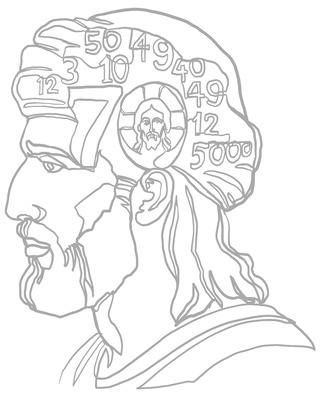
Why are there seventy apostles mentioned in today’s Gospel reading? The number 70 is not random, and we do well to reflect on its significance for a moment. Numbers, after all, are important in Christian theology and liturgy, but not like they are in the philosophy of Pythagoras. Pythagoras believed that numbers had mystical qualities, and that numbers were not just abstract concepts but the physical building blocks of reality. For Christians, by contrast, certain numbers are important because they are associated with principal moments of divine revelation. The number three, for example, can signify our belief in the Holy Trinity. For this reason, in our liturgical life we very often say, “Lord, have mercy” three times, and we perform a host of other ceremonial actions three times as well. The number twelve is equally important, because there were twelve tribes of Israel, and there were twelve original disciples of Christ. This is why we say, “Lord, have mercy” twelve times in services like Orthros, Great Compline, and many others. Given the importance of these other numbers, what is the significance of the number 70? Two key issues are foremost. First, Moses had a council of seventy elders around him when he led the people of Israel (Numbers 11:16-17). God promised that he would raise up for his people a prophet like Moses, and Jesus is that prophet. He is the “New Moses.” If Moses had seventy advisors, Jesus has seventy as well. With a different emphasis, Genesis 10 lists seventy descendants of Noah which means that the world is divided into seventy different nations of people. When Jesus sent out seventy apostles, he symbolized that he was sending his emissaries to every nation of the earth. The seventy of today’s Gospel, therefore, is a very important and noteworthy number.

Fr. George Parsenios is Professor of New Testament at Holy Cross Greek Orthodox School of Theology. www.hchc.edu


The Eucharist: Holy Communion

The Eucharist: Holy Communion

By Father Steven Tsichlis, MDiv-Holy Cross 1978

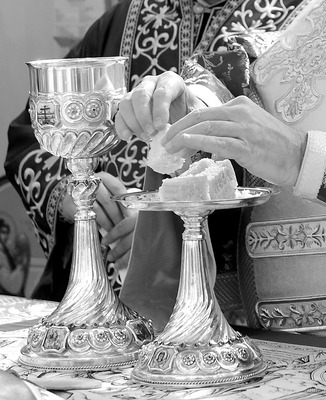
In the Liturgy of the Eucharist, the Lord Jesus gives us everything, giving Himself completely to us. The Word of God not only became flesh for us centuries ago in a far-away country; the Word of God becomes food and drink for us now at every celebration of the Liturgy. The word that best expresses this mystery of God's total offering of Himself to us in love is communion. This is the word that best contains the truth that, in and through Jesus, God wants not only to teach us, instruct us and inspire us, but He wants to become one with us. God desires to be fully and completely united with us so that we will be bound together with Him in a love that will stretch into eternity. This is what St. Paul means when he speaks of life "in Christ" (Galatians 1:22 and 2:20; 1 Corinthians 15:22; Romans 8:1).

Living a Eucharistic Life is living with gratitude as the basic stance to the life we have been given. Ultimately, the Liturgy summarizes the life we are called to live in communion with God and is, among other things, a school for Christian living. Within the Liturgy we come to know God, the world, and ourselves through Christ in the Holy Spirit, because the Liturgy communicates the meaning and purpose of life and helps us to understand and internalize both the tragedy of the human condition as well as the limitless expanse and potential of the new life in Christ offered freely to everyone.

Living in a Eucharistic way has everything to do with seeing life as a gift, a gift for which we are forever grateful. It is, after all, not happy people who are grateful, but grateful people who are happy. There should never be a Liturgy that we attend in which we do not come away with this insight for living. There should never be a time that we attend Liturgy when there is not a movement of our heart: from a hardened heart to a grateful heart, from a heart of stone to a heart of flesh, from a heart often filled with resentment or anger or self-righteousness to a heart filled with gratitude, compassion, faith, hope, and love.

Faith in Action

As you receive Christ in Holy Communion, let your heart move from gratitude to action, bringing His love, compassion, and hope into someone's life this week.


This Week’s Look at Church History: St. John of Kronstadt

This Week’s Look at Church History: St. John of Kronstadt

Ben Malian, MTS-Holy Cross 2026

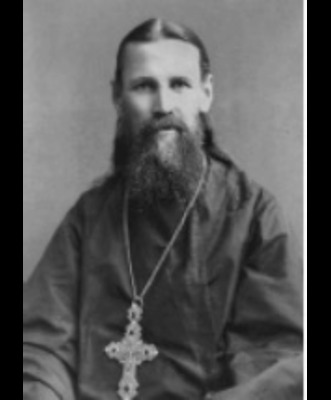
Archpriest John Ilyich Sergiyev, better known as St. John of Kronstadt (d. 10/31/1908), was a leading light of the Orthodox Church in the early 20th Century. A powerful preacher, service-minded pastor, and celebrated wonderworker, he was a married priest serving St. Andrew’s Cathedral in Kronstadt, the gritty naval community off St. Petersburg’s coast.

There, Fr. John initiated a spiritual revival rooted in the frequent practice of confession and communion. He also opened the “House of Industry,” a multi-faceted social relief organization which routinely aided thousands of poor and vulnerable Russians. His spiritual memoir composed during these years, My Life in Christ, is still considered a classic of its genre.

Fr. John’s idiosyncrasies lent him an undeniable charisma. He earned the reputation of a holy man throughout Russia, the Orthodox East, and, eventually, the wider world. In 1894, he was summoned to the deathbed of Tsar Alexander III, cementing thereafter his close personal relationship with the Royal Family. Even young St. Silouan, before embarking for Mt. Athos, ventured to Kronstadt to receive this holy man’s blessing.

Image Credit: St. John of Kronstadt, c. 1890. Public Domain.

BACK TO TOP