August 23
 ☰
☰
Holy Trinity
Publish Date: 2026-08-23
Bulletin Contents
Hymns of the Day
Gospel and Epistle Readings
Saints and Feasts
HTGOC Tulsa Calendar
Community News and Info
Diakonia Newsletter


Holy Trinity
General Information
- Phone:
- (918) 583-2082
- Fax:
- na
- Street Address:
- 1222 S. Guthrie Ave.
- Tulsa, OK 74119
Contact Information
Services Schedule
Saturday Evening Vespers: 5:30 pm
Sunday Morning Orthros 8:30 AM
Sunday Morning Divine Liturgy 9:30 AM
Past Bulletins
- Publish Date:
- 2026-09-27
- Publish Date:
- 2026-09-20
- Publish Date:
- 2026-09-13
- Publish Date:
- 2026-08-30
- Publish Date:
- 2026-08-16
- Publish Date:
- 2026-08-09
Hymns of the Day
Resurrectional Apolytikion in the Third Tone
Let the heavens rejoice; let the earth be glad, for the Lord has shown the mighty power of His arm. He trampled down death by death and became the firstborn of the dead. From the depths of Hades, He delivered us and granted to the world great mercy.
Εὐφραινέσθω τὰ οὐράνια, ἀγαλλιάσθω τὰ ἐπίγεια, ὅτι ἐποίησε κράτος, ἐν βραχίονι αὐτοῦ, ὁ Κύριος, ἐπάτησε τῷ θανάτῳ τὸν θάνατον, πρωτότοκος τῶν νεκρῶν ἐγένετο, ἐκ κοιλίας ᾅδου ἐρρύσατο ἡμᾶς, καὶ παρέσχε τῷ κόσμῳ τὸ μέγα ἔλεος.
Apolytikion for Apodosis of the Dormition in the First Tone
In birth, you preserved your virginity; in death, you did not abandon the world, O Theotokos. As mother of life, you departed to the source of life, delivering our souls from death by your intercessions.
Εν τή Γεννήσει τήν παρθενίαν εφύλαξας, έν τή Κοιμήσει τόν κόσμον ού κατέλιπες Θεοτόκε, Μετέστης πρός τήν ζωήν, μήτηρ υπάρχουσα τής ζωής, καί ταίς πρεσβείαις ταίς σαίς λυτρουμένη, εκ θανάτου τάς ψυχάς ημών.
Seasonal Kontakion in the Second Tone
Neither the grave nor death could contain the Theotokos, the unshakable hope, ever vigilant in intercession and protection. As Mother of life, He who dwelt in the ever-virginal womb transposed her to life.
Τήν εν πρεσβείαις ακοίμητον Θεοτόκον, καί προστασίαις αμετάθετον ελπίδα, τάφος καί νέκρωσις ουκ εκράτησεν, ως γάρ ζωής Μητέρα, πρός τήν ζωήν μετέστησεν, ο μήτραν οικήσας αειπάρθενον.
The translations of hymns are under copyright and used by permission. All rights reserved. These works may not be further reproduced, in print or on other websites or in any other form, without the prior written authorization of the copyright holder:
Gospel and Epistle Readings
Matins Gospel Reading
First Orthros Gospel
The Reading is from Matthew 28:16-20
At that time, the eleven disciples went to Galilee, to the mountain to which Jesus had directed them. And when they saw Him they worshiped Him; but some doubted. And Jesus came and said to them, "All authority in heaven and on earth has been given to Me. Go therefore and make disciples of all nations, baptizing them in the name of the Father and the Son and the Holy Spirit, teaching them to observe all that I have commanded you; and lo, I am with you always, to the close of the age. Amen."
First Orthros Gospel
Κατὰ Ματθαῖον 28:16-20
Τῷ καιρῷ ἐκείνῳ, οἱ ἕνδεκα μαθηταὶ ἐπορεύθησαν εἰς τὴν Γαλιλαίαν, εἰς τὸ Ὄρος, οὗ ἐτάξατο αὐτοῖς ὁ Ἰησοῦς. Καὶ ἰδόντες αὐτόν, προσεκύνησαν αὐτῷ· οἱ δὲ ἐδίστασαν. Καὶ προσελθὼν ὁ Ἰησοῦς, ἐλάλησεν αὐτοῖς, λέγων· Ἐδόθη μοι πᾶσα ἐξουσία ἐν οὐρανῷ καὶ ἐπὶ τῆς γῆς. Πορευθέντες οὖν, μαθητεύσατε πάντα τὰ ἔθνη, βαπτίζοντες αὐτοὺς εἰς τὸ ὄνομα τοῦ Πατρός, καὶ τοῦ Υἱοῦ, καὶ τοῦ Ἁγίου Πνεύματος· διδάσκοντες αὐτοὺς τηρεῖν πάντα ὅσα ἐνετειλάμην ὑμῖν. Καὶ ἰδού, ἐγὼ μεθ' ὑμῶν εἰμι πάσας τὰς ἡμέρας, ἕως τῆς συντελείας τοῦ αἰῶνος. Ἀμήν.
Epistle Reading
Prokeimenon. Third Tone. Psalm 46.6,1.
Sing praises to our God, sing praises.
Verse: Clap your hands, all you nations.
The reading is from St. Paul's First Letter to the Corinthians 15:1-11.
Brethren, I would remind you in what terms I preached to you the gospel, which you received, in which you stand, by which you are saved, if you hold it fast -- unless you believed in vain. For I delivered to you as of first importance what I also received, that Christ died for our sins in accordance with the scriptures, that he was buried, that he was raised on the third day in accordance with the scriptures, and that he appeared to Cephas, then to the twelve. Then he appeared to more than five hundred brethren at one time, most of whom are still alive, though some have fallen asleep. Then he appeared to James, then to all the apostles. Last of all, as to one untimely born, he appeared also to me. For I am the least of the apostles, unfit to be called an apostle, because I persecuted the church of God. But by the grace of God I am what I am, and his grace toward me was not in vain. On the contrary, I worked harder than any of them, though it was not I, but the grace of God which is with me. Whether then it was I or they, so we preach and so you believed.
Προκείμενον. Third Tone. ΨΑΛΜΟΙ 46.6,1.
Ψάλατε τῷ Θεῷ ἡμῶν, ψάλατε.
Στίχ. Πάντα τὰ ἔθνη κροτήσατε χεῖρας.
τὸ Ἀνάγνωσμα Πρὸς Κορινθίους α' 15:1-11.
Ἀδελφοί, γνωρίζω δὲ ὑμῖν, ἀδελφοί, τὸ εὐαγγέλιον ὃ εὐηγγελισάμην ὑμῖν, ὃ καὶ παρελάβετε, ἐν ᾧ καὶ ἑστήκατε, διʼ οὗ καὶ σῴζεσθε· τίνι λόγῳ εὐηγγελισάμην ὑμῖν, εἰ κατέχετε, ἐκτὸς εἰ μὴ εἰκῇ ἐπιστεύσατε. Παρέδωκα γὰρ ὑμῖν ἐν πρώτοις, ὃ καὶ παρέλαβον, ὅτι Χριστὸς ἀπέθανεν ὑπὲρ τῶν ἁμαρτιῶν ἡμῶν κατὰ τὰς γραφάς. καὶ ὅτι ἐτάφη· καὶ ὅτι ἐγήγερται τῇ τρίτῃ ἡμέρᾳ κατὰ τὰς γραφάς· καὶ ὅτι ὤφθη Κηφᾷ, εἶτα τοῖς δώδεκα· ἔπειτα ὤφθη ἐπάνω πεντακοσίοις ἀδελφοῖς ἐφάπαξ, ἐξ ὧν οἱ πλείους μένουσιν ἕως ἄρτι, τινὲς δὲ καὶ ἐκοιμήθησαν· ἔπειτα ὤφθη Ἰακώβῳ, εἶτα τοῖς ἀποστόλοις πᾶσιν· ἔσχατον δὲ πάντων, ὡσπερεὶ τῷ ἐκτρώματι, ὤφθη κἀμοί. Ἐγὼ γάρ εἰμι ὁ ἐλάχιστος τῶν ἀποστόλων, ὃς οὐκ εἰμὶ ἱκανὸς καλεῖσθαι ἀπόστολος, διότι ἐδίωξα τὴν ἐκκλησίαν τοῦ θεοῦ. Χάριτι δὲ θεοῦ εἰμι ὅ εἰμι, καὶ ἡ χάρις αὐτοῦ ἡ εἰς ἐμὲ οὐ κενὴ ἐγενήθη, ἀλλὰ περισσότερον αὐτῶν πάντων ἐκοπίασα, οὐκ ἐγὼ δέ, ἀλλʼ ἡ χάρις τοῦ θεοῦ ἡ σὺν ἐμοί. Εἴτε οὖν ἐγώ, εἴτε ἐκεῖνοι, οὕτως κηρύσσομεν καὶ οὕτως ἐπιστεύσατε.
Gospel Reading
12th Sunday of Matthew
The Reading is from Matthew 19:16-26
At that time, a young man came up to Jesus, kneeling and saying, "Good Teacher, what good deed must I do, to have eternal life?" And he said to him, "Why do you call me good? One there is who is good. If you would enter life, keep the commandments." He said to him, "Which?" And Jesus said, "You shall not kill, You shall not commit adultery, You shall not steal, You shall not bear false witness, Honor your father and mother, and You shall love your neighbor as yourself." The young man said to him, "All these I have observed; what do I still lack?" Jesus said to him, "If you would be perfect, go, sell what you possess and give to the poor, and you will have treasure in heaven; and come, follow me." When the young man heard this he went away sorrowful; for he had great possessions.
And Jesus said to his disciples, "Truly, I say to you, it will be hard for a rich man to enter the kingdom of heaven. Again I tell you, it is easier for a camel to go through the eye of a needle than for a rich man to enter the kingdom of God." When the disciples heard this they were greatly astonished, saying, "Who then can be saved?" But Jesus looked at them and said to them, "With men this is impossible, but with God all things are possible."
12th Sunday of Matthew
Κατὰ Ματθαῖον 19:16-26
Τῷ καιρῷ ἐκείνῳ, νεανίσκος τις προσῆλθε τῷ Ἰησοῦ, γονυπετῶν αὐτόν, καὶ λέγων· Διδάσκαλε ἀγαθέ, τί ἀγαθὸν ποιήσω ἵνα ἔχω ζωὴν αἰώνιον; ‘O δὲ εἶπεν αὐτῷ· τί με λέγεις ἀγαθόν; οὐδεὶς ἀγαθὸς εἰ μὴ εἷς ὁ Θεός. εἰ δὲ θέλεις εἰσελθεῖν εἰς τὴν ζωήν, τήρησον τὰς ἐντολάς. λέγει αὐτῷ· ποίας; ὁ δὲ ᾿Ιησοῦς εἶπε· τὸ οὐ φονεύσεις, οὐ μοιχεύσεις, οὐ κλέψεις, οὐ ψευδομαρτυρήσεις, τίμα τὸν πατέρα καὶ τὴν μητέρα, καὶ ἀγαπήσεις τὸν πλησίον σου ὡς σεαυτόν. λέγει αὐτῷ ὁ νεανίσκος· πάντα ταῦτα ἐφυλαξάμην ἐκ νεότητός μου· τί ἔτι ὑστερῶ; ἔφη αὐτῷ ὁ ῾Ιησοῦς· εἰ θέλεις τέλειος εἶναι, ὕπαγε πώλησόν σου τὰ ὑπάρχοντα καὶ δὸς πτωχοῖς, καὶ ἕξεις θησαυρὸν ἐν οὐρανῷ, καὶ δεῦρο ἀκολούθει μοι. ἀκούσας δὲ ὁ νεανίσκος τὸν λόγον ἀπῆλθε λυπούμενος· ἦν γὰρ ἔχων κτήματα πολλά. ῾Ο δὲ ᾿Ιησοῦς εἶπε τοῖς μαθηταῖς αὐτοῦ· ἀμὴν λέγω ὑμῖν ὅτι δυσκόλως πλούσιος εἰσελεύσεται εἰς τὴν βασιλείαν τῶν οὐρανῶν. πάλιν δὲ λέγω ὑμῖν, εὐκοπώτερόν ἐστι κάμηλον διὰ τρυπήματος ῥαφίδος διελθεῖν ἢ πλούσιον εἰς τὴν βασιλείαν τοῦ Θεοῦ εἰσελθεῖν. ἀκούσαντες δὲ οἱ μαθηταὶ αὐτοῦ ἐξεπλήσσοντο σφόδρα λέγοντες· τίς ἄρα δύναται σωθῆναι; ἐμβλέψας δὲ ὁ ᾿Ιησοῦς εἶπεν αὐτοῖς· παρὰ ἀνθρώποις τοῦτο ἀδύνατόν ἐστι, παρὰ δὲ Θεῷ πάντα δυνατά ἐστι.
Saints and Feasts


August 23
Apodosis of the Dormition of our Most Holy Lady the Theotokos and Ever Virgin Mary
Concerning the Dormition of the Theotokos, this is what the Church has received from ancient times from the tradition of the Fathers. When the time drew nigh that our Savior was well-pleased to take His Mother to Himself, He declared unto her through an Angel that three days hence, He would translate her from this temporal life to eternity and bliss. On hearing this, she went up with haste to the Mount of Olives, where she prayed continuously. Giving thanks to God, she returned to her house and prepared whatever was necessary for her burial. While these things were taking place, clouds caught up the Apostles from the ends of the earth, where each one happened to be preaching, and brought them at once to the house of the Mother of God, who informed them of the cause of their sudden gathering. As a mother, she consoled them in their affliction as was meet, and then raised her hands to Heaven and prayed for the peace of the world. She blessed the Apostles, and, reclining upon her bed with seemliness, gave up her all-holy spirit into the hands of her Son and God.
With reverence and many lights, and chanting burial hymns, the Apostles took up that God-receiving body and brought it to the sepulchre, while the Angels from Heaven chanted with them, and sent forth her who is higher than the Cherubim. But one Jew, moved by malice, audaciously stretched forth his hand upon the bed and immediately received from divine judgment the wages of his audacity. Those daring hands were severed by an invisible blow. But when he repented and asked forgiveness, his hands were restored. When they had reached the place called Gethsemane, they buried there with honor the all-immaculate body of the Theotokos, which was the source of Life. But on the third day after the burial, when they were eating together, and raised up the artos (bread) in Jesus' Name, as was their custom, the Theotokos appeared in the air, saying "Rejoice" to them. From this they learned concerning the bodily translation of the Theotokos into the Heavens.
These things has the Church received from the traditions of the Fathers, who have composed many hymns out of reverence, to the glory of the Mother of our God (see Oct. 3 and 4).

August 23
Our Holy Father Irenaeus, Bishop of Lyons
The Holy Hieromartyr Irenaeus was born in Asia Minor about the year 120, and in his youth was a disciple of Saint Polycarp, Bishop of Smyrna. Saint Irenaeus was sent to Lyons in Gaul, to be a fellow labourer of Pothinus, Bishop of Lyons (celebrated June 2), who had also been a disciple of Saint Polycarp. After the martyrdom of Saint Pothinus, Saint Irenaeus succeeded him as Bishop of Lyons. Besides the assaults of paganism, Irenaeus found himself compelled to do battle with many Gnostic heresies, against which he wrote his greatest work, A Refutation and Overthrow of Knowledge Falsely So Called . He was also a peace-maker within the Church. When Victor, Bishop of Rome, was prepared to excommunicate the Christians of Asia Minor for following a different tradition celebrating Pascha, Irenaeus persuaded him to moderate his zeal, and mediated peace. He made Lyons an illustrious bastion of Orthodoxy and a school of piety, and sealed his confession with martyrdom about the year 202, during the reign of Septimius Severus. He is not to be confused with Saint Irenaeus, Bishop of Sirmium, also celebrated today, who was beheaded and cast into a river in 304 under Diocletian.
HTGOC Tulsa Calendar
-
HTGOC Calendar
August 23 to September 6, 2026
Sunday, August 238:30AM Orthros
9:15AM 40 Day Mom/Baby Blessing
9:30AM Divine Liturgy
11:00AM Festival Kick Off
11:30AM Festival Meeting
Monday, August 249:00AM Festival Baking-Koulourakia
Tuesday, August 256:30AM Men’s Study Group
9:00AM Festival Baking-Koulourakia
5:30PM Regional Campus Ministry (ages 18-22) Back to School BBQ at Holy Trinity
Wednesday, August 269:00AM Festival Baking-Koulourakia
5:00PM Paraklesis
6:00PM Young Olympians (Middle School/High School) Greek Dance Practice
Thursday, August 279:00AM CANCEL TODAY-Festival Baking-Koulourakia
Saturday, August 29Beheading John the Baptist
8:30AM Orthros followed by Divine Liturgy
5:30PM CANCEL TONIGHT-Vespers
Sunday, August 308:30AM Orthros
9:30AM Divine Liturgy
11:15AM Pan Orthodox Young Adult OVC Intro
11:30AM Parish Assembly
12:15PM Festival Meeting
6:00PM AHEPA Meeting
Tuesday, September 1New Ecclesiastical Year
6:30AM CANCEL THIS WEEK-Men’s Study Group
8:30AM Orthros followed by Divine Liturgy
Wednesday, September 29:00AM Festival Baking-Baklava
5:00PM CANCEL THIS WEEK-Paraklesis
6:00PM Young Olympians (Middle School/High School) Greek Dance Practice
Thursday, September 39:00AM Festival Baking-Baklava
Friday, September 49:00AM Festival Baking-Baklava
Saturday, September 55:30PM CANCEL TONIGHT: Vespers
6:30PM Adult Greek Dance Practice
Sunday, September 68:30AM Orthros
9:30AM Divine Liturgy
11:30AM Festival Meeting
Community News and Info
Note About the Alarm at Church
Before entering the church or hall, including the North Kitchen Door please confirm that the Alarm is Disarmed. There were multiple alarms (False Alarms) this past week.
Tulsa Greek Festival September 17-19...Our Community Kick Off is This Week
We look forward to the Official Community Kick Off for the 2026 Tulsa Greek Festival during coffee hour after services this week!
Check out the Tulsa Greek Festival Website and share the information with your friends.
Festival Baking
Preparations continue for the Tulsa Greek Festival coming up next month, September 17-19. The baking will begin this week, please come down and help when your available. Here is the Baking schedule for this year:
- August 24-27; 9am Monday-Thursday ~ Koulourakia
- September 2-4; 9am Wednesday-Friday ~ Baklava
- September 8-11; 10:30am Monday, 9am Tuesday-Friday ~ Kourabiedes and Finikia
There is something for everyone, come down to join the fun and help!
Men's Group
Our men's group will meet at 6:30am this Tuesday, we hope to see you there.
Paraklesis
We are back to our regular schedule, with Paraklesis at 5pm on Wednesday. Please join us for this beautiful service
Young Olympians Greek Dance Practice
Our Young Olympians (middle school/high school ages) will have dance practice at 6pm on Wednesdays
Diakonia Newsletter
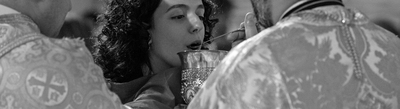
Why Non-Orthodox are Excluded from the Sacrament of Holy Communion
Fr. Charles Bell, Ph.D
In the light of Church history, the question might better be asked, "Why does anyone allow for 'open communion?'" From the very beginning the Eucharist was offered only to baptized and chrismated believers. The second century writing known as The Didache instructs believers to "let no one eat or drink from your Eucharist except those who are baptized in the Lord's Name." So restricted were the Eucharistic meetings of Christians in the first centuries that rumors arose among the pagans that they were actually involved in human sacrifice and cannibalism.
Even reformed churches practiced closed communion. Only baptized believers who had undergone examination by the leaders of the churches were admitted to the Lord's Supper. In times past, communion tokens were used to gain admission to the sacrament in the Church of Scotland and also in Methodist churches.
The Orthodox Church does not consider it sufficient to express belief in Jesus to be admitted to the sacrament. Many heretics believe in Jesus. Arius, the fourth century heretic, believed in Jesus. Jehovah's Witnesses, Mormons and Hindus believe in Jesus. But none of these believes in the One Lord Jesus Christ known and proclaimed by the One Holy Catholic and Apostolic Church.
In the historic understanding of the Church, Communion has always been understood as the goal, the climax and expression of our unity in Christ. Today there are over 25,000 denominations worldwide and among them are many different views of Jesus.
Orthodox Christians practice closed communion, not for triumphalistic reasons, but for very important theological reasons. In doing so they follow the practice of the ancient Church; a practice that was retained by the Reformers. "Open communion" was a relatively recent innovation and an exception to the practice of the Church beginning in the New Testament period.
In our pluralistic American culture, we object to anything that excludes. We have been taught that all faiths are relative in their claims. One denomination is said to be as good as another, and the Orthodox Church appears to be just one more "denomination." However, the Orthodox Church pre-dates denominations, and the practice of the Orthodox Church pre-dates the practices of later Christian denominations by at least 1500 years.
FAITH IN ACTION
Make it Personal. Only by the grace of God are we worthy to receive Holy Communion. Pray the Prayer before Holy Communion each Sunday before coming forward to receive the sacrament.
Photographer: Brittainy Newman