November 08

St. George Greek Orthodox Church
Publish Date: 2026-11-08
Bulletin Contents
Announcements
Saints and Feasts
Hymns of the Day
Gospel and Epistle Readings
Wisdom of the Fathers
Flyers
Diakonia Newsletter


St. George Greek Orthodox Church
General Information
- Phone:
- (973) 779-2626
- Fax:
- (973) 777-6946
- Email:
- [email protected]
- Street Address:
- 818 Valley Road
- Clifton, NJ 07013
Contact Information
Services Schedule
ORTHROS/MATINS 8:30AM
DIVINE LITURGY 9:30AM
Past Bulletins
- Publish Date:
- 2026-11-01
- Publish Date:
- 2026-10-25
- Publish Date:
- 2026-10-18
- Publish Date:
- 2026-10-11
- Publish Date:
- 2026-10-04
- Publish Date:
- 2026-09-27
Announcements
ORTHROS BEGINS AT 8:30AM & THE DIVINE LITURGY BEGINS AT 9:30AM
Website Links: Visit the church's website at www.stgeorgeclifton.org for our online streaming links.
To find the prayers for each service and to follow along, visit the Greek Orthodox Archdiocese of America’s Digital Chant Stand at https://digitalchantstand.goarch.org.
WE WELCOME EVERYONE TO OUR CHURCH COMMUNITY!
We are grateful that you have joined us for prayer and to worship the Lord. Please join us after the Divine Services in our Fellowship Hall for our Hospitality Hour sponsored by the Morse Family in memory of their beloved family member.
MEMORIAL SERVICES TODAY FOR:
Marilyn Morse – 40 days
Vassiliki Manoliadis – 2 years & Theoharis Manoliadis – 9 years
Ioulia Christodoulou – 7 years Thomas Georgaros – 7 years
May their memory be eternal.
The Artoclasia Service Today: is offered in honor of the Feast Day of the Synaxis of the Archangels by the Delaney and Manis families for the health and well-being of their loved ones.
Liturgical Schedule:
Mon., Nov. 9th – Feast Day of St. Nectarios the Wonderworker.……Orthros & Div. Lit. 9:00AM
Friday, November 13th – St. John Chrysostom………………...Orthros & Divine Liturgy 8:30AM
The Sacrament of Holy Confession:
When an Orthodox Christian repents & comes to the sacrament of Holy Confession, God grants forgiveness of sins and helps him or her in the struggle against the passions and the influence of the evil one. We have a printed booklet with useful information that helps the faithful better prepare for the Sacrament of Holy Confession. It is available free of charge for everyone who wishes to use it. Pick up your copy today from the table outside the Church office. To make an appointment for confession, call Fr. Peter directly on his cell, 973-650-9717.
Mark Your Calendar:
Wednesday, November 11th ………St. Photios Bible Study – 7:00PM
Thursday, November 12th ………....Senior Citizen Luncheon – 12:00PM
Friday, November 13th ……………..YAL Glendi at the Grand Marquis, Old Bridge, NJ – 7PM
Saturday, November 14th ………….Comedy Night Featuring Ellen Karis – Starts at 8:00PM
Sunday, November 15th ……………Parish General Assembly following Divine Liturgy
Sunday, November 22nd ……………Final day to donate to the Philoptochos Turkey Drive
Nov. 25th– Nov. 27th…………….......Church Office Closed for Thanksgiving
Sunday, December 6th ……………..Stewardship Sunday
Friday, December 11th ……………..HOPE & JOY Greeksgiving at 6:00PM
Sunday, December 13th ……………Final day to order Vasilopita
Final day to drop off items for Philoptochos Coat Drive
Sunday, December 20th ……………Sunday School Christmas Pageant
Greek School Hosts Christmas Breakfast
Philoptochos Vasilopita Sale Pick-up
St. Nectarios Feast Day Celebration:
Fr. Peter, along with the Parish Council, invites all our parishioners and friends to join us as we celebrate the Feast Day of Saint Nectarios the Wonderworker, Patron Saint of our Chapel. The Hierarchical Great Vespers service will be held Sunday evening at 7:00 PM, and the Hierarchical Divine Liturgy begins with Orthros at 9:00 AM Monday morning. His Eminence Metropolitan Cleopas of Sweden and All Scandinavia will preside over both services. Following Sunday's vespers, our St. Paraskevi Philoptochos Society will host a reception for all in attendance, and following Monday’s services, a luncheon will be offered by our Parish Council in our fellowship hall. We hope and pray that you will be with us for these services.
Nativity Fast:
Please be reminded that the Nativity Fast begins on November 15, 2026. The Nativity Lent is a time to recommit to worship, more intense prayer, being attentive to our families, practicing forgiveness, partaking in the Sacrament of Confession and Holy Communion, and being mindful of the needs of others. With Thanksgiving upon us in a couple of weeks, we should still practice our fast around the holiday festivities.
Teen Greek Conversation Class:
Our Greek School has started offering classes. Learning Greek is more than learning a language - it’s discovering a connection to your heritage, culture, and a world of new friendships and opportunities. Whether you’re new to Modern Greek or want to strengthen what you already know, we’d love for you to join us! Classes will meet online via Zoom on Wednesdays from 7:00–8:00 PM. Preparation for the Ellinomatheia certification and the New York State Regents Exam (Greek) proficiency will also be available for interested students. Please spread the word! Let your friends know about the class and encourage them to email us at [email protected] if they’re interested in joining.
Sponsor A Day Program:
One way to help the church is through our “Sponsor A Day” program. We encourage our parishioners to select a day that has special meaning to them, like a birthday, feast day, anniversary or a memorial and make a suggested donation of $250. We would like to thank Angeliki Antoniou for sponsoring November 9, the Feast Day of St. Nectarios in memory of her husband Antonis Antoniou, and the Daughters of Penelope for sponsoring November 16, in honor of the DOP Founders Day. For more information about the program, please speak to one of our Parish Council members or call the church office.
St. Paraskevi Philoptochos:
As Thanksgiving approaches, please consider donating a turkey or making a $30 contribution to our "Giving from the Heart, feeding with Love" initiative. Your generosity will help bring a warm Thanksgiving meal to families in need. No act of kindness is ever too small, and together we can make this holiday a little brighter for those less fortunate.
St. Photios Orthodox Class & Bible Study:
The sessions will be held at 7:00PM on Wednesdays, and they will consist of two parts. The first part is on understanding the Divine Liturgy, followed by the Bible Study based on the Gospel reading of the upcoming Sunday. These sessions are open to everyone and are a requirement for those seeking to learn about our faith and become Orthodox. All are welcome!
Sunday School Infant, Toddler, Parent Playroom:
Our Sunday School has a very special parent-and-me playroom designed specifically for children under the age of three. After Holy Communion, parents are invited to bring their children down to the classroom and join the fun. This is a great opportunity for parents and children to meet and play while they wait for the older children to finish their Sunday School lessons. A few reminders: this room is designed for younger children (under 3 years of age), and an adult must accompany every child. We also ask that you teach your children and assist them in cleaning up when you are finished playing. Most importantly, have fun utilizing this special place.
Greek Dance Classes:
Are you ready to see your children dance? We will have Greek dance lessons on Sundays at 12:00PM in the church’s lower hall. All children ages 5 through 12 are welcome. The fee is $20 a month per child. For more information, contact Fotoula at [email protected].
Sunday School Snacks:
Did you know that your Sunday School children are offered juice, water, and cookies prior to heading into the classroom? In an effort to encourage fasting, we offer the children a snack as soon as they come down to the classrooms, but we need your help. Parents and parishioners are asked to donate the items needed. A sign-up sheet can be found on a clipboard by the lower kitchen window. Thank you in advance for your help! Your continued support means a lot to us.
Warm the Children is Ending:
The Warm the Children (WTC) ministry housed at St George is coming to an end. We will no longer be accepting items or monetary donations. WTC has enough donated items and monies for Christmas boxes going to Greece, Romania & Ukraine, and then we will stop shipping. Many thanks to Fr. Peter, our Parish Council, office staff, and all the St. George parishioners & ministries who supported & volunteered over the past 12 years. "Truly I tell you, whatever you did for one of the least of these brothers and sisters of mine, you did for me." Matt. 25:40
Philoptochos “Hopeful Hearts” Bereavement Group:
The mission of the group is to offer support and comfort through professional grief counseling services to individuals navigating the complexities of loss. The group meets every Tuesday at 7:00PM via ZOOM. For more information, contact Konstantina Papadakos at [email protected].
Saints and Feasts


November 08
Synaxis of the Archangel Michael & the other Bodiless Powers: Gabriel, Raphael, Uriel, Salaphiel, Jegudiel, & Barachiel
All the Angels, according to the Apostle Paul, are ministering spirits, - sent forth to minister to them who shall be heirs of salvation - (Heb. 1:14). God set them as overseers of every nation and people, and guides to that which is profitable (Deut. 32:8); and while one Angel is appointed to oversee each nation as a whole, one is also appointed to protect each Christian individually. He commands them to guard them that hope on Him, that nothing should harm them, neither should any evil draw nigh to their dwelling (Ps. 90:10-12). In the Heavens they always behold the face of God, sending up to Him the thrice-holy hymn and interceding with Him in our behalf, seeing they rejoice over one sinner that repents (Esaias 6:2-3; Matt. 18:10; Luke 15:7). In a word, they have served God in so many ways for our benefit, that the pages of Holy Scripture are filled with the histories thereof. It is for these reasons that the Orthodox Catholic Church, wisely honouring these divine ministers, our protectors and guardians, celebrates today the present Synaxis that is, our coming together in assembly for their common feast to chant their praises, especially for the Archangels Michael and Gabriel, who are mentioned in the Scriptures by name. The name Michael means "Who is like God?" and Gabriel means "God is mighty." The number of Angels is not defined in the divine Scriptures, where Daniel says that thousands of thousands ministered before Him, and ten thousands of ten thousands attended upon Him -(Dan. 7:10). But all of them are divided into nine orders which are called Thrones, Cherubim, Seraphim, Dominions, Powers, Authorities, Principalities, Archangels, and Angels.

November 09
Nektarius the Wonderworker, Metropolitan of Pentapolis
Saint Nektarius was born in Selyvria of Thrace on October 1, 1846. After putting himself through school in Constantinople with much hard labour, he became a monk on Chios in 1876, receiving the monastic name of Lazarus; because of his virtue, a year later he was ordained deacon, receiving the new name of Nektarius. Under the patronage of Patriarch Sophronius of Alexandria, Nektarius went to Athens to study in 1882; completing his theological studies in 1885, he went to Alexandria, where Patriarch Sophronius ordained him priest on March 23, 1886 in the Cathedral of Saint Sabbas, and in August of the same year, in the Church of Saint Nicholas in Cairo, made him Archimandrite. Archimandrite Nektarius showed much zeal both for preaching the word of God, and for the beauty of God's house. He greatly beautified the Church of Saint Nicholas in Cairo, and years later, when Nektarius was in Athens, Saint Nicholas appeared to him in a dream, embracing him and telling him he was going to exalt him very high.
On January 15, 1889, in the same Church of Saint Nicholas, Nektarius was consecrated Metropolitan of the Pentapolis in eastern Libya, which was under the jurisdiction of Alexandria. Although Nektarius' swift ascent through the degrees of ecclesiastical office did not affect his modesty and childlike innocence, it aroused the envy of lesser men, who convinced the elderly Sophronius that Nektarius had it in his heart to become Patriarch. Since the people loved Nektarius, the Patriarch was troubled by the slanders. On May 3, 1890, Sophronius relieved Metropolitan Nektarius of his duties; in July of the same year, he commanded Nektarius to leave Egypt.
Without seeking to avenge or even to defend himself, the innocent Metropolitan left for Athens, where he found that accusations of immorality had arrived before him. Because his good name had been soiled, he was unable to find a position worthy of a bishop, and in February of 1891 accepted the position of provincial preacher in Euboia; then, in 1894, he was appointed dean of the Rizarios Ecclesiastical School in Athens. Through his eloquent sermons his unwearying labours to educate fitting men for the priesthood, his generous alms deeds despite his own poverty, and the holiness, meekness, and fatherly love that were manifest in him, he became a shining light and a spiritual guide to many. At the request of certain pious women, in 1904 he began the building of his convent of the Holy Trinity on the island of Aegina while yet dean of the Rizarios School; finding later that his presence there was needed, he took up his residence on Aegina in 1908, where he spent the last years of his life, devoting himself to the direction of his convent and to very intense prayer; he was sometimes seen lifted above the ground while rapt in prayer. He became the protector of all Aegina, through his prayers delivering the island from drought, healing the sick, and casting out demons. Here also he endured wicked slanders with singular patience, forgiving his false accusers and not seeking to avenge himself. Although he had already worked wonders in life, an innumerable multitude of miracles have been wrought after his repose in 1920 through his holy relics, which for many years remained incorrupt. There is hardly a malady that has not been cured through his prayers; but Saint Nektarius is especially renowned for his healings of cancer for sufferers in all parts of the world.

November 11
Menas of Egypt
Saint Menas, who had Egypt as his fatherland, contested in Cotyaeion of Phrygia in 296 during the reign of Diocletian and Maximian. A soldier distinguished for his valour in war, he renounced his rank and withdrew to devote himself to ascetical struggles and prayer in the mountains. Filled with zeal and more than human courage, he presented himself in the midst of a pagan festival in Cotyaeion and declared himself to be a Christian. After terrible torments which he endured with astonishing courage, he was beheaded. His martyrium in Egypt became a place of universal pilgrimage; evidence of ancient journeys to his shrine have been found as far away as Ireland. The glory and refuge of the Christians of Egypt, he has been revealed to be a worker of great miracles and a swift defender for all who call on him with faith; besides all else, he is also invoked for help in finding lost objects.

November 12
John the Merciful, Patriarch of Alexandria
Saint John was born in 555 on the island of Cyprus in the city of Amathus; his father, Epiphanius, was a ruler of Cyprus. The Saint was consecrated Archbishop of Alexandria in 608. A man of exemplary uprightness, in his zeal for Orthodoxy he strove mightily to fight the many heresies among the Christians in Egypt; but above all, he was famous for his singular generosity, humility, and sympathy towards all, especially the poor. His mercy was so great that the report of it reached the Persian invaders of Jerusalem, who desired to see him because of it. Saint John reposed in 619, at the age of sixty-four.

November 13
John Chrysostom, Archbishop of Constantinople
This greatest and most beloved of all Christian orators was born in Antioch the Great in the year 344 or 347; his pious parents were called Secundus and Anthusa. After his mother was widowed at the age of twenty, she devoted herself to bringing up John and his elder sister in the nurture and admonition of the Lord. John received his literary training under Anthragathius the philosopher, and Libanius the sophist, who was the greatest Greek scholar and rhetorician of his day. Libanius was a pagan, and when asked before his death whom he wished to have for his successor, he said, "John, had not the Christians stolen him from us." With such a training, and with such gifts as he had by nature, John had before him a brilliant career as a rhetorician. But through the good example of his godly mother Anthusa and of the holy Bishop Meletius of Antioch (see Feb. 12), by whom he was ordained reader about the year 370, he chose instead to dedicate himself to God. From the years 374 to 381 he lived the monastic life in the hermitages that were near Antioch. His extreme asceticism undermined his health, compelling him to return to Antioch, where Saint Meletius ordained him deacon about the year 381. Saint Meletius was called to Constantinople later that year to preside over the Second Ecumenical Council, during which he fell asleep in the Lord. In 386 Bishop Flavian ordained John presbyter of the Church of Antioch. Upon his elevation to the priesthood his career as a public preacher began, and his exceptional oratorical gifts were made manifest through his many sermons and commentaries. They are distinguished by their eloquence and the remarkable ease with which rich imagery and scriptural allusions are multiplied; by their depth of insight into the meaning of Scripture and the workings of God's providence; and, not least of all, by their earnestness and moral force, which issue from the heart of a blameless and guileless man who lived first what he preached to others. Because of his fame, he was chosen to succeed Saint Nectarius as Patriarch of Constantinople. He was taken away by stealth, to avoid the opposition of the people, and consecrated Patriarch of Constantinople on February 28, 398, by Theophilus, Patriarch of Alexandria, who was to prove his mortal enemy.
At that time the Emperor of the East was Arcadius, who had had Saint Arsenius the Great as his tutor (see May 8); Arcadius was a man of weak character, and much under the influence of his wife Eudoxia. The zealous and upright Chrysostom's unsparing censures of the lax morals in the imperial city stung the vain Eudoxia; through Theophilus' plottings and her collaboration, Saint John was banished to Pontus in 403. The people were in an uproar, and the following night an earthquake shook the city; this so frightened the Empress Eudoxia that she begged Arcadius to call Chrysostom back. While his return was triumphant, his reconciliation with the Empress did not last long. When she had a silver statue of herself erected in the forum before the Church of the Holy Wisdom (Saint Sophia) in September of 403, and had it dedicated with much unseemly revelry, Saint John thundered against her, and she could not forgive him. In June of 404 he was exiled to Cucusus, on the borders of Cilicia and Armenia. From here he exchanged letters with Pope Innocent of Rome, who sent bishops and priests to Constantinople requesting that a council be held. Saint John's enemies, dreading his return, prevailed upon the Emperor to see an insult in this, and had John taken to a more remote place of banishment called Pityus near the Caucasus. The journey was filled with bitter sufferings for the aged bishop, both because of the harshness of the elements and the cruelty of one of his 310 guards. He did not reach Pityus, but gave up his soul to the Lord near Comana in Pontus, at the chapel of the Martyr Basiliscus (see May 22), who had appeared to him shortly before, foretelling the day of his death, which came to pass on September 14, 407. His last words were "Glory be to God for all things." His holy relics were brought from Comana to Constantinople thirty-one years later by the Emperor Theodosius the Younger and Saint Pulcheria his sister, the children of Arcadius and Eudoxia, with fervent supplications that the sin of their parents against him be forgiven; this return of his holy relics is celebrated on January 27.
Saint John was surnamed Chrysostom ("Golden-mouth") because of his eloquence. He made exhaustive commentaries on the divine Scriptures and was the author of more works than any other Church Father, leaving us complete commentaries on the Book of Genesis, the Gospels of Saints Matthew and John, the Acts, and all the Epistles of Saint Paul. His extant works are 1,447 sermons and 240 epistles. Twenty-two teachers of the Church have written homilies of praise in his honour. Besides his feasts today and on January 27, he is celebrated as one of the Three Hierarchs on January 30, together with Saint Basil the Great and Saint Gregory the Theologian.
It should be noted that, because September 14 is the Exaltation of the Cross, the Saint's memory has been transferred to this day.

November 14
Philip the Apostle
This Apostle, one of the Twelve, was from Bethsaida of Galilee, and was a compatriot of Andrew and Peter. He was instructed in the teachings of the Law, and devoted himself to the study of the prophetic books. Therefore, when the Lord Jesus called him to the dignity of apostleship, he immediately sought out and found Nathanael and said to him, "We have found Him of Whom Moses in the Law and the Prophets did write, Jesus of Nazareth, the son of Joseph" (John 1.45). Having preached Jesus the God-man throughout many parts of Asia Minor, and having suffered many things for His Name's sake, he was finally crucified upside down in Hierapolis of Phrygia.

November 14
Gregory Palamas, Archbishop of Thessaloniki
This divine Father, who was from Asia Minor, was from childhood reared in the royal court of Constantinople, where he was instructed in both religious and secular wisdom. Later, while still a youth, he left the imperial court and struggled in asceticism on Mount Athos, and in the Skete at Beroea. He spent some time in Thessalonica being treated for an illness that came from his harsh manner of life. He was present in Constantinople at the Council that was convened in 1341 against Barlaam of Calabria, and at the Council of 1347 against Acindynus, who was of like mind with Barlaam; Barlaam and Acindynus claimed that the grace of God is created. At both these Councils, the Saint contended courageously for the true dogmas of the Church of Christ, teaching in particular that divine grace is not created, but is the uncreated energies of God which are poured forth throughout creation: otherwise it would be impossible, if grace were created, for man to have genuine communion with the uncreated God. In 1347 he was appointed Metropolitan of Thessalonica. He tended his flock in an apostolic manner for some twelve years, and wrote many books and treatises on the most exalted doctrines of our Faith; and having lived for a total of sixty-three years, he reposed in the Lord in 1359.His holy relics are kept in the Cathedral of Thessalonica.
Hymns of the Day
Resurrectional Apolytikion in the Plagal Second Mode
The angelic powers appeared at your tomb, and those guarding it became as dead. Mary stood at your grave seeking your pure body. But you stripped the power of Hades, yet were not touched by corruption. You met the virgin and granted her life. O Lord, who
Ἀγγελικαὶ Δυνάμεις ἐπὶ τὸ μνῆμά σου, καὶ οἱ φυλάσσοντες ἀπενεκρώθησαν, καὶ ἵστατο Μαρία ἐν τῷ τάφῳ, ζητοῦσα τὸ ἄχραντόν σου σῶμα. Ἐσκύλευσας τὸν ᾍδην, μὴ πειρασθεὶς ὑπ' αὐτοῦ, ὑπήντησας τῇ Παρθένῳ, δωρούμενος τὴν ζωήν, ὁ ἀναστὰς ἐκ των νεκρῶν, Κύριε δόξα σοι.
Apolytikion for Synaxis of the Archangels in the Fourth Mode
Supreme Commanders of the Hosts of Heavens, we, the unworthy, importune and beseech thee that by thy supplications thou encircle us in the shelter of the wings of thine immaterial glory, guarding us who now fall down and cry to thee with fervour: Deliver us from dangers of all kinds, as the great marshal of the heavenly hosts on high.
Τῶν οὐρανίων στρατιὼν Ἀρχιστράτηγε, δυσωπούμέν σε ἀεὶ ἡμεῖς οἱ ἀνάξιοι, ἵνα ταὶς σαὶς δεήσεσι τειχίσης ἡμᾶς, σκέπη τῶν πτερύγων τῆς ἀϋλου σου δόξης, φρουρῶν ἡμᾶς προσπίπτοντας ἐκτενῶς καὶ βοῶντας, ἐκ τῶν κινδύνων λύτρωσαι ἡμᾶς, ὡς Ταξιάρχης τῶν ἄνω δυνάμεων.
Seasonal Kontakion in the Fourth Mode
Today, the most pure temple of the Savior, the precious bridal chamber and Virgin, the sacred treasure of God, enters the house of the Lord, bringing the grace of the Divine Spirit. The Angels of God praise her. She is the heavenly tabernacle.
Ο καθαρώτατος ναός τού Σωτήρος, η πολυτίμητος παστάς καί Παρθένος, τό Ιερόν θησαύρισμα τής δόξης τού Θεού, σήμερον εισάγεται, εν τώ οίκω Κυρίου, τήν χάριν συνεισάγουσα, τήν εν Πνευματι θείω, ήν ανυμνούσιν Άγγελοι Θεού, Αύτη υπάρχει σκηνή επουράνιος.
Gospel and Epistle Readings
Matins Gospel Reading
First Orthros Gospel
The Reading is from Matthew 28:16-20
At that time, the eleven disciples went to Galilee, to the mountain to which Jesus had directed them. And when they saw Him they worshiped Him; but some doubted. And Jesus came and said to them, "All authority in heaven and on earth has been given to Me. Go therefore and make disciples of all nations, baptizing them in the name of the Father and the Son and the Holy Spirit, teaching them to observe all that I have commanded you; and lo, I am with you always, to the close of the age. Amen."
First Orthros Gospel
Κατὰ Ματθαῖον 28:16-20
Τῷ καιρῷ ἐκείνῳ, οἱ ἕνδεκα μαθηταὶ ἐπορεύθησαν εἰς τὴν Γαλιλαίαν, εἰς τὸ Ὄρος, οὗ ἐτάξατο αὐτοῖς ὁ Ἰησοῦς. Καὶ ἰδόντες αὐτόν, προσεκύνησαν αὐτῷ· οἱ δὲ ἐδίστασαν. Καὶ προσελθὼν ὁ Ἰησοῦς, ἐλάλησεν αὐτοῖς, λέγων· Ἐδόθη μοι πᾶσα ἐξουσία ἐν οὐρανῷ καὶ ἐπὶ τῆς γῆς. Πορευθέντες οὖν, μαθητεύσατε πάντα τὰ ἔθνη, βαπτίζοντες αὐτοὺς εἰς τὸ ὄνομα τοῦ Πατρός, καὶ τοῦ Υἱοῦ, καὶ τοῦ Ἁγίου Πνεύματος· διδάσκοντες αὐτοὺς τηρεῖν πάντα ὅσα ἐνετειλάμην ὑμῖν. Καὶ ἰδού, ἐγὼ μεθ' ὑμῶν εἰμι πάσας τὰς ἡμέρας, ἕως τῆς συντελείας τοῦ αἰῶνος. Ἀμήν.
Epistle Reading
Prokeimenon. Fourth Mode. Psalm 103.4,1.
Who makes his angels spirits and his ministers a flame of fire
Verse: Bless the Lord, O my soul. O Lord my God you are very great.
The reading is from St. Paul's Letter to the Hebrews 2:2-10.
Brethren, if the message declared by angels was valid and every transgression or disobedience received a just retribution, how shall we escape if we neglect such a great salvation? It was declared at first by the Lord, and it was attested to us by those who heard him, while God also bore witness by signs and wonders and various miracles and by gifts of the Holy Spirit distributed according to his own will. For it was not to angels that God subjected the world to come, of which we are speaking. It has been testified somewhere, "What is man that thou art mindful of him, or the son of man, that thou carest for him? Thou didst make him for a little while lower than the angels, thou hast crowned him with glory and honor, putting everything in subjection under his feet." Now in putting everything in subjection to him, he left nothing outside his control. As it is, we do not yet see everything in subjection to him. But we see Jesus, who for a little while was made lower than the angels, crowned with glory and honor because of the suffering of death, so that by the grace of God he might taste death for every one. For it was fitting that he, for whom and by whom all things exist, in bringing many sons to glory, should make the pioneer of their salvation perfect through suffering.
Προκείμενον. Fourth Mode. ΨΑΛΜΟΙ 103.4,1.
Ὁ ποιῶν τοὺς ἀγγέλους αὐτοῦ πνεύματα καὶ τοὺς λειτουργοὺς αὐτοῦ πυρὸς φλόγα.
Στίχ. Εὐλόγει, ἡ ψυχή μου, τὸν Κύριον. Κύριε ὁ Θεός μου, ἐμεγαλύνθης σφόδρα.
τὸ Ἀνάγνωσμα Πρὸς Ἑβραίους 2:2-10.
Ἀδελφοί, εἰ ὁ δι΄ ἀγγέλων λαληθεὶς λόγος ἐγένετο βέβαιος, καὶ πᾶσα παράβασις καὶ παρακοὴ ἔλαβεν ἔνδικον μισθαποδοσίαν, πῶς ἡμεῖς ἐκφευξόμεθα τηλικαύτης ἀμελήσαντες σωτηρίας; Ἥτις, ἀρχὴν λαβοῦσα λαλεῖσθαι διὰ τοῦ κυρίου, ὑπὸ τῶν ἀκουσάντων εἰς ἡμᾶς ἐβεβαιώθη, συνεπιμαρτυροῦντος τοῦ θεοῦ σημείοις τε καὶ τέρασιν, καὶ ποικίλαις δυνάμεσιν, καὶ πνεύματος ἁγίου μερισμοῖς, κατὰ τὴν αὐτοῦ θέλησιν. Οὐ γὰρ ἀγγέλοις ὑπέταξεν τὴν οἰκουμένην τὴν μέλλουσαν, περὶ ἧς λαλοῦμεν. Διεμαρτύρατο δέ πού τις λέγων, Τί ἐστιν ἄνθρωπος, ὅτι μιμνήσκῃ αὐτοῦ; Ἢ υἱὸς ἀνθρώπου, ὅτι ἐπισκέπτῃ αὐτόν; Ἠλάττωσας αὐτὸν βραχύ τι παρʼ ἀγγέλους· δόξῃ καὶ τιμῇ ἐστεφάνωσας αὐτόν· πάντα ὑπέταξας ὑποκάτω τῶν ποδῶν αὐτοῦ. Ἐν γὰρ τῷ ὑποτάξαι αὐτῷ τὰ πάντα, οὐδὲν ἀφῆκεν αὐτῷ ἀνυπότακτον. Νῦν δὲ οὔπω ὁρῶμεν αὐτῷ τὰ πάντα ὑποτεταγμένα. Τὸν δὲ βραχύ τι παρʼ ἀγγέλους ἠλαττωμένον βλέπομεν Ἰησοῦν, διὰ τὸ πάθημα τοῦ θανάτου δόξῃ καὶ τιμῇ ἐστεφανωμένον, ὅπως χάριτι θεοῦ ὑπὲρ παντὸς γεύσηται θανάτου. Ἔπρεπεν γὰρ αὐτῷ, διʼ ὃν τὰ πάντα, καὶ διʼ οὗ τὰ πάντα, πολλοὺς υἱοὺς εἰς δόξαν ἀγαγόντα, τὸν ἀρχηγὸν τῆς σωτηρίας αὐτῶν διὰ παθημάτων τελειῶσαι.
Gospel Reading
7th Sunday of Luke
The Reading is from Luke 8:41-56
At that time, there came to Jesus a man named Jairus, who was a ruler of the synagogue; and falling at Jesus' feet he besought him to come to his house, for he had an only daughter, about twelve years of age, and she was dying. As he went, the people pressed round him. And a woman who had had a flow of blood for twelve years and had spent all her living upon physicians and could not be healed by anyone, came up behind him, and touched the fringe of his garment; and immediately her flow of blood ceased. And Jesus said, "Who was it that touched me?" When all denied it, Peter and those who were with him said, "Master, the multitudes surround you and press upon you!" But Jesus said, "Some one touched me; for I perceive that power has gone forth from me." And when the woman saw that she was not hidden, she came trembling, and falling down before him declared in the presence of all the people why she had touched him, and how she had been immediately healed. And he said to her, "Daughter, your faith has made you well; go in peace." While he was still speaking, a man from the ruler's house came and said, "Your daughter is dead; do not trouble the Teacher any more." But Jesus on hearing this answered him, "Do not fear; only believe, and she shall be well." And when he came to the house, he permitted no one to enter with him, except Peter and John and James, and the father and mother of the child. And all were weeping and bewailing her; but he said, "Do not weep; for she is not dead but sleeping." And they laughed at him, knowing that she was dead. But taking her by the hand he called, saying, "Child, arise." And her spirit returned, and she got up at once; and he directed that something should be given her to eat. And her parents were amazed; but he charged them to tell no one what had happened.
7th Sunday of Luke
Κατὰ Λουκᾶν 8:41-56
Τῷ καιρῷ ἐκείνῳ, ἄνθρωπός τις προσῆλθε τῷ Ἰησοῦ ᾧ ὄνομα ᾿Ιάειρος, καὶ αὐτὸς ἄρχων τῆς συναγωγῆς ὑπῆρχε· καὶ πεσὼν παρὰ τοὺς πόδας τοῦ ᾿Ιησοῦ παρεκάλει αὐτὸν εἰσελθεῖν εἰς τὸν οἶκον αὐτοῦ, ὅτι θυγάτηρ μονογενὴς ἦν αὐτῷ ὡς ἐτῶν δώδεκα, καὶ αὕτη ἀπέθνησκεν. ᾿Εν δὲ τῷ ὑπάγειν αὐτὸν οἱ ὄχλοι συνέπνιγον αὐτόν. καὶ γυνὴ οὖσα ἐν ῥύσει αἵματος ἀπὸ ἐτῶν δώδεκα, ἥτις ἰατροῖς προσαναλώσασα ὅλον τὸν βίον οὐκ ἴσχυσεν ὑπ᾿ οὐδενὸς θεραπευθῆναι, προσελθοῦσα ὄπισθεν ἥψατο τοῦ κρασπέδου τοῦ ἱματίου αὐτοῦ, καὶ παραχρῆμα ἔστη ἡ ῥύσις τοῦ αἵματος αὐτῆς. καὶ εἶπεν ὁ ᾿Ιησοῦς· τίς ὁ ἁψάμενός μου; ἀρνουμένων δὲ πάντων εἶπεν ὁ Πέτρος καὶ οἱ σὺν αὐτῷ· ἐπιστάτα, οἱ ὄχλοι συνέχουσί σε καὶ ἀποθλίβουσι, καὶ λέγεις τίς ὁ ἁψάμενός μου; ὁ δὲ ᾿Ιησοῦς εἶπεν· ἥψατό μού τις· ἐγὼ γὰρ ἔγνων δύναμιν ἐξελθοῦσαν ἀπ᾿ ἐμοῦ. ἰδοῦσα δὲ ἡ γυνὴ ὅτι οὐκ ἔλαθε, τρέμουσα ἦλθε καὶ προσπεσοῦσα αὐτῷ δι᾿ ἣν αἰτίαν ἥψατο αὐτοῦ ἀπήγγειλεν αὐτῷ ἐνώπιον παντὸς τοῦ λαοῦ, καὶ ὡς ἰάθη παραχρῆμα. ὁ δὲ εἶπεν αὐτῇ· θάρσει, θύγατερ, ἡ πίστις σου σέσωκέ σε· πορεύου εἰς εἰρήνην.῎Ετι αὐτοῦ λαλοῦντος ἔρχεταί τις παρὰ τοῦ ἀρχισυναγώγου λέγων αὐτῷ ὅτι τέθνηκεν ἡ θυγάτηρ σου· μὴ σκύλλε τὸν διδάσκαλον. ὁ δὲ ᾿Ιησοῦς ἀκούσας ἀπεκρίθη αὐτῷ λέγων· μὴ φοβοῦ· μόνον πίστευε, καὶ σωθήσεται. ἐλθὼν δὲ εἰς τὴν οἰκίαν οὐκ ἀφῆκεν εἰσελθεῖν οὐδένα εἰ μὴ Πέτρον καὶ ᾿Ιωάννην καὶ ᾿Ιάκωβον καὶ τὸν πατέρα τῆς παιδὸς καὶ τὴν μητέρα. ἔκλαιον δὲ πάντες καὶ ἐκόπτοντο αὐτήν. ὁ δὲ εἶπε· μὴ κλαίετε· οὐκ ἀπέθανεν, ἀλλὰ καθεύδει. καὶ κατεγέλων αὐτοῦ, εἰδότες ὅτι ἀπέθανεν. αὐτὸς δὲ ἐκβαλὼν ἔξω πάντας καὶ κρατήσας τῆς χειρὸς αὐτῆς ἐφώνησε λέγων· ἡ παῖς, ἐγείρου. καὶ ἐπέστρεψε τὸ πνεῦμα αὐτῆς, καὶ ἀνέστη παραχρῆμα, καὶ διέταξεν αὐτῇ δοθῆναι φαγεῖν. καὶ ἐξέστησαν οἱ γονεῖς αὐτοῖς. ὁ δὲ παρήγγειλεν αὐτοῖς μηδενὶ εἰπεῖν τὸ γεγονός.
Wisdom of the Fathers
We advance toward humility by means of trials. He who rests on his virtue without suffering tribulation has the door of pride open before him.
Homily 57, in Ascetical Homilies, p. 283, 7th century
For in a contest there is much labor needed--and after the contest victory falls to some, to others disgrace. Is the palm ever given or the crown granted before the course is finished? ... Therefore no one can receive a reward, unless he has striven lawfully; nor is the victory a glorious one, unless the contest also has been toilsome.
Chapter 15, Three Books on the Duties of the Clergy, 4th century
Flyers
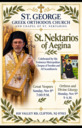
St. Nectarios Feast Day
His Eminence Metropolitan Cleopas of Sweden and all Scandinavia will be celebrating the Hierarchical Great Vespers On Nov. 8th and Divine Liturgy with us on Nov. 9th for the feast of St. Nectarios.
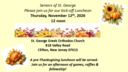
Senior Citizen Luncheon
Thursday, November 12, 2026 at 12:00PM.
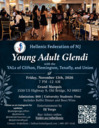
YAL Glendi
Friday, November 13, 2026 at the Grand Marquis in Old Bridge, NJ, from 7-12PM.
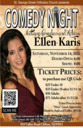
Comedy Night Featuring Ellen Karis
Saturday, November 14, 2026. Doors open at 6:00PM. Show begins at 8:00PM.
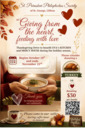
St. Paraskevi Philoptochos Thanksgiving Drive
Please consider donating a turkey or making a $30 donation.
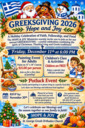
HOPE & JOY Greeksgiving
Friday, December 11, 2026 at 6:00PM.
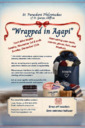
St. Paraskevi Philoptochos Coat Drive
Collections end December 13, 2026.

St. Paraskevi Philoptochos Vasilopita Sale
Place your order by December 13, 2026.
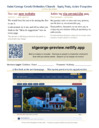
St. George New Website Preview
Scan the QR code and let us know what you think.
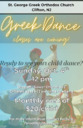
Greek Dance Lessons
For all children ages 5-12. Classes meet on Sundays at 12:00PM.
Diakonia Newsletter
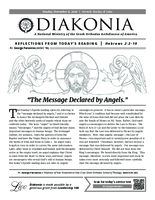
Read the latest Diakonia Newsletter for this Sunday
https://bulletinbuilder.org/diakonia-newsletter/2026-11-08?source=bulletin_web
November 8, 2026