July 05

St. Nicholas Greek Orthodox Church
Publish Date: 2026-07-05
Bulletin Contents

St. Nicholas Greek Orthodox Church
General Information
- Phone:
- (734) 332-8200
- Fax:
- (734) 332-8201
- Email:
- [email protected]
- Street Address:
- 3109 Scio Church Road
- Ann Arbor, MI 48103
Contact Information
Services Schedule
9:00 am Orthros
10:00 am Divine Liturgy
Office closed during all church services.
Past Bulletins
- Publish Date:
- 2026-07-26
- Publish Date:
- 2026-07-19
- Publish Date:
- 2026-07-12
- Publish Date:
- 2026-06-28
- Publish Date:
- 2026-06-21
- Publish Date:
- 2026-06-14
Hymns of the Day
Resurrectional Apolytikion in the Fourth Mode
When the women disciples of the Lord heard the Angel joyously proclaim the resurrection, they cast aside the ancestral verdict, and boasting in glory they said to the Apostles, “Death has been despoiled! Christ God has risen, granting the great mercy to the world!”
Τὸ φαιδρὸν τῆς Ἀναστάσεως κήρυγμα, ἐκ τοῦ Ἀγγέλου μαθοῦσαι αἱ τοῦ Κυρίου Μαθήτριαι, καὶ τὴν προγονικὴν ἀπόφασιν ἀπορρίψασαι, τοῖς Ἀποστόλοις καυχώμεναι ἔλεγον· Ἐσκύλευται ὁ θάνατος, ἠγέρθη Χριστὸς ὁ Θεός, δωρούμενος τῷ κόσμῳ τὸ μέγα ἔλεος.
Apolytikion for Athanasius of Athos in the Third Mode
The Angels' ranks were awed by thy life in the flesh, how, though corporeal, and clad with earthly clay, thou didst set forth with courage to invisible wars and wrestlings and didst boldly smite the hordes of the demons with mortal wounds. Wherefore, Christ rewarded thee with abundant gifts in return. Entreat Him that our souls find salvation, O most renowned Father Athanasius.
Τήν εν σαρκί ζωήν, σού κατεπλάγησαν, Αγγέλων τάγματα, πώς μετά σώματος, πρός αοράτους συμπλοκάς, εχώρησας πανεύφημε, καί κατετραυμάτισας, τών δαιμόνων, τάς φάλαγγας, όθεν Αθανάσιε, ο Χριστός σέ ημείψατο, πλουσίαις δωρεαίς, Διό Πάτερ, πρέσβευε Χριστώ τώ Θεώ, σωθήναι τάς ψυχάς ημών.
Seasonal Kontakion in the Second Mode
A protection of Christians unshamable, intercessor to our Holy Maker, unwavering, please reject not the prayerful cries of those who are in sin. Instead, come to us, for you are good; your loving help bring unto us, who are crying in faith to you: hasten to intercede and speed now to supplicate, as a protection for all time, Theotokos, for those who honor you.
Προστασία τῶν Χριστιανῶν ἀκαταίσχυντε, μεσιτεία πρὸς τὸν Ποιητὴν ἀμετάθετε. Μὴ παρίδῃς ἁμαρτωλῶν δεήσεων φωνάς, ἀλλὰ πρόφθασον, ὡς ἀγαθή, εἰς τὴν βοήθειαν ἡμῶν, τῶν πιστῶς κραυγαζόντων σοι· Τάχυνον εἰς πρεσβείαν, καὶ σπεῦσον εἰς ἱκεσίαν, ἡ προστατεύουσα ἀεί, Θεοτόκε, τῶν τιμώντων σε.
Gospel and Epistle Readings
Matins Gospel Reading
Fifth Orthros Gospel
The Reading is from Luke 24:12-35
At that time, [Peter rose and ran to the tomb; stooping and looking in, he saw the linen cloths by themselves; and he went home wondering at what had happened. That very day] two of them were going to a village named Emmaus, about seven miles from Jerusalem, and talking with each other about all these things that had happened. While they were talking and discussing together, Jesus Himself drew near and went with them. But their eyes were kept from recognizing Him. And He said to them, "What is this conversation which you are holding with each other as you walk?" and they stood still, looking sad. Then one of them, named Cleopas, answered Him, "Are you the only visitor to Jerusalem who does not know the things that have happened there in these days?" And He said to them, "What things?" And they said to him, "Concerning Jesus of Nazareth, who was a prophet mighty in deed and word before God and all the people, and how our chief priests and rulers delivered Him up to be condemned to death, and crucified Him. But we had hoped that He was the one to redeem Israel. Yes, and besides all this, it is now the third day since this happened. Moreover, some women of our company amazed us. They were at the tomb early in the morning and did not find His body; and they came back saying that they had even seen a vision of angels, who said that He was alive. Some of those who were with us went to the tomb, and found it just as the women had said; but Him they did not see." And He said to them, "O foolish men, and slow of heart to believe all that the prophets have spoken! Was not it necessary that the Christ should suffer these things and enter into this glory?" And beginning with Moses and all the prophets, He interpreted to them in all the scriptures the things concerning Himself. So they drew near to the village to which they were going. He appeared to be going further, but they constrained Him, saying, "Stay with us, for it is toward evening and the day is now far spent." So He went in to stay with them. When He was at table with them, He took the bread and blessed, and broke it, and gave it to them. And their eyes were opened and they recognized Him; and He vanished out of their sight. They said to each other, "Did not our hearts burn within us while He talked to us on the road, while He opened to us the scriptures?" And they rose that same hour and returned to Jerusalem; and they found the eleven gathered together and those who were with them, who said, "The Lord has risen indeed, and has appeared to Simon!" Then they told what had happened on the road and how He was known to them in the breaking of the bread.
Fifth Orthros Gospel
Κατὰ Λουκᾶν 24:12-35
Τῷ καιρῷ ἐκείνῳ, ὁ Πέτρος ἀναστὰς ἔδραμεν ἐπὶ τὸ μνημεῖον, καὶ παρακύψας βλέπει τὰ ὀθόνια κείμενα μόνα, καὶ ἀπῆλθε, πρὸς ἑαυτὸν θαυμάζων τὸ γεγονός. Καὶ ἰδοὺ δύο ἐξ αὐτῶν ἦσαν πορευόμενοι ἐν αὐτῇ τῇ ἡμέρᾳ εἰς κώμην ἀπέχουσαν σταδίους ἑξήκοντα ἀπὸ Ἱερουσαλήμ, ᾗ ὄνομα Ἐμμαούς, καὶ αὐτοὶ ὡμίλουν πρὸς ἀλλήλους περὶ πάντων τῶν συμβεβηκότων τούτων. Καὶ ἐγένετο ἐν τῷ ὁμιλεῖν αὐτοὺς καὶ συζητεῖν, καί αὐτὸς ὁ Ἰησοῦς ἐγγίσας συνεπορεύετο αὐτοῖς· οἱ δὲ ὀφθαλμοὶ αὐτῶν ἐκρατοῦντο τοῦ μὴ ἐπιγνῶναι αὐτόν. Εἶπε δὲ πρὸς αὐτούς· Τίνες οἱ λόγοι οὗτοι οὓς ἀντιβάλλετε πρὸς ἀλλήλους περιπατοῦντες, καὶ ἐστὲ σκυθρωποί; Ἀποκριθείς δὲ ὁ εἷς, ᾧ ὄνομα Κλεόπας, εἶπε πρὸς αὐτόν· Σὺ μόνος παροικεῖς ἐν Ἱερουσαλήμ, καὶ οὐκ ἔγνως τὰ γενόμενα ἐν αὐτῇ ἐν ταῖς ἡμέραις ταύταις; καὶ εἶπεν αὐτοῖς· Ποῖα; Οἱ δὲ εἶπον αὐτῷ· Τὰ περὶ Ἰησοῦ τοῦ Ναζωραίου, ὃς ἐγένετο ἀνὴρ προφήτης δυνατὸς ἐν ἔργῳ καὶ λόγῳ ἐναντίον τοῦ Θεοῦ καὶ παντὸς τοῦ λαοῦ· ὅπως τε παρέδωκαν αὐτὸν οἱ ἀρχιερεῖς καὶ οἱ ἄρχοντες ἡμῶν εἰς κρῖμα θανάτου, καὶ ἐσταύρωσαν αὐτόν· ἡμεῖς δὲ ἠλπίζομεν ὅτι αὐτός ἐστιν ὁ μέλλων λυτροῦσθαι τὸν Ἰσραήλ. Ἀλλά γε οὖν σὺν πᾶσι τούτοις τρίτην ταύτην ἡμέραν ἄγει σήμερον, ἀφ' οὗ ταῦτα ἐγένετο. Ἀλλὰ καὶ γυναῖκές τινες ἐξ ἡμῶν ἐξέστησαν ἡμᾶς, γενόμεναι ὂρθριαι ἐπὶ τὸ μνημεῖον, καὶ μὴ εὑροῦσαι τὸ σῶμα αὐτοῦ, ἦλθον λέγουσαι καὶ ὀπτασίαν ἀγγέλων ἑωρακέναι, οἳ λέγουσιν αὐτὸν ζῆν. Καὶ ἀπῆλθόν τινες τῶν σὺν ἡμῖν ἐπὶ τὸ μνημεῖον, καὶ εὗρον οὕτω καθὼς καὶ αἱ γυναῖκες εἶπον· αὐτὸν δὲ οὐκ εἶδον. Καὶ αὐτὸς εἶπε πρὸς αὐτούς· Ὦ ἀνόητοι καὶ βραδεῖς τῇ καρδίᾳ τοῦ πιστεύειν ἐπὶ πᾶσιν οἷς ἐλάλησαν οἱ Προφῆται. Οὐχὶ ταῦτα ἔδει παθεῖν τὸν Χριστὸν καὶ εἰσελθεῖν εἰς τὴν δόξαν αὐτοῦ; Καὶ ἀρξάμενος ἀπὸ Μωσέως καὶ ἀπὸ πάντων τῶν προφητῶν, διηρμήνευεν αὐτοῖς ἐν πάσαις ταῖς Γραφαῖς τὰ περὶ ἑαυτοῦ. Καὶ ἤγγισαν εἰς τὴν κώμην οὗ ἐπορεύοντο, καὶ αὐτὸς προσεποιεῖτο ποῤῥωτέρω πορεύεσθαι. Καὶ παρεβιάσαντο αὐτόν, λέγοντες· Μεῖνον μεθ' ἡμῶν, ὅτι πρὸς ἑσπέραν ἐστὶ καὶ κέκλικεν ἡ ἡμέρα. Καὶ εἰσῆλθε τοῦ μεῖναι σὺν αὐτοῖς. Καὶ ἐγένετο ἐν τῷ κατακλιθῆναι αὐτὸν μετ' αὐτῶν, λαβὼν τὸν ἄρτον εὐλόγησε, καὶ κλάσας ἐπεδίδου αὐτοῖς. Αὐτῶν δὲ διηνοίχθησαν οἱ ὀφθαλμοί, καὶ ἐπέγνωσαν αὐτόν· καὶ αὐτὸς ἄφαντος ἐγένετο ἀπ' αὐτῶν. Καὶ εἶπον πρὸς ἀλλήλους· Οὐχὶ ἡ καρδία ἡμῶν καιομένη ἦν ἐν ἡμῖν, ὡς ἐλάλει ἡμῖν ἐν τῇ ὁδῷ, καὶ ὡς διήνοιγεν ἡμῖν τὰς Γραφάς; Καὶ ἀναστάντες αὐτῇ τῇ ὥρᾳ, ὑπέστρεψαν εἰς Ἱερουσαλήμ, καὶ εὗρον συνηθροισμένους τοὺς ἕνδεκα καὶ τοὺς σὺν αὐτοῖς, λέγοντας, ὅτι ἠγέρθη ὁ Κύριος ὄντως, καὶ ὤφθη Σίμωνι. Καὶ αὐτοὶ ἐξηγοῦντο τὰ ἐν τῇ ὁδῷ, καὶ ὡς ἐγνώσθη αὐτοῖς ἐν τῇ κλάσει τοῦ ἄρτου.
Epistle Reading
Prokeimenon. Grave Mode. Psalm 149.5,1.
The saints shall rejoice in glory.
Verse: Sing to the Lord a new song.
The reading is from St. Paul's Letter to the Galatians 5:22-26; 6:1-2.
Brethren, the fruit of the Spirit is love, joy, peace, patience, kindness, goodness, faithfulness, gentleness, self-control; against such there is no law. And those who belong to Christ Jesus have crucified the flesh with its passions and desires. If we live by the Spirit, let us also walk by the Spirit. Let us have no self-conceit, no provoking of one another, no envy of one another. Brethren, if a man is overtaken in any trespass, you who are spiritual should restore him in a spirit of gentleness. Look to yourself, lest you too be tempted. Bear one another's burdens, and so fulfill the law of Christ.
Προκείμενον. Grave Mode. ΨΑΛΜΟΙ 149.5,1.
Καυχήσονται ὅσιοι ἐν δόξῃ
Στίχ. Ἄσατε τῷ Κυρίῳ ᾆσμα καινόν.
τὸ Ἀνάγνωσμα Πρὸς Γαλάτας 5:22-26, 6:1-2.
Ἀδελφοί, ὁ καρπὸς τοῦ πνεύματός ἐστιν ἀγάπη, χαρά, εἰρήνη, μακροθυμία, χρηστότης, ἀγαθωσύνη, πίστις, πρᾳότης, ἐγκράτεια· κατὰ τῶν τοιούτων οὐκ ἔστιν νόμος. Οἱ δὲ τοῦ Χριστοῦ, τὴν σάρκα ἐσταύρωσαν σὺν τοῖς παθήμασιν καὶ ταῖς ἐπιθυμίαις. Εἰ ζῶμεν πνεύματι, πνεύματι καὶ στοιχῶμεν. Μὴ γινώμεθα κενόδοξοι, ἀλλήλους προκαλούμενοι, ἀλλήλοις φθονοῦντες. Ἀδελφοί, ἐὰν καὶ προληφθῇ ἄνθρωπος ἔν τινι παραπτώματι, ὑμεῖς οἱ πνευματικοὶ καταρτίζετε τὸν τοιοῦτον ἐν πνεύματι πρᾳότητος, σκοπῶν σεαυτόν μὴ καὶ σὺ πειρασθῇς. Ἀλλήλων τὰ βάρη βαστάζετε, καὶ οὕτως ἀναπληρώσατε τὸν νόμον τοῦ Χριστοῦ.
Gospel Reading
5th Sunday of Matthew
The Reading is from Matthew 8:28-34; 9:1
At that time, when Jesus came to the country of the Gergesenes, two demoniacs met him, coming out of the tombs, so fierce that no one would pass that way. And behold, they cried out, "What have you to do with us, O Son of God? Have you come here to torment us before the time?" Now a herd of many swine was feeding at some distance from them. And the demons begged him, "If you cast us out, send us away into the herd of swine." And he said to them, "Go." So they came out and went into the swine; and behold, the whole herd rushed down the steep bank into the sea, and perished in the waters. The herdsmen fled, and going into the city they told everything, and what had happened to the demoniacs. And behold, all the city came out to meet Jesus; and when they saw him, they begged him to leave their neighborhood. And getting into a boat he crossed over and came to his own city.
5th Sunday of Matthew
Κατὰ Ματθαῖον 8:28-34, 9:1
Τῷ καιρῷ ἐκείνῳ, ἐλθόντος τῷ Ἰησοῦ εἰς τὸ πέραν εἰς τὴν χώραν τῶν Γεργεσηνῶν ὑπήντησαν αὐτῷ δύο δαιμονιζόμενοι ἐκ τῶν μνημείων ἐξερχόμενοι, χαλεποὶ λίαν, ὥστε μὴ ἰσχύειν τινὰ παρελθεῖν διὰ τῆς ὁδοῦ ἐκείνης. καὶ ἰδοὺ ἔκραξαν λέγοντες· τί ἡμῖν καὶ σοί, ᾿Ιησοῦ υἱὲ τοῦ Θεοῦ; ἦλθες ὧδε πρὸ καιροῦ βασανίσαι ἡμᾶς; ἦν δὲ μακρὰν ἀπ᾿ αὐτῶν ἀγέλη χοίρων πολλῶν βοσκομένη. οἱ δὲ δαίμονες παρεκάλουν αὐτὸν λέγοντες· εἰ ἐκβάλλεις ἡμᾶς, ἐπίτρεψον ἡμῖν ἀπελθεῖν εἰς τὴν ἀγέλην τῶν χοίρων. καὶ εἶπεν αὐτοῖς· ὑπάγετε. οἱ δὲ ἐξελθόντες ἀπῆλθον εἰς τὴν ἀγέλην τῶν χοίρων· καὶ ἰδοὺ ὥρμησε πᾶσα ἡ ἀγέλη τῶν χοίρων κατὰ τοῦ κρημνοῦ εἰς τὴν θάλασσαν καὶ ἀπέθανον ἐν τοῖς ὕδασιν. οἱ δὲ βόσκοντες ἔφυγον, καὶ ἀπελθόντες εἰς τὴν πόλιν ἀπήγγειλαν πάντα καὶ τὰ τῶν δαιμονιζομένων. καὶ ἰδοὺ πᾶσα ἡ πόλις ἐξῆλθεν εἰς συνάντησιν τῷ ᾿Ιησοῦ, καὶ ἰδόντες αὐτὸν παρεκάλεσαν ὅπως μεταβῇ ἀπὸ τῶν ὁρίων αὐτῶν. Καὶ ἐμβὰς εἰς πλοῖον διεπέρασε καὶ ἦλθεν εἰς τὴν ἰδίαν πόλιν.
Wisdom of the Fathers
Patience is a labor that does not crush the soul. It never wavers under interruptions, good or bad...Patience sets a boundary to the daily onslaught of suffering...Patience comes from hope and mourning, and indeed to lack those is to be a slave of despondency.
Ladder of Divine Ascent, Step 27: On Stillness; Paulist Press pg.271, 6th century
Now, should any one say, "And wherefore did Christ fulfill the devils' request, suffering them to depart into the herd of swine?" this would be our reply, that He did so, not as yielding to them, but as providing for many objects thereby.
Homily 28 on Matthew 8, 4th Century
Saints and Feasts


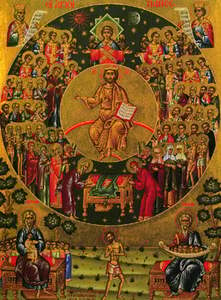
July 05
Athanasius of Mount Athos
Saint Athanasius had Trebizond for his homeland. He first entered the monastic life on the mountain called Kymaeos or Kyminas, which is in Mysia of Bithynia, then he went to Mount Athos and founded a large monastery, which is known as the Great Lavra. He became so renowned for his virtue that from Rome, Calabria, Georgia, and elsewhere, rulers, men of wealth and nobility, abbots, and even bishops came to him and were subject to him. When the time for his departure was at hand, God revealed to him how it would take place, so that he was able to instruct his spiritual children not to be troubled when it should come to pass. A new church was being built for the sake of the many who came to him, and only the dome had not been finished. Together with six of the brethren, the Saint went to the top of the church to help the workmen. The dome collapsed, and they fell. Five were killed at once, and the Saint died three hours later. His holy body remained incorrupt and he worked many miracles after his death. He reposed about the end of the tenth century.

July 05
Righteous Father Lampadus the Wonderworker

July 05
Kyprianos the New Martyr of Koutloumousiou Monastery

July 05
Uncovering of the Holy Relics of Our Righteous Father Sergius of Radonezh
Our righteous Father Sergius was born in Rostov, north of Moscow, about the year 1314. Named Bartholomew in Baptism, he was brought up in Radonezh, and at the death of his parents he withdrew to the wilderness to become a monk. It is notable that without having been trained in a monastery, he was of such a spiritual stature as to be able to take up the perilous eremitical life from the beginning, without falling into delusion or despondency. When he had endured with courage the deprivations of the solitary life, other monks began to come to him, for whom he was made abbot against his will. On the counsel of Philotheus, Patriarch of Constantinople, he organized his monks according to the cenobitic life, appointing duties to each. While Anthony and Theodosius of Kiev, and the other righteous Fathers before Sergius, had established their monasteries near to cities, Sergius was the leader and light of those who went far into the wilderness, and after his example the untrodden forests of northern Russia were settled with monks. When Grand Duke Demetrius Donskoy was about to go to battle against the invading Tartars, he first sought the blessing of Saint Sergius, through whose prayers he was triumphant. Saint Sergius was adorned with the highest virtues of Christ-like humility and burning love for God and neighbour, and received the gift of working wonders, of casting out demons, and of discretion for leading souls to salvation. When he served the Divine Liturgy, an Angel served with him visibly; he was also vouchsafed the visitation of the most holy Theotokos with the Apostles Peter and John. He was gathered to his Fathers on September 25, 1392. At the recovery of his holy relics on July 5, 1422, his body and garments were found fragrant and incorrupt. His life was written by the monks of Epiphanius, who knew him.

July 07
Kyriaki the Great Martyr
Saint Kyriake was the daughter of Christian parents, Dorotheus and Eusebia. She was given her name because she was born on Sunday, the day of the Lord (in Greek, Kyriake). She contested in Nicomedia during the reign of Diocletian, in the year 300. After many bitter torments she was condemned to suffer beheading, but being granted time to pray first, she made her prayer and gave up her holy soul in peace.

July 08
Appearance of the Icon of the Most Holy Theotokos of Kazan
In Kazan, in 1579, the nine-year old Matrona, whose parents' home had burned down in a fire, had a dream in which she beheld an icon of the Theotokos and heard a voice commanding her to recover this icon from the ashes of the ruined house. The icon was found wrapped in an old piece of cloth under the stove, where it may have been hidden during the Tartar invasions. The icon was finally brought to the Cathedral of the Annunciation of the Theotokos, where it became renowned for the healings that the Mother of God wrought through it for the blind; hence the custom of praying before this holy icon for help in blindness and eye diseases. Tsar Ivan the Terrible had a convent built at the place of the icon's discovery; this, however, was destroyed by the Bolsheviks after the Revolution, and a factory was built in its stead. The feast was established in 1595. The icon of Kazan is one of the most beloved icons of the Mother of God in Russia.