

Dormition of the Theotokos Greek Orthodox Church
Publish Date: 2026-11-15
Bulletin Contents

Organization Icon
Dormition of the Theotokos Greek Orthodox Church

General Information

  • Phone:
  • (412) 828-4144
  • Street Address:

  • 12 Washington Avenue

  • Oakmont, PA 15139


Contact Information


Services Schedule

Sunday Services:

8:00 a.m. Orthros
9:30 a.m. Divine  Liturgy


Past Bulletins


Announcements

Service Schedule

Monday, November 16th—8:30 a.m. Orthros, 9:30 a.m. Divine Liturgy
(Saint Matthew)

 Saturday, November 21st—8:30 a.m. Orthros, 9:30 a.m. Divine Liturgy
(Entrance of the Theotokos in the Temple)

 Sunday, November 22nd —8:00 a.m. Orthros, 9:30 a.m. Divine Liturgy
(9th Sunday of Luke)

 Wednesday, November 24th —5:00 p.m. Vigil: Vespers, Orthros, Divine Liturgy)
(St. Katherine) 

Sunday, November 29th —8:00 a.m. Orthros, 9:30 a.m. Divine Liturgy
(13th Sunday of Luke)


This Week at Dormition of the Theotokos

TODAY – 40 Day Blessing of Lucia, daughter of Kristina and Frank LeDonne
TODAY – Memorial for George and Isabella Aivaliotis
TODAY – Philoptochos Meeting

Thursday, November 19th – 4:00 p.m.-6:00 p.m. Half Pan Sale Pick-Up

Saturday, November 21st – 11:00 a.m.-1:00 p.m. Half Pan Sale Pick-Up


Upcoming Activities, Events, Announcements

NEXT SUNDAY – Parish General Assembly & Parish Council Voting

 St. Barbara Philoptochos Information
-   Collecting Trauma Teddies for Neighborhood Resilience; Sox Box: Socks for people experiencing homelessness; School supplies; Part of a national collection initiative through November 15th
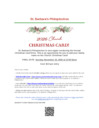
-   Community Christmas Card on sale through November 22nd
-   Volunteering at Beverly’s PGH on Wednesday, November 18th.  Will meet at Church at 9:00 a.m.  Contact Judi Contes at (724) 882-6473 if you are able to attend
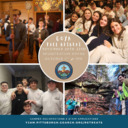
-   Annual Christmas Brunch, Saturday, December 5th, 2026 11:00 a.m.  RSVP by November 27th to Christina Contes


Flyers


Saints and Feasts

November 15

8th Sunday of Luke


November 15

Nativity Fast Begins

The Nativity Fast is one of four main fast periods throughout the ecclesiastical year. Beginning on November 15 and concluding on December 24, the Nativity Fast gives individuals the opportunity to prepare for the Feast of the Nativity of Our Lord and Savior in the Flesh on December 25. By abstaining from certain food and drink, particularly from meat, fish, dairy products, olive oil, and wine, as well as focusing more deeply on prayer and almsgiving, we can find that the primary aim of fasting is to make us conscious of our dependence upon God.


November 15

Guria, Shamuna, and Habib, Martyrs and Confessors of Edessa

Of these most illustrious Martyrs of the city of Edessa in Syria, Guria and Shamuna contested during the reign of Diocletian, in 288; after many tortures, they were cast into prison, then beheaded. Saint Habib, a deacon, contested in the days of Licinius, in the year 316, and was burned alive; he was buried with Saints Guria and Shamuna. The three have one common feast, and it is always together that they are portrayed in icons and invoked by the faithful. On account of a renowned miracle they worked, they are invoked for help in marital difficulties. A certain Goth had come with the Roman army to Edessa and was quartered in the house of a pious widow named Sophia. The Goth asked Sophia for the hand of her daughter, Euphemia; after resisting for a long time, Sophia at last agreed. When it was time for the army to return home, Sophia made the Goth vow by the power in the holy Martyrs Shamuna, Guria, and Habib, to keep Euphemia as the apple of his eye. As he was nearing his home, however, the treacherous man revealed to Euphemia that he already had a wife. Euphemia was compelled to serve the Goths wife, who dealt with her mercilessly. After extreme sufferings, which included being sealed alive in a tomb and left there to die, Euphemia was miraculously conveyed to Edessa, to the very shrine of the holy Martyrs whose surety they had taken, and was reunited with her mother through their holy prayers.


November 15

Thomas II the New, Archbishop of Constantinople


November 16

Matthew the Apostle & Evangelist

This Apostle, who was also called Levi, was the son of Alphaeus and had Galilee as his homeland. A publican before being called by Christ, he became one of the Twelve Apostles, and an Evangelist. While still in Palestine, he wrote his Gospel first in Hebrew, being also the first of all to write the Gospel. When he is depicted in icons, there is portrayed next to him the likeness of a man, one of the symbolic living creatures mentioned by Ezekiel (1.10), which, as Saint Irenaeus writes, is a symbol of our Saviour's Incarnation.


November 17

Tuesday of the 9th Week


November 17

Gregory the Wonderworker & Bishop of Neo-Caesarea

Saint Gregory was born in Neocaesarea of Pontus to parents who were not Christians. He studied in Athens, in Alexandria, in Beirut, and finally for five years in Caesarea of Palestine under Origen, by whom he was also instructed in the Faith of Christ. Then, in the year 240, he became bishop of his own city, wherein he found only seventeen Christians. By the time the Saint reposed about the year 265, there were only seventeen unbelievers left there. Virtually the whole duration of his episcopacy was a time of continual, marvellous wonders worked by him. Because of this, he received the surname "Wonderworker"; even the enemies of the truth called him a second Moses (see Saint Basil the Great's On the Holy Spirit, ch. 29).


November 17

Gennadios I and Maximus, Patriarchs of Constantinople


November 17

Righteous Mother Hilda of Whitby

Our righteous Mother Hilda was of noble birth, being a kinswoman of Saint Edwin, King of Northumbria (celebrated Oct. 12). At the age of thirty-three she renounced the world, and lived another thirty-three years as a nun and abbess. The last six years of her life she suffered a burning fever with patience and nobility, and reposed in peace in the year 680.


Hymns of the Day

Resurrectional Apolytikion in the Grave Tone

You destroyed death by Your Cross, You opened Paradise to the Robber. You turned the Myrrh-bearing Women’s lament into joy, and You commanded Your Apostles to preach that You rose, O Christ God, granting the world the great mercy.
Κατέλυσας τῷ Σταυρῷ σου τὸν θάνατον, ἠνέῳξας τῷ Λῃστῇ τὸν Παράδεισον, τῶν Μυροφόρων τὸν θρῆνον μετέβαλες, καὶ τοῖς σοῖς Ἀποστόλοις κηρύττειν ἐπέταξας, ὅτι ἀνέστης Χριστὲ ὁ Θεός, παρέχων τῷ κόσμῳ τὸ μέγα ἔλεος.

Apolytikion for Martyrs Gouria, Shamuna, and Habib in the Plagal 1st Tone

Since Thou hast given us the miracles of Thy holy Martyrs as an invincible battlement, by their entreaties, scatter the counsels of the heathen, O Christ our God, and strengthen the faith of Orthodox Christians, since Thou alone art good and the Friend of man.
Τά θαύματα τών Αγίων σου Mαρτύρων, τείχος ακαταμάχητον ημίν δωρησάμενος, Χριστέ ό Θεός, ταίς αυτών ικεσίαις, βουλάς εθνών διασκέδασον, τής βασιλείας τά σκήπτρα κραταίωσον, ως μόνος αγαθός καί φιλάνθρωπος.

Seasonal Kontakion in the 4th Tone

Today, the most pure temple of the Savior, the precious bridal chamber and Virgin, the sacred treasure of God, enters the house of the Lord, bringing the grace of the Divine Spirit. The Angels of God praise her. She is the heavenly tabernacle.
Ο καθαρώτατος ναός τού Σωτήρος, η πολυτίμητος παστάς καί Παρθένος, τό Ιερόν θησαύρισμα τής δόξης τού Θεού, σήμερον εισάγεται, εν τώ οίκω Κυρίου, τήν χάριν συνεισάγουσα, τήν εν Πνευματι θείω, ήν ανυμνούσιν Άγγελοι Θεού, Αύτη υπάρχει σκηνή επουράνιος.


Gospel and Epistle Readings

Matins Gospel Reading

Second Orthros Gospel
The Reading is from Mark 16:1-8

When the Sabbath was past, Mary Magdalene, and Mary the mother of James and Salome, bought spices, so that they might go and anoint Jesus. And very early on the first day of the week they went to the tomb when the sun had risen. And they were saying to one another, "Who will roll away the stone for us from the door of the tomb?" And looking up, they saw that the stone was rolled back - it was very large. And entering the tomb, they saw a young man sitting on the right side, dressed in a white robe; and they were amazed. And he said to them, "Do not be amazed; you seek Jesus of Nazareth, who was crucified. He has risen, He is not here; see the place where they laid Him. But go, tell His disciples and Peter that He is going before you to Galilee; there you will see Him, as He told you." And they went out and fled from the tomb, for trembling and astonishment had come upon them; and they said nothing to anyone, for they were afraid.

Second Orthros Gospel
Κατὰ Μᾶρκον 16:1-8

Διαγενομένου τοῦ Σαββάτου, Μαρία ἡ Μαγδαληνὴ καὶ Μαρία ἡ τοῦ Ἰακώβου καὶ Σαλώμη ἠγόρασαν ἀρώματα, ἵνα ἐλθοῦσαι ἀλείψωσιν τὸν Ἰησοῦν. Καὶ λίαν πρωῒ τῇ μιᾷ τῶν σαββάτων ἔρχονται ἐπὶ τὸ μνημεῖον ἀνατείλαντος τοῦ ἡλίου. Καὶ ἔλεγον πρὸς ἑαυτάς· Τίς ἀποκυλίσει ἡμῖν τὸν λίθον ἐκ τῆς θύρας τοῦ μνημείου; καὶ ἀναβλέψασαι θεωροῦσιν ὅτι ἀποκεκύλισται ὁ λίθος· ἦν γὰρ μέγας σφόδρα. Καὶ εἰσελθοῦσαι εἰς τὸ μνημεῖον, εἶδον νεανίσκον καθήμενον ἐν τοῖς δεξιοῖς, περιβεβλημένον στολήν λευκήν, καὶ ἐξεθαμβήθησαν· ὁ δὲ λέγει αὐταῖς· Μὴ ἐκθαμβεῖσθε, Ἰησοῦν ζητεῖτε τὸν Ναζαρηνὸν τὸν ἐσταυρωμένον, ἠγέρθη, οὐκ ἔστιν ᾧδε· ἴδε, ὁ τόπος ὅπου ἔθηκαν αὐτόν, ἀλλ' ὑπάγετε, εἴπατε τοῖς μαθηταῖς αὐτοῦ καὶ τῷ Πέτρῳ, ὅτι προάγει ὑμᾶς εἰς τὴν Γαλιλαίαν· ἐκεῖ αὐτὸν ὄψεσθε, καθὼς εἶπεν ὑμῖν. Καὶ ἐξελθοῦσαι ταχὺ ἔφυγον ἀπὸ τοῦ μνημείου, εἶχε δὲ αὐτὰς τρόμος καὶ ἔκστασις, καὶ οὐδενὶ οὐδὲν εἶπον· ἐφοβοῦντο γάρ.


Epistle Reading

Prokeimenon. Grave Tone. Psalm 28.11,1.
The Lord will give strength to his people.
Verse: Bring to the Lord, O sons of God, bring to the Lord honor and glory.

The reading is from St. Paul's Letter to the Ephesians 2:14-22.

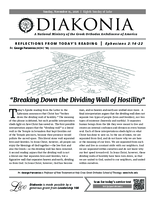
Brethren, Christ is our peace, who has made us both one, and has broken down the dividing wall of hostility, by abolishing in his flesh the law of commandments and ordinances, that he might create in himself one new man in place of the two, so making peace, and might reconcile us both to God in one body through the cross, thereby bringing the hostility to an end. And he came and preached peace to you who were far off and peace to those who were near; for through him we both have access in one Spirit to the Father. So then you are no longer strangers and sojourners, but you are fellow citizens with the saints and members of the household of God, built upon the foundation of the apostles and prophets, Christ Jesus himself being the cornerstone, in whom the whole structure is joined together and grows into a holy temple in the Lord; in whom you also are built into it for a dwelling place of God in the Spirit.

Προκείμενον. Grave Tone. ΨΑΛΜΟΙ 28.11,1.
Κύριος ἰσχὺν τῷ λαῷ αὐτοῦ δώσει.
Στίχ. Ἐνέγκατε τῷ Κυρίῳ υἱοὶ Θεοῦ, ἐνέγκατε τῷ Κυρίῳ δόξαν καὶ τιμήν.

τὸ Ἀνάγνωσμα Πρὸς Ἐφεσίους 2:14-22.

Ἀδελφοί, Χριστός ἐστιν ἡ εἰρήνη ἡμῶν, ὁ ποιήσας τὰ ἀμφότερα ἕν, καὶ τὸ μεσότοιχον τοῦ φραγμοῦ λύσας, τήν ἔχθραν ἐν τῇ σαρκί αὐτοῦ, τὸν νόμον τῶν ἐντολῶν ἐν δόγμασιν, καταργήσας· ἵνα τοὺς δύο κτίσῃ ἐν ἑαὐτῷ εἰς ἕνα καινὸν ἄνθρωπον, ποιῶν εἰρήνην, καὶ ἀποκαταλλάξῃ τοὺς ἀμφοτέρους ἐν ἑνὶ σώματι τῷ θεῷ διὰ τοῦ σταυροῦ, ἀποκτείνας τὴν ἔχθραν ἐν αὐτῷ· καὶ ἐλθὼν εὐηγγελίσατο εἰρήνην ὑμῖν τοῖς μακρὰν καὶ τοῖς ἐγγύς· ὅτι διʼ αὐτοῦ ἔχομεν τὴν προσαγωγὴν οἱ ἀμφότεροι ἐν ἑνὶ πνεύματι πρὸς τὸν πατέρα. Ἄρα οὖν οὐκέτι ἐστὲ ξένοι καὶ πάροικοι, ἀλλὰ συμπολῖται τῶν ἁγίων καὶ οἰκεῖοι τοῦ θεοῦ, ἐποικοδομηθέντες ἐπὶ τῷ θεμελίῳ τῶν ἀποστόλων καὶ προφητῶν, ὄντος ἀκρογωνιαίου αὐτοῦ Ἰησοῦ Χριστοῦ, ἐν ᾧ πᾶσα οἰκοδομὴ συναρμολογουμένη αὔξει εἰς ναὸν ἅγιον ἐν κυρίῳ, ἐν ᾧ καὶ ὑμεῖς συνοικοδομεῖσθε εἰς κατοικητήριον τοῦ θεοῦ ἐν πνεύματι.


Gospel Reading

8th Sunday of Luke
The Reading is from Luke 10:25-37

At that time, a lawyer stood up to put Jesus to the test, saying, "Teacher, what shall I do to inherit eternal life?" He said to him, "What is written in the law? How do you read?" And he answered, "You shall love the Lord your God with all your heart, and with all your soul, and with all your strength, and with all your mind; and your neighbor as yourself." And he said to him, "You have answered right; do this, and you will live."

But he, desiring to justify himself, said to Jesus, "And who is my neighbor?" Jesus replied, "A man was going down from Jerusalem to Jericho, and he fell among robbers, who stripped him and beat him, and departed, leaving him half dead. Now by chance a priest was going down that road; and when he saw him he passed by on the other side. So likewise a Levite, when he came to the place and saw him, passed by on the other side. But a Samaritan, as he journeyed, came to where he was; and when he saw him, he had compassion, and went to him and bound up his wounds, pouring on oil and wine; then he set him on his own beast and brought him to an inn, and took care of him. And the next day he took out two denarii and gave them to the innkeeper, saying, 'Take care of him; and whatever more you spend, I will repay you when I come back.' Which of these three, do you think, proved neighbor to the man who fell among the robbers?" He said, "The one who showed mercy on him." And Jesus said to him, "Go and do likewise."

8th Sunday of Luke
Κατὰ Λουκᾶν 10:25-37

Τῷ καιρῷ ἐκείνῳ, νομικός τις ἀνέστη ἐκπειράζων αὐτὸν καὶ λέγων· διδάσκαλε, τί ποιήσας ζωὴν αἰώνιον κληρονομήσω; ὁ δὲ εἶπε πρὸς αὐτόν· ἐν τῷ νόμῳ τί γέγραπται; πῶς ἀναγινώσκεις; ὁ δὲ ἀποκριθεὶς εἶπεν· ἀγαπήσεις Κύριον τὸν Θεόν σου ἐξ ὅλης τῆς καρδίας σου καὶ ἐξ ὅλης τῆς ψυχῆς σου καὶ ἐξ ὅλης τῆς ἰσχύος σου καὶ ἐξ ὅλης τῆς διανοίας σου, καὶ τὸν πλησίον σου ὡς σεαυτόν· εἶπε δὲ αὐτῷ· ὀρθῶς ἀπεκρίθης· τοῦτο ποίει καὶ ζήσῃ. ὁ δὲ θέλων δικαιοῦν ἑαυτὸν εἶπε πρὸς τὸν ᾿Ιησοῦν· καὶ τίς ἐστί μου πλησίον; ὑπολαβὼν δὲ ὁ ᾿Ιησοῦς εἶπεν· ἄνθρωπός τις κατέβαινεν ἀπὸ ῾Ιερουσαλὴμ εἰς ῾Ιεριχώ, καὶ λῃσταῖς περιέπεσεν· οἳ καὶ ἐκδύσαντες αὐτὸν καὶ πληγὰς ἐπιθέντες ἀπῆλθον ἀφέντες ἡμιθανῆ τυγχάνοντα. κατὰ συγκυρίαν δὲ ἱερεύς τις κατέβαινεν ἐν τῇ ὁδῷ ἐκείνῃ, καὶ ἰδὼν αὐτὸν ἀντιπαρῆλθεν. ὁμοίως δὲ καὶ Λευΐτης γενόμενος κατὰ τὸν τόπον, ἐλθὼν καὶ ἰδὼν ἀντιπαρῆλθε. Σαμαρείτης δέ τις ὁδεύων ἦλθε κατ᾿ αὐτόν, καὶ ἰδὼν αὐτὸν ἐσπλαγχνίσθη, καὶ προσελθὼν κατέδησε τὰ τραύματα αὐτοῦ ἐπιχέων ἔλαιον καὶ οἶνον, ἐπιβιβάσας δὲ αὐτὸν ἐπὶ τὸ ἴδιον κτῆνος ἤγαγεν αὐτὸν εἰς πανδοχεῖον καὶ ἐπεμελήθη αὐτοῦ· καὶ ἐπὶ τὴν αὔριον ἐξελθών, ἐκβαλὼν δύο δηνάρια ἔδωκε τῷ πανδοχεῖ καὶ εἶπεν αὐτῷ· ἐπιμελήθητι αὐτοῦ, καὶ ὅ τι ἂν προσδαπανήσῃς, ἐγὼ ἐν τῷ ἐπανέρχεσθαί με ἀποδώσω σοι. τίς οὖν τούτων τῶν τριῶν πλησίον δοκεῖ σοι γεγονέναι τοῦ ἐμπεσόντος εἰς τοὺς λῃστάς; ὁ δὲ εἶπεν· ὁ ποιήσας τὸ ἔλεος μετ᾿ αὐτοῦ. εἶπεν οὖν αὐτῷ ὁ ᾿Ιησοῦς· πορεύου καὶ σὺ ποίει ὁμοίως.


Diakonia Newsletter

BACK TO TOP