Fr. George Parsenios (HCHC ’96)
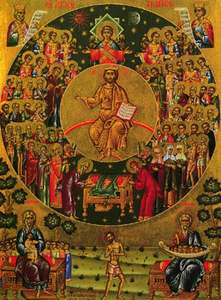
When Abraham Lincoln honors the Union soldiers who died at Gettysburg, he says, “The world will little note, nor long remember what we say here, but it can never forget what they did here.” Actions speak louder than words. St. Paul makes the same point today when he says, “I have been crucified with Christ. It is no longer I who live, but Christ who lives in me.” Paul’s letters and his preaching are filled with eloquent words that explain how to live the new life in Christ. But St. Paul’s most eloquent explanation of how to follow the Gospel was written on his own self and articulated by his actions. His actions explained the Gospel and provided a model for others to follow. Tomorrow, on October 26, we commemorate St. Demetrios the Great Martyr; as we do, we should recall that St. John Chrysostom said that the actions of the saints were more convincing explanations of the Gospel than any sermon could ever be. Chrysostom explains this by imagining people wondering whether the water in a bath is too hot to enter. People standing beside the bath may talk endlessly about how hot the water might be, but the most convincing person is the one who dips his toe into the water. His actions tell the tale. If this example is true, then even more are the martyrs eloquent evangelists, because they testify to Christ not merely with a toe or even a limb, but with their entire selves. Their actions are a masterful and convincing sermon on what it means to follow Christ. Like St. Paul, the martyrs were crucified with Christ, and so when we look at them, we see an image of Christ. We, too, must not merely call ourselves Christians in words, but preach Christ in our actions.
Fr. George Parsenios is Professor of New Testament at Holy Cross Greek Orthodox School of Theology. www.hchc.edu