Annunciation Church
Publish Date: 2026-10-18
Bulletin Contents

Organization Icon
Annunciation Church

General Information

  • Phone:
  • (978) 465-5757
  • Street Address:

  • 7 Harris St.

  • Newburyport, MA 01950


Contact Information


Services Schedule

Orthros 9am Divine Liturgy 10am


Past Bulletins


Hymns of the Day

Resurrectional Apolytikion in the Third Mode

Let the heavens rejoice; let the earth be glad, for the Lord has shown the mighty power of His arm. He trampled down death by death and became the firstborn of the dead. From the depths of Hades, He delivered us and granted to the world great mercy.
Εὐφραινέσθω τὰ οὐράνια, ἀγαλλιάσθω τὰ ἐπίγεια, ὅτι ἐποίησε κράτος, ἐν βραχίονι αὐτοῦ, ὁ Κύριος, ἐπάτησε τῷ θανάτῳ τὸν θάνατον, πρωτότοκος τῶν νεκρῶν ἐγένετο, ἐκ κοιλίας ᾅδου ἐρρύσατο ἡμᾶς, καὶ παρέσχε τῷ κόσμῳ τὸ μέγα ἔλεος.

Apolytikion for Luke the Evangelist in the Third Mode

O Holy Apostle and Evangelist Luke, intercede with the merciful God that He grant unto our souls forgiveness of offences.
Απόστολε Άγιε, καί Ευαγγελιστά Λουκά, πρέσβευε τώ ελεήμονι Θεώ, ίνα πταισμάτων άφεσιν, παράσχη ταίς ψυχαίς ημών.

Apolytikion of the Annunciation in the Fourth Mode

Today is the crowning of our salvation * And the revealing of the age-old mystery * The Son of God becomes the Son of the Virgin * And Gabriel announces the amazing grace * Therefore let us cry out with him to the most blessed Theotokos * Rejoice, O highly favored one, the Lord is with you!

Seasonal Kontakion in the Second Mode

The protection of Christians unshameable, intercessor to our Holy Maker, unwavering, do not turn from the prayerful cries of those who are in sin; instead, come to us, for you are good; your loving help bring unto us, who are crying in faith to you: Hasten to intercession and speed now to supplication as a protection for all time, Theotokos, for those who honor you.
Προστασία τῶν Χριστιανῶν ἀκαταίσχυντε, μεσιτεία πρὸς τὸν Ποιητὴν ἀμετάθετε. Μὴ παρίδῃς ἁμαρτωλῶν δεήσεων φωνάς, ἀλλὰ πρόφθασον, ὡς ἀγαθή, εἰς τὴν βοήθειαν ἡμῶν, τῶν πιστῶς κραυγαζόντων σοι· Τάχυνον εἰς πρεσβείαν, καὶ σπεῦσον εἰς ἱκεσίαν, ἡ προστατεύουσα ἀεί, Θεοτόκε, τῶν τιμώντων σε.


Saints and Feasts

October 18

Luke the Evangelist

This Apostle was an Antiochean, a physician by trade, and a disciple and companion of Paul. He wrote his Gospel in Greek after Matthew and Mark, after which he wrote the Acts of the Apostles, and dedicated both works to Theophilus, who, according to some, was Governor of Achaia. He lived some eighty-six years and died in Achaia, perhaps in Patras, the capital of this district. His emblem is the calf, the third symbolical beast mentioned by Ezekiel (1:10), which is a symbol of Christ's sacrificial and priestly office, as Saint Irenaeus says.


October 18

Marinos the Martyr


Gospel and Epistle Readings

Epistle Reading

Prokeimenon. Plagal Fourth Mode. Psalm 18.4,1.
Their voice has gone out into all the earth.
Verse: The heavens declare the glory of God.

The reading is from St. Paul's Letter to the Colossians 4:5-11, 14-18.

Brethren, conduct yourselves wisely toward outsiders, making the most of the time. Let your speech always be gracious, seasoned with salt, so that you may know how you ought to answer every one. Tychicos will tell you all about my affairs; he is a beloved brother and faithful minister and fellow servant in the Lord. I have sent him to you for this very purpose, that you may know how we are and that he may encourage your hearts, and with him Onesimos, the faithful and beloved brother, who is one of yourselves. They will tell you of everything that has taken place. Aristarchos my fellow prisoner greets you, and Mark the cousin of Barnabas (concerning whom you have received instructions if he comes to you, receive him), and Jesus who is called Justos. These are the only men of the circumcision among my fellow workers for the kingdom of God, and they have been a comfort to me. Luke the beloved physician and Demas greet you. Give my greetings to the brethren at Laodicea, and to Nympha and the church in her house. And when this letter has been read among you, have it read also in the church of the Laodiceans; and see that you read also the letter from Laodicea. And say to Archippos, "See that you fulfill the ministry which you have received in the Lord." I, Paul, write this greeting with my own hand. Remember my fetters. Grace be with you. Amen.

Προκείμενον. Plagal Fourth Mode. ΨΑΛΜΟΙ 18.4,1.
Εἰς πᾶσαν τὴν γῆν ἐξῆλθεν ὁ φθόγγος αὐτῶν.
Στίχ. Οἱ οὐρανοὶ διηγοῦνται δόξαν Θεοῦ.

τὸ Ἀνάγνωσμα Πρὸς Κολοσσαεῖς 4:5-11, 14-18.

Ἀδελφοί, ἐν σοφίᾳ περιπατεῖτε πρὸς τοὺς ἔξω, τὸν καιρὸν ἐξαγοραζόμενοι. Ὁ λόγος ὑμῶν πάντοτε ἐν χάριτι, ἅλατι ἠρτυμένος, εἰδέναι πῶς δεῖ ὑμᾶς ἑνὶ ἑκάστῳ ἀποκρίνεσθαι. Τὰ κατʼ ἐμὲ πάντα γνωρίσει ὑμῖν Τυχικός, ὁ ἀγαπητὸς ἀδελφὸς καὶ πιστὸς διάκονος καὶ σύνδουλος ἐν κυρίῳ· ὃν ἔπεμψα πρὸς ὑμᾶς εἰς αὐτὸ τοῦτο, ἵνα γνῷ τὰ περὶ ὑμῶν καὶ παρακαλέσῃ τὰς καρδίας ὑμῶν· σὺν Ὀνησίμῳ τῷ πιστῷ καὶ ἀγαπητῷ ἀδελφῷ, ὅς ἐστιν ἐξ ὑμῶν. Πάντα ὑμῖν γνωριοῦσιν τὰ ὧδε. Ἀσπάζεται ὑμᾶς Ἀρίσταρχος ὁ συναιχμάλωτός μου, καὶ Μᾶρκος ὁ ἀνεψιὸς Βαρνάβᾳ, περὶ οὗ ἐλάβετε ἐντολάς - ἐὰν ἔλθῃ πρὸς ὑμᾶς, δέξασθε αὐτόν· καὶ Ἰησοῦς ὁ λεγόμενος Ἰοῦστος, οἱ ὄντες ἐκ περιτομῆς· οὗτοι μόνοι συνεργοὶ εἰς τὴν βασιλείαν τοῦ θεοῦ, οἵτινες ἐγενήθησάν μοι παρηγορία. Ἀσπάζεται ὑμᾶς Λουκᾶς ὁ ἰατρὸς ὁ ἀγαπητός, καὶ Δημᾶς. Ἀσπάσασθε τοὺς ἐν Λαοδικείᾳ ἀδελφούς, καὶ Νυμφᾶν, καὶ τὴν κατʼ οἶκον αὐτοῦ ἐκκλησίαν. Καὶ ὅταν ἀναγνωσθῇ παρʼ ὑμῖν ἡ ἐπιστολή, ποιήσατε ἵνα καὶ ἐν τῇ Λαοδικαίων ἐκκλησίᾳ ἀναγνωσθῇ, καὶ τὴν ἐκ Λαοδικείας ἵνα καὶ ὑμεῖς ἀναγνῶτε. Καὶ εἴπατε Ἀρχίππῳ, Βλέπε τὴν διακονίαν ἣν παρέλαβες ἐν κυρίῳ, ἵνα αὐτὴν πληροῖς. Ὁ ἀσπασμὸς τῇ ἐμῇ χειρὶ Παύλου. Μνημονεύετέ μου τῶν δεσμῶν. Ἡ χάρις μεθʼ ὑμῶν. Ἀμήν.


Gospel Reading

Luke the Evangelist
The Reading is from Luke 10:16-21

The Lord said to his disciples, "He who hears you hears me, and he who rejects you rejects me, and he who rejects me rejects him who sent me." The seventy returned with joy, saying, "Lord, even the demons are subject to us in your name!" And he said to them, "I saw Satan fall like lightning from heaven. Behold, I have given you authority to tread upon serpents and scorpions, and over all the power of the enemy; and nothing shall hurt you. Nevertheless do not rejoice in this, that the spirits are subject to you; but rejoice that your names are written in heaven." In that same hour he rejoiced in the Holy Spirit and said, "I thank you, Father, Lord of heaven and earth, that you have hidden these things from the wise and understanding and revealed them to babes; yes, Father, for such was your gracious will."

Luke the Evangelist
Κατὰ Λουκᾶν 10:16-21

Εἶπεν ὁ Κὐριος τοῖς ἑαυτοῦ μαθηταῖς· ῾Ο ἀκούων ὑμῶν ἐμοῦ ἀκούει, καὶ ὁ ἀθετῶν ὑμᾶς ἐμὲ ἀθετεῖ· ὁ δὲ ἐμὲ ἀθετῶν ἀθετεῖ τὸν ἀποστείλαντά με. ῾Υπέστρεψαν δὲ οἱ ἑβδομήκοντα μετὰ χαρᾶς λέγοντες· Κύριε, καὶ τὰ δαιμόνια ὑποτάσσεται ἡμῖν ἐν τῷ ὀνόματί σου. Εἶπε δὲ αὐτοῖς· ἐθεώρουν τὸν σατανᾶν ὡς ἀστραπὴν ἐκ τοῦ οὐρανοῦ πεσόντα. ἰδοὺ δίδωμι ὑμῖν τὴν ἐξουσίαν τοῦ πατεῖν ἐπάνω ὄφεων καὶ σκορπίων καὶ ἐπὶ πᾶσαν τὴν δύναμιν τοῦ ἐχθροῦ, καὶ οὐδὲν ὑμᾶς οὐ μὴ ἀδικήσῃ. πλὴν ἐν τούτῳ μὴ χαίρετε, ὅτι τὰ πνεύματα ὑμῖν ὑποτάσσεται· χαίρετε δὲ ὅτι τὰ ὀνόματα ὑμῶν ἐγράφη ἐν τοῖς οὐρανοῖς. ᾿Εν αὐτῇ τῇ ὥρᾳ ἠγαλλιάσατο τῷ πνεύματι ὁ ᾿Ιησοῦς καὶ εἶπεν· ἐξομολογοῦμαί σοι, πάτερ, κύριε τοῦ οὐρανοῦ καὶ τῆς γῆς, ὅτι ἀπέκρυψας ταῦτα ἀπὸ σοφῶν καὶ συνετῶν, καὶ ἀπεκάλυψας αὐτὰ νηπίοις· ναί, ὁ πατήρ, ὅτι οὕτως ἐγένετο εὐδοκία ἔμπροσθέν σου.


Parish News and Events

Please pray for our brothers and sisters:  Christina, Malina, Athena, Ivana, Deborah,  Christine, Charlie, Cornelia, Marianna, Dimitra, Beverly, Maria, Alis, Vasiliki, Adam, Raymond, Philippe, Mario, Mason, James, Steven, Efrosine, Andrew.  We will keep the names for about six months unless the situation is resolved.

Epistle readers - a sign up sheet will be provided in the narthex for those who want to read the epistle in English or (on selected Sundays) in Greek.  Please prepare the reading ahead of time by consulting https://www.goarch.org/chapel/calendar.  If this is your first time reading, please check in with Fr. Costin for liturgical instructions.

What is the Church? - a study of the book of Acts  lead jointly by Fr. Costin and dr. Bruce Beck will continue this Monday, October 19 at 7pm (every other week).  We encourage you to read the first two chapters of the book of Acts in preparation for October 19.  Everybody is welcome to join!

Men's Club Gyro Booth/GLAS Pastry Sale - a big thank you for all volunteers who participated in this fun first of a kind event!  We hope to build on this and establish a tradition.
 
Fall Parish Fellowship Dinner, October 17 The event will begin in Nicholson Hall at 6:00 p.m. and end at 8:30 p.m. We are no longer taking reservations because we have already reached our reservation target. If you need to add anyone to your party, please let us know so we can add them to a waiting list. Some may be unable to attend.  As mentioned in previous notices, you are invited to contribute a voluntary donation towards the cost of the Fall Fellowship Dinner. If you would like to donate to help, please click the "Come to the Table" link to go to the payment tile on our website.  For your information, the average cost per person comes to about $28. While a donation is not required, we appreciate your financial support if you are able to donate. Our Outreach Ministry team looks forward to welcoming you all to an evening of relaxed fellowship with our church family. We are very grateful that you will be joining us. If you need to reach us, please text Bruce Beck at 508-868-9886.
 
Friday Community Dog Walk - we invite you to join us for a morning walk at Moseley Woods next Friday, October 30 at 9:30am, weather permitting.  Bringing a dog is optional, but bring comfortable shoes!  We will meet in the parking lot at 9:30am.  If you would like to participate, please let Fr. Costin know, in case there is a cancellation.
 
Bakers Needed!  St. Basil’s is looking for bakers who would be willing to select a Monday to provide a dessert for their guests. This is a great opportunity to get involved in a wonderful ministry.  To be put on the dessert schedule or if you have questions, please contact Daphne Tikellis at 978-270-6089.


Liturgical Ministry

Thursday Morning service and chant class at 8:45am and 9:15am respectively.  Anyone who wants to learn to chant is welcome, as well as those who want to learn more about services and participation by reading or serving in the altar. 

Friday, October 23, 9:30am Divine Liturgy of St. James, ancient rite  - please mark your calendars for a very special liturgical event that only happens once a year.  Holy Communion will be admnistered according to ancient practice, similar to the way deacons commune in the altar.

Proforo Schedule for October:  Oct 18 - Christos Patrinos, Oct 25 - Melinda Patrick. Thank you to our dedicated Prosforo Bakers.


Diakonia Newsletter

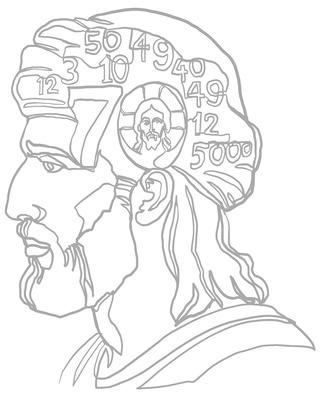
“What’s in a number?”—Reflections From Today’s Reading – Luke 10:16-21

“What’s in a number?”—Reflections From Today’s Reading – Luke 10:16-21

Fr. George Parsenios (HCHC ’96)

Why are there seventy apostles mentioned in today’s Gospel reading? The number 70 is not random, and we do well to reflect on its significance for a moment. Numbers, after all, are important in Christian theology and liturgy, but not like they are in the philosophy of Pythagoras. Pythagoras believed that numbers had mystical qualities, and that numbers were not just abstract concepts but the physical building blocks of reality. For Christians, by contrast, certain numbers are important because they are associated with principal moments of divine revelation. The number three, for example, can signify our belief in the Holy Trinity. For this reason, in our liturgical life we very often say, “Lord, have mercy” three times, and we perform a host of other ceremonial actions three times as well. The number twelve is equally important, because there were twelve tribes of Israel, and there were twelve original disciples of Christ. This is why we say, “Lord, have mercy” twelve times in services like Orthros, Great Compline, and many others. Given the importance of these other numbers, what is the significance of the number 70? Two key issues are foremost. First, Moses had a council of seventy elders around him when he led the people of Israel (Numbers 11:16-17). God promised that he would raise up for his people a prophet like Moses, and Jesus is that prophet. He is the “New Moses.” If Moses had seventy advisors, Jesus has seventy as well. With a different emphasis, Genesis 10 lists seventy descendants of Noah which means that the world is divided into seventy different nations of people. When Jesus sent out seventy apostles, he symbolized that he was sending his emissaries to every nation of the earth. The seventy of today’s Gospel, therefore, is a very important and noteworthy number.

Fr. George Parsenios is Professor of New Testament at Holy Cross Greek Orthodox School of Theology. www.hchc.edu


What does “Apology” mean? From The Original Greek: Apologia (Ἀπολογία)

What does “Apology” mean? From The Original Greek: Apologia (Ἀπολογία)

Fr. George Parsenios (HCHC ’96)

The Greek term apologia means something very different from what we imply today by the word “apology.” When we apologize for something in English, we express regret for having done it. The Greek sense of “apology” is not an expression of regret, but the opposite. An apology is a defense, an affirmation. Plato and Xenophon gave the title “Apology” to the speech that Socrates delivered to the Athenian jury that convicted him of impiety and sentenced him to death. In keeping with this ancient sense of the word, Christians have long referred to the defense of their faith as “apologetics.” Apologia appears in this usage in the New Testament, as in 1 Peter 3:15: “Always be prepared to make a defense (apologia) to anyone who calls you to account for the hope that is in you.” St. Paul also speaks before the governor in Acts 24:10 by saying, “I make my apology,” when he responds to accusations about his faith. St. Justin Martyr (150 AD) is recognized as the first dedicated Christian apologist. He wrote two extensive works (First and Second Apologies) to defend Christianity against its pagan detractors, as well as his Dialogue with Trypho to counter Jewish criticism.

Fr. George Parsenios is Professor of New Testament at Holy Cross Greek Orthodox School of Theology. www.hchc.edu


This Week’s Look at Church History: St. John of Kronstadt

This Week’s Look at Church History: St. John of Kronstadt

Ben Malian, MTS-Holy Cross 2026

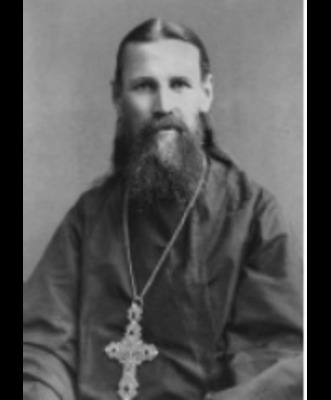
Archpriest John Ilyich Sergiyev, better known as St. John of Kronstadt (d. 10/31/1908), was a leading light of the Orthodox Church in the early 20th Century. A powerful preacher, service-minded pastor, and celebrated wonderworker, he was a married priest serving St. Andrew’s Cathedral in Kronstadt, the gritty naval community off St. Petersburg’s coast.

There, Fr. John initiated a spiritual revival rooted in the frequent practice of confession and communion. He also opened the “House of Industry,” a multi-faceted social relief organization which routinely aided thousands of poor and vulnerable Russians. His spiritual memoir composed during these years, My Life in Christ, is still considered a classic of its genre.

Fr. John’s idiosyncrasies lent him an undeniable charisma. He earned the reputation of a holy man throughout Russia, the Orthodox East, and, eventually, the wider world. In 1894, he was summoned to the deathbed of Tsar Alexander III, cementing thereafter his close personal relationship with the Royal Family. Even young St. Silouan, before embarking for Mt. Athos, ventured to Kronstadt to receive this holy man’s blessing.

Image Credit: St. John of Kronstadt, c. 1890. Public Domain.


The Eucharist: Holy Communion

The Eucharist: Holy Communion

By Father Steven Tsichlis, MDiv-Holy Cross 1978

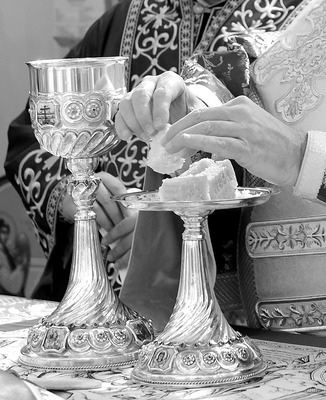
In the Liturgy of the Eucharist, the Lord Jesus gives us everything, giving Himself completely to us. The Word of God not only became flesh for us centuries ago in a far-away country; the Word of God becomes food and drink for us now at every celebration of the Liturgy. The word that best expresses this mystery of God's total offering of Himself to us in love is communion. This is the word that best contains the truth that, in and through Jesus, God wants not only to teach us, instruct us and inspire us, but He wants to become one with us. God desires to be fully and completely united with us so that we will be bound together with Him in a love that will stretch into eternity. This is what St. Paul means when he speaks of life "in Christ" (Galatians 1:22 and 2:20; 1 Corinthians 15:22; Romans 8:1).

Living a Eucharistic Life is living with gratitude as the basic stance to the life we have been given. Ultimately, the Liturgy summarizes the life we are called to live in communion with God and is, among other things, a school for Christian living. Within the Liturgy we come to know God, the world, and ourselves through Christ in the Holy Spirit, because the Liturgy communicates the meaning and purpose of life and helps us to understand and internalize both the tragedy of the human condition as well as the limitless expanse and potential of the new life in Christ offered freely to everyone.

Living in a Eucharistic way has everything to do with seeing life as a gift, a gift for which we are forever grateful. It is, after all, not happy people who are grateful, but grateful people who are happy. There should never be a Liturgy that we attend in which we do not come away with this insight for living. There should never be a time that we attend Liturgy when there is not a movement of our heart: from a hardened heart to a grateful heart, from a heart of stone to a heart of flesh, from a heart often filled with resentment or anger or self-righteousness to a heart filled with gratitude, compassion, faith, hope, and love.

Faith in Action

As you receive Christ in Holy Communion, let your heart move from gratitude to action, bringing His love, compassion, and hope into someone's life this week.


Events for the following two weeks

  • Parish calendar

    October 18 to November 1, 2026

    Sunday, October 18

    9:00AM Matins (Orthros)

    10:00AM Divine Liturgy

    Monday, October 19

    11:30AM St. Basil Kitchen

    7:00PM What is the church ? - a study of the Book of Acts

    Tuesday, October 20

    10:30AM Metropolis Clergy brotherhood meeting

    7:00PM In-Person AGOC Finance Committee Zoom Meeting - 2027 Budget Planning Meeting

    Thursday, October 22

    8:45AM Morning Service

    9:15AM Chant Rehearsal

    6:30PM Parish Council Meeting

    Friday, October 23

    9:30AM Divine Liturgy of St. James (ancient rite)

    Sunday, October 25

    9:00AM Matins (Orthros)

    10:00AM Divine Liturgy

    6:00PM Vespers for St. Demetrios in Saco

    Monday, October 26

    11:30AM St. Basil Kitchen

    Thursday, October 29

    8:45AM Morning Service

    9:15AM Chant Rehearsal

    Friday, October 30

    9:30AM Community dog walk

    Sunday, November 1

    9:00AM Matins (Orthros)

    10:00AM Divine Liturgy


Flyers


Archdiocese News

The law guides his decisions. Family and faith sustain him

10/15/2026

NEW YORK — Judge John Iliou spends his working days with families at their breaking point. His Suffolk County caseload includes allegations of child abuse and neglect, along with cases involving domestic violence. So when His Eminence Archbishop Elpidophoros of America asked him how anyone does that work, the judge responded: “I get strength from my family. My wife is phenomenal. Athena is the best,” Iliou said. “And, then my faith helps me.”

Iliou, a Suffolk County Court judge and a candidate for the New York State Supreme Court, came to the Greek Orthodox Archdiocese of America’s headquarters on East 79th Street in Manhattan last week to ask for the Archbishop’s blessing. With him were his wife, Athena Iliou; his father, Tom Iliou; and the Fr. Elias Pappas, presiding priest of St. Nicholas Greek Orthodox Church in West Babylon, the family’s parish on Long Island.

The judge was precise about the difference between what decides his cases and what keeps him going. “I’m guided by the law, by precedent,” he said. “We all have our own personal opinions, but I put them aside when I go into the law.” Iliou presides over the Integrated Domestic Violence Part in Suffolk County, where he also serves as an acting state Supreme Court justice. New York began building these courts in 2001 around an idea summed up as “one family, one judge.” When domestic violence lies beneath a family’s legal troubles, a single judge hears its related criminal, family and divorce cases, so the family does not shuttle among courthouses or receive conflicting orders from different judges. He has been part of that court almost from its start. Suffolk’s integrated court opened in October 2002 as one of the state’s first six, and Iliou was its principal law clerk from 2003 to 2006.

After graduating from Hofstra University and Albany Law School, he became an assistant district attorney in Suffolk County in 1994. He later worked as an assistant town attorney in Brookhaven, as a court attorney in Suffolk’s Family Court and as a principal law clerk in County Court. He became a Suffolk County District Court judge in 2006 and has served on the County Court since 2013. Off the bench, he is a former trustee of the West Babylon school board and has served as an officer of AHEPA, the Greek American fraternal organization.

“We are proud of you,” Archbishop Elpidophoros told the judge. “The church is your family. The Archdiocese is your family.”
He was just as plain about where the church stands in an election season. “The church is not partisan. We do not support one specific political party,” he said, explaining that the church is there for its people αnd want them to succeed when they serve in a public office.

Athena Iliou’s family comes from Kastoria, in the country’s north, and told His Eminence that she spent her childhood summers there. “Some of the most beautiful Byzantine churches in northern Greece are in Kastoria,” the Archbishop remarked.

Tom Iliou stands with the Fr. Maximos Moses at the groundbreaking ceremony for St. Nicholas Greek Orthodox Church in Babylon, New York, in the early 1980s. Photo courtesy of Tom Iliou

Tom Iliou helped build the family’s parish. St. Nicholas once worshipped in a small church in the Babylon area, the judge said, until a priest of that era brought parishioners together to build the church the community uses today. His father was among those who did the work. The elder Iliou recalled needing great quantities of fill to prepare the grounds and calling a friend for help. Truck after truck arrived. When he asked what the parish owed, he was told the church would not be charged. He and others also laid the parish’s sidewalks and parking lot.

A new generation serves at its altar now. Fr. Elias Pappas, whom Archbishop Elpidophoros ordained to the priesthood in 2022, became presiding priest of St. Nicholas in June 2025.

“You see, it takes generations to build the body of Christ, the church,” the Archbishop said. “So many people worked so hard and we inherited all these beautiful things and we need to be worthy of having them and expanding them and growing them.”

The post The law guides his decisions. Family and faith sustain him appeared first on Orthodox Observer.


NEW YORK — Judge John Iliou spends his working days with families at their breaking point. His Suffolk County caseload includes allegations of child abuse and neglect, along with cases involving domestic violence. So when […]

The post The law guides his decisions. Family and faith sustain him appeared first on Orthodox Observer.


Archdiocesan Psaltic Art Library launches with new Funeral Service book

10/14/2026

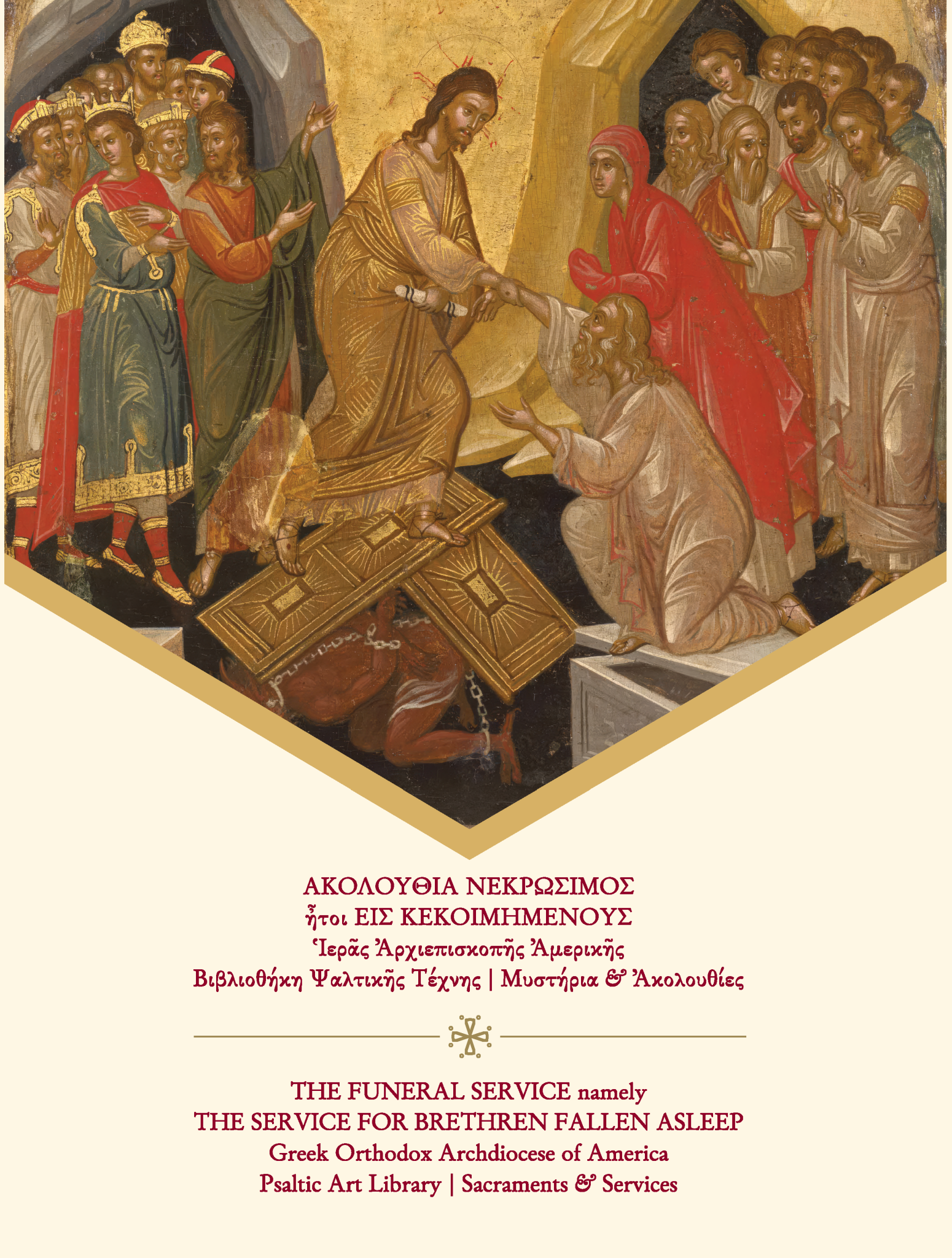
The School of Byzantine Music, a national ministry of the Greek Orthodox Archdiocese of America, is proud to announce the publication of The Funeral Service (Service for Brethren Fallen Asleep), the first volume of the Archdiocese’s new Psaltic Art Library. The beautiful hardcover edition is available immediately for $60 (US) at www.orthodoxmarketplace.com/the-funeral-service.

With the generous support of Leadership 100, the initiative of the Psaltic Art Library embodies His Eminence Archbishop Elpidophoros of America’s vision to equip ministry leaders and workers for building up the Body of Christ. The Psaltic Art Library will bring together service books and educational texts for all Sacraments and major services of the Church in handsome editions. Each edition will be paired with professional audio recordings that will be available on all major streaming platforms worldwide.

The English hymns in the Funeral Service translation, approved by the Holy Eparchial Synod, are metered to match the original Greek. The book is made for parish choirs, cantors, clergy, seminarians, Byzantine Music schools, and students of the Psaltic Art. This edition promotes the sacred art of Byzantine chant and makes the Church’s liturgical treasury more accessible to contemporary generations. Audio recordings of the Funeral Service are planned for launch on major streaming services worldwide by early 2027.

The Funeral Service and the Psaltic Art Library build on the successful launch of the School of Byzantine Music’s Sunday Orthros albums (www.goarch.org/orthros). Archbishop Elpidophoros announced the Sunday Orthros during his keynote address at the Clergy-Laity Congress in Cleveland. The 16 albums, eight in English and eight in Greek and covering all eight modes, have been a major success, capturing more than 40,000 streams on Spotify from July through October 2026.

Order now: www.orthodoxmarketplace.com/the-funeral-service

Learn more: sbm.goarch.org

Front of the service book.
Back of the service book.

The post Archdiocesan Psaltic Art Library launches with new Funeral Service book appeared first on Orthodox Observer.


The School of Byzantine Music, a national ministry of the Greek Orthodox Archdiocese of America, is proud to announce the publication of The Funeral Service (Service for Brethren Fallen Asleep), the first volume of the […]

The post Archdiocesan Psaltic Art Library launches with new Funeral Service book appeared first on Orthodox Observer.


National Philoptochos Grant brings comfort to families at Ronald McDonald House Mobile

10/13/2026

MOBILE, AL — October 8, 2026 — National Philoptochos is proud to support Ronald McDonald House Mobile with a $91,351 grant establishing the Family Care Van, a new transportation program serving families whose children are receiving medical care in the Mobile, Alabama area.

The grant made possible the purchase of a new 15-passenger van, two car seats, and a wheelchair-accessible conversion, along with the first year of a part-time driver. Through this program, families will have daily transportation between Ronald McDonald House Mobile and USA Health Children’s & Women’s Hospital, as well as rides to other area hospitals, medical appointments, pharmacies, and, when needed, work. Twice-weekly shopping trips and occasional outings will help families care for their everyday needs while they are far from home.

RMHM van donation by the Greek Orthodox Ladies Philoptochos Society on Thursday, Oct. 8, 2026, in Mobile, Alabama. Photo by Mike Kittrell/RMHC Mobile, AL

For several years, families returning home from Ronald McDonald House Mobile have named transportation as the service they need most. For parents already carrying the weight of a child’s illness or injury, something as simple as a ride can mean being present at a child’s bedside, receiving their own medical care, or bringing home a needed prescription.

To celebrate this milestone, National Philoptochos President Debbie George traveled to Mobile alongside Metropolis of Atlanta Philoptochos President Effie Moraitakis, who were joined by Sarah Kalaris and Despina Koulianos. Together, they were welcomed by the Ronald McDonald House Mobile team to see the Family Care Van firsthand and celebrate the difference it will make for the families who call the House home during their time of need.

Speaking at the celebration, President George reflected on the meaning behind the organization’s name and the families at the center of this work.

“Philoptochos means ‘friend of the poor,’ and for nearly a century, the women of our organization have tried to live up to that name: showing up for families in the moments when they need it most,” said President George. “And there are few moments that ask more of a family than when a child is sick.”

National Philoptochos President Debbie George speaks at the RMHM van donation by the Greek Orthodox Ladies Philoptochos Society on Thursday, Oct. 8, 2026, in Mobile, Alabama. Photo by Mike Kittrell/RMHC Mobile, AL

Recalling the moment the grant was first awarded, she shared how seeing the van in person brought its purpose to life.

“At the time, it was a number on a page and a hope for what it could become. Standing here today, seeing it in person, it feels like so much more than that,” she said. “Because this van isn’t just a vehicle. It’s a ride to a treatment that can’t be missed. It’s one less thing for a tired parent to worry about. It’s a few quiet minutes together on the way to the hospital, and maybe, someday, the drive home.”

President George also extended her gratitude to the staff, volunteers, and supporters of Ronald McDonald House Mobile, thanking them for creating a place where families can feel held during the hardest chapters of their lives.

This grant is a testament to the devotion of Philoptochos members at the local level, who recognized the need in their own community and guided the application through the National Philoptochos grants process. Paul Giardina, Executive Director of Ronald McDonald House Mobile, shared his gratitude for their efforts, noting that the advocacy, generosity, and compassion of local members helped turn an idea into a service that will benefit families for years to come.

In closing, President George spoke directly to the women whose service made the day possible.

“To our Philoptochos sisters, here in Alabama and across the country, this is your love in motion,” she said. “Every gift, every fundraiser, every act of service made this day possible.”

The Greek Orthodox Ladies Philoptochos Society, Inc. is the philanthropic arm of the Greek Orthodox Archdiocese of America. With over 90 years of experience, Philoptochos has served communities in need through fundraising and charitable programs. The Society includes more than 400 active chapters nationwide. Learn more at www.philoptochos.org.

The post National Philoptochos Grant brings comfort to families at Ronald McDonald House Mobile appeared first on Orthodox Observer.


MOBILE, AL — October 8, 2026 — National Philoptochos is proud to support Ronald McDonald House Mobile with a $91,351 grant establishing the Family Care Van, a new transportation program serving families whose children are […]

The post National Philoptochos Grant brings comfort to families at Ronald McDonald House Mobile appeared first on Orthodox Observer.


‘We need consensus; but we also need courage,’ says Fr. John Chryssavgis on the 10th anniversary of the Holy and Great Council of Crete

10/13/2026

Fr. John Chryssavgis, Archdeacon of the Ecumenical Throne and Executive Director of the Huffington Ecumenical Institute at HCHC, participated in an international conference organized by the Ecumenical Patriarchate in Chantilly, France, from October 5–8, 2026, commemorating the 10th anniversary of the Holy and Great Council of the Orthodox Church, held in Crete in June 2016.

The conference brought together scholars and representatives from Orthodox Autocephalous Churches to reflect on the Council’s decisions, documents, reception, and continuing significance for the life of the Orthodox Church.

Fr. John chaired a special panel devoted to the reception of the Council of Crete and the development of the Ecumenical Patriarchate’s social document, For the Life of the World: Toward a Social Ethos of the Orthodox Church, published in 2020. The panel featured presentations by Rev. Dr. Nicolas Kazarian (Commission member for the document), Rev. Dr. Dietmar Schon (author of two books on the document) and Rev. Dr. Stephanie Dietrich (Faith and Order moderator of the WCC).

Fr. John also participated in the conference’s concluding session, which offered an assessment of the Holy and Great Council and considered its prospects for the future. 

Drawing on his experience as Press Officer of the Ecumenical Patriarchate at the Council of Crete and as facilitator of the Special Commission that produced the document, he addressed the relationship between the two, and between the principles of conciliarity and primacy in the Church.

Fr. John said the conciliar life of the Orthodox Church is “scarcely neat, rarely predictable, and hardly efficient,” because conciliarity “depends upon consensus rather than imposition, upon persuasion rather than domination.”

The Council of Crete, he said, offers a revealing example of this.

“Ecumenical Patriarch Bartholomew worked patiently and persistently with every Orthodox Autocephalous Church,” Fr. John said. “Yet patience did not mean passivity. His All-Holiness also knew when to stand firm: to uphold what had been agreed, to guide the completion of the documents, and ultimately to ensure that the Council actually took place.”

“The same pattern emerged with the document entitled For the Life of the World: Toward a Social Ethos of the Orthodox Church,” Fr. John continued. “Once again, the Ecumenical Patriarch encouraged consultation while maintaining direction.”

Now, For the Life of the World has generated translations in more than twenty languages, as well as articles, special journal issues, scholarly monographs, and international conferences. Interest that initially came largely from the ecumenical world, Fr. John said, is increasingly coming from within the Orthodox world. 

Describing how the two relate, Fr. John said the Council “asked what the Orthodox Church needs to say,” while the document “asked what those words mean for the life of the world.”

Fr. John then moved into a discussion of conciliarity and the Church’s future.

Recovering a genuine culture of conciliarity, he said, will require “patiently listening, humbly trusting, generously sacrificing, and sometimes boldly relinquishing inherited assumptions and entrenched habits.”

He urged the audience that we must acknowledge “we have largely lost the lived experience of conciliarity.”

“Synodality is not an event,” Fr. John said. “It is a culture. And culture, as Julien Green reminds us, “cannot be improvised.” It must be learned. It must be absorbed. It must be practiced.”

Fr. John also said Orthodox Christians should not fear the concept of primacy. 

“Synodality does not mean the absence of leadership,” he said. “Consensus does not mean paralysis. And communion does not mean that no one bears the responsibility to convene and coordinate, to guide and encourage, even—when necessary—to lead and insist.”

“We need the many; but we also need the one, the first. We need consultation; but we also need command,” Fr. John said. “We need consensus; but we also need courage.”

He concluded that the future of Orthodoxy does not lie in choosing between synodality and primacy, but in “recovering the proper relationship” between the two.

“The Orthodox Church will not become more conciliar by diminishing leadership; nor will leadership become more authentic by diminishing conciliarity,” Fr. John said. “Each requires the other. Each corrects the other. Each complements the other. And, at their best, each serves the communion of the Church.”

Fr. John closed by posing the question of “whether we can learn again how to walk together in the time and place we have been placed and entrusted by God.”

This, he suggested, is what conciliarity has meant all along.

The post ‘We need consensus; but we also need courage,’ says Fr. John Chryssavgis on the 10th anniversary of the Holy and Great Council of Crete appeared first on Orthodox Observer.


Fr. John Chryssavgis, Archdeacon of the Ecumenical Throne and Executive Director of the Huffington Ecumenical Institute at HCHC, participated in an international conference organized by the Ecumenical Patriarchate in Chantilly, France, from October 5–8, 2026, […]

The post ‘We need consensus; but we also need courage,’ says Fr. John Chryssavgis on the 10th anniversary of the Holy and Great Council of Crete appeared first on Orthodox Observer.


BACK TO TOP