January 25

Saint Paul Orthodox Church
Publish Date: 2026-01-25
Bulletin Contents
Announcements
Bulletin Inserts
Diakonia Newsletter
Hymns of the Day
Gospel and Epistle Readings
Wisdom of the Fathers
Saints and Feasts

Saint Paul Orthodox Church
General Information
Contact Information
Services Schedule
Please call ahead for schedule of services
Confessions Prior to all Divine Liturgies
Past Bulletins
- Publish Date:
- 2026-08-16
- Publish Date:
- 2026-07-19
- Publish Date:
- 2026-07-05
- Publish Date:
- 2026-06-28
- Publish Date:
- 2026-06-21
- Publish Date:
- 2026-06-14
Announcements
Welcome to St. Paul Orthodox Church - Freehold, NJ
Mission Parish of the American Carpatho-Russian Orthodox Diocese of North America
Ecumenical Patriarchate of Constantinople


Flag of United States Flag of Slovakia
Glory to Jesus Christ! Glory Forever!
We celebrate the diverse gifts that everyone brings and we are committed to making our church accessible so that everyone can participate fully in Holy Orthodox Church.
We are happy to welcome the new families that have moved to our area.

SPECIAL WEATHER ANNOUNCEMENT
Due to the impending severe winter weather snowstorm and for the safety of our parishioners, Divine Liturgy for this week only is Saturday evening Jan 24th at 6:00PM. Please be safe traveling.
All are welcome!
“The Scriptures were not given to us that we might have them in books, but that we might engrave them in our hearts.” St. John Chrysostom
Upcoming Church Schedule:
15th Sunday of Luke
Saturday January 24, 2026
Divine Liturgy - 6:00PM
Please pray for our Bishop and all of our Hierarchs!

Please remember to pray for the Seminarians of our Diocese at Christ the Saviour Seminary in Johnstown PA! Especially Seminarians John Bonnewicz-Coffey, a vocation of St. Nectarios Mission, Lakeland, FL; Clay Wood, Holy Cross Church, Columbus, OH; Brad Shaffer, St. Alexis Church, Battle Ground, IN; Nicholas Cizin, Holy Ghost Church, Manville, NJ; John R. Fedornock III, Christ the Saviour Cathedral, Johnstown, PA; Clay Spyridon Raburn, St. Nectarios Mission, Lakeland, FL. Deacon Peter Sodini of St. Michael Church, Niles, IL; Deacon Maximus Cannaverde, St. Nicholas Church, Murphy, NC; Sem. Alex Hurtsellers, St. Elizabeth Mission, Woodstock, GA. Sem. Robert Leonardo, St. Johns Church, Rahway, NJ.
Please keep in your minds and hearts our parishioners, family, and friends in need of our prayers. May God grant them peace, health and happiness for many blessed years!
Please pray for Catechumens and inquirers, for those preparing for Marriage, for Expecting Mothers, Seminarians, and for those serving in the Armed Forces and Civil Authorities.
Bulletin Inserts
American Carpatho-Russian Orthodox Diocese Prayer Book
Diocesean Prayer Book for Orthodox Christians - ACROD
An Orthodox Prayer Book - Holy Mount Athos Greece
An Orthodox Prayer Book
An Orthodox Prayer Book - Ukrainian Toronto Canada
Prayer Book - Morning Prayers - Small Compline
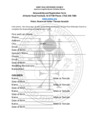
SAINT PAUL STEWARDSHIP AND REGISTRATION FORM
We encourage all new and existing parishioners to complete the Saint Paul Stewardship Form
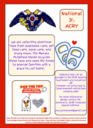
Junior ACRY Tab Collection
Junior ACRY Tab Collection - For the Ronald McDonald House
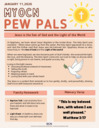
Jan 11 Pew Pals
Pew Pals

Seminary Retreat
Vocations Retreat
Diakonia Newsletter
Read the latest Diakonia Newsletter for this Sunday
https://bulletinbuilder.org/diakonia-newsletter/2026-01-25?source=bulletin_web
January 25, 2026
Hymns of the Day
Resurrectional Apolytikion in the Eighth Tone
You came to earth from heaven O Gracious One.* You allowed Yourself to be in the grave for three days,* that we might be freed from our passions.* O Lord, our life and our resurrection glory to You!
Reading is under copyright and is used with permission, all rights reserved by: American Carpatho-Russian Diocese
Apolytikion for Gregory the Theologian in the First Tone
The shepherd's pipe of thy theology conquered the trumpets of the philosophers; for since thou didst search out the depths of the Spirit, beauty of speech was added to thee. But intercede with Christ God, O Father Gregory, that our souls be saved.
Reading is under copyright and is used with permission, all rights reserved by: Holy Transfiguration Monastery
Seasonal Kontakion in the First Tone
You who have sanctified by Your Birth a virgin womb and fittingly blessed the hands of Simeon, * You have come O Christ our God, and on this day have saved us. * Give peace to nations at war * and strengthen the Orthodox people whom you have loved, * for You alone love mankind.
Reading is under copyright and is used with permission, all rights reserved by: American Carpatho-Russian Diocese
Gospel and Epistle Readings
Epistle Reading
Prokeimenon. First Tone. Psalm 48.3,1.
My mouth shall speak wisdom and the meditation of my heart shall bring forth understanding.
Verse: Hear this all you nations.
The reading is from St. Paul's Letter to the Hebrews 7:26-28; 8:1-2.
Brethren, it was fitting that we should have such a high priest, holy, blameless, unstained, separated from sinners, exalted above the heavens. He has no need, like those high priests, to offer sacrifices daily, first for his own sins and then for those of the people; he did this once for all when he offered up himself. Indeed, the law appoints men in their weakness as high priests, but the word of the oath, which came later than the law, appoints a Son who has been made perfect for ever. Now the point in what we are saying is this: we have such a high priest, one who is seated at the right hand of the throne of the Majesty in heaven, a minister in the sanctuary and the true tent which is set up not by man but by the Lord.
Gospel Reading
15th Sunday of Luke
The Reading is from Luke 19:1-10
At that time, Jesus was passing through Jericho. And there was a man named Zacchaios; he was a chief collector, and rich. And he sought to see who Jesus was, but could not, on account of the crowd, because he was small of stature. So he ran on ahead and climbed up into a sycamore tree to see him, for he was to pass that way. And when Jesus came to the place, he looked up and said to him, "Zacchaios, make haste and come down; for I must stay at your house today." So he made haste and came down, and received him joyfully. And when they saw it they all murmured, "He has gone in to be the guest of a man who is a sinner." And Zacchaios stood and said to the Lord, "Behold, Lord, the half of my goods I give to the poor; and if I have defrauded any one of anything, I restore it fourfold." And Jesus said to him, "Today salvation has come to this house, since he also is a son of Abraham. For the Son of man came to seek and to save the lost."
Wisdom of the Fathers
For Christ's presence is like that of some life-giving, scented balsam which restores health, enriches life and gives savor to the soul, the thoughts, the words of a man. In brief, distance from Christ means corruption and death, and closeness to Him means salvation and life.
Prolog, 4 February
Christ is the salvation that comes, and Zacchaeus is the house to which He comes.
Prolog, 4 February
Saints and Feasts


January 25
Gregory the Theologian, Archbishop of Constantinople
This great Father and Teacher of the Church was born in 329 in Arianzus, a village of the second district of Cappadocia, not far from Nazianzus. His father, who later became Bishop of Nazianzus, was named Gregory (commemorated Jan. 1), and his mother was named Nonna (Aug. 5); both are among the Saints, and so are his brother Caesarius (Mar. 9) and his sister Gorgona (Feb. 23). At first he studied in Caesarea of Palestine, then in Alexandria, and finally in Athens. As he was sailing from Alexandria to Athens, a violent sea storm put in peril not only his life but also his salvation, since he had not yet been baptized. With tears and fervour he besought God to spare him, vowing to dedicate his whole self to Him, and the tempest gave way to calm. At Athens Saint Gregory was later joined by Saint Basil the Great, whom he already knew; but now their acquaintanceship grew into a lifelong brotherly love. Another fellow student of theirs in Athens was the young Prince Julian, who later as Emperor was called the Apostate because he denied Christ and did all in his power to restore paganism. Even in Athens, before Julian had thrown off the mask of piety; Saint Gregory saw what an unsettled mind he had, and said, "What an evil the Roman State is nourishing" (Orat. V, 24, PG 35:693).
After their studies at Athens, Gregory became Basil's fellow ascetic, living the monastic life together with him for a time in the hermitages of Pontus. His father ordained him presbyter of the Church of Nazianzus, and Saint Basil consecrated him Bishop of Sasima (or Zansima), which was in the archdiocese of Caesarea. This consecration was a source of great sorrow to Gregory, and a cause of misunderstanding between him and Basil; but his love for Basil remained unchanged, as can be plainly seen from his Funeral Oration on Saint Basil (Orat. XLIII).
About the Year 379, Saint Gregory came to the assistance of the Church of Constantinople, which had already been troubled for forty years by the Arians; by his supremely wise words and many labours he freed it from the corruption of heresy, and was elected Archbishop of that city by the Second Ecumenical Council, which assembled there in 381, and condemned Macedonius, Archbishop of Constantinople, the enemy of the Holy Spirit. When Saint Gregory came to Constantinople, the Arians had taken all the churches and he was forced to serve in a house chapel dedicated to Saint Anastasia the Martyr. From there he began to preach his famous five sermons on the Trinity, called the Triadica. When he left Constantinople two years later, the Arians did not have one church left to them in the city. Saint Meletius of Antioch (see Feb. 12), who was presiding over the Second Ecumenical Council, died in the course of it, and Saint Gregory was chosen in his stead; there he distinguished himself in his expositions of dogmatic theology.
Having governed the Church until 382, he delivered his farewell speech - the Syntacterion, in which he demonstrated the Divinity of the Son - before 150 bishops and the Emperor Theodosius the Great; in this speech he requested, and received from all, permission to retire from the see of Constantinople. He returned to Nazianzus, where he lived to the end of his life, and reposed in the Lord in 391, having lived some sixty-two years.
His extant writings, both prose and poems in every type of metre, demonstrate his lofty eloquence and his wondrous breadth of learning. In the beauty of his writings, he is considered to have surpassed the Greek writers of antiquity, and because of his God-inspired theological thought, he received the surname "Theologian." Although he is sometimes called Gregory of Nazianzus, this title belongs properly to his father; he himself is known by the Church only as Gregory the Theologian. He is especially called "Trinitarian Theologian," since in virtually every homily he refers to the Trinity and the one essence and nature of the Godhead. Hence, Alexius Anthorus dedicated the following verses to him:
Like an unwandering star beaming with splendour,
Thou bringest us by mystic teachings, O Father,
To the Trinity's sunlike illumination,
O mouth breathing with fire, Gregory most mighty.

January 25