St. Elias the Prophet Church
Publish Date: 2026-07-19
Bulletin Contents

Organization Icon
St. Elias the Prophet Church

General Information

  • Phone:
  • (505) 466-0015
  • Fax:
  • (505) 466-0015
  • Street Address:

  • 46 Calle Electra

  • Santa Fe, NM 87508-9142


Contact Information


Services Schedule

Sundays:  Orthros 8:45, Divine Liturgy appproximately 10:00am.

Weekdays and Saturdays (as announced):  Orthros 9:00am, Divine Liturgy approximately 10:00am.


Past Bulletins


Parish News and Events


Nota Bene

  • Feast day - Feast day community event July 19th 10am - 3pm. Buy tickets early for discount. See attachment at bottom of bulletin or on website under “Events” for more info. Volunteer list is posted in the kitchen for anyone who wants to help.

  • A big "Thank you!" To Iggy and all those who helped prep for the feast day meal! 
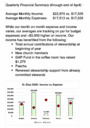
  • Financial note: our latest financial summary though the month of May is found as an attachment at the bottom of the bulletin. 

  • Beginning Sunday June 7th, Father will be doing a once a month blessing for all birthdays and anniversaries for the prior month. If you would like to be celebrated and blessed please attend the first Sunday of the month after your celebration month and come forward, if you choose, when Father calls for those being blessed at the end of church.

  • Donations for coffee hour after liturgy are always welcome. If you are interested you can bring a dish to share after church or make a monetary donation by leaving in the candle box in narthex and noting on your check : “for breakfast items/supplies."

*Note from the fundraising committee: 

Please visit the display in coffee room for what we are calling our “Gap Fund.” Last year at general assembly we talked about the gap we continue to have between expenses and stewardship. This gap varies at any point in the year. Suggested on the display is the weekly amount that is required to make up the average gap.  If you choose to give to this effort in any amount it is meant to be in addition to your stewardship not in replacement otherwise we won’t be making up the gap. Please turn checks in either to the candle box in narthex or when the tray is passed at end of liturgy. Very important - in the memo of your check write “Gap Fund” 

**Stewardship Forms are available in the narthex.

*Online Giving now available! Please visit our website to see our new online givine through PayPal. We plan to expand the options and functionality as we move forward with this project.

*Check out the updates to the parish website. https://steliasnm.org/  

*There are commemoration slips in the narthex. If you would like to submit names to Fr. Seraphim for prayer (ie: during the Proskomide, during the litanties at the end of Orthros, during Liturgy, at Paraklesis, etc), please fill out a slip for the living or departed and give to one of the Parish Council members to bring to the altar. 


As members of an Orthodox Christian family, we are called upon to pray for each other

We pray for: Metropolitan Isaiah, Geronta Silouan, Constantine, Susan Larkin, Vasilios, Sheldon Miller, Gael Levings, Chris Gianapoulos, Vickie Fellows,Sophia Gesner, Aristides N Maniatis, Stephen, Kalleope, Spiros, Eleni, Ernie Riach, Magdaleni Maggie Pappas, Judy Brophy, Panagiotis, Fr. Alexander, Demetra, Gregory, John, Jimmy, Ana and all of our brethren.

If you like to add a loved one to the prayer list, please contact V. Rev. Archimandrite Seraphim Proistamenos [email protected] 

________________________________________________________________________ 

From Father:  

Parish Council Members

       President: Chris Catechis

       Vice President:  Anne Pappas

       Secretary:  Karla Vlahoulis

       Treasurer:  Tiffany Wallace

       Council Members: Nick Pavlakos, Angela Raines, Karla Vlahoulis, and Anne Pappas.

Nicki Panagopoulos in charge of the Chanters and folks should contact her if interested in joining. Her contact is [email protected]


Our Church is open and services are ongoing.

Services Schedule

Join us in prayer and fellowship.


*If you have something for the bulletin, please submit it to Fr. Seraphim at [email protected] by Wednesday at 5:00pm. 



Gospel and Epistle Readings

Epistle Reading

Prokeimenon. Plagal 2nd Tone. Psalm 31.11,1.
Be glad in the Lord, and rejoice, O righteous.
Verse: Blessed are they whose transgressions have been forgiven.

The reading is from St. Paul's Letter to Titus 3:8-15.

Titus, my son, the saying is sure. I desire you to insist on these things, so that those who have believed in God may be careful to apply themselves to good deeds; these are excellent and profitable to men. But avoid stupid controversies, genealogies, dissensions, and quarrels over the law, for they are unprofitable and futile. As for a man who is factious, after admonishing him once or twice, have nothing more to do with him, knowing that such a person is perverted and sinful; he is self-condemned.

When I send Artemas or Tychicos to you, do your best to come to me at Nicopolis, for I have decided to spend the winter there. Do your best to speed Zenas the lawyer and Apollos on their way; see that they lack nothing. And let our people learn to apply themselves to good deeds, so as to help cases of urgent need, and not to be unfruitful.

All who are with me send greeting to you. Greet those who love us in the faith. Grace be with you all. Amen.

Προκείμενον. Plagal 2nd Tone. ΨΑΛΜΟΙ 31.11,1.
Εὐφράνθητι ἐπὶ Κύριον, καὶ ἀγαλλιᾶσθε δίκαιοι.
Στίχ. Μακάριοι, ὧν ἀφέθησαν αἱ ἀνομίαι.

τὸ Ἀνάγνωσμα Πρὸς Τίτον 3:8-15.

Τέκνον Τίτε, πιστὸς ὁ λόγος, καὶ περὶ τούτων βούλομαί σε διαβεβαιοῦσθαι, ἵνα φροντίζωσιν καλῶν ἔργων προΐστασθαι οἱ πεπιστευκότες θεῷ. ταῦτά ἐστιν καλὰ καὶ ὠφέλιμα τοῖς ἀνθρώποις · μωρὰς δὲ ζητήσεις καὶ γενεαλογίας καὶ ἔριν καὶ μάχας νομικὰς περιΐστασο, εἰσὶν γὰρ ἀνωφελεῖς καὶ μάταιοι. αιῥετικὸν ἄνθρωπον μετὰ μίαν καὶ δευτέραν νουθεσίαν παραιτοῦ, εἰδὼς ὅτι ἐξέστραπται ὁ τοιοῦτος καὶ ἁμαρτάνει, ὢν αὐτοκατάκριτος. Ὅταν πέμψω Ἀρτεμᾶν πρὸς σὲ ἢ Τυχικόν, σπούδασον ἐλθεῖν πρός με εἰς Νικόπολιν, ἐκεῖ γὰρ κέκρικα παραχειμάσαι. Ζηνᾶν τὸν νομικὸν καὶ Ἀπολλῶν σπουδαίως πρόπεμψον, ἵνα μηδὲν αὐτοῖς λείπῃ. μανθανέτωσαν δὲ καὶ οἱ ἡμέτεροι καλῶν ἔργων προΐστασθαι εἰς τὰς ἀναγκαίας χρείας, ἵνα μὴ ὦσιν ἄκαρποι. Ἀσπάζονταί σε οἱ μετ ᾽ἐμοῦ πάντες. Ἄσπασαι τοὺς φιλοῦντας ἡμᾶς ἐν πίστει. ἡ χάρις μετὰ πάντων ὑμῶν.


Gospel Reading

Sunday of the Holy Fathers of the 4th Ecumenical Council
The Reading is from Matthew 5:14-19

The Lord said to his disciples, "You are the light of the world. A city set on a hill cannot be hid. Nor do men light a lamp and put it under a bushel, but on a stand, and it gives light to all in the house. Let your light so shine before men, that they may see your good works and give glory to your Father who is in heaven. Think not that I have come to abolish the law and the prophets; I have come not to abolish them but to fulfill them. For truly, I say to you, till heaven and earth pass away, not an iota, not a dot, will pass from the law until all is accomplished. Whoever then relaxes one of the least of these commandments and teaches men so, shall be called least in the kingdom of heaven; but he who does them and teaches them shall be called great in the kingdom of heaven."

Sunday of the Holy Fathers of the 4th Ecumenical Council
Κατὰ Ματθαῖον 5:14-19

Εἶπεν ὁ Κὐριος τοῖς ἑαυτοῦ μαθηταῖς· ῾Υμεῖς ἐστε τὸ φῶς τοῦ κόσμου. οὐ δύναται πόλις κρυβῆναι ἐπάνω ὄρους κειμένη· οὐδὲ καίουσι λύχνον καὶ τιθέασι αὐτὸν ὑπὸ τὸν μόδιον, ἀλλ᾿ ἐπὶ τὴν λυχνίαν, καὶ λάμπει πᾶσι τοῖς ἐν τῇ οἰκίᾳ. οὕτω λαμψάτω τὸ φῶς ὑμῶν ἔμπροσθεν τῶν ἀνθρώπων, ὅπως ἴδωσιν ὑμῶν τὰ καλὰ ἔργα καὶ δοξάσωσι τὸν πατέρα ὑμῶν τὸν ἐν τοῖς οὐρανοῖς. Μὴ νομίσητε ὅτι ἦλθον καταλῦσαι τὸν νόμον ἢ τοὺς προφήτας· οὐκ ἦλθον καταλῦσαι, ἀλλὰ πληρῶσαι. ἀμὴν γὰρ λέγω ὑμῖν, ἕως ἂν παρέλθῃ ὁ οὐρανὸς καὶ ἡ γῆ, ἰῶτα ἓν ἢ μία κεραία οὐ μὴ παρέλθῃ ἀπὸ τοῦ νόμου ἕως ἂν πάντα γένηται. ὃς ἐὰν οὖν λύσῃ μίαν τῶν ἐντολῶν τούτων τῶν ἐλαχίστων καὶ διδάξῃ οὕτω τοὺς ἀνθρώπους, ἐλάχιστος κληθήσεται ἐν τῇ βασιλείᾳ τῶν οὐρανῶν· ὃς δ᾿ ἂν ποιήσῃ καὶ διδάξῃ, οὗτος μέγας κληθήσεται ἐν τῇ βασιλείᾳ τῶν οὐρανῶν.


Saints and Feasts

July 19

Sunday of the Holy Fathers of the 4th Ecumenical Council

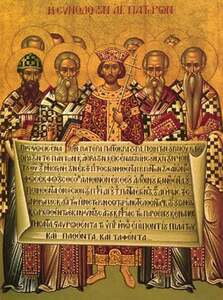
On the Sunday that falls from the 13th to the 19th of the present month, we chant the Service to the 630 Holy and God-bearing Fathers who came together for the 4th Ecumenical Council who assembled in Chalcedon in 451, to condemn Eutyches, who taught that there was only one nature, the divine, in Christ after the Incarnation, and Dioscorus, Patriarch of Alexandria, who illegally received Eutyches back into communion and deposed Saint Flavian, Patriarch of Constantinople, who had excommunicated Eutyches.

In the Slavic tradition, on this Sunday, the Fathers of the first six Ecumenical Councils are all commemorated.


July 19

Macrina the Righteous, sister of St. Basil

Saint Macrina, the elder sister of Saints Basil the Great and Gregory of Nyssa, was sought after by many as a bride because of her beauty, wisdom, and illustrious birth, and in tender youth was espoused by her parents to a bridegroom of fitting nobility. When her betrothed died, Macrina refused any other suitors, and devoted herself to a life of virginity, asceticism, and prayer. When her brother Basil returned from a brilliant career in the best schools of Constantinople and Athens, puffed up with not a little youthful pride-for knowledge puffeth up-it was the ardent admonitions and holy example of his blessed sister that persuaded him to turn from seeking worldly glory to the service of God. Saint Macrina founded a convent, where she ended her earthly life in the year 379, and was buried by her brother Gregory, who wrote a moving account of her last days and his grief at seeing such a light pass out of the world.


July 19

Translation of the Holy Relics of Righteous Seraphim of Sarov

The uncovering of the holy relics of Saint Seraphim of Sarov on July 19, 1903 was attended by many thousands, among them the foremost of the clergy and royalty; the holy Tsar Nicholas II (see July 4) was one of the bearers of the relics in procession, and the Grand Duchess Elizabeth (see July 5) wrote an eyewitness account of the many miracles that took place. Not only had the Saint foretold the coming of the Tsar to his glorification, and that from joy they would chant "Christ is Risen" in summer, but he had also left a letter "for the fourth sovereign, who will come to Sarov." This was Nicholas II, who was given the letter when he came in 1903; the contents of the letter are not known, but when he had read it, the Tsar and future Martyr, though not a man to show his emotions, was visibly shaken. For the life of Saint Seraphim, see January 2.


July 20

Elias the Prophet

Elias of great fame was from Thisbe or Thesbe, a town of Galaad (Gilead), beyond the Jordan. He was of priestly lineage, a man of a solitary and ascetical character, clothed in a mantle of sheep skin, and girded about his loins with a leathern belt. His name is interpreted as "Yah is my God." His zeal for the glory of God was compared to fire, and his speech for teaching and rebuke was likened unto a burning lamp. From this too he received the name Zealot. Therefore, set aflame with such zeal, he sternly reproved the impiety and lawlessness of Ahab and his wife Jezebel. He shut up heaven by means of prayer, and it did not rain for three years and six months. Ravens brought him food for his need when, at God's command, he was hiding by the torrent of Horrath. He multiplied the little flour and oil of the poor widow of Sarephtha of Sidon, who had given him hospitality in her home, and when her son died, he raised him up. He brought down fire from Heaven upon Mount Carmel, and it burned up the sacrifice offered to God before all the people of Israel, that they might know the truth. At the torrent of Kisson, he slew 450 false prophets and priests who worshipped idols and led the people astray. He received food wondrously at the hand of an Angel, and being strengthened by this food he walked for forty days and forty nights. He beheld God on Mount Horeb, as far as this is possible for human nature. He foretold the destruction of the house of Ahab, and the death of his son Ohozias; and as for the two captains of fifty that were sent by the king, he burned them for their punishment, bringing fire down from Heaven. He divided the flow of the Jordan, and he and his disciple Elisseus passed through as it were on dry land; and finally, while speaking with him, Elias was suddenly snatched away by a fiery chariot in the year 895 B.C., and he ascended as though into heaven, whither God most certainly translated him alive, as He did Enoch (Gen. 5:24; IV Kings 2: 11). But from thence also, after seven years, by means of an epistle he reproached Joram, the son of Josaphat, as it is written: "And there came a message in writing to him from Elias the Prophet, saying, Thus saith the Lord God of David thy father, Because thou hast not walked in the way," and so forth (II Chron. 21:12). According to the opinion of the majority of the interpreters, this came to pass either through his disciple Elisseus, or through another Prophet when Elias appeared to them, even as he appeared on Mount Tabor to the disciples of Christ (see Aug. 6).


July 21

John and Symeon the Fool for Christ

These Saints were from the city of Edessa in Mesopotamia and flourished during the reign of Justin the Younger (565-578). After a pilgrimage to Jerusalem they were moved with a desire to forsake the world; they were tonsured monks by the Abbot Nicon, and soon after left the monastery to struggle together in the wilderness near the Dead Sea. When they had passed a little more than thirty years together in silence and prayer, Symeon, having reached the heights of dispassion, departed for Emesa in Syria, where he passed the rest of his life playing the fool, saving many souls from sin while hiding his sanctity with seemingly senseless behavior. He reposed in 570; by the providence of God, John, who had remained in the wilderness, departed soon after.


July 22

Mary Magdalene, Myrrhberer & Equal-to-the-Apostles

Saint Mary was from Magdala in Galilee on the Sea of Tiberias, and for this was named Magdalene. When the Lord Jesus cast out seven demons from her, from which she had been suffering, she became His faithful and inseparable disciple, following Him and ministering unto Him even to the time of His crucifixion and burial. Then, returning to Jerusalem together with the rest of the Myrrh-bearers, she prepared the fragrant spices for anointing the body of the Lord. And on the Lord's day they came very early to the tomb, even before the Angels appeared declaring the Resurrection of the Lord. When Mary Magdalene saw the stone taken away from the tomb, she ran and proclaimed it to Peter and John. And returning immediately to the tomb and weeping outside, she was deemed worthy to be the first of the Myrrh-bearers to behold the Lord arisen from the dead, and when she fell at His feet, she heard Him say, "Touch Me not." After the Lord's Ascension, nothing certain is known concerning her. Some accounts say that she went to Rome and later returned to Jerusalem, and from there proceeded to Ephesus, where she ended her life, preaching Christ. Although it is sometimes said that Saint Mary Magdalene was the "sinful woman" of the Gospel, this is nowhere stated in the tradition of the Church, in the sacred hymnology, or in the Holy Gospels themselves, which say only that our Lord cast seven demons out of her, not that she was a fallen woman. "Madeleine" is a form of Magdalene.


July 23

Phocas the Holy Martyr, Bishop of Sinope

This saint was known for the many miracles he worked and for his apostolic zeal in shepherding the flock of Sinope. He contested for the Faith during the reign of the Emperor Trajan, in the year 102, when he was burned to death in a bath-house. A homily in his honour was composed by Saint John Chrysostom. The translation of his holy relics is celebrated on July 23.


July 24

Christina the Great Martyr of Tyre

Saint Christina was from Tyre in Syria, the daughter of a pagan named Urban. Enlightened in her heart to believe in Christ, she broke her father's idols, made of gold and silver, and distributed the pieces to the poor. When her father learned this, he punished her ruthlessly, then cast her into prison. The rulers subjected her to imprisonments, hunger, torments, the cutting off of her breasts and tongue, and finally impalement, in the year 200, during the reign of the Emperor Septimius Severus.


July 25

Dormition of St. Anna, mother of the Theotokos

According to tradition, Anna, the ancestor of God, lived for sixty-nine years, and her spouse Joachim, for eighty; according to one account, Saint Joachim died two years before Saint Anna. The Theotokos had been orphaned of both her parents already when she was eleven years of age, when she was living in the Temple (see Sept. 8 and Nov. 21). Saint Anna is invoked for conceiving children, and for help in difficult childbirth.


Hymns of the Day

Resurrectional Apolytikion in the Plagal 2nd Tone

Angelic powers were above Thy tomb, and they that guarded Thee became as dead. And Mary stood by the grave seeking Thine immaculate Body. Thou hast despoiled Hades and wast not tried thereby. Thou didst meet the Virgin and didst grant us life. O Thou Who didst arise from the dead, Lord, glory be to Thee.
Ἀγγελικαὶ Δυνάμεις ἐπὶ τὸ μνῆμά σου, καὶ οἱ φυλάσσοντες ἀπενεκρώθησαν, καὶ ἵστατο Μαρία ἐν τῷ τάφῳ, ζητοῦσα τὸ ἄχραντόν σου σῶμα. Ἐσκύλευσας τὸν ᾍδην, μὴ πειρασθεὶς ὑπ' αὐτοῦ, ὑπήντησας τῇ Παρθένῳ, δωρούμενος τὴν ζωήν, ὁ ἀναστὰς ἐκ των νεκρῶν, Κύριε δόξα σοι.

Apolytikion for Sun. of the Holy Fathers in the Plagal 4th Tone

Most glorified art Thou, O Christ our God, Who hast established our Fathers as luminous stars upon the earth, and through them didst guide us all to the true Faith. O Most Merciful One, glory be to Thee.
Ὑπερδεδοξασμένος εἶ, Χριστὲ ὁ Θεὸς ἡμῶν, ὁ φωστῆρας ἐπὶ γῆς τοὺς Πατέρας ἡμῶν θεμελιώσας, καὶ δι' αὐτῶν πρὸς τὴν ἀληθινὴν πίστιν, πάντας ἡμᾶς ὁδηγήσας· πολυεύσπλαγχνε, δόξα σοι.

Seasonal Kontakion in the 2nd Tone

O Protection of Christians that cannot be put to shame, mediation unto the creator most constant: O despise not the voices of those who have sinned; but be quick, O good one, to come unto our aid, who in faith cry unto thee: Hasten to intercession and speed thou to make supplication, O thou who dost ever protect, O Theotokos, them that honor thee.
Προστασία τῶν Χριστιανῶν ἀκαταίσχυντε, μεσιτεία πρὸς τὸν Ποιητὴν ἀμετάθετε. Μὴ παρίδῃς ἁμαρτωλῶν δεήσεων φωνάς, ἀλλὰ πρόφθασον, ὡς ἀγαθή, εἰς τὴν βοήθειαν ἡμῶν, τῶν πιστῶς κραυγαζόντων σοι· Τάχυνον εἰς πρεσβείαν, καὶ σπεῦσον εἰς ἱκεσίαν, ἡ προστατεύουσα ἀεί, Θεοτόκε, τῶν τιμώντων σε.


Wisdom of the Fathers

The Lord says to His disciples, 'Let your light so shine before men, that they may see your good works, and glorify your Father which is in heaven' (Matt. 5:16). He does not say this to urge them to show off, but to urge them to organize their lives as is pleasing to God. Just as light effortlessly attracts people's gaze, so a way of life pleasing to God draws their minds along with their eyes. We do not praise the air which shares in the brilliance of the sunlight, but the sun which is the source of this brilliance and bestows it on us. Even if we do praise the air for its brightness, we praise the sun much more. So it is when someone makes the brilliance of the Sun of righteousness (Mal. 4:2) visible through his virtuous deeds. As soon as anyone looks at him, they are immediately led towards the glory of the Father in heaven of Christ, the Sun of righteousness.
St. Gregory Palamas
Homilies Vol. 1, Homily Ten para. 14; Saint Tikhon's Seminary Press pgs. 110-111, 14th century

Every work which does not have love as its beginning and root is nothing.
St. John Chrysostom
Unknown, 4th century


Monthly Calendars


Diakonia Newsletter

BACK TO TOP