October 04

St. George Greek Orthodox Church
Publish Date: 2026-10-04
Bulletin Contents
Community News
Gospel and Epistle Readings
Wisdom of the Fathers
Hymns of the Day
Saints and Feasts
Diakonia Newsletter

St. George Greek Orthodox Church
General Information
- Phone:
- (405) 751-1885
- Fax:
- (405) 751-1889
- Email:
- [email protected]
- Street Address:
- 2101 NW 145th Street
- Oklahoma City, OK 73134
- Mailing Address:
- 2101 NW 145th Street
- Oklahoma City, OK 73134
Contact Information
Services Schedule
Every Saturday we have Great Vespers (unless otherwise noted) at 6:00 p.m. Every Sunday - Orthros at 8:50 a.m., Divine Liturgy at 10:00 a.m. Weekday Services are as listed on the Calendar and Community News.
Past Bulletins
- Publish Date:
- 2026-09-27
- Publish Date:
- 2026-09-20
- Publish Date:
- 2026-09-13
- Publish Date:
- 2026-09-06
- Publish Date:
- 2026-08-30
- Publish Date:
- 2026-08-23
Community News
Weekday Services...
Every Sunday we have Orthros beginning at 8:50 a.m. and Divine Liturgy beginning at 10:00 a.m. Saturday evenings we have Great Vespers at 6:00 p.m., unless otherwise noted. Weekday services are listed below and begin at 8:30 a.m. with Orthros followed by Divine Liturgy. Unless otherwise stated service will be at St. George.
October
23rd, Friday - St. James the Brother of the Lord
26th, Monday - St. Demetrios the Great Martyr
|
Community Connections |
Greek Festival is HERE!!!!!! Come and help!
Please be attentive and pick-up after yourself in the Church Hall. Thank you!!!
November 1st - Bingo Night
November 15th - General Assembly & Thanksgiving Dinner
November 29th - Memorial for Pete and Louise Marianos. May their memory be eternal.
December 20th - Sunday School Christmas Program
Catechism Class
There is no Catechism Class on Thursdays 8/24, 9/1 due to Festival Preperation.
Catechism Classes are on Thursday from 7:00 - 8:30 p.m. It is open to all.
Prosfora Schedule
October
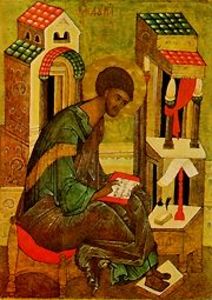
4th, Sunday 2nd Sunday of St. Luke Catherine Chrysant
11th, Sunday 7th Ecumenical Council Vana Economopoulos
18th, Sunday St. Luke the Evangelist Elaine Bappert
23rd, Friday St. James the Brother of the Lord Beth Huntley
25th, Sunday 6th Sunday of St. Luke Christine Chiconas
26th, Monday St. Demetrios the Great Martyr Catherine Chrysant
St. Paul writes, "The Lord Jesus on the night when he was betrayed took bread, and when he had given thanks, he broke it and said, 'This is my body which is for you. Do this in rememberance of me.'" (1 Cor. 11:24).
We are in need of Prosfora bakers. Our ladies and gentlemen have diminished over the years. The greatest part of this is everyone qualifies! Anyone young and old can make Prosfora. We would only ask a few times per year to prepare bread for a Divine Liturgy. What better way for a family to give of themselves and their love for the Church.
Prosfora can be kneaded in a bread machine, with a mixer that has dough hooks, or by hand. It can easily bge an individual's or an offering made by the whole family. Children love to knead bread or be able to put the seal on and for the children it is a learning experience. It is a great offering of life and love to God.
Please call the Church office if you would like to offer this gift.
Gospel and Epistle Readings
Matins Gospel Reading
Seventh Orthros Gospel
The Reading is from John 20:1-10
On the first day of the week, Mary Magdalene came to the tomb early, while it was still dark, and saw that the stone had been taken away from the tomb. So she ran, and went to Simon Peter and the other disciple, the one whom Jesus loved, and said to them, "They have taken the Lord out of the tomb, and we do not know where they have laid Him." Peter then came out with the other disciple, and they went toward the tomb. They both ran, but the other disciple outran Peter and reached the tomb first; and stooping to look in, he saw the linen cloths lying there, but he did not go in. Then Simon Peter came, following him, and went into the tomb; he saw the linen cloths lying and the napkin, which had been on His head, not lying with the linen cloths, but rolled up in a place by itself. Then the other disciple, who reached the tomb first, also went in, and he saw and believed; for as yet they did not know the scripture, that He must rise from the dead. Then the disciples went back to their homes.
Epistle Reading
Prokeimenon. First Mode. Psalm 32.22,1.
Let your mercy, O Lord, be upon us.
Verse: Rejoice in the Lord, O ye righteous.
The reading is from St. Paul's Second Letter to the Corinthians 9:6-11.
Brethren, he who sows sparingly will also reap sparingly, and he who sows bountifully will also reap bountifully. Each one must do as he has made up his mind, not reluctantly or under compulsion, for God loves a cheerful giver. And God is able to provide you with every blessing in abundance, so that you may always have enough of everything and may provide in abundance for every good work. As it is written, "He scatters abroad, he gives to the poor; his righteousness endures for ever." He who supplies seed to the sower and bread for food will supply and multiply your resources and increase the harvest of your righteousness. You will be enriched in every way for great generosity, which through us will produce thanksgiving to God.
Gospel Reading
2nd Sunday of Luke
The Reading is from Luke 6:31-36
The Lord said, "As you wish that men would do to you, do so to them. If you love those who love you, what credit is that to you? For even sinners love those who love them. And if you do good to those who do good to you, what credit is that to you? For even sinners do the same. And if you lend to those from whom you hope to receive, what credit is that to you? Even sinners lend to sinners, to receive as much again. But love your enemies, and do good, and lend, expecting nothing in return; and your reward will be great, and you will be sons of the Most High; for he is kind to the ungrateful and the selfish. Be merciful, even as your Father is merciful."
Wisdom of the Fathers
There are three things that impel us towards what is holy: natural instincts, angelic powers and probity of intention. Natural instincts impel us when, for example, we do to others what we would wish them to do to us (cf. Luke 6:31), or when we see someone suffering deprivation or in need and naturally feel compassion. Angelic powers impel us when, being ourselves impelled to something worthwhile, we find we are providentially helped and guided. We are impelled by probity of intention when, discriminating between good and evil, we choose the good.
Second Century on Love no. 32, Philokalia Vol. 2 edited by Palmer, Sherrard and Ware; Faber and Faber pg. 71, 7th century
Every work which does not have love as its beginning and root is nothing.
Unknown, 4th century
'But I say to you,' the Lord says, 'love your enemies; do good to those who hate you, pray for those who persecute you.' Why did he command these things? So that he might free you from hatred, sadness, anger and grudges, and might grant you the greatest possession of all, perfect love, which is impossible to possess except by the one you loves all equally in imitation of God.
Unknown, 7th century
Christians should strive in all things and ought not to pass judgment of any kind on anyone, not on the prostitute nor on sinners nor on disorderly persons. But they should look upon all persons with a single mind and a pure eye so that it may be for such a person almost a natural and fixed attitude never to despise or judge or abhor anyone or to divide people and put them into boxes for this is purity of heart, that, when you see the sinner and the weak, you have compassion and show mercy to them.
Homilies 5.8, 4th century
Why do we judge our neighbors? Because we shun knowing ourselves. Someone busy trying to understand himself has no time to notice the shortcomings of others. Judge yourself ... and you will stop judging others. Judge a poor deed, but do not judge the doer. It is necessary to consider yourself the most sinful of all, and to forgive your neighbor every poor deed.
Unknown, 19th century
The sign that thou lovest God, is this, that thou lovest thy fellow; and if thou hatest thy fellow, thy hatred is towards God. For it is blasphemy if thou prayest before God while thou art wroth. For thy heart also convicts thee, that in vain thou multipliest words: thy conscience rightly judges that in thy prayers thou profitest nought.
ON ADMONITION AND REPENTANCE.
Hymns of the Day
Resurrectional Apolytikion in the First Mode
Although the stone was sealed by the Jews, and the soldiers guarded Your most pure body, You arose on the third day, O Savior, giving life to the world. For this reason, the heavenly powers cried out to you, O Giver of Life: Glory to Your resurrection, O Christ! Glory to Your kingdom! Glory to Your dispensation, only Lover of Mankind!
Reading is under copyright and is used with permission, all rights reserved by: Greek Orthodox Archdiocese of America
Apolytikion for Saint George in the Fourth Mode
Liberator of captives, defender of the poor, physician of the sick, and champion of kings, O trophy-bearer, Great Martyr George, intercede with Christ God that our souls be saved.
Seasonal Kontakion in the Second Mode
O Protection of Christians that cannot be put to shame, mediation unto the creator most constant: O despise not the voices of those who have sinned; but be quick, O good one, to come unto our aid, who in faith cry unto thee: Hasten to intercession and speed thou to make supplication, O thou who dost ever protect, O Theotokos, them that honor thee.
Reading is under copyright and is used with permission, all rights reserved by: Holy Transfiguration Monastery
Saints and Feasts


October 04
Hierotheus, Bishop of Athens
According to some, Hierotheus, like Saint Dionysius, was a member of the court of Mars Hill. Having first been instructed in the Faith of Christ by Paul, he became Bishop of Athens. He, in turn, initiated the divine Dionysius more perfectly into the mysteries of Christ; the latter, on his part, elaborated more clearly and distinctly Hierotheus' concise and summary teachings concerning the Faith. He too was brought miraculously by the power of the Holy Spirit to be present at the Dormition of the Theotokos, when, together with the sacred Apostles, he became a leader of the divine hymnody. "He was wholly transported, wholly outside himself and was so deeply absorbed in communion with the sacred things he celebrated in hymnology, that to all who heard him and saw him and knew him, and yet knew him not, he seemed to be inspired of God, a divine hymnographer," as Dionysius says (On the Divine Names, 3:2). Having lived in a manner pleasing to God, he reposed in the Lord.

October 04
John the Hermit

October 05
Charitina the Martyr
Saint Charitina contested for Christ during the reign of Diocletian, in the year 290. The handmaid of a certain Claudius, she was betrayed as a Christian to Dometian, the Count, before whom she fearlessly confessed Christ. After suffering the most terrible tortures, including the uprooting of her teeth and nails, she gave up her soul into the hands of the Lord.

October 05
Peter, Alexis, Jonah, Hermogenes & Tikhon, Metropolitans of Moscow
The feast of the Hierarchs of Moscow was established during the reign of Tsar Theodore Ioannovich and Patriarch Job in the year 1596. Their individual feasts are: Saint Peter (+1326), December 21, and August 24, translation of holy relics; Saint Alexis (+14th cent.), February 12, and May 20, recovery of holy relics; Saint Jonah (+1461), March 31 and June 15, with the recovery of his holy relics celebrated on May 27. In 1875, at the proposal of Metropolitan Innocent of Moscow, to this feast was joined the commemoration of Saint Philip of Moscow (+1569), whose feast is kept on January 9, and the recovery of his holy relics on July 3. In more recent times, the holy Patriarchs Hermogenes (+1612) and Tikhon (+1925) have been added to the Synaxis. Saint Hermogenes, who was starved to death by the Poles, is also celebrated on February 17 and May 12, and Saint Tikhon, a confessor under the atheist yoke, on March 25. the Menaion service itself makes reference only to Saints Peter, Alexis, Jonah, and Philip.

October 06
Thomas the Apostle of the 12
The name Thomas means, "twin." He was one of the Twelve, a Galilean by birth. Sophroneus (not the famous Patriarch of Jerusalem [7th Century, celebrated March 11], but a friend of Jerome's), quoted also by Jerome, says that Saint Thomas preached to the Parthians, Pesians, Medes, Hyrcanians, Bactrians, and neighbouring nations. According to Heracleon, the Apostle died a natural death; according to other accounts, he was martyred at Meliapur His tomb was known by Saint John Chrysostom to be at Edessa in Syria, to which city his holy relics may have been translated from India in the fourth century.

October 07
Sergius & Bacchus the Great Martyrs of Syria
These holy Martyrs were Romans of high rank in the service of the Emperor Maximian, to whom it was reported that they did not take part in the festivals of the idols. When he called them into his presence, they confessed their Faith in the one God. He had them arrayed in women's clothes and paraded through the streets in mockery. They were afterwards scourged, from which Saint Bacchus died. This was about the year 296. Saint Sergius was then taken to Resapha in Syria, where he was tortured and beheaded. His tomb in Resapha became a very famous shrine, to which pilgrims came from as far away as Western Europe; Resapha was later renamed Sergiopolis in his honour.

October 07
Jonah of Manchuria

October 08
Pelagia the Righteous
This Saint was a prominent actress of the city of Antioch, and a pagan, who lived a life of unrestrained prodigality and led many to perdition. Instructed and baptized by a certain bishop named Nonnus (Saint Nonnus is commemorated Nov. 10), she departed for the Mount of Olives near Jerusalem, where she lived as a recluse, feigning to be a eunuch called Pelagia. She lived in such holiness and repentance that within three or four years she was deemed worthy to repose in an odour of sanctity, in the middle of the fifth century. Her tomb on the Mount of Olives has been a place of pilgrimage ever since.

October 09
James the Apostle, son of Alphaeus
The holy Apostle James was one of the Twelve, and preached Christ to many nations, and finally suffered death by crucifixion.

October 09
Andronicus & his wife Athanasia of Egypt
Saints Andronicus and Athanasia were from Antioch, and finished their lives in asceticism about the year 500.

October 09
Abraham the Righteous & his nephew Lot
The holy Patriarch Abraham, born a pagan, ten generations after Noah, when the knowledge of God had perished from among men, became the beginning of God's dispensation for the universal renewal and salvation of man. He was called out of his country--the land of the Chaldees, that is, Mesopotamia--to the land of Canaan, and received the promise that through his seed all the nations of the earth should be blessed; through his singular faith in the promises of God, he was justified before the giving of the Law and the coming of Grace; through his willingness to sacrifice Isaac, he portrayed the love wherewith God loved the world in sacrificing His only-begotten Son. The greatness of Abraham, and the trials that he and his righteous nephew Lot underwent, are set forth in the Book of Genesis in the Old Testament, chapters twelve through twenty-five. See also the Sunday of the Holy Forefathers, December 11-17.

October 10
Eulampios & Eulampia the Martyrs
The Martyrs Eulampius and Eulampia were from Nicomedia, and contested for Christ during the reign of Maximian, in the year 296.

October 10
The 14 Holy Elders of Optina Monastery
On this day we also celebrate the Synaxis of the Righteous Fathers of Optina Hermitage in Russia, who struggled valiantly in the monastic life in prayer, humility, obedience, and love, and whom God deemed worthy of the lofty gifts of discernment, prophecy, clairvoyance, and eldership, that is, the grace to guide souls on the unerring path of salvation. They are Leo (who reposed in 1841), Macarius (1860), Moses (1862), Anthony (1865), Hilarion (1873), Ambrose (1891), Anatolius (1894), Isaacius (1894), Joseph (1911), Barsanuphius (1913), Anatolius (1922), Nectarius (1928), Nicon (1931), and Isaacius (1936).
Diakonia Newsletter

Read the latest Diakonia Newsletter for this Sunday
https://bulletinbuilder.org/diakonia-newsletter/2026-10-04?source=bulletin_web
October 4, 2026