

St. George Greek Orthodox Cathedral
Publish Date: 2026-08-16
Bulletin Contents

Organization Icon
St. George Greek Orthodox Cathedral

General Information

  • Phone:
  • (860) 956-7586
  • Street Address:

  • 433 Fairfield Avenue

  • Hartford, CT 06114


Contact Information


Services Schedule

Sundays: Orthros (Matins): 8:45 AM | Divine Liturgy: 9:45 AM


Past Bulletins


Gospel and Epistle Readings

Epistle Reading

Prokeimenon. Second Mode. Psalm 117.14,18.
The Lord is my strength and my song.
Verse: The Lord has chastened me sorely.

The reading is from St. Paul's First Letter to the Corinthians 9:2-12.

Brethren, you are the seal of my apostleship in the Lord. This is my defense to those who would examine me. Do we not have the right to our food and drink? Do we not have the right to be accompanied by a wife, as the other apostles and the brothers of the Lord and Cephas? Or is it only Barnabas and I who have no right to refrain from working for a living? Who serves as a soldier at his own expense? Who plants a vineyard without eating any of its fruit? Who tends a flock without getting some of the milk? Do I say this on human authority? Does not the law say the same? For it is written in the law of Moses, "You shall not muzzle an ox when it is treading out the grain." Is it for oxen that God is concerned? Does he not speak entirely for our sake? It was written for our sake, because the plowman should plow in hope and the thresher thresh in hope of a share in the crop. If we have sown spiritual good among you, is it too much if we reap your material benefits? If others share this rightful claim upon you, do not we still more? Nevertheless, we have not made use of this right, but we endure anything rather than put an obstacle in the way of the gospel of Christ.

Προκείμενον. Second Mode. ΨΑΛΜΟΙ 117.14,18.
Ἰσχύς μου καὶ ὕμνησίς μου ὁ Κύριος.
Στίχ. Παιδεύων ἐπαίδευσέ με ὁ Κύριος.

τὸ Ἀνάγνωσμα Πρὸς Κορινθίους α' 9:2-12.

Ἀδελφοί, ἡ σφραγὶς τῆς ἐμῆς ἀποστολῆς ὑμεῖς ἐστε ἐν κυρίῳ. Ἡ ἐμὴ ἀπολογία τοῖς ἐμὲ ἀνακρίνουσιν αὕτη ἐστίν. Μὴ οὐκ ἔχομεν ἐξουσίαν φαγεῖν καὶ πιεῖν; Μὴ οὐκ ἔχομεν ἐξουσίαν ἀδελφὴν γυναῖκα περιάγειν, ὡς καὶ οἱ λοιποὶ ἀπόστολοι, καὶ οἱ ἀδελφοὶ τοῦ κυρίου, καὶ Κηφᾶς; Ἢ μόνος ἐγὼ καὶ Βαρνάβας οὐκ ἔχομεν ἐξουσίαν τοῦ μὴ ἐργάζεσθαι; Τίς στρατεύεται ἰδίοις ὀψωνίοις ποτέ; Τίς φυτεύει ἀμπελῶνα, καὶ ἐκ τοῦ καρποῦ αὐτοῦ οὐκ ἐσθίει; Ἢ τίς ποιμαίνει ποίμνην, καὶ ἐκ τοῦ γάλακτος τῆς ποίμνης οὐκ ἐσθίει; Μὴ κατὰ ἄνθρωπον ταῦτα λαλῶ; Ἢ οὐχὶ καὶ ὁ νόμος ταῦτα λέγει; Ἐν γὰρ τῷ Μωϋσέως νόμῳ γέγραπται, Οὐ φιμώσεις βοῦν ἀλοῶντα. Μὴ τῶν βοῶν μέλει τῷ θεῷ; Ἢ διʼ ἡμᾶς πάντως λέγει; Διʼ ἡμᾶς γὰρ ἐγράφη, ὅτι ἐπʼ ἐλπίδι ὀφείλει ὁ ἀροτριῶν ἀροτριᾷν, καὶ ὁ ἀλοῶν τῆς ἐλπίδος αὐτοῦ μετέχειν ἐπʼ ἐλπίδι. Εἰ ἡμεῖς ὑμῖν τὰ πνευματικὰ ἐσπείραμεν, μέγα εἰ ἡμεῖς ὑμῶν τὰ σαρκικὰ θερίσομεν; Εἰ ἄλλοι τῆς ἐξουσίας ὑμῶν μετέχουσιν, οὐ μᾶλλον ἡμεῖς; Ἀλλʼ οὐκ ἐχρησάμεθα τῇ ἐξουσίᾳ ταύτῃ, ἀλλὰ πάντα στέγομεν, ἵνα μὴ ἐγκοπήν τινα δῶμεν τῷ εὐαγγελίῳ τοῦ Χριστοῦ.


Gospel Reading

11th Sunday of Matthew
The Reading is from Matthew 18:23-35

The Lord said this parable: "The kingdom of heaven may be compared to a king who wished to settle accounts with his servants. When he began the reckoning, one was brought to him who owed him ten thousand talents; and as he could not pay, his lord ordered him to be sold, with his wife and children and all that he had, and payment to be made. So the servant fell on his knees, imploring him, 'Lord, have patience with me, and I will pay you everything.' And out of pity for him the lord of that servant released him and forgave him the debt. But that same servant, as he went out, came upon one of his fellow servants who owed him a hundred denarii; and seizing him by the throat he said, 'Pay what you owe.' So his fellow servant fell down and besought him, 'Have patience with me, and I will pay you.' He refused and went and put him in prison till he should pay the debt. When his fellow servants saw what had taken place, they were greatly distressed, and they went and reported to their lord all that had taken place. Then his lord summoned him and said to him, 'You wicked servant! I forgave you all that debt because you besought me; and should not you have had mercy on your fellow servant, as I had mercy on you?' And in anger his lord delivered him to the torturers, till he should pay all his debt. So also my heavenly Father will do to every one of you, if you do not forgive your brother from your heart."

11th Sunday of Matthew
Κατὰ Ματθαῖον 18:23-35

Εἶπεν ὁ Κύριος τήν παραβολὴν ταύτην· Ὡμοιώθη ἡ βασιλεία τῶν οὐρανῶν ἀνθρώπῳ βασιλεῖ, ὃς ἠθέλησε συνᾶραι λόγον μετὰ τῶν δούλων αὐτοῦ. ἀρξαμένου δὲ αὐτοῦ συναίρειν προσηνέχθη αὐτῷ εἷς ὀφειλέτης μυρίων ταλάντων. μὴ ἔχοντος δὲ αὐτοῦ ἀποδοῦναι ἐκέλευσεν αὐτὸν ὁ κύριος αὐτοῦ πραθῆναι καὶ τὴν γυναῖκα αὐτοῦ καὶ τὰ τέκνα καὶ πάντα ὅσα εἶχε, καὶ ἀποδοθῆναι. πεσὼν οὖν ὁ δοῦλος προσεκύνει αὐτῷ λέγων· κύριε, μακροθύμησον ἐπ᾿ ἐμοὶ καὶ πάντα σοι ἀποδώσω. σπλαγχνισθεὶς δὲ ὁ κύριος τοῦ δούλου ἐκείνου ἀπέλυσεν αὐτὸν καὶ τὸ δάνειον ἀφῆκεν αὐτῷ. ἐξελθὼν δὲ ὁ δοῦλος ἐκεῖνος εὗρεν ἕνα τῶν συνδούλων αὐτοῦ, ὃς ὤφειλεν αὐτῷ ἑκατὸν δηνάρια, καὶ κρατήσας αὐτὸν ἔπνιγε λέγων· ἀπόδος μοι εἴ τι ὀφείλεις. πεσὼν οὖν ὁ σύνδουλος αὐτοῦ εἰς τοὺς πόδας αὐτοῦ παρεκάλει αὐτὸν λέγων· μακροθύμησον ἐπ᾿ ἐμοὶ καὶ ἀποδώσω σοι. ὁ δὲ οὐκ ἤθελεν, ἀλλὰ ἀπελθὼν ἔβαλεν αὐτὸν εἰς φυλακὴν ἕως οὗ ἀποδῷ τὸ ὀφειλόμενον. ἰδόντες δὲ οἱ σύνδουλοι αὐτοῦ τὰ γενόμενα ἐλυπήθησαν σφόδρα, καὶ ἐλθόντες διεσάφησαν τῷ κυρίῳ ἑαυτῶν πάντα τὰ γενόμενα. τότε προσκαλεσάμενος αὐτὸν ὁ κύριος αὐτοῦ λέγει αὐτῷ· δοῦλε πονηρέ, πᾶσαν τὴν ὀφειλὴν ἐκείνην ἀφῆκά σοι, ἐπεὶ παρεκάλεσάς με. οὐκ ἔδει καὶ σὲ ἐλεῆσαι τὸν σύνδουλόν σου, ὡς καὶ ἐγώ σε ἠλέησα; καὶ ὀργισθεὶς ὁ κύριος αὐτοῦ παρέδωκεν αὐτὸν τοῖς βασανισταῖς ἕως οὗ ἀποδῷ πᾶν τὸ ὀφειλόμενον αὐτῷ. Οὕτω καὶ ὁ πατήρ μου ὁ ἐπουράνιος ποιήσει ὑμῖν, ἐὰν μὴ ἀφῆτε ἕκαστος τῷ ἀδελφῷ αὐτοῦ ἀπὸ τῶν καρδιῶν ὑμῶν τὰ παραπτώματα αὐτῶν.


Hymns of the Day

Resurrectional Apolytikion in the Second Mode

When Thou didst descend unto death, O Life Immortal, then didst Thou slay Hades with the lightning of Thy Divinity. And when Thou didst also raise the dead out of the nethermost depths, all the powers in the Heavens cried out: O Life-giver, Christ our God, glory be to Thee.
Ὅτε κατῆλθες πρὸς τὸν θάνατον, ἡ Ζωὴ ἡ ἀθάνατος, τότε τὸν ᾅδην ἐνέκρωσας τῇ ἀστραπῇ τῆς Θεότητος, ὅτε δὲ καὶ τοὺς τεθνεῶτας ἐκ τῶν καταχθονίων ἀνέστησας, πᾶσαι αἱ Δυνάμεις τῶν ἐπουρανίων ἐκραύγαζον·Ζωοδότα Χριστὲ ὁ Θεὸς ἡμῶν δόξα σοι.

Apolytikion for Holy Napkin in the Second Mode

We worship Thine immaculate icon, O Good One, asking the forgiveness of our failings, O Christ our God; for of Thine own will wast Thou well-pleased to ascend the Cross in the flesh, that Thou mightest deliver from slavery to the enemy those whom Thou hadst fashioned. Wherefore, we cry to Thee thankfully: Thou didst fill all things with joy, O our Saviour, when Thou camest to save the world.
Τήν άχραντον Εικόνα σου, προσκυνούμεν αγαθέ, αιτούμενοι συγχώρησιν τών πταισμάτων ημών, Χριστέ ο Θεός, βουλήσει γάρ ηυδόκησας σαρκί, ανελθείν εν τώ Σταυρώ, ίνα ρύση ούς έπλασας, εκ τής δουλείας τού εχθρού, όθεν ευχαρίστως βοώμέν σοι, Χαράς επλήρωσας τά πάντα, ο Σωτήρ ημών, παραγενόμενος εις τό σώσαι τόν κόσμον.

Apolytikion for Afterfeast of the Dormition in the First Mode

In giving birth, thou didst preserve thy virginity; in thy dormition, thou didst not forsake the world, O Theotokos. Thou wast translated unto life, since thou art the Mother of Life; and by thine intercessions dost thou redeem our souls from death.
Εν τή Γεννήσει τήν παρθενίαν εφύλαξας, έν τή Κοιμήσει τόν κόσμον ού κατέλιπες Θεοτόκε, Μετέστης πρός τήν ζωήν, μήτηρ υπάρχουσα τής ζωής, καί ταίς πρεσβείαις ταίς σαίς λυτρουμένη, εκ θανάτου τάς ψυχάς ημών.

Seasonal Kontakion in the Second Mode

Neither the grave nor death could contain the Theotokos, the unshakable hope, ever vigilant in intercession and protection. As Mother of life, He who dwelt in the ever-virginal womb transposed her to life.
Τήν εν πρεσβείαις ακοίμητον Θεοτόκον, καί προστασίαις αμετάθετον ελπίδα, τάφος καί νέκρωσις ουκ εκράτησεν, ως γάρ ζωής Μητέρα, πρός τήν ζωήν μετέστησεν, ο μήτραν οικήσας αειπάρθενον.


This Week at the Cathedral

Today at the Cathedral:

We welcome all newcomers to our cathedral and are glad you are here!  Please join us after the Divine Liturgy in the Social Hall; we would love to get to know you!

Memorial
Despina Johnson, 5 years

Coffee and sweets will be offered in memory of Despina Johnson

This Week at the Cathedral: 

Sunday, August 23
9:30am - Bishop Andonios will be visiting to celebrate the Divine Liturgy

Announcements:

Sunday School Registration
We are excited to welcome our children back for another wonderful year of Sunday School at St. George Cathedral! Registration is open for Pre-K through 12th Grade, and we invite you to join us on Sunday, September 13, to register in person and meet our teachers. Our Sunday School ministry helps children grow in their Orthodox faith, build lasting friendships, and become active members of our church family. Through engaging lessons, meaningful discussions, and hands-on activities, our students have the opportunity to deepen their understanding of our Orthodox traditions and grow closer to Christ.
Stay connected with us by following our new Facebook page, Sunday School of St. George Cathedral, where we will share updates, activities, and highlights throughout the year. We look forward to another blessed year of learning, fellowship, and growing together in Christ.

Canned Goods Drive
Please help us to help those in need!  We believe that food is a basic human right and that everyone should have access to sufficient, safe, and nutritious food.  To this goal, we have marked receptacles in the lower entrance area for anyone who wishes to donate and help support the health and well-being of our local individuals and communities in need. (see flyer)


Flyers

    Canned Goods Drive

    Canned Goods Drive

    Please help us to help those in need! It is our belief that food is a basic human right and that everyone should have access to sufficient, safe, and nutritious food. To this goal, we have marked receptacles in the lower entrance area for anyone who wishes to donate and help support the health and well-being of our local individuals and communities in need.


    Sunday School Calendar 2026-2027

    Sunday School Calendar 2026-2027

    Religious Education schedule for the 2026-2027 school year.


Saints and Feasts

August 16

Translation of the Image of Our Lord and God and Savior, Jesus Christ

When the fame of our Lord Jesus Christ came to Abgar, the ruler of Edessa, who was suffering from leprosy, Abgar sent a messenger named Ananias, through him asking the Savior to heal him of his disease, while bidding Ananias bring back a depiction of Him. When Ananias came to Jerusalem, and was unable to capture the likeness of our Lord, He, the Knower of hearts, asked for water, and having washed His immaculate and divine face, wiped it dry with a certain cloth, which He gave to Ananias to take to Abgar; the form of the Lord's face had been wondrously printed upon the cloth. As soon as Abgar received the cloth, which is called the Holy Napkin (Mandylion), he reverenced it with joy, and was healed of his leprosy; only his forehead remained afflicted. After the Lord's Death, Resurrection, and Ascension, the Apostle Thaddaeus (see Aug. 21) came to Edessa, and when he had baptized Abgar and all his men, Abgar's remaining leprosy also was healed. Abgar had the holy image of our Savior fixed to a board and placed at the city gate, commanding that all who entered the city reverence it as they passed through. Abgar's grandson, however, returned to the worship of the idols, and the Bishop of Edessa learned of his intention to replace the Holy Napkin with an idol. Since the place where it stood above the city gate was a rounded hollow, he set a burning lamp before the Holy Napkin, put a tile facing it, then bricked up the place and smoothed it over, so that the holy icon made without hands was no longer to be seen, and the ungodly ruler gave no further thought to it.

With the passage of time, the hidden icon was forgotten, until the year 615, when Chosroes II, King of Persia, was assaulting the cities of Asia, and besieged Edessa. The Bishop of Edessa, Eulabius, instructed by a divine revelation, opened the sealed chamber above the city gate and found the Holy Napkin complete and incorrupt, the lamp burning, and the tile bearing upon itself an identical copy of the image that was on the Holy Napkin. The Persians had built a huge fire outside the city wall; when the Bishop approached with the Holy Napkin, a violent wind fell upon the fire, turning it back upon the Persians, who fled in defeat. The Holy Napkin remained in Edessa, even after the Arabs conquered it, until the year 944, when it was brought with honor and triumph to Constantinople in the reign of Romanus I, when Theophylact was Ecumenical Patriarch. The Holy Napkin was enshrined in the Church of the most holy Theotokos called the Pharos. This is the translation that is celebrated today.


August 17

Myron the Martyr of Cyzicus

Saint Myron was a priest during the reign of Decius, when Antipater was ruler of Achaia. On the day of our Lord's Nativity, Antipater entered the church to seize the Christians and punish them. Saint Myron, kindled with holy zeal, roundly insulted Antipater, for which he was hung up and scraped, then cast into a raging furnace, but was preserved unharmed. When Myron refused to worship the idols, Antipater commanded that strips be cut in the Saint's flesh from his shoulders to his feet; the Saint took one of the strips of his flesh and flung it in the tyrant's face. He was beaten, and scraped again upon his beaten flesh; then he was thrown to wild beasts, but when Antipater saw them leaving off their fierce nature and protecting the Saint from harm, he was overcome with unbearable shame and slew himself. The Saint was then sent to Cyzicus, where the proconsul had him beheaded, about the year 250.


August 20

Samuel the Prophet

This most holy man, a Prophet of God from childhood, was the last judge of the Israelite people, and anointed the first two Kings of Israel. He was born in the twelfth century before Christ, in the city of Armathaim Sipha, from the tribe of Levi, the son of Elkanah and Hannah (Anna). He was the fruit of prayer, for his mother, being barren, conceived him only after she had supplicated the Lord with many tears; wherefore she called him Samuel, that is, "heard by God." As soon as Hannah had weaned him, she brought him to the city of Silom (Shiloh), where the Ark was kept, and she consecrated him, though yet a babe, to the service of God, giving thanks to Him with the hymn found in the Third Ode of the Psalter: "My heart hath been established in the Lord . . ." Samuel remained in Silom under the protection of Eli the priest. He served in the Tabernacle of God, and through his most venerable way of life became well-pleasing to God and man (I Kings 2: 26). While yet a child, sleeping in the tabernacle near the Ark of God, he heard the voice of God calling his name, and foretelling the downfall of Eli; for although Eli's two sons, Ophni and Phineas, were most lawless, and despisers of God, Eli did not correct them. Even after Samuel had told Eli of the divine warning, Eli did not properly chastise his sons, and afterwards, through various misfortunes, his whole house was blotted out in one day.

After these things came to pass, Samuel was chosen to be the protector of the people, and he judged them with holiness and righteousness. He became for them an example of all goodness, and their compassionate intercessor before God: "Far be it from me that I should sin against the Lord in ceasing to pray for you; yea, I will serve the Lord, and show you the good and the right way" (ibid. 12:23). When he asked them -- having God as witness -- if he ever wronged anyone, or took anyone's possessions, or any gift, even so much as a sandal, they answered with one voice: "Thou hast not defrauded us, nor oppressed us, nor afflicted us, neither hast thou taken anything from anyone's hand" (ibid. 12:4). When Samuel was old, the people asked him for a king, but he was displeased with this, knowing that God Himself was their King. But when they persisted, the Lord commanded him to anoint them a king, saying, "They have not rejected thee, but they have rejected Me from reigning over them" (ibid. 8:7); so Samuel anointed Saul. But Saul transgressed the command of God repeatedly, so Samuel anointed David. Yet, since Samuel was a man of God, full of tender mercy, when the Lord told him that He had rejected Saul, Samuel wept for him the whole night long (ibid. 15:11); and later, since he continued to grieve, the Lord said to him, "How long wilt thou mourn for Saul?" (ibid. 16:1). Having lived blamelessly some ninety-eight years, and become an example to all of a God-pleasing life, he reposed in the eleventh century before Christ. Many ascribe to him the authorship of the Books of judges, and of Ruth, and of the first twenty-four chapters of the First Book of Kings (I Samuel).


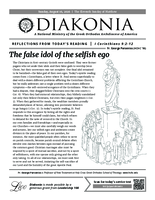
Diakonia Newsletter

BACK TO TOP