Holy Transfiguration Church
Publish Date: 2026-11-01
Bulletin Contents

Organization Icon
Holy Transfiguration Church

General Information

  • Phone:
  • (907) 344-0190
  • Fax:
  • (907) 344-9909
  • Street Address:

  • 2800 O'Malley Road

  • Anchorage, AK 99507
  • Mailing Address:

  • 2800 O'Malley Road

  • Anchorage, AK 99507


Contact Information


Services Schedule

Saturday 5pm - Great Vespers

Sunday 8:45 am - Orthros

Sunday 10 am - Divine Liturgy


Past Bulletins


Hymns of the Day

Resurrectional Apolytikion in the Plagal First Mode

Let us the faithful give praise and worship to the Logos, coeternal with the Father and the Spirit, born of the Virgin for our salvation; for of His own goodwill he consented to ascend the cross in the flesh and endured death and raised the dead by His glorious resurrection.
Τὸν συνάναρχον Λόγον Πατρὶ καὶ Πνεύματι, τὸν ἐκ Παρθένου τεχθέντα εἰς σωτηρίαν ἡμῶν, ἀνυμνήσωμεν πιστοὶ καὶ προσκυνήσωμεν, ὅτι ηὐδόκησε σαρκί, ἀνελθεῖν ἐν τῷ σταυρῷ, καὶ θάνατον ὑπομεῖναι, καὶ ἐγεῖραι τοὺς τεθνεῶτας, ἐν τῇ ἐνδόξῳ Ἀναστάσει αὐτοῦ.

Apolytikion for Unmercenaries Cosmas and Damian in the Third Mode

O Holy Unmercenaries and wonderworkers, visit our infirmities; freely ye received, freely give to us.
Άγιοι Ανάργυροι καί θαυματουργοί, επισκέψασθε τάς ασθενείας ημών, δωρεάν ελάβετε, δωρεάν δότε ημίν.

Seasonal Kontakion in the Second Mode

The protection of Christians unshameable, intercessor to our Holy Maker, unwavering, do not turn from the prayerful cries of those who are in sin; instead, come to us, for you are good; your loving help bring unto us, who are crying in faith to you: Hasten to intercession and speed now to supplication as a protection for all time, Theotokos, for those who honor you.
Προστασία τῶν Χριστιανῶν ἀκαταίσχυντε, μεσιτεία πρὸς τὸν Ποιητὴν ἀμετάθετε. Μὴ παρίδῃς ἁμαρτωλῶν δεήσεων φωνάς, ἀλλὰ πρόφθασον, ὡς ἀγαθή, εἰς τὴν βοήθειαν ἡμῶν, τῶν πιστῶς κραυγαζόντων σοι· Τάχυνον εἰς πρεσβείαν, καὶ σπεῦσον εἰς ἱκεσίαν, ἡ προστατεύουσα ἀεί, Θεοτόκε, τῶν τιμώντων σε.


Saints and Feasts

November 01

Cosmas and Damianos the Holy Unmercenaries and their mother Theodota

These Saints were from Asia (that is, Asia Minor). After the death of their father, their Christ-loving mother Theodota reared them in piety and in all manner of virtue, and had them instructed in every science, especially that of medicine. This became their vocation, and they went about healing every illness and malady, bestowing healing freely on both men and beasts alike; because of this, they are called "Unmercenaries." And thus, having completed the course of their life, they reposed in peace.


November 04

George Karslidis of Pontos


November 05

Galaktion & his wife Episteme, the Martyrs of Emesa

Saint Galaktion was from Emesa, the son of Cleitophon and Leucippe, pagans who had been instructed in piety by a certain Christian named Onuphrius and received holy Baptism. Saint Episteme, born of unbelieving parents, was baptized before she was wedded to Galaktion. After their marriage they remained in virginity and lived in separate monastic houses. Betrayed as Christians, they suffered martyrdom during the reign of Decius, about the year 250.


November 07

Bishop Raphael Hawaweeny of Brooklyn

Saint Raphael Hawaweeny was born on November 8, 1860 A.D., in Damascus, Syria, to pious Christian parents. He studied Arabic grammar and mathematics at the Antiochian Patriarchate parochial school where he was tonsured a reader in 1874. His strong academics served him well throughout his life, providing for him numerous opportunities to succeed and grow. He accepted a position in 1877 as an assistant teacher of Arabic and Turkish, which became full time in 1879. In 1879 he was tonsured a monk while working with Patriarch Hierotheos at the patriarchate, traveling with him on pastoral visits and serving as his personal assistant.

Longing to continue his theological studies, Raphael petitioned the Patriarch for permission to study at Halki Theological School, which was the only option for students of the Antiochian Patriarchate as the Balamand Seminary in Lebanon had been closed since 1840. After much persistence, Raphael received the blessing of the Patriarch and enrolled in Halki Seminary where he was ordained a deacon in 1885. After completing his degree at Halki, the young Deacon Raphael studied at the Kiev Theological Academy, working as a liaison between the Moscow and Antiochian patriarchates. Deacon Raphael was ordained to the holy priesthood in 1889 while in Kiev, continuing to serve that community for many years.

The opening of the Suez Canal in 1869 led to the subsequent collapse of the silk industry in the Middle East, causing many Syrians and others to immigrate to the United States. These new citizens desired to have their religion present in their new homeland and sent letters to their mother churches for pastoral help. A few priests were sent, but none lasted, and so the people asked for Father Raphael Hawaweeny to come to America and serve. Both the Antiochian and Moscow Patriarchs agreed to this idea, and Father Raphael left for America where the people greeted him with great love. Father Raphael then spent many years serving the Syrians in Brooklyn, New York, but he desired to scan the continent for Syrians and other Orthodox Christians who were without spiritual leadership. He traveled by train and carriage across the nation, finding Orthodox Christians, recording their location, and performing liturgies, baptisms, and weddings. Upon his return to Brooklyn, Father Raphael worked to find clergy to send to these dispersed communities, giving them a full time pastor to minister to their needs.

In 1904, by the hands of Bishops Tikhon and Innocent of the Moscow Patriarchate, he was the first bishop consecrated in the New World. The now Bishop Raphael continued his ministry to the Christians throughout America. Bishop Raphael worked tirelessly in Brooklyn to mediate disputes between the Orthodox Christians from Syria and Maronite Catholic Christians who often fought violently with one another. Despite numerous outbursts and setbacks, Bishop Raphael continued his ministry serving the Orthodox throughout his vast diocese. One such incident was when an influential leader of the Maronite group was killed and many people accused Bishop Raphael of ordering his murder. This led to many people attempting to harm the bishop, but he endured it all willingly. He was arrested under attempted murder charges, but was eventually cleared and let go after much time and money was spent in his defense.

Throughout his time in North America, Bishop Raphael founded 36 parishes to bring the Church to the faithful who were without a priest to guide them. Bishop Raphael truly lived out the Gospel in all aspects of his life, striving tirelessly for the people in his care, even to the point of sacrificing his own physical health in order to maintain the spiritual health of his people. Bishop Raphael died on February 27, 1915, at his home in Brooklyn. His funeral was attended by hundreds of people, including clergy from all ethnic backgrounds, illustrating his love for all of the people of God regardless of where they came from. The sacred relics of Saint Raphael, “the good shepherd of the lost sheep in North America,” were first interred in a crypt beneath the holy table at his Saint Nicholas Cathedral in Brooklyn on March 7, 1915, before being moved to the Syrian section of Mount Olivet Cemetery in Brooklyn on April 2, 1922. They were finally translated to the Holy Resurrection Cemetery at the Antiochian Village near Ligonier, Pennsylvania, on August 15, 1988. His sanctity was officially proclaimed by the Holy Synod of the Orthodox Church in America on March 29, 2000, and his glorification was celebrated on May 29 of that year at the Monastery of Saint Tikhon in Pennsylvania.


Gospel and Epistle Readings

Epistle Reading

Prokeimenon. Fourth Mode. Psalm 15.3,8.
Among the saints who are in his land, the Lord has been wondrous.
Verse: I see the Lord before me continually.

The reading is from St. Paul's First Letter to the Corinthians 12:27-31; 13:1-8.

Brethren, you are the body of Christ and individually members of it. And God has appointed in the church first apostles, second prophets, third teachers, then workers of miracles, then healers, helpers, administrators, speakers in various kinds of tongues. Are all apostles? Are all prophets? Are all teachers? Do all work miracles? Do all possess gifts of healing? Do all speak with tongues? Do all interpret? But earnestly desire the higher gifts. And I will show you a still more excellent way. If I speak in the tongues of men and of angels, but have not love, I am a noisy gong or a clanging cymbal. And if I have prophetic powers, and understand all mysteries and all knowledge, and if I have all faith, so as to remove mountains, but have not love, I am nothing. If I give away all I have, and if I deliver my body to be burned, but have not love, I gain nothing. Love is patient and kind; love is not jealous or boastful; it is not arrogant or rude. Love does not insist on its own way; it is not irritable or resentful; it does not rejoice at wrong, but rejoices in the right. Love bears all things, believes all things, hopes all things, endures all things. Love never ends.

Προκείμενον. Fourth Mode. ΨΑΛΜΟΙ 15.3,8.
Τοῖς ἁγίοις τοῖς ἐν τῇ γῇ αὐτοῦ ἐθαυμάστωσεν ὁ Κύριος.
Στίχ. Προωρώμην τὸν Κύριον ἐνώπιόν μου διαπαντός.

τὸ Ἀνάγνωσμα Πρὸς Κορινθίους α' 12:27-31, 13:1-8.

Ἀδελφοί, ὑμεῖς δέ ἐστε σῶμα Χριστοῦ, καὶ μέλη ἐκ μέρους. Καὶ οὓς μὲν ἔθετο ὁ θεὸς ἐν τῇ ἐκκλησίᾳ πρῶτον ἀποστόλους, δεύτερον προφήτας, τρίτον διδασκάλους, ἔπειτα δυνάμεις, εἶτα χαρίσματα ἰαμάτων, ἀντιλήψεις, κυβερνήσεις, γένη γλωσσῶν. Μὴ πάντες ἀπόστολοι; Μὴ πάντες προφῆται; Μὴ πάντες διδάσκαλοι; Μὴ πάντες δυνάμεις; Μὴ πάντες χαρίσματα ἔχουσιν ἰαμάτων; Μὴ πάντες γλώσσαις λαλοῦσιν; Μὴ πάντες διερμηνεύουσιν; Ζηλοῦτε δὲ τὰ χαρίσματα τὰ κρείττονα. Καὶ ἔτι καθʼ ὑπερβολὴν ὁδὸν ὑμῖν δείκνυμι. Ἐὰν ταῖς γλώσσαις τῶν ἀνθρώπων λαλῶ καὶ τῶν ἀγγέλων, ἀγάπην δὲ μὴ ἔχω, γέγονα χαλκὸς ἠχῶν ἢ κύμβαλον ἀλαλάζον. Καὶ ἐὰν ἔχω προφητείαν, καὶ εἰδῶ τὰ μυστήρια πάντα καὶ πᾶσαν τὴν γνῶσιν, καὶ ἐὰν ἔχω πᾶσαν τὴν πίστιν, ὥστε ὄρη μεθιστάνειν, ἀγάπην δὲ μὴ ἔχω, οὐθέν εἰμι. Καὶ ἐὰν ψωμίσω πάντα τὰ ὑπάρχοντά μου, καὶ ἐὰν παραδῶ τὸ σῶμά μου ἵνα καυθήσωμαι, ἀγάπην δὲ μὴ ἔχω, οὐδὲν ὠφελοῦμαι. Ἡ ἀγάπη μακροθυμεῖ, χρηστεύεται· ἡ ἀγάπη οὐ ζηλοῖ· ἡ ἀγάπη οὐ περπερεύεται, οὐ φυσιοῦται, οὐκ ἀσχημονεῖ, οὐ ζητεῖ τὰ ἑαυτῆς, οὐ παροξύνεται, οὐ λογίζεται τὸ κακόν, οὐ χαίρει ἐπὶ τῇ ἀδικίᾳ, συγχαίρει δὲ τῇ ἀληθείᾳ, πάντα στέγει, πάντα πιστεύει, πάντα ἐλπίζει, πάντα ὑπομένει. 8 Ἡ ἀγάπη οὐδέποτε ἐκπίπτει· εἴτε δὲ προφητεῖαι, καταργηθήσονται· εἴτε γλῶσσαι, παύσονται· εἴτε γνῶσις, καταργηθήσεται.


Gospel Reading

5th Sunday of Luke
The Reading is from Luke 16:19-31

The Lord said, "There was a rich man, who was clothed in purple and fine linen and who feasted sumptuously every day. And at his gate lay a poor man named Lazaros, full of sores, who desired to be fed with what fell from the rich man's table; moreover the dogs came and licked his sores. The poor man died and was carried by the angels to Abraham's bosom. The rich man also died and was buried; and in Hades, being in torment, he lifted up his eyes, and saw Abraham far off and Lazaros in his bosom. And he called out, 'Father Abraham, have mercy upon me, and send Lazaros to dip the end of his finger in water and cool my tongue; for I am in anguish in this flame.' But Abraham said, 'Son, remember that you in your lifetime received your good things, and Lazaros in like manner evil things; but now he is comforted here, and you are in anguish. And besides all this, between us and you a great chasm has been fixed, in order that those who would pass from here to you may not be able, and none may cross from there to us.' And he said, 'Then I beg you, father, to send him to my father's house, for I have five brothers, so that he may warn them, lest they also come into this place of torment.' But Abraham said, 'They have Moses, and the prophets; let them hear them.' And he said, 'No, father Abraham; but if some one goes to them from the dead, they will repent.' He said to them, 'If they do not hear Moses and the prophets, neither will they be convinced if some one should rise from the dead.'"

5th Sunday of Luke
Κατὰ Λουκᾶν 16:19-31

Εἶπεν ὁ Κύριος· ῎Ανθρωπος δέ τις ἦν πλούσιος, καὶ ἐνεδιδύσκετο πορφύραν καὶ βύσσον εὐφραινόμενος καθ᾿ ἡμέραν λαμπρῶς. πτωχὸς δέ τις ἦν ὀνόματι Λάζαρος, ὃς ἐβέβλητο πρὸς τὸν πυλῶνα αὐτοῦ ἡλκωμένος καὶ ἐπιθυμῶν χορτασθῆναι ἀπὸ τῶν ψιχίων τῶν πιπτόντων ἀπὸ τῆς τραπέζης τοῦ πλουσίου· ἀλλὰ καὶ οἱ κύνες ἐρχόμενοι ἀπέλειχον τὰ ἕλκη αὐτοῦ. ἐγένετο δὲ ἀποθανεῖν τὸν πτωχὸν καὶ ἀπενεχθῆναι αὐτὸν ὑπὸ τῶν ἀγγέλων εἰς τὸν κόλπον ᾿Αβραάμ· ἀπέθανε δὲ καὶ ὁ πλούσιος καὶ ἐτάφη. καὶ ἐν τῷ ᾅδῃ ἐπάρας τοὺς ὀφθαλμοὺς αὐτοῦ, ὑπάρχων ἐν βασάνοις, ὁρᾷ τὸν ᾿Αβραὰμ ἀπὸ μακρόθεν καὶ Λάζαρον ἐν τοῖς κόλποις αὐτοῦ. καὶ αὐτὸς φωνήσας εἶπε· πάτερ ᾿Αβραάμ, ἐλέησόν με καὶ πέμψον Λάζαρον ἵνα βάψῃ τὸ ἄκρον τοῦ δακτύλου αὐτοῦ ὕδατος καὶ καταψύξῃ τὴν γλῶσσάν μου, ὅτι ὀδυνῶμαι ἐν τῇ φλογὶ ταύτῃ. εἶπε δὲ ᾿Αβραάμ· τέκνον, μνήσθητι ὅτι ἀπέλαβες σὺ τὰ ἀγαθά σου ἐν τῇ ζωῇ σου, καὶ Λάζαρος ὁμοίως τὰ κακά· νῦν δὲ ὧδε παρακαλεῖται, σὺ δὲ ὀδυνᾶσαι· καὶ ἐπὶ πᾶσι τούτοις μεταξὺ ἡμῶν καὶ ὑμῶν χάσμα μέγα ἐστήρικται, ὅπως οἱ θέλοντες διαβῆναι ἔνθεν πρὸς ὑμᾶς μὴ δύνωνται, μηδὲ οἱ ἐκεῖθεν πρὸς ἡμᾶς διαπερῶσιν. εἶπε δέ· ἐρωτῶ οὖν σε, πάτερ, ἵνα πέμψῃς αὐτὸν εἰς τὸν οἶκον τοῦ πατρός μου· ἔχω γὰρ πέντε ἀδελφούς· ὅπως διαμαρτύρηται αὐτοῖς, ἵνα μὴ καὶ αὐτοὶ ἔλθωσιν εἰς τὸν τόπον τοῦτον τῆς βασάνου. λέγει αὐτῷ ᾿Αβραάμ· ἔχουσι Μωϋσέα καὶ τοὺς προφήτας· ἀκουσάτωσαν αὐτῶν. ὁ δὲ εἶπεν· οὐχί, πάτερ ᾿Αβραάμ, ἀλλ᾿ ἐάν τις ἀπὸ νεκρῶν πορευθῇ πρὸς αὐτούς, μετανοήσουσιν. εἶπε δὲ αὐτῷ· εἰ Μωϋσέως καὶ τῶν προφητῶν οὐκ ἀκούουσιν, οὐδὲ ἐάν τις ἐκ νεκρῶν ἀναστῇ πεισθήσονται.


Wisdom of the Fathers

The things that have come into being have received from the Creator their proper place, their beginning and, in some cases, their end. But there is no boundary to virtue. The psalmist says, 'I have seen the end the end of all perfection, but Your commandment is very broad and is without limit' (Ps. 118:96). Now if it is true...that love never ends (I Cor. 13:8),... then love has no boundary, and both in the present age and in the future age we will never cease to progress in it, as we add light to light.
St. John Climacus
Ladder of Divine Ascent, Step 26: On Discernment; Paulist Press pgs. 250-251, 6th century

...every tree is known by its own fruit. So also is love known by its own fruit and the love of which Christianity speaks is known by its own fruit - revealing that it has in itself the truth of the eternal. All other love, whether humanly speaking it withers early and is altered or lovingly preserves itself for a round of time - such love is still transient; it merely blossoms. This is precisely its weakness and tragedy, whether it blossoms for an hour or for seventy years - it merely blossoms; but Christian love is eternal.
Soren Kierkegaard
Works of Love, Chapter 1; Harper Torchbooks pg. 25, 19th century


Parish News & Events

SPIRITUAL FORMATION BOOK STUDY

10/11/2026

Our Orthodox Spiritual Formation book study will continue until Mid-December on Saturday evenings after Great Vespers. All are welcome!


FALL GENERAL ASSEMBLY

11/01/2026

Please plan to join us for our Fall General Assembly next Sunday, November 8th. We will get a major update on our finances, and hear about the status of several grants, our Greek Dance program, the Consecration, etc. We will also take nominations for the 2027 Parish Council elections. As a reminder, in order to make nominations, vote on the budget, or vote in the PC elections, you must be an official Steward of the parish.


SAVE THE DATE FOR ST NICHOLAS FAMILY NIGHT

11/01/2026

Save the date for one of our most beloved parish traditions: St Nicholas Family Night! This year we will celebrate it on Saturday, December 5th starting with Great Vespers for St Nicholas at 5pm, followed by dinner. After our meal we will have activities for the children, we will decorate the church for Christmas, and then sing Christmas carols around Margaret's bonfire. Put this on your calendar so that you don't miss it!


HTGOC CHRISTMAS BAZAAR

10/25/2026

Preparations are already underway for our Annual Christmas Bazaar. It will be held on Saturday December 19th from 09:00am to 06:00pm (Vespers will be at 6pm that Saturday). The cost for a small (6ftx1.5ft) table will be $90, and for the large (6ftx2.5ft) table $110. (Additional costs: outlet use for $10). This includes the rent for the space that the table and two chairs will occupy. All payments are to be made in cash by November 15th. We are looking for artists and bakers who create with love and passion but also, we are looking for musicians who would like to reserve a 20-30min time slot to perform Christmas appropriate music during the event! All proceeds for this event are donated to a local charity.


Diakonia Newsletter

“Love is Patient, Love is Kind…But the Corinthians were neither.” — Reflections From Today’s Reading – I Corinthians 12:27-31; 13:1-8

“Love is Patient, Love is Kind…But the Corinthians were neither.” — Reflections From Today’s Reading – I Corinthians 12:27-31; 13:1-8

Fr. George Parsenios (HCHC ’96)

"Love is Patient; love is kind.” So says St. Paul in today’s epistle reading, taken from First Corinthians 13. These well-known verses are famously printed on posters and plaques—even refrigerator magnets—and they are often read at Protestant and Catholic weddings all over America. Everyone knows the verses and everyone loves them. But few understand them. Far from being a sentimental meditation on romantic love, these famous lines are a rhetorically powerful rebuke to a divided church. Love may be patient and kind, but the Corinthians were neither. They battled against one another over who had more wealth, who had more knowledge of God, or who had deeper spiritual experiences. Paul told the Corinthians that “love is not jealous or boastful” because he had to correct them a few chapters earlier for jealous striving (3:3), and for boasting about spiritual gifts (4:7). He told them that love is slow to judge (13:5) because he commanded them previously to stop dragging each other before pagan judges in public courts (6:1-11). And he said that love hopes all things (13:7), because the Corinthians had a shaky hope in the Resurrection of the dead (15:13). When he wrote that “love is patient and kind,” St. Paul was not poetically reflecting on love with pretty words. He was admonishing a strife-ridden community and confronting their arrogance. We are correct, therefore, to associate these verses with weddings and family concord, not because of how they make us feel, but because of how they make us act. Not sentimental emotions, but real self-sacrifice is the cornerstone of a strong marriage, a firm friendship and any lasting relationship. Husbands and wives, brothers and sisters, clergy and laity show their love for one another not by what they say, but by what they do.  

Fr. George Parsenios is Professor of New Testament at Holy Cross Greek Orthodox School of Theology. www.hchc.edu


The Ten Commandments: A Document of Divine Guidance

The Ten Commandments: A Document of Divine Guidance

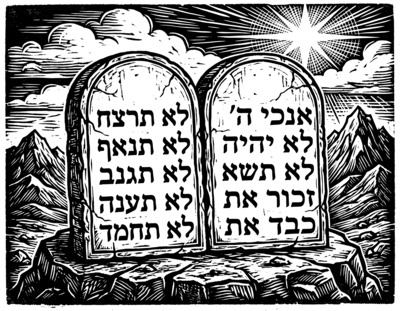
The Ten Commandments, also known as the Decalogue (from the Greek deca, meaning ten, and logos, meaning word), form a foundational ethical code that guides humanity in worshiping the true God and in building a society that reflects God's will on earth. Preserved through the centuries as a treasure of Christian civilization, the Commandments have been embraced by the Christian Church as a basic moral standard governing people's responsibilities toward both God and one another. Few documents have exerted a greater influence on religion and morality.

Moses stands as one of the most significant figures of the Old Testament, renowned for his leadership and as a religious forerunner of Judaism. God called him to lead the people of Israel out of Egyptian bondage into the wilderness north of Mount Sinai, between Egypt and Palestine, where they would begin a new chapter of their history. Moses was familiar with this region, having spent forty years there in exile under the guidance of his father-in-law Jethro.


Three months after the Exodus, Moses sought God's guidance so that the Israelites might live faithfully and peacefully under divine protection. In response, God summoned Moses to Mount Sinai to receive His covenant and convey it to the people. The Israelites accepted God's word, declaring, “All that the Lord has spoken, we will do” (Exodus 19:8).

Moses remained with the Lord for forty days. At the end of that time, God gave him two stone tablets containing the divine commandments, written by the finger of God (Exodus 31:18). When Moses descended the mountain and witnessed the people's idolatry, he broke the tablets (Exodus 32:19). God later replaced them. (Exodus 34:1).

The text of the Ten Commandments is preserved in two Old Testament accounts: Exodus 20:1-17 and Deuteronomy 5:6-18. Aside from the prohibition concerning images and the command to observe the Sabbath, the Commandments contain moral principles shared by all humanity. Their meaning was further deepened by the teachings of Jesus Christ, especially in the Sermon on the Mount. Christ summarized the entire law in two commandments: to love God with all one's heart, soul, and strength, and to love one's neighbor as oneself (Mark 12:29-31; cf. Deuteronomy 6:4-5; Leviticus 19:18). In these two commandments, Jesus reveals the enduring purpose and fulfillment of the Ten Commandments.

Faith in Action

Choose one of the Ten Commandments and intentionally live it with greater purpose each day this week. Begin and end each day with prayer, asking God to help you grow in love for Him and for your neighbor.

Based on a longer article, The Ten Commandments: A Document of Divine Guidance, by Rev. George Mastrantonis, found on goarch.org (https://bit.ly/4ikvFtl) 

BACK TO TOP