August 16

Saint Paul Orthodox Church
Publish Date: 2026-08-16
Bulletin Contents
Announcements
Bulletin Inserts
Diakonia Newsletter
Hymns of the Day
Gospel and Epistle Readings
Wisdom of the Fathers
Saints and Feasts


Saint Paul Orthodox Church
General Information
Contact Information
Services Schedule
Please call ahead for schedule of services
Confessions Prior to all Divine Liturgies
Past Bulletins
- Publish Date:
- 2026-07-19
- Publish Date:
- 2026-07-05
- Publish Date:
- 2026-06-28
- Publish Date:
- 2026-06-21
- Publish Date:
- 2026-06-14
- Publish Date:
- 2026-06-07
Announcements
Welcome to St. Paul Orthodox Church - Freehold, NJ
Mission Parish of the American Carpatho-Russian Orthodox Diocese of North America
Ecumenical Patriarchate of Constantinople
We celebrate the diverse gifts that everyone brings and we are committed to making our church accessible so that everyone can participate fully in Holy Orthodox Church.
We are happy to welcome the new families that have moved to our area.
All are welcome!
Upcoming Church Schedule:
Please call for latest church schedule
Sunday August 16th - 11th Sunday of Matthew
Divine Liturgy 10:00AM
Please pray for our Bishop and all of our Hierarchs!
Thank you all for helping to make our church and property beautiful. It's never looked better. May God Bless all of you.

Please continue to keep Al in your prayers for his continued recovery.
2026 STEWARDSHIP COMMITMENTS & PARISH DONATIONS
Greetings in Christ! We kindly ask that you participate in Parish Stewardship Commitment for 2026! Your Stewardship Commitment allows us to plan for and manage the Christ-centered ministries of our community. Please consider being a part of the support of our parish family by filling out a Stewardship Commitment Form attached to the bulletin or find the form online at www.spaoc.org. For questions, please see Albert Vira or Father Thomas.
Donations can be made via check, cash (in a stewardship envelope with your name on it), Paypal or Venmo, or use credit/debit card through givebutter.com. You can click or scan the link below.
SCAN ME


DIGITAL DONATIONS
Please support our diocesan seminary bookstore:
If you have any religious items to purchase such as icons, jewlery, books, and various Orthodox decor, please visit: www.orthodoxgoods.com
Also, please continue to pray for vocations:
O Lord, the High Priest of God's people, You have shown us that it is Your will that men be called to the service of Your Holy Church. From the ranks of fishermen, You called Andrew and Peter and James and John, and made them and their successors in every age to be the "fishers of men." We, your people in this age, call upon Your great love to inspire for our churches, young men to be Your future priests. Touch their lives with Your Holy Spirit; give them the courage to answer Your call and the strength to work all the days of their life for Your service. Continue to shower upon our Diocesan Seminary Your choicest blessings and make us aware of her needs so that it may continue to be a place where the souls of those called to Your service may be trained and prepared to teach and preach, to pray and labor, to forgive and heal - to care in every way as priests of Your fold, O Good Shepherd. You told us with Your precious lips, "Without me, you can do nothing." As we call upon Your Name for more vocations, O Great High Priest, hear us and have mercy.
Bulletin Inserts
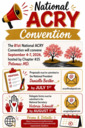
ACRY Convention 2026
ACRY Convention Flyer

Diocesan-Wide Outreach Program To Benefit Zoe For Life
Please support Zoe for Life Outreach Program https://zoeforlife.org/zoe-house/
Preparation for Confession
The Mystery of Confession - from the Diocese of the South Orthodox Church of America
American Carpatho-Russian Orthodox Diocese Prayer Book
Diocesean Prayer Book for Orthodox Christians - ACROD
An Orthodox Prayer Book - Holy Mount Athos Greece
An Orthodox Prayer Book
An Orthodox Prayer Book - Ukrainian Toronto Canada
Prayer Book - Morning Prayers - Small Compline
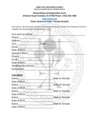
SAINT PAUL STEWARDSHIP AND REGISTRATION FORM
We encourage all new and existing parishioners to complete the Saint Paul Stewardship Form
Diakonia Newsletter
Read the latest Diakonia Newsletter for this Sunday
https://bulletinbuilder.org/diakonia-newsletter/2026-08-16?source=bulletin_web
August 16, 2026
Hymns of the Day
Resurrectional Apolytikion in the Second Tone
When You submitted to death, O Immortal Life,* You made death powerless by the radiance of Your Divinity.* When You raised the dead from the depths of the earth,* all the heavenly powers exclaimed:* "O Giver of Life Christ our God Glory to You!"
Reading is under copyright and is used with permission, all rights reserved by: American Carpatho-Russian Diocese
Apolytikion for Holy Napkin in the Second Tone
We worship Thine immaculate icon, O Good One, asking the forgiveness of our failings, O Christ our God; for of Thine own will wast Thou well-pleased to ascend the Cross in the flesh, that Thou mightest deliver from slavery to the enemy those whom Thou hadst fashioned. Wherefore, we cry to Thee thankfully: Thou didst fill all things with joy, O our Saviour, when Thou camest to save the world.
Reading is under copyright and is used with permission, all rights reserved by: Holy Transfiguration Monastery
Apolytikion for Afterfeast of the Dormition in the First Tone
O Birthgiver of God, in giving birth you retained virginity; * and in your falling asleep you did not forsake the world. * You are the Mother of Life and have passed into life, * and by your prayers have delivered our souls from death.
Reading is under copyright and is used with permission, all rights reserved by: American Carpatho-Russian Diocese
Seasonal Kontakion in the Second Tone
The tomb and death had no power over the Birthgiver of God, * who is ever watchful in her prayers * and in whose intercession lies unfailing hope * For as the Mother of Life she has been transported into life * by Him who dwelt within her ever-virgin womb.
Reading is under copyright and is used with permission, all rights reserved by: American Carpatho-Russian Diocese
Gospel and Epistle Readings
Epistle Reading
Prokeimenon. Second Tone. Psalm 117.14,18.
The Lord is my strength and my song.
Verse: The Lord has chastened me sorely.
The reading is from St. Paul's First Letter to the Corinthians 9:2-12.
Brethren, you are the seal of my apostleship in the Lord. This is my defense to those who would examine me. Do we not have the right to our food and drink? Do we not have the right to be accompanied by a wife, as the other apostles and the brothers of the Lord and Cephas? Or is it only Barnabas and I who have no right to refrain from working for a living? Who serves as a soldier at his own expense? Who plants a vineyard without eating any of its fruit? Who tends a flock without getting some of the milk? Do I say this on human authority? Does not the law say the same? For it is written in the law of Moses, "You shall not muzzle an ox when it is treading out the grain." Is it for oxen that God is concerned? Does he not speak entirely for our sake? It was written for our sake, because the plowman should plow in hope and the thresher thresh in hope of a share in the crop. If we have sown spiritual good among you, is it too much if we reap your material benefits? If others share this rightful claim upon you, do not we still more? Nevertheless, we have not made use of this right, but we endure anything rather than put an obstacle in the way of the gospel of Christ.
Gospel Reading
11th Sunday of Matthew
The Reading is from Matthew 18:23-35
The Lord said this parable: "The kingdom of heaven may be compared to a king who wished to settle accounts with his servants. When he began the reckoning, one was brought to him who owed him ten thousand talents; and as he could not pay, his lord ordered him to be sold, with his wife and children and all that he had, and payment to be made. So the servant fell on his knees, imploring him, 'Lord, have patience with me, and I will pay you everything.' And out of pity for him the lord of that servant released him and forgave him the debt. But that same servant, as he went out, came upon one of his fellow servants who owed him a hundred denarii; and seizing him by the throat he said, 'Pay what you owe.' So his fellow servant fell down and besought him, 'Have patience with me, and I will pay you.' He refused and went and put him in prison till he should pay the debt. When his fellow servants saw what had taken place, they were greatly distressed, and they went and reported to their lord all that had taken place. Then his lord summoned him and said to him, 'You wicked servant! I forgave you all that debt because you besought me; and should not you have had mercy on your fellow servant, as I had mercy on you?' And in anger his lord delivered him to the torturers, till he should pay all his debt. So also my heavenly Father will do to every one of you, if you do not forgive your brother from your heart."
Wisdom of the Fathers
Do we forgive our neighbors their trespasses? God also forgives us in His mercy. Do we refuse to forgive? God, too, will refuse to forgive us. As we treat our neighbors, so also does God treat us. The forgiveness, then, of your sins or unforgiveness, and hence also your salvation or destruction, depend on you yourself, man. For without forgiveness of sins there is no salvation.
Unknown, 18th century
Wherefore then did He not do this, nor forgive the debt before the account? Desiring to teach him, from how many obligations He is delivering him, that in this way at least he might become more mild towards his fellow servant .... He gave more than he asked, remission and forgiveness of the entire debt.
Homily 61 on Matthew 18, 4th Century
Saints and Feasts


August 16
Translation of the Image of Our Lord and God and Savior, Jesus Christ
When the fame of our Lord Jesus Christ came to Abgar, the ruler of Edessa, who was suffering from leprosy, Abgar sent a messenger named Ananias, through him asking the Savior to heal him of his disease, while bidding Ananias bring back a depiction of Him. When Ananias came to Jerusalem, and was unable to capture the likeness of our Lord, He, the Knower of hearts, asked for water, and having washed His immaculate and divine face, wiped it dry with a certain cloth, which He gave to Ananias to take to Abgar; the form of the Lord's face had been wondrously printed upon the cloth. As soon as Abgar received the cloth, which is called the Holy Napkin (Mandylion), he reverenced it with joy, and was healed of his leprosy; only his forehead remained afflicted. After the Lord's Death, Resurrection, and Ascension, the Apostle Thaddaeus (see Aug. 21) came to Edessa, and when he had baptized Abgar and all his men, Abgar's remaining leprosy also was healed. Abgar had the holy image of our Savior fixed to a board and placed at the city gate, commanding that all who entered the city reverence it as they passed through. Abgar's grandson, however, returned to the worship of the idols, and the Bishop of Edessa learned of his intention to replace the Holy Napkin with an idol. Since the place where it stood above the city gate was a rounded hollow, he set a burning lamp before the Holy Napkin, put a tile facing it, then bricked up the place and smoothed it over, so that the holy icon made without hands was no longer to be seen, and the ungodly ruler gave no further thought to it.
With the passage of time, the hidden icon was forgotten, until the year 615, when Chosroes II, King of Persia, was assaulting the cities of Asia, and besieged Edessa. The Bishop of Edessa, Eulabius, instructed by a divine revelation, opened the sealed chamber above the city gate and found the Holy Napkin complete and incorrupt, the lamp burning, and the tile bearing upon itself an identical copy of the image that was on the Holy Napkin. The Persians had built a huge fire outside the city wall; when the Bishop approached with the Holy Napkin, a violent wind fell upon the fire, turning it back upon the Persians, who fled in defeat. The Holy Napkin remained in Edessa, even after the Arabs conquered it, until the year 944, when it was brought with honor and triumph to Constantinople in the reign of Romanus I, when Theophylact was Ecumenical Patriarch. The Holy Napkin was enshrined in the Church of the most holy Theotokos called the Pharos. This is the translation that is celebrated today.

August 16
Diomedes the Physician & Martyr of Tarsus
The holy Martyr Diomedes was from Tarsus in Cilicia, a physician who treated bodies with his healing art and souls with his piety. In the days of the Emperor Diocletian, about the year 288, Diomedes left Tarsus and came to Nicaea, where he benefited many both as a physician and as a preacher of the Faith. He was accused to Diocletian, who sent men to fetch him. When they arrived, although finding that he had already given up his soul to the Lord, they cut off his head to take it to the Emperor, and because of their inhumanity were stricken with blindness. When Diocletian saw the Saint's head, he commanded them to take it back and put it on the body in its place; when they had done so, they received their sight again. Saint Diomedes is one of the Holy Unmercenaries.