Holy Trinity Church
Publish Date: 2026-11-01
Bulletin Contents

Organization Icon
Holy Trinity Church

General Information

  • Phone:
  • (978) 458-8092
  • Fax:
  • (978) 970-0935
  • Street Address:

  • 62 Lewis Street

  • Lowell, MA 01854


Contact Information


Services Schedule

Orthros: 9:00am 
Divine Liturgy: 10:00am
Sunday Fellowship: following Divine Liturgy


Past Bulletins


Today's Calendar

Artoclasia & Fellowship Hour offered by Philoptochos in celebration of their Patrons, Saints Cosmas & Damianos, the Holy Unmercenaries of Asia, and their mother Theodota.  

Following Fellowship Hour, please use the elevator exit rather than the main entrance of the church. Thank you for your cooperation.

Parish Council members on duty:  George Kontos, Gregory Curtis, Daniel Routsis and George Tgibides.


Weekly Calendar

November 4, Wednesday: Chair Yoga in the church hall at 11am

November 4, Wednesday: Philoptochos meeting in the church hall at 6:00pm

November 5, Thursday: Orthodox 101 at 6:30pm

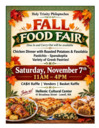
November 7, Saturday, 11am-4pm at the Hellenic Cultural Center:  Greek Food Fair and more! 

God bless you and the beginning of a new and promising week. 

"Whatever you do, work at it with all your heart, as working for the Lord, not for human masters." — Colossians 3:23

   https://www.goarch.org/news


Announcements

Holy Trinity News

Annual Holy Trinity Parish Council Elections will be held on Sunday, December 13, 2026 between 9am – 1pm in the Church Hall.   

Parish Council & Board of Auditors: Seven (7) members are to be elected for a 2-year term and One (1) Auditor for a 1-year term.

CANDIDATES FOR ELECTION TO PARISH COUNCIL

A candidate for the Parish Council must be a parishioner in good standing of the Parish for at least one (1) year immediately preceding the date of the election and must live his or her life in accordance with the Faith and canons of the Church. The Priest determines whether the Parishioners are in canonical and financial good standing.

All candidates shall attend a seminar conducted by the priest prior to the election at which the Priest shall discuss the Uniform Parish Regulations and explain them to the candidates, particularly the oath of office. At the conclusion of the seminar all candidates will acknowledge by signing a statement that they understand the Uniform Parish Regulations and, if elected, will abide by them and the oath of office. If a candidate for the Parish Council refuses to attend the seminar and sign the declaration, his or her name shall be deleted from the list of candidates.   

At the Fall 2019 Archdiocesan Council meeting, it was resolved that all Parish Council members would undergo background checks. Ideally, this background check will be handled before candidates are elected as part of their qualifications to stand for election (this will avoid the situation of having to remove a board member because of a failed background check.) But as this program gets underway, it will be best implemented by doing a background check for every parish council member now, and then in the future, notifying every nominee for a parish council election that a background check is a pre-requisite of running for office, so that every candidate who runs has passed the background check.

 Filing Deadline is Thursday, November 19 at 12 noon.  The names of the candidates will then be posted on the bulletin board in the Church Hall.

 Applications may be obtained from the Church Secretary during office hours: Tuesday-Thursday 10am-2pm or on Sunday after Divine Liturgy.  The packet can also be emailed to prospective candidates.

Upcoming Church Services: Orthros 9am, Divine Liturgy 10am unless noted otherwise. 

  • November 09, Monday:  Nektarios the Wonderworker Note:  Divine Liturgy will not take place at Holy Trinity. Instead, we invite everyone to join Fr. Nick at Assumption–St. George Church, along with Fr. Demetri Costarakis and the parish community, for the service and the veneration of the holy relics of St. Nektarios. (Orthros 9am, Divine Liturgy 10am)

  • November 21, Saturday: Entrance of the Theotokos into the Temple
  • November 25, Wednesday:  Saint Katherine the Great
  • December 04, Friday: St. Barbara the Martyr
  • December 15, Tuesday:  St. Eleutherios the Holy Martyr

Sunday School News:   

As we head into a busy fall and holiday season, we have several fun opportunities to gather, connect, and celebrate together. Please save the dates and keep an eye out for more details!

Movie Night – November:  Join us for a evening of fellowship and a movie! Date and details to come.

Trivia Night – November:   Put your knowledge to the test and enjoy a fun evening together. Stay tuned for the date and more information!

Christmas Pageant – December 20:  Our Christmas Pageant will take place on December 20.           Participants should plan to attend rehearsals on: November 15, November 22, December 6, December 13.   More information about the pageant and participation will be shared soon.

Christmas Breakfast and Tree Decoration –December 19:   Fun filled morning!!  Final Rehearsal for the for Christmas Pageant, Pancakes and Decorating the Sunday School Christmas Tree!!!

Coffee Hour Hosting:  Help us continue this special time of fellowship by hosting Coffee Hour! We are looking for signups approximately once a month, including:  October 25 and December 20

Parents: Please be on the lookout for sign-up emails with additional details. We look forward to a wonderful season of fellowship, fun, and celebration together!  

 Philoptochos News: follow us on Facebook at Holy-Trinity-Ladies-Philoptochos-Lowell 

Monthly Meetings Calendar

  • WED  11/04 at 6:00pm
  • WED  12/02 at 5:30pm
  • WED  02/03 at 5:30pm
  • WED  03/03 at 5:30pm
  • WED  04/07 at 6:00pm
  • WED  05/05 at 6:00pm
  • WED  06/02 at 6:00pm

Greek Food Fair and more!  - Saturday, November 7, 2026:  Every year, the first Saturday of November is reserved for Philoptochos’ main fund-raising event.  We invite everyone to stop by and enjoy delicious Greek Food & Pastry, try you luck at the Basket Raffle & Main Ca$h Raffle and more. All proceeds will benefit the philanthropic efforts of the Holy Trinity Philoptochos. 

Chair Yoga in the Church Hall, Wednesdays 11am-12pm: Come enjoy fellowship, friendship and a wonderful opportunity to gather together each week.   We invite everyone to join us for our fall program! Fall Dates: November 4, 11, 18 & 25.  To register or for more information, please contact Donna Zouzas at 508-423-6270 or [email protected].

Annual Hunger & Homeless Food Drive (Oct 4-Nov 22)  A collection bin is located in the Narthex. 

Suggested donations:

  • Peanut Butter                                  
  • Canned Soups, Beans, Vegetables, Fruits & Tuna    
  • Macaroni & Cheese                        
  • Snacks
  • Cereal & Oatmeal                           
  • Juice Boxes, Bottled Juice
  • Pasta & Rice                                   
  • Baby Food, Diapers
  • Personal Care Items                        
  • Supermarket Gift Cards

Hellenic American Academy and HAA PTA News (hellenicaa.org)  

11/09:  Veterans Day Programat 1:00pm The Hellenic American Academy invites veterans from our school and church community to attend our Veterans Day Program at the Hellenic Cultural Center.  This special program is an opportunity to recognize and honor those who have served our country and to express our gratitude for their service and sacrifice.  We encourage our veterans & their families to join us as we honor those who have served.

Church Office Hours:  (978) 458-8092 / [email protected])    Tu–Wed-Th 10am-2pm:   If you need to visit the office at a different date or time, please call during office hours or send an email to [email protected], to schedule an appointment.  Kindly use the Lewis Street side entrance and ring the bell or, call the office to enter through the elevator entrance.

Pastoral Visits:  Please call the Church Office at 978 458-8092 to arrange a hospital, nursing home or shut-in visit by Fr. Nick.  Health care facilities are unable to contact us because of HIPAA regulations.
Greek Orthodox Archdiocese News & On-Line Ministries www.goarch.org:
  • Communications Department:  https://www.goarch.org/departments/communications
  • Family Care:  https://www.goarch.org/departments/family



News and Events


Saints and Feasts

November 01

Cosmas and Damian the Holy Unmercenaries of Asia, and their mother Theodota

These Saints were from Asia (that is, Asia Minor). After the death of their father, their Christ-loving mother Theodota reared them in piety and in all manner of virtue, and had them instructed in every science, especially that of medicine. This became their vocation, and they went about healing every illness and malady, bestowing healing freely on both men and beasts alike; because of this, they are called "Unmercenaries." And thus, having completed the course of their life, they reposed in peace.


Gospel and Epistle Readings

Epistle Reading

Cosmas and Damian the Holy Unmercenaries of Asia, and their mother Theodota
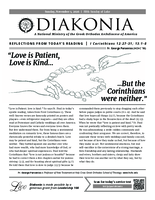
The Reading is from St. Paul's First Letter to the Corinthians 12:27-31; 13:1-8

Brethren, you are the body of Christ and individually members of it. And God has appointed in the church first apostles, second prophets, third teachers, then workers of miracles, then healers, helpers, administrators, speakers in various kinds of tongues. Are all apostles? Are all prophets? Are all teachers? Do all work miracles? Do all possess gifts of healing? Do all speak with tongues? Do all interpret? But earnestly desire the higher gifts. And I will show you a still more excellent way. If I speak in the tongues of men and of angels, but have not love, I am a noisy gong or a clanging cymbal. And if I have prophetic powers, and understand all mysteries and all knowledge, and if I have all faith, so as to remove mountains, but have not love, I am nothing. If I give away all I have, and if I deliver my body to be burned, but have not love, I gain nothing. Love is patient and kind; love is not jealous or boastful; it is not arrogant or rude. Love does not insist on its own way; it is not irritable or resentful; it does not rejoice at wrong, but rejoices in the right. Love bears all things, believes all things, hopes all things, endures all things. Love never ends.

Cosmas and Damian the Holy Unmercenaries of Asia, and their mother Theodota
Πρὸς Κορινθίους α' 12:27-31, 13:1-8

Ἀδελφοί, ὑμεῖς δέ ἐστε σῶμα Χριστοῦ, καὶ μέλη ἐκ μέρους. Καὶ οὓς μὲν ἔθετο ὁ θεὸς ἐν τῇ ἐκκλησίᾳ πρῶτον ἀποστόλους, δεύτερον προφήτας, τρίτον διδασκάλους, ἔπειτα δυνάμεις, εἶτα χαρίσματα ἰαμάτων, ἀντιλήψεις, κυβερνήσεις, γένη γλωσσῶν. Μὴ πάντες ἀπόστολοι; Μὴ πάντες προφῆται; Μὴ πάντες διδάσκαλοι; Μὴ πάντες δυνάμεις; Μὴ πάντες χαρίσματα ἔχουσιν ἰαμάτων; Μὴ πάντες γλώσσαις λαλοῦσιν; Μὴ πάντες διερμηνεύουσιν; Ζηλοῦτε δὲ τὰ χαρίσματα τὰ κρείττονα. Καὶ ἔτι καθʼ ὑπερβολὴν ὁδὸν ὑμῖν δείκνυμι. Ἐὰν ταῖς γλώσσαις τῶν ἀνθρώπων λαλῶ καὶ τῶν ἀγγέλων, ἀγάπην δὲ μὴ ἔχω, γέγονα χαλκὸς ἠχῶν ἢ κύμβαλον ἀλαλάζον. Καὶ ἐὰν ἔχω προφητείαν, καὶ εἰδῶ τὰ μυστήρια πάντα καὶ πᾶσαν τὴν γνῶσιν, καὶ ἐὰν ἔχω πᾶσαν τὴν πίστιν, ὥστε ὄρη μεθιστάνειν, ἀγάπην δὲ μὴ ἔχω, οὐθέν εἰμι. Καὶ ἐὰν ψωμίσω πάντα τὰ ὑπάρχοντά μου, καὶ ἐὰν παραδῶ τὸ σῶμά μου ἵνα καυθήσωμαι, ἀγάπην δὲ μὴ ἔχω, οὐδὲν ὠφελοῦμαι. Ἡ ἀγάπη μακροθυμεῖ, χρηστεύεται· ἡ ἀγάπη οὐ ζηλοῖ· ἡ ἀγάπη οὐ περπερεύεται, οὐ φυσιοῦται, οὐκ ἀσχημονεῖ, οὐ ζητεῖ τὰ ἑαυτῆς, οὐ παροξύνεται, οὐ λογίζεται τὸ κακόν, οὐ χαίρει ἐπὶ τῇ ἀδικίᾳ, συγχαίρει δὲ τῇ ἀληθείᾳ, πάντα στέγει, πάντα πιστεύει, πάντα ἐλπίζει, πάντα ὑπομένει. 8 Ἡ ἀγάπη οὐδέποτε ἐκπίπτει· εἴτε δὲ προφητεῖαι, καταργηθήσονται· εἴτε γλῶσσαι, παύσονται· εἴτε γνῶσις, καταργηθήσεται.


Gospel Reading

5th Sunday of Luke
The Reading is from Luke 16:19-31

The Lord said, "There was a rich man, who was clothed in purple and fine linen and who feasted sumptuously every day. And at his gate lay a poor man named Lazaros, full of sores, who desired to be fed with what fell from the rich man's table; moreover the dogs came and licked his sores. The poor man died and was carried by the angels to Abraham's bosom. The rich man also died and was buried; and in Hades, being in torment, he lifted up his eyes, and saw Abraham far off and Lazaros in his bosom. And he called out, 'Father Abraham, have mercy upon me, and send Lazaros to dip the end of his finger in water and cool my tongue; for I am in anguish in this flame.' But Abraham said, 'Son, remember that you in your lifetime received your good things, and Lazaros in like manner evil things; but now he is comforted here, and you are in anguish. And besides all this, between us and you a great chasm has been fixed, in order that those who would pass from here to you may not be able, and none may cross from there to us.' And he said, 'Then I beg you, father, to send him to my father's house, for I have five brothers, so that he may warn them, lest they also come into this place of torment.' But Abraham said, 'They have Moses, and the prophets; let them hear them.' And he said, 'No, father Abraham; but if some one goes to them from the dead, they will repent.' He said to them, 'If they do not hear Moses and the prophets, neither will they be convinced if some one should rise from the dead.'"

5th Sunday of Luke
Κατὰ Λουκᾶν 16:19-31

Εἶπεν ὁ Κύριος· ῎Ανθρωπος δέ τις ἦν πλούσιος, καὶ ἐνεδιδύσκετο πορφύραν καὶ βύσσον εὐφραινόμενος καθ᾿ ἡμέραν λαμπρῶς. πτωχὸς δέ τις ἦν ὀνόματι Λάζαρος, ὃς ἐβέβλητο πρὸς τὸν πυλῶνα αὐτοῦ ἡλκωμένος καὶ ἐπιθυμῶν χορτασθῆναι ἀπὸ τῶν ψιχίων τῶν πιπτόντων ἀπὸ τῆς τραπέζης τοῦ πλουσίου· ἀλλὰ καὶ οἱ κύνες ἐρχόμενοι ἀπέλειχον τὰ ἕλκη αὐτοῦ. ἐγένετο δὲ ἀποθανεῖν τὸν πτωχὸν καὶ ἀπενεχθῆναι αὐτὸν ὑπὸ τῶν ἀγγέλων εἰς τὸν κόλπον ᾿Αβραάμ· ἀπέθανε δὲ καὶ ὁ πλούσιος καὶ ἐτάφη. καὶ ἐν τῷ ᾅδῃ ἐπάρας τοὺς ὀφθαλμοὺς αὐτοῦ, ὑπάρχων ἐν βασάνοις, ὁρᾷ τὸν ᾿Αβραὰμ ἀπὸ μακρόθεν καὶ Λάζαρον ἐν τοῖς κόλποις αὐτοῦ. καὶ αὐτὸς φωνήσας εἶπε· πάτερ ᾿Αβραάμ, ἐλέησόν με καὶ πέμψον Λάζαρον ἵνα βάψῃ τὸ ἄκρον τοῦ δακτύλου αὐτοῦ ὕδατος καὶ καταψύξῃ τὴν γλῶσσάν μου, ὅτι ὀδυνῶμαι ἐν τῇ φλογὶ ταύτῃ. εἶπε δὲ ᾿Αβραάμ· τέκνον, μνήσθητι ὅτι ἀπέλαβες σὺ τὰ ἀγαθά σου ἐν τῇ ζωῇ σου, καὶ Λάζαρος ὁμοίως τὰ κακά· νῦν δὲ ὧδε παρακαλεῖται, σὺ δὲ ὀδυνᾶσαι· καὶ ἐπὶ πᾶσι τούτοις μεταξὺ ἡμῶν καὶ ὑμῶν χάσμα μέγα ἐστήρικται, ὅπως οἱ θέλοντες διαβῆναι ἔνθεν πρὸς ὑμᾶς μὴ δύνωνται, μηδὲ οἱ ἐκεῖθεν πρὸς ἡμᾶς διαπερῶσιν. εἶπε δέ· ἐρωτῶ οὖν σε, πάτερ, ἵνα πέμψῃς αὐτὸν εἰς τὸν οἶκον τοῦ πατρός μου· ἔχω γὰρ πέντε ἀδελφούς· ὅπως διαμαρτύρηται αὐτοῖς, ἵνα μὴ καὶ αὐτοὶ ἔλθωσιν εἰς τὸν τόπον τοῦτον τῆς βασάνου. λέγει αὐτῷ ᾿Αβραάμ· ἔχουσι Μωϋσέα καὶ τοὺς προφήτας· ἀκουσάτωσαν αὐτῶν. ὁ δὲ εἶπεν· οὐχί, πάτερ ᾿Αβραάμ, ἀλλ᾿ ἐάν τις ἀπὸ νεκρῶν πορευθῇ πρὸς αὐτούς, μετανοήσουσιν. εἶπε δὲ αὐτῷ· εἰ Μωϋσέως καὶ τῶν προφητῶν οὐκ ἀκούουσιν, οὐδὲ ἐάν τις ἐκ νεκρῶν ἀναστῇ πεισθήσονται.


Archdiocese News

Opinion | They planted the faith; we must welcome the harvest

10/28/2026

Every convert to Orthodoxy has a story. Some discover the Church through marriage; others through the Fathers, a university course, or more recently, on social media or an internet browser. Their journeys differ, but each requires the courage to step beyond the familiar into something deeper. 

As America celebrates its 250th anniversary, we should remember another story of courage: before people could discover Orthodoxy in America, Orthodox immigrants first had to bring it here. 

In my family, these are not merely stories from a history book. Borrowing funds, my uncle left Cyprus at fourteen.  He quickly learned how to cut hair on his voyage ($.25/cut) to pay back that loan. My father left the same village with a $20 bill in his pocket and the hope of building a better life. Our forefathers and foremothers arrived with little money, limited English, and few guarantees. There are countless stories of our immigrant ancestors coming to America. Among everything they carried, the greatest treasure was the one they refused to leave behind: the Orthodox Christian faith. 

Assimilation would have been easier. There was tremendous pressure to change their names, learn the language, adjust to new foods and customs, and adapt to an unfamiliar religious landscape. They could have walked into Catholic or Episcopalian Churches to find worship. Yet instead of surrendering everything that made them different, they lived into their faith and celebrated their culture with joy no matter the circumstance. 

They gathered in homes, storefronts, and rented halls. From hard-earned wages, they gave what they could barely afford. They built churches to baptize their children, to celebrate the Divine Liturgy and Pascha. They taught the next generation to make the sign of the Cross. They sacrificed because the Church was not an accessory to their new life in America; it was essential to it. 

We must also remember the clergy who crossed the ocean to encounter the unknown and to serve scattered communities. Wherever an altar could be raised, they celebrated the Liturgy, crowned marriages, buried the dead, taught the Faith, and became spiritual fathers. Together clergy and laity planted Orthodoxy in America. They may have dreamed of the parishes, cathedrals, seminaries, monasteries, and ministries their devotion would one day build. But did they imagine that someone with no ancestral connection to an Orthodox homeland would walk through those same doors and ask, “How can I become Orthodox?” 

This is one of the beautiful paradoxes of Orthodoxy in America: our ancestors preserved the Church because they did not want their children to lose it. By doing so, they made it possible for countless others to find it. 

Today, an inquirer may first encounter the Faith online, but Orthodoxy cannot be lived through a screen. The seeker must physically enter a parish to appreciate its worship, community, prayer, fasting, and Eucharistic life. Conversion is not merely accepting new ideas; it is allowing Christ to redirect one’s life. Our calling is not simply to provide information, but to accompany people patiently in transformation. 

This is where the stories of our ancestors and today’s converts meet. Both resist the easiest path. Our ancestors declared, “We can become fully American without ceasing to be Orthodox.” Today’s converts reveal the other side of that truth: one need not be any particular ethnicity to become fully Orthodox. 

America, ultimately, welcomed Orthodox Christians. Now Orthodoxy welcomes Americans. As descendants of those who established the faith in this land, it is our responsibility to receive anyone seeking Christ. The question of this great responsibility is not merely whether we will preserve what we inherited, but whether we possess enough of our ancestors’ courage to share it.  

When we proclaim, “This is the faith of the Apostles. This is the faith of the Fathers. This is the faith of the Orthodox,” we rightly remember the saints who defended and preserved the faith. In America, we may also remember our own fathers and mothers, grandfathers and grandmothers, who crossed an ocean of uncertainty without abandoning their greatest treasure. They carried it here. They planted it here. They sacrificed for it here. 

The faith planted by our ancestors is now entrusted to us. We are called to preserve it by offering it courageously to all who come after us. Some may bear Greek surnames; others will have no ancestral connection to an Orthodox homeland. Each will bring a story of how they found the Church, and each will find a place within it. Perhaps the greatest fruit of our ancestors’ courage is to witness people of varying backgrounds and ethnicities gather in the churches they established to share in the love of Christ they never could abandon. 

This article is published as part of the America at 250: Orthodoxy in a New Homeland media initiative co-organized by the Orthodox Observer and the Department of Inter-Orthodox, Ecumenical, and Interfaith Relations of the Greek Orthodox Archdiocese of America to honor the contributions and experience of Orthodox Christianity in America and celebrate 250th anniversary of America’s founding.

The post Opinion | They planted the faith; we must welcome the harvest appeared first on Orthodox Observer.


Every convert to Orthodoxy has a story. Some discover the Church through marriage; others through the Fathers, a university course, or more recently, on social media or an internet browser. Their journeys differ, but each […]

The post Opinion | They planted the faith; we must welcome the harvest appeared first on Orthodox Observer.


The closet method: Seeing God as your friend

10/27/2026

I am reluctant to admit that I begin each morning by snoozing my alarm a few too many times and mindlessly scrolling on TikTok. And once awake, school, work, socializing, and a workout always seem to fall into place effortlessly. So why doesn’t prayer?

While I make my σταυρό before every meal, and mumble Πάτερ ἡμῶν everynight before going to sleep, I didn’t establish a set prayer time each day until a month ago. The forty-five minutes I might dedicate to a pilates class had become more feasible, and I convinced myself that it is more worthwhile. I lived under the pretext that being busy was an excuse from establishing a set time with God. The Orthodox Church teaches the importance of a traditional worship: venerating icons, the seven sacraments and routine prayer. These rituals come naturally to me, yet I mostly practice them during services. I have never doubted my relationship with God, yet I have always struggled to pray. And while it may sound obvious, learning ‘how to pray’ is important and it is a conversation that is often shelved.

Recently, I’ve been observing the way in which my grandmother worships God in her daily life outside of Church. Her morning routine swaps scrolling for reading scripture, her afternoon walks do not require blaring music or a phone call to catch up with a friend, and her evenings end with silent prayer and reflection each night. Meals are introduced with a proper prayer and thanks to God, not a half-hearted and hastily done cross. She incorporates God into her routine, arguably gossiping to Him just as I would with friends. And while she is 83 and has more downtime, these habits are ones that anyone could emulate.

For much of my life I was truly uncomfortable in personal prayer; shifting in the silence, asking God for wants like some sort of genie, and eventually resorting to repeating familiar prayers because I was impatient. Our time spent together felt forced, ingenuine and painfully redundant. My screen time was an abjection and this summer, I admitted to myself that the restlessness in silence with God needed to change. Observing my grandmother required me to face my fears and accept the reality that nourishing an intimate relationship with God will require self reflection and this dreaded, uncomfortable silence. Yet acceptance was the easiest part; it has been putting it into practice for me that has proven to be most difficult, while dually the most fruitful.

Under the advice of my older brother, I reached out to my priest to speak about these feelings. During our conversation, he urged me to test out the ‘closet method’ wherein you set a timer and sit somewhere kept away from distraction -hence the closet- and dedicate a period of time to God. While this may seem a bit dramatic, it has changed the way I pray and I’ve grown increasingly comfortable in the silence that was formerly so daunting to me. Much like meditation, it reminded me that I need to relax my breath, set my mind and my intentions onto my goal: building my relationship with God. This approach to prayer has allowed me to focus my entire attention on God, weakened distraction and has translated into other moments of my day. The reward of knowing God intimately requires struggle and in just the few weeks I’ve put this advice into practice, I have begun to look forward to our conversations. I look for Him in my solitude and no longer feel the need to drown Him out with music, idle scrolling or former unfulfilling distractions. I shifted my perspective of God from not just my creator, but to my friend. And just like any strong friendship, it requires effort, listening and patience with both parties. Further, allocating time for God in the same way you would a workout, a healthy meal, or a good catch up with a friend is nourishing; it is a free and effective wellness supplement!

Mary Markis is a part-time writer for the Orthodox Observer. A Greek American and lifelong Orthodox Christian, she is currently pursuing a Bachelor of Art in Art History and Social Anthropology at the University of St. Andrews in Scotland.

The post The closet method: Seeing God as your friend appeared first on Orthodox Observer.


I am reluctant to admit that I begin each morning by snoozing my alarm a few too many times and mindlessly scrolling on TikTok. And once awake, school, work, socializing, and a workout always seem […]

The post The closet method: Seeing God as your friend appeared first on Orthodox Observer.


Diakonia Newsletter

BACK TO TOP