September 20

Holy Trinity Church
Publish Date: 2026-09-20
Bulletin Contents
Hymns of the Day
Saints and Feasts
Gospel and Epistle Readings
Parish News and Events
Parish Events of the Week
Diakonia Newsletter
Bulletin Inserts


Holy Trinity Church
General Information
- Phone:
- (603)225-2961
- Fax:
- (603)225-2961
- Email:
- [email protected]
- Street Address:
- 68 North State Street
- Concord, NH 03301
Contact Information
Services Schedule
Sundays: Divine Liturgy 10:00 am
Weekdays: Divine Liturgy 10:00 am
Past Bulletins
- Publish Date:
- 2026-09-13
- Publish Date:
- 2026-09-06
- Publish Date:
- 2026-08-30
- Publish Date:
- 2026-08-09
- Publish Date:
- 2026-08-02
- Publish Date:
- 2026-07-26
Hymns of the Day
Resurrectional Apolytikion in the Grave Tone
Κατέλυσας τῷ Σταυρῷ σου τὸν θάνατον, ἠνέῳξας τῷ Λῃστῇ τὸν Παράδεισον, τῶν Μυροφόρων τὸν θρῆνον μετέβαλες, καὶ τοῖς σοῖς Ἀποστόλοις κηρύττειν ἐπέταξας, ὅτι ἀνέστης Χριστὲ ὁ Θεός, παρέχων τῷ κόσμῳ τὸ μέγα ἔλεος.
O Lord, by your sacred cross you abolished death and granted unto the thief blessed paradise. The Myrrh-bearers ceased lamenting and turned to joy. The Apostles did preach the Good News at your command, that you had risen from the dead, O Christ our God, bestowing upon the world evermore.
Apolytikion for Afterfeast of the Holy Cross in the 1st Tone
Save, O Lord, Your people and bless Your inheritance, grant victory to the faithful against the adversaries of the faith, and protect Your people by Your holy Cross, Your holy Cross.
Σώσον Κύριε τόν λαόν σου καί ευλόγησον τήν κληρονομίαν σου, νίκας τοίς Βασιλεύσι κατά βαρβάρων δωρούμενος καί τό σόν φυλάττων διά τού Σταυρού σου πολίτευμα.
Apolytikion for Martyr Eustathius and His Companions in the 4th Tone
Thy Martyrs, O Lord, in their courageous contest for Thee received as the prize the crowns of incorruption and life from Thee, our immortal God. For since they possessed Thy strength, they cast down the tyrants and wholly destroyed the demons' strengthless presumption. O Christ God, by their prayers, save our souls, since Thou art merciful.
Οι Μάρτυρές σου, Κύριε, εν τή αθλήσει αυτών, στεφάνους εκομίσαντο τής αφθαρσίας, εκ σού τού Θεού ημών, σχόντες γάρ τήν ισχύν σου, τούς τυράννους καθείλον, έθραυσαν καί δαιμόνων, τά ανίσχυρα θράση. Αυτών ταίς ικεσίαις, Χριστέ ο Θεός, σώσον τάς ψυχάς ημών.
Apolytikion for the Church (Pentecost) in the Plagal 4th Tone
Ευλογητός εί, Χριστέ ο Θεός ημών, ο πανσόφους τους αλιείς αναδείξας, καταπέμψας αυτοίς το Πνεύμα το άγιον, και δι’ αυτών την οικουμένην σαγηνεύσας· φιλάνθρωπε, δόξα σοι.
O blessed are You, O Christ our God, who by sending down the Holy Spirit upon them made the fishermen wise and through them illumined the world, and to You the universe was ever drawn. All glory to You, O Lord.
Seasonal Kontakion in the 4th Tone
Ο υψωθείς εν τώ Σταυρώ εκουσίως, τή επωνύμω σου καινή πολιτεία, τούς οικτιρμούς σου δώρησαι, Χριστέ ο Θεός, Εύφρανον εν τή δυνάμει σου, τούς πιστούς Βασιλείς ημών, νίκας χορηγών αυτοίς, κατά τών πολεμίων, τήν συμμαχίαν έχοιεν τήν σήν, όπλον ειρήνης, αήττητον τρόπαιον.
You who were raised upon the Cross of Your own will, O Christ our God do You bestow Your compassions upon this Your new commonwealth named after You. Gladden with Your sovereign might our most Orthodox rulers, and vouchsafe them victory over every enemy. And as Your help in war may they possess the weapon of peace, the trophy invincible.
Saints and Feasts


September 20
Eustathius the Great Martyr, his wife and two children
The holy Martyr Eustathius before his baptism was an illustrious Roman general named Placidas in the days of the Emperor Trajan. While hunting in the country one day, he was converted to the Faith of Christ through the apparition of an uncommonly majestic stag, between whose antlers he saw the Cross of Christ, and through which the Lord spoke to him with a human voice. Upon returning home, he learned that his wife Tatiana had also had a vision in which she was instructed to become a Christian. They sought out the Bishop of the Christians and were baptized, Placidas receiving the name Eustathius, and Tatiana the name Theopiste; their two sons were baptized Agapius and Theopistus. The family was then subjected to such trials as Job endured. Their servants died, all their goods were stolen, and on a pilgrimage to Jerusalem they were scattered abroad, each not even knowing if the others were still alive. By the providence of God, they were united again after many years, and returned to Rome in glory. Nevertheless, when they refused to sacrifice to the idols-a public sacrifice from which no Roman general could be absent-the Emperor Hadrian, who had succeeded Trajan, had them put into a large bronze device in the shape of a bull, which was heated with fire until they died. When their holy bodies were removed, they were found to be without harm. They suffered martyrdom about the year 126.

September 21
Quadratus the Apostle
Saint Quadratus was a disciple of the Apostles, and became Bishop of Athens. According to the Synaxaristes, he contested for the Faith in the year 117, in the reign of Hadrian (117-138), but according to others, in the reign of Marcus Aurelius (161-180).

September 21
Jonah the Prophet
The Prophet Jonah, the son of Amathi, of the town of Geth-hopher (IV Kings 14:25), was of the tribe of Zabulon; he prophesied during the years 838-810 before Christ. God commanded him to go to Nineveh, the great city of the Assyrians, and to proclaim that its destruction was nigh at hand because of the sins of its people. But he, as a Prophet who knew the great compassion of God, feared that at his preaching the Ninevites would repent; that God, accepting their repentance in His love for man, would not fulfill Jonah' threats; and that he would be branded a false prophet. So he disobeyed the divine command, and boarded a ship and departed elsewhere. Yet, the sudden and fearful sea-storm and the revelation of Jonah' disbedience caused the sailors to cast him into the sea. A great sea-monster appeared straightway by divine providence, and swallowed him up. For three days and nights he was found in its belly and he prayed, saying the words, "I cried aloud in my affliction unto the Lord my God..." (Jonah 2:3, the Sixth ode of the Holy Psalter). The sea-monster then vomited him up on dry land and he again heard God's command. Wherefore, he went and preached, saying, "In three days, Nineveh shall be destroyed." The people became terrified and all repented. The great, the small, babes at the breast, and even the irrational beasts themselves fasted, and thus, having found mercy from God, they were spared His wrath. Jonah' book of prophecy is divided into four chapters, and is placed fifth in order among the twelve minor Prophets. His three-day sojourn in the sea-monster's belly is an image of our Saviour's three-day burial and His life-bringing Resurrection (Matt. 12:39-40). His name means "dove."

September 23
The Conception of St. John the Baptist
This came to pass fifteen months before the birth of Christ, after the vision of the Angel that Zacharias, the father of the Forerunner, saw in the Temple while he executed the priest's office in the order of his course during the feast of the Tabernacles, as tradition bears witness. In this vision, the Archangel Gabriel appeared to Zacharias and said to him, "Thy prayer is heard; and thy wife Elizabeth shall bear thee a son, and thou shalt call his name John" (Luke 1:13). Knowing that Elizabeth was barren, and that both he and she were elderly, Zacharias did not believe what the Angel told him, although he had before him the example of Abraham and Sarah, of Hannah, mother of the Prophet Samuel, and of other barren women in Israel who gave birth by the power of God. Hence, he was condemned by the Archangel to remain speechless until the fulfilment of these words in their season, which also came to pass (Luke 1:7-24).

September 24
Thekla the Protomartyr & Equal-to-the-Apostles
This saint was from the city of Iconium. When she was eighteen years of age, she was instructed in the Faith of Christ and the hope of the resurrection by the Apostle Paul, whom also she followed, forsaking her betrothed and espousing a life of virginity for the sake of the Heavenly Bridegroom. Having preached Christ in various cities and suffered many things, she reposed in Seleucia of Cilicia at the age of 90.

September 25
Euphrosyne of Alexandria
Our righteous Mother Euphrosyne, who lived during the reign of Saint Theodosius the Younger (408-450), was the daughter of Paphnutius of Egypt. Forsaking her father and his wealth, she renamed herself Smaragdus, and pretending to be a eunuch of the imperial palace, she dressed herself as a man and entered a monastery of men where her identity remained unknown until her repose thirty-eight years later.

September 25
Our Righteous Father Sergius of Radonezh
Our righteous Father Sergius was born in Rostov, north of Moscow, about the year 1314. Named Bartholomew in Baptism, he was brought up in Radonezh, and at the death of his parents he withdrew to the wilderness to become a monk. It is notable that without having been trained in a monastery, he was of such a spiritual stature as to be able to take up the perilous eremitical life from the beginning, without falling into delusion or despondency. When he had endured with courage the deprivations of the solitary life, other monks began to come to him, for whom he was made abbot against his will. On the counsel of Philotheus, Patriarch of Constantinople, he organized his monks according to the cenobitic life, appointing duties to each. While Anthony and Theodosius of Kiev, and the other righteous Fathers before Sergius, had established their monasteries near to cities, Sergius was the leader and light of those who went far into the wilderness, and after his example the untrodden forests of northern Russia were settled with monks. When Grand Duke Demetrius Donskoy was about to go to battle against the invading Tartars, he first sought the blessing of Saint Sergius, through whose prayers he was triumphant. Saint Sergius was adorned with the highest virtues of Christ-like humility and burning love for God and neighbour, and received the gift of working wonders, of casting out demons, and of discretion for leading souls to salvation. When he served the Divine Liturgy, an Angel served with him visibly; he was also vouchsafed the visitation of the most holy Theotokos with the Apostles Peter and John. He was gathered to his Fathers on September 25, 1392. At the recovery of his holy relics on July 5, 1422, his body and garments were found fragrant and incorrupt. His life was written by the monks of Epiphanius, who knew him.

September 26
The Falling Asleep of St. John the Evangelist and Theologian
This Apostle was from Bethsaida of Galilee, and was the son of Zebedee and Salome, and the brother of James the elder. First a fisherman by trade, he became an Apostle and the beloved Disciple of Christ. Only he of all the Disciples followed Him even to the Cross, and was entrusted with the care of our Saviour's Mother, as it were another son to her, and a brother of Christ the Teacher. After this, he preached throughout Asia Minor, especially in Ephesus. When the second persecution against the Christians began in the year 96 during the reign of Domitian, he was taken in bonds to Rome, and there was cast into a vat filled to the brim with boiling oil. Coming forth therefrom unharmed, he was exiled to the island of Patmos, where he wrote the Book of Revelation. Returning again to Ephesus after the death of the tyrant, he wrote his Gospel (after the other Evangelists had already written theirs) and his three Catholic Epistles. In all, he lived ninety-five years and fell asleep in the Lord during the reign of Trajan in the year 100. He was called Theologian because he loftily expounded in his Gospel the theology of the inexpressible and eternal birth of the Son and Word of God the Father. It is for this cause that an eagle-a symbol of the Holy Spirit, as Saint Irenaeus says-is depicted in his icon, for this was one of the four symbolic living creatures that the Prophet Ezekiel saw (Ezek. 1:10).
Gospel and Epistle Readings
Epistle Reading
Προκείμενον. Grave Tone. ΨΑΛΜΟΙ 28.11,1.
Κύριος ἰσχὺν τῷ λαῷ αὐτοῦ δώσει.
Στίχ. Ἐνέγκατε τῷ Κυρίῳ υἱοὶ Θεοῦ, ἐνέγκατε τῷ Κυρίῳ δόξαν καὶ τιμήν.
τὸ Ἀνάγνωσμα Πρὸς Γαλάτας 2:16-20.
Ἀδελφοί, εἰδότες ὅτι οὐ δικαιοῦται ἄνθρωπος ἐξ ἔργων νόμου, ἐὰν μὴ διὰ πίστεως Ἰησοῦ Χριστοῦ, καὶ ἡμεῖς εἰς Χριστὸν Ἰησοῦν ἐπιστεύσαμεν, ἵνα δικαιωθῶμεν ἐκ πίστεως Χριστοῦ, καὶ οὐκ ἐξ ἔργων νόμου· διότι οὐ δικαιωθήσεται ἐξ ἔργων νόμου πᾶσα σάρξ. Εἰ δέ, ζητοῦντες δικαιωθῆναι ἐν Χριστῷ, εὑρέθημεν καὶ αὐτοὶ ἁμαρτωλοί, ἆρα Χριστὸς ἁμαρτίας διάκονος; Μὴ γένοιτο. Εἰ γὰρ ἃ κατέλυσα, ταῦτα πάλιν οἰκοδομῶ, παραβάτην ἐμαυτὸν συνίστημι. Ἐγὼ γὰρ διὰ νόμου νόμῳ ἀπέθανον, ἵνα θεῷ ζήσω. Χριστῷ συνεσταύρωμαι· ζῶ δέ, οὐκέτι ἐγώ, ζῇ δὲ ἐν ἐμοὶ Χριστός· ὃ δὲ νῦν ζῶ ἐν σαρκί, ἐν πίστει ζῶ τῇ τοῦ υἱοῦ τοῦ θεοῦ, τοῦ ἀγαπήσαντός με καὶ παραδόντος ἑαυτὸν ὑπὲρ ἐμοῦ.
Prokeimenon. Grave Tone. Psalm 28.11,1.
The Lord will give strength to his people.
Verse: Bring to the Lord, O sons of God, bring to the Lord honor and glory.
The reading is from St. Paul's Letter to the Galatians 2:16-20.
Brethren, knowing that a man is not justified by works of the law but through faith in Jesus Christ, even we have believed in Christ Jesus, in order to be justified by faith in Christ, and not by works of the law, because by works of the law shall no one be justified. But if, in our endeavor to be justified in Christ, we ourselves were found to be sinners, is Christ then an agent of sin? Certainly not! But if I build up again those things which I tore down, then I prove myself a transgressor. For I through the law died to the law, that I might live to God. I have been crucified with Christ; it is no longer I who live, but Christ who lives in me; and the life I now live in the flesh I live by faith in the Son of God, who loved me and gave himself for me.
Gospel Reading
Sunday after Holy Cross
Κατὰ Μᾶρκον 8:34-38, 9:1
Εἶπεν ὁ Κύριος· Εἴ τις θέλει ὀπίσω μου ἐλθεῖν, ἀπαρνησάσθω ἑαυτὸν καὶ ἀράτω τὸν σταυρὸν αὐτοῦ, καὶ ἀκολουθείτω μοι. ὃς γὰρ ἂν θέλῃ τὴν ψυχὴν αὐτοῦ σῶσαι, ἀπολέσει αὐτήν· ὃς δ᾿ ἂν ἀπολέσῃ τὴν ἑαυτοῦ ψυχὴν ἕνεκεν ἐμοῦ καὶ τοῦ εὐαγγελίου, οὗτος σώσει αὐτήν. τί γὰρ ὠφελήσει ἄνθρωπον ἐὰν κερδήσῃ τὸν κόσμον ὅλον, καὶ ζημιωθῇ τὴν ψυχὴν αὐτοῦ; ἢ τί δώσει ἄνθρωπος ἀντάλλαγμα τῆς ψυχῆς αὐτοῦ; ὃς γὰρ ἐὰν ἐπαισχυνθῇ με καὶ τοὺς ἐμοὺς λόγους ἐν τῇ γενεᾷ ταύτῃ τῇ μοιχαλίδι καὶ ἁμαρτωλῷ, καὶ ὁ υἱὸς τοῦ ἀνθρώπου ἐπαισχυνθήσεται αὐτὸν ὅταν ἔλθῃ ἐν τῇ δόξῃ τοῦ πατρὸς αὐτοῦ μετὰ τῶν ἀγγέλων τῶν ἁγίων. Καὶ ἔλεγεν αὐτοῖς· ἀμὴν λέγω ὑμῖν ὅτι εἰσί τινες τῶν ὧδε ἑστηκότων, οἵτινες οὐ μὴ γεύσωνται θανάτου ἕως ἂν ἴδωσι τὴν βασιλείαν τοῦ Θεοῦ ἐληλυθυῖαν ἐν δυνάμει.
Sunday after Holy Cross
The Reading is from Mark 8:34-38; 9:1
The Lord said: "If anyone wishes to come after me, let him deny himself and take up his cross and follow me. For whoever would save his life will lose it; and whoever loses his life for my sake and the gospel's will save it. For what does it profit a man, to gain the whole world and forfeit his life? For what can a man give in return for his life? For whoever is ashamed of me and my words in this adulterous and sinful generation, of him will the Son of man also be ashamed, when he comes in the glory of his Father with the holy angels." And he said to them, "Truly, I say to you, there are some standing here who will not taste death before they see the kingdom of God come with power."
Parish News and Events
Fellowship Hour
Today's Fellowship Hour is hosted by Sandy Lillios in memory of her mother Tassoula.
A Fellowship Hour Plea
Thank you so much to all who signed up to be part of a coffee hour team. It would be great if some more people would sign up because we have a hungry community and if one or more people on a team can‘t help on a given Sunday, the burden on the others is still heavy. If you can help, please contact or see Pres.
Festival Sign Up
There are sign-up sheets in the Church Hall for help on the day of Festival and for Pastries and Pasticcio. Many hands make like work! Please sign up so we know what help we have!
Faith and Fellowship
We are resuming our Faith and Fellowship sessions which take place toward the end of Fellowship Hour up in the Church. This month's session will take place today Sunday, September 20, and is given by Deborah Krajcik. The title of her talk is Church Community Care: Dying, Burial, and Mourning.
"Preparing for death is something that our culture tends to avoid. We have lost the emotional, community, and spiritual resources needed to face death directly. Death is left to “specialists.” As Christians, we “look for the resurrection of the dead, and the life of the world to come.” In this ministry, we work to care for the dying, prayerfully and respectfully prepare those who have died for burial, and comfort those who mourn.
My hope is to share with you that through the beautiful reading of the psalms and church prayers and the loving, confident care of our deceased loved ones, grieving families and friends are shown a tangible way to enact love and hope, whether that be at home, at church, or at a funeral home. There are many misconceptions regarding professional funeral practices. Reclaiming our part in burial preparation is a simple and beautiful way of honoring the physical body as a temple of the Holy Spirit. Being present and involved supports the meaning of death as passage without the disconnect from the death of a loved one to the funeral."
Festival Preparation
This week will be very busy with the last minute preparations for the Festival, and for the Grand Finale on Saturday! PLEASE SIGN UP TO WORK AT THE FESTIVAL! If you are not signed up, please don't expect to get the position you want; someone else may have already signed up for it. We are also in need of a variety of pastries. There are sign up sheets in the Church Hall by the ramp. Please don't pass them by in silence. Our Festival is an important source of income for the parish, as well as being a good way of showcasing the Greek culture and food, as well as our faith (we're Orthodox; we don't separate our faith from our actions!). You can find the schedule for workshops for this week below and elsewhere in this bulletin.
Helping Hands Ministry
Do you need some help with cutting the lawn or doing some housework? These things can become difficult as we get older. If you find yourself in this dilemma, please get in touch with our Helping Hands Ministry. Members of our parish have volunteered to do yard work, small repairs, household chores or other such odd jobs, please get in touch with our Helping Hands! Please give Presbytera a call (603-953-3051) and she will put you in touch with someone to help!
Mark Your Calendar
September 20--Faith and Fellowship
September 22 and 24 at noon--Moussaka Workshop
September 23, 9:00 am-Baklava Workshop
September 23, 2:00 pm--Cutting Meat
September 25, 9:00 am--Galaktoboureko Workshop
September 25, 2:00 pm--Skewering Souvlaki
September 26, 11:00 am--5:00 pm--GREEK FOOD FESTIVAL
Parish Events of the Week
Sunday, September 20--Sunday after the Elevation of the Cross
9:00 am--Orthros
10:00 am--Divine Liturgy
Memorial Service: Tassoula Lillios
Faith and Fellowship Talk: Deborah Krajcik, Church Community Care: Death, Burial, and Mourning
Tuesdsay, September 22
Noon--Moussaka Workshop
Wednesday, September 23
9:00 am--Baklava Workshop
2:00 pm--Cutting Meat
Thursday, September 24
Noon--Moussaka Workshop
Friday, September 25
9:00 am--Galaktoboureko Workshop
2:00 am--Skewering Souvlakia
Saturday, September 26
GREEK FOOD FESTIVAL--11:00 AM--5:00 PM
Sunday, September 27--1st Sunday of Luke
9:00 am--Orthros
10:00 am--Divine Liturgy
Diakonia Newsletter
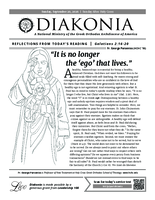
Read the latest Diakonia Newsletter for this Sunday
https://bulletinbuilder.org/diakonia-newsletter/2026-09-20?source=bulletin_web
September 20, 2026
Bulletin Inserts

2026 Greek Festival
Worker and Pastry Sign Up Sheets are available in the Church Hall. Please sign up soon!
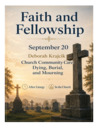
Faith and Fellowship
September 20 after Fellowship Deborah Krajcik Church Community Care: Dying, Burial, and Mourning
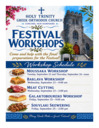
Festival Workshops
Your help is needed all week!
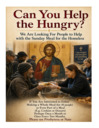
Help the Homeless
If you would like to make a meal for the homeless please see Presbytera or Nate