St. Spyridon Parish News, Events, Activities and Announcements
The Divine Services for the Entrance of the Theotokos Into the Temple
This Saturday, November 21st - Orthros/Preparatory service begins at 9:00 am with the Divine Liturgy to follow.
This Sunday's Memorials
Deacon Michael Kallas - 6 months
Nick Panos - 15 years
Popi Panos - 22 years
Konstantinos Loukatos - 22 years
Elly Loukatos - 15 years
John Stamatelatos - 19 years
Marika Livas - 25 years
Stavros Livas - 54 years
Argirios Livas - 12 years
Nikos Livas - 2 years
Athena Livas - 2 years
Joseph Livas - 2 years
John Giannos - 20 years
Marika Giannos - 5 years
As a reminder: The pews on the front right side of the church, as you enter the church, are reserved for the family/families who are having a Memorial Service for their loved ones. Thus, please allow one pew per Memorial family on any given Sunday. Thank you for your understanding.
Office Holiday
The church office will be closed on Thursday, November 26th and Friday, November 27th in observance of Thanksgiving. Regular hours will resume on Monday, November 30th.
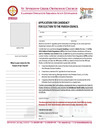
Seeking Candidates for Election to the Parish Council
If you would like to serve our church by running for the Parish Council, please complete an Application for Candidacy. To request an application via email, contact Jadranka at [email protected]. Hard copies are also available in the Hall. The deadline to submit your application is Monday, November 30th. The Parish Council Elections will be held in the Hall Lounge on Sunday, December 6th.
See the attached Application for Candidacy in the Inserts & Flyers section below.
Church Office Email Addresses
For Bulletins, Memorials, and Icon Decoration, email Jadranka:[email protected].
For Sacraments, Calendar, and Newsletter, email Soula:[email protected].
For Stewardship, Donations Processing, and Facilities, email Christine:[email protected].
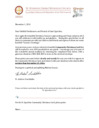
Community Christmas Card Deadline
Be a part of this wonderful tradition by including your name in the St. Spyridon Community Christmas Card. Simply complete and return the form you received in the mail, or the attached form, with your donation, to the church office by thisWednesday, November 25, 2026.
See the attached letter in the Inserts & Flyers section below.
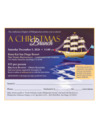
Philoptochos Christmas Brunch
Join us for delicious food, wonderful fellowship, and holiday cheer on Saturday, December 5th, at 11:00 am at the Kona Kai San Diego Resort. You may purchase tickets online at www.anthousa.net. Please bring a pair of children's pajamas to support those in need. Kala Christouyena!
See the attached flyer in the Inserts & Flyers section below.
Philoptochos Decorated Icons
Commemorate a Feast Day by offering a decorated icon to be venerated in the Narthex. The suggested donation is $85 to the Greek Orthodox Ladies Philoptochos Society. Call the church office at 619-297-4165 to reserve.
Icons available:
12/4: St. Barbara the Great Martyr
12/25: Holy Nativity of The Lord
Fellowship and Coffee Hour
We invite you to consider offering a future Sunday Fellowship Hour with your family or friends by providing simple refreshments such as donuts or bagels, fruit, and juice. This is a meaningful way to honor a loved one or celebrate a special occasion. To sign up, please contact the Fellowship Coordinator, Olympia (Debbie) Kyriakidis at 619-507-6521 or [email protected].
Available Sundays:
January 24th
January 31st
With appreciation, Anthousa Chapter of Philoptochos
48th Annual Epiphany Cross Dive Luncheon
Sunday, January 10, 2027, at the Kona Kai San Diego Resort. Tickets are $50 for adults and $25 for children under 12. Tickets must be purchased by January 4, 2027. For reservations and sponsorships, call Christoforos Savvides at 619-709-6067.
Cross Divers needed - To participate, please contact Bill Navrides at 619-992-6775 or [email protected]. Divers must be GOYA age (7th – 12th grade) and stay for the luncheon. All diver confirmations must be received by December 26, 2026.
St. Spyridon Food Drive
Next week is the last week to bring in canned foods! Join Sunday School, Greek School, GOYA/HOPE & JOY, and Dance/Choral in collecting non-perishable food items for St. Innocent Orphanagethrough November 29th. The ministries will be competing to collect the most food! Collection bins are in the Hall and Education Courtyard.
See the attached flyer in the Inserts & Flyers section below.
Project Mexico Information Meeting
This Sunday, November 22nd at 12:15 pm in the Upper Education Building - Room 6. Come hear about St. Spyridon’s June homebuilding trip. Text Julie Dennis for more information: 619-618-5116.
Fall See's Candy Fundraiser
Only two weeks left! See’s Candy makes a great Thanksgiving and Christmas treat and gift! All proceeds go to support the Dance and Choral School! Candy is shipped directly to your (or your recipient’s) home. Fundraiser ends December 4th. Email Kathy Meck with questions: [email protected]. https://www.yumraising.com/store/winter-2026-st-spyridon-dance-and-choral-166d/Kat_Mec6915
See the attached flyer in the Inserts & Flyers section below.
Greek Dance and Choral School
Friday, November 20:
Helios 4:30-5:30 pm, Youth Room
Sunday, November 22:
Ta Spyridonakia: 12:15 to 12:45 pm, Youth Room
Youth Choir: 12:30 to 1:10 pm, Choir Loft
High School Girls Group: 1:10 pm to 1:25 pm, Choir Loft
Lunch break for Helios/Pelagos/Choir participants: 12:10 to 12:20 pm, Youth Room
Next playgroup is December 2nd from 9:45-11:00 am. This is for babies and toddlers and parents! We play, sing songs, and do fun activities in our St. Spyridon Playroom (Lower Education Building). If you have any questions, please contact Julie Dennis, Youth Ministries Director, at [email protected].
HOPE and JOY Christmas Cookie Party
Kids in TK-5th grade: Save the Date, December 5th at 12:30 pm in the St. Spyridon Kitchen.
Men's Ministry Christmas Meeting
Thursday, December 17, 6:30 pm. Bring your entire family. We will celebrate our Lord's birth together. Lenten potluck goodies! Christmas music and more. Bring a toy for TOYS FOR TOTS. Our proud Marines will be picking up the gifts for those children in need. Contact John Georges at 951-536-1217 or [email protected].
Upcoming Memorials in December
12/27: James (Demetrios) Mellos - 2 years
Church Parking
We respectfully ask that you please adhere to these guidelines when using the church parking lot:
Please do not park in handicap spaces unless your vehicle displays a valid handicap placard or license plate.
Please ensure that no vehicles are blocked in from any side. Blocking someone in is not only a big inconvenience to them, but damage to your vehicle is very possible.
Please park only in marked spaces. If there is no line marking a parking spot, please do not park there.
To ensure Emergency Vehicle access, please do not park in the red-painted driveway onto Indiana Street.
Please ensure that no Entrances or Exits are blocked by your car.
Please be mindful not to mistakenly take up two spots with your car.
Thank you for your cooperation and for helping to keep our parking area safe and accessible for all parishioners.
The Nursery and Cry Room
A nursery and cry room is available in the Narthex behind the candle box, offering a quiet space (with toys, books, and a changing table) for parents with young children. The room is equipped with both video and audio, allowing you to follow the Divine Liturgy. For assistance, please speak with a member of the Narthex Team.
Agape Meals
Our Philoptochos Agape Meal program provides meals to our St. Spyridon community members who may need help with a meal(s) during a time of need. If you are interested in preparing a home-cooked meal for our parishioners, please reach out to Marian Dougenis at [email protected] or mobile 619-520-3660. Thank you!
Orthodox Parish Leadership 2026 Webinar Series: To Embrace - Building the Orthodox Mindset & Adult Religious Education for the Newly Illumined
The Orthodox Parish Leadership (OPL) ministry of the Greek Orthodox Metropolis of San Francisco is pleased to announce the final segment of the 2026 OPL webinar series, with an engaging presentation on "To Embrace: Building the Orthodox Mindset & Adult Religious Education for the Newly Illumined" in collaboration with the Metropolises of Atlanta and Boston. This event is scheduled for Monday, December 14, 2026 at 5:00 p.m. Pacific. The presentation will be led by Rev. Father Thomas Zaferes and Dr. Eve Tibbs.
Third Orthros Gospel
The Reading is from Mark 16:9-20
When Jesus rose early on the first day of the week, He appeared first to Mary Magdalene, from whom He had cast out seven demons. She went and told those who had been with Him, as they mourned and wept. But when they heard that He was alive and had been seen by her, they would not believe it.
After this he appeared in another form to two of them, as they were walking into the country. And they went back and told the rest, but they did not believe them. After this He appeared to the eleven themselves as they sat at table and He upbraided them for their unbelief and hardness of heart, because they had not believed those who saw Him after He had risen. And He said to them, "Go into all the world and preach the gospel to the whole creation. He who believes and is baptized will be saved; but he who does not believe will be condemned. And these signs will accompany those who believe: in My name they will cast out demons; they will speak in new tongues; they will pick up serpents, and if they drink any deadly thing, it will not hurt them; they will lay their hands on the sick, and they will recover."
So then the Lord Jesus, after He had spoken to them, was taken up into heaven, and sat down at the right hand of God. And they went forth and preached everywhere, while the Lord worked with them and confirmed the message by the signs that attended it. Amen.
Epistle Reading
Prokeimenon. Plagal Fourth Mode. Psalm 75.11,1. Make your vows to the Lord our God and perform them.
Verse: God is known in Judah; his name is great in Israel.
The reading is from St. Paul's Letter to the Ephesians 4:1-7.
Brethren, I, a prisoner for the Lord, beg you to lead a life worthy of the calling to which you have been called, with all lowliness and meekness, with patience, forbearing one another in love, eager to maintain the unity of the Spirit in the bond of peace. There is one body and one Spirit, just as you were called to the one hope that belongs to your call, one Lord, one faith, one baptism, one God and Father of us all, who is above all and through all and in all. But grace was given to each of us according to the measure of Christ's gift.
Gospel Reading
9th Sunday of Luke
The Reading is from Luke 12:16-21
The Lord said this parable: "The land of a rich man brought forth plentifully; and he thought to himself, 'What shall I do, for I have nowhere to store my crops?' And he said, 'I will do this: I will pull down my barns, and build larger ones; and there I will store all my grain and my goods. And I will say to my soul, 'Soul, you have ample goods laid up for many years; take your ease, eat, drink, be merry.' But God said to him, 'Fool! This night your soul is required of you; and the things you have prepared, whose will they be?' So is he who lays up treasure for himself, and is not rich toward God." As he said these things, he cried out: "He who has ears to hear, let him hear."
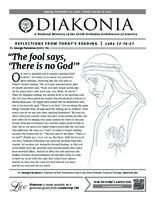
Diakonia Newsletter
Read the latest Diakonia Newsletter for this Sunday
Communiqué of the Holy Eparchial Synod, November 19, 2026
11/19/2026
Today, November 19, His Eminence Archbishop Elpidophoros of America presided over an extraordinary meeting of the Holy Eparchial Synod, convened via videoconference.
At the outset, the Archbishop and the Hierarchs
a) Expressed their heartfelt best wishes to His Eminence Metropolitan Methodios of Boston on the occasion of his 80th Birthday.
His Eminence Metropolitan Methodios of Boston. (Orthodox Observer)
b) Welcomed His Eminence Metropolitan Athenagoras of New Jersey, who participated for the first time as a member of the Holy Eparchial Synod following his recent election. They extended their heartfelt wishes for his good health and success in the fulfillment of his archpastoral responsibilities.
His Eminence Metropolitan Athenagoras of New Jersey. (Orthodox Observer)
Subsequently, the Holy Eparchial Synod resolved to dedicate the forthcoming year, 2027, to honoring the life and memory of Archbishop Alexander, the first Archbishop of America. Among the initiatives planned to commemorate his legacy, the Synod decided to organize a pilgrimage to Corfu during the coming year, where the late Archbishop reposed in the Lord and was laid to rest.
The Archbishop then proposed the election of a new Auxiliary Bishop to assume the responsibilities previously entrusted to His Eminence Metropolitan Athenagoras of New Jersey during his tenure as Bishop of Nazianzos. For this position, the Archbishop nominated the Reverend Archdeacon Dionysios Papiris.
The Rev. Archdeacon Dionysios Papiris with His Eminence Archbishop Elpidophoros of America. (Orthodox Observer/Dimitrios Panagos)
Following the acceptance of this proposal, the Holy Eparchial Synod proceeded to establish the required list of three candidates (triprosopon), as follows:
a) The Rev. Archdeacon Dionysios Papiris.
b) The V. Rev. Archimandrite Bartholomew Mercado, and
c) The V. Rev. Archimandrite Michael Giavris.
In accordance with established ecclesiastical procedure, the aforementioned list was submitted that same day through an official letter of the Archbishop to His All-Holiness Ecumenical Patriarch Bartholomew the Great and the Holy and Sacred Synod of the Ecumenical Patriarchate, with the request that the canonical election be conducted on the basis of the submitted list.
The Archbishop also informed the Holy Eparchial Synod of:
a) The successful pilgrimage of the Sacred Archdiocese to Constantinople, organized in cooperation with the Order of Saint Andrew the Apostle, Archons of the Ecumenical Patriarchate.
b) His participation, as the representative of the Ecumenical Patriarchate, in the celebrations commemorating the 30th anniversary of the establishment of the Holy Metropolis of Buenos Aires.
His Eminence Metropolitan Nathanael of Chicago updated the Holy Eparchial Synod on the progress of the Organizing Committee, which he chairs, in preparing the celebrations marking the 90th anniversary of the founding of Holy Cross Greek Orthodox School of Theology in 2027.
Finally, the Holy Eparchial Synod:
a) Was informed of the decision of the Ecumenical Patriarchate to accept the appeal (ekkliton) of the Rev. Presbyter Andrey Drugay, who had been deposed from the priesthood by the Moscow Patriarchate, to lift his deposition, and to approve his reception into the Sacred Archdiocese of America.
b) Following the transfer of His Grace Bishop Alexander of Nicopolis to the Holy Metropolis of Buenos Aires, appointed the Rev. Protopresbyter of the Ecumenical Throne Oleksandr Belya as the Vicar of the Slavic Orthodox Vicariate.
At the conclusion of the meeting, the Archbishop and the Synodal Hierarchs exchanged heartfelt wishes for the Nativity Fast and for the forthcoming national celebration of Thanksgiving.
Today, November 19, His Eminence Archbishop Elpidophoros of America presided over an extraordinary meeting of the Holy Eparchial Synod, convened via videoconference. At the outset, the Archbishop and the Hierarchs a) Expressed their heartfelt best […]
How the Ecumenical Patriarch brought creation care to America
11/19/2026
The initiatives and influence, along with the recognition and reverberation of the ecological ministry of His All-Holiness Ecumenical Patriarch Bartholomew is often measured by his theological and ecclesiastical vision along with his social and global outreach. What many are perhaps unaware of are the significant and momentous milestones throughout His All-Holiness’s unprecedented environmental ministry that transpired on the soil of this blessed country over the last 30 years. In this brief article, I will highlight just three events that defined both the environmental achievements of the Ecumenical Patriarch and the environmental awareness of the Greek Orthodox Archdiocese of America.
Santa Barbara (1997)
On November 8, 1997, addressing a prestigious gathering of theologian, scientists, and policy makers on the occasion of his first official visit to the United States as Ecumenical Patriarch, His All-Holiness declared that “if human beings were to treat one another’s personal property the way that they treat their environment, we would view that behavior as anti-social.” It was the same year that Time magazine would name him among “the 100 most influential people in the world.”
At this symposium in Santa Barbara, the Ecumenical Patriarch presented a radical and daring vision that revised the Christian perspective of sin by proposing that the abuse of natural creation was nothing less than sin itself. It was the first time any religious leader had ever identified any act of harm to the environment as sinful. His audience included Bruce Babbitt, then United States Secretary of the Interior, representing President Bill Clinton at the symposium; Jean-Michel Cousteau, the preeminent oceanographic explorer; Carl Pope, Executive Director of the Sierra Club; and Paul Nosie Jr., of the San Carlos Apache tribe in Arizona.
Ecumenical Patriarch Bartholomew’s undiluted criticism of ecological destruction remains monumental to this day:
To commit a crime against the natural world is a sin. For human beings to cause species to become extinct and destroy the biological diversity of God’s creation; for human beings to degrade the integrity of the earth by causing climate change, stripping the earth of its natural forests, or destroying its wetlands; for human beings to injure other human beings with disease or contaminate the earth’s waters, its land, its air, and its life, with poisonous substances . . . these are sins.
Mississippi River (2009)
Over the 35 years of his tenure, the Ecumenical Patriarch has organized five Summer Seminars (1994–1998), nine Seaborne Symposia (1995–2018), and six Halki Summits (2012 to date), all focused on bringing people from diverse backgrounds together to call for principled environmental stewardship and care for creation.
The eighth symposium was held in October 2009 on the banks of the Mississippi River in New Orleans and titled “Restoring Balance—The Great Mississippi River.” As one of the world’s greatest rivers, with the third largest drainage basin on the planet, the Mississippi is a vast ecosystem that has fallen completely under human domination with a chain of cities along its length discharging domestic and industrial waste into the river for nearly two centuries. Yet, as His All-Holiness declared at the opening of the symposium, the fate of the Mississippi waters should be primarily perceived as an ethical crisis:
Let us remember that our responsibility grows alongside our privileges; we are more accountable the higher we stand on the scale of leadership. Our successes or failures, personal and collective, determine the lives of billions. Our decisions, personal and collective, determine the future of the planet.
The exploitation of the great river produced catastrophic human and natural consequences, as the whole world observed in the aftermath of Hurricane Katrina.
In his message to the Ecumenical Patriarch and the delegates, former Vice President Al Gore observed:
Your All-Holiness, I would like to welcome you to the United States and, in particular to the South. From the days when I first addressed you as the Green Patriarch, our paths have crossed many times but we have both kept our course, struggling for a better future for our planet with the hope that our efforts will not fail . . . Your All Holiness, your perseverance in this struggle is demonstrated yet again by this waterborne symposium. As Martin Luther King said, “Let’s not become silent about things that matter.”
In the White House, as His All-Holiness later revealed, climate change “was one of the foremost issues” raised by the Ecumenical Patriarch in his conversation with President Obama just prior to the Mississippi symposium.
Templeton Prize (2025)
Finally, just last year, on September 24, 2025, at a special ceremony in New York City, the John Templeton Foundation awarded the 2025 Templeton Prize to His All-Holiness “for his pioneering efforts to bridge scientific and spiritual understandings of humanity’s relationship with the natural world, bringing together people of different faiths to heed a call for stewardship of creation . . . as well as for articulating a compelling moral and theological vision of humanity’s responsibility to care for the earth and to uphold harmony, unity, and mutual love within and across religious communities.”
His All-Holiness Ecumenical Patriarch Bartholomew and Jane Goodall at the 2025 Templeton Prize dinner on Sep. 24, 2025. (Orthodox Observer/Archons/J.Mindala)
It was a fitting recognition of a commitment and conviction established and developed over decades, first initiated under Ecumenical Patriarch Demetrios (1914–1991), articulated by such thinkers as Metropolitan John Zizioulas of Pergamon (1931–2023), and tirelessly promoted by Ecumenical Patriarch Bartholomew throughout his ongoing tenure as the longest-serving Ecumenical Patriarch in history.
Conclusion
There is no doubt that the recent history of the United States and the Greek Orthodox Archdiocese of America is conspicuously and unmistakably marked by the exceptional presence and ecological impact of His All-Holiness Ecumenical Patriarch Bartholomew.
People across the world and in the United States have certainly acknowledged the importance and impact of His All-Holiness on issues related to raising awareness to protect the sacred gift of creation. As such, it is up to all Orthodox Christians and people of good will to find ways, particularly in the United States, to adopt the Ecumenical Patriarch’s vision of ecological stewardship in their lives and communities to participate in caring for creation to the glory of God.
The initiatives and influence, along with the recognition and reverberation of the ecological ministry of His All-Holiness Ecumenical Patriarch Bartholomew is often measured by his theological and ecclesiastical vision along with his social and global […]
The first six months matter: Building an intentional pathway for inquirers
11/18/2026
This is the first of three articles based on two clergy roundtable discussions on the acclimation of inquirers into the life of the parish.
People are walking through our doors seeking something they have not found anywhere else. They are young adults, young families, professionals, and members of Gen Z, and more. They are looking for a faith tradition with ancient roots, offering personal spiritual renewal, and a deep sense of purpose. Parish leaders are learning that attracting inquirers is not the same as integrating them into parish life. A central concern of two recent clergy roundtables on the acclimation of inquirers was not how many visitors arrive or how many are eventually chrismated or baptized. The concern was whether, in a few years, they will still be active Orthodox Christians.
There was agreement among roundtable participants that acclimation of non-Orthodox into the Orthodox Christian Faith and into the life of the parish is not a program. It is a lifelong process of growth and formation that begins long before baptism or chrismation and continues throughout a person’s life in Christ. Successful parish leaders understand that the period before reception into the Church is not a waiting room for catechesis. It is the beginning of acclimation into a community, a way of life, and a network of relationships that support long-term growth in the faith.
For parish leaders, this means creating a pathway for newcomers from their very first visit. Clergy roundtable participants stressed the importance of intentional hospitality. The first visit often determines whether a first-time visitor will return. Visitors need to be greeted warmly, introduced to parish customs, connected with parish clergy, and to be personally welcomed by parishioners. Contact information needs to be collected for meaningful follow-up. Interested visitors may be lost simply because no one follows up with them after their visit. Hospitality must be seen as evangelism and pastoral care.
Though every parish is different, the roundtable participants supported a clear sequence that moves a person from visitor to fully integrated member of the parish family. This process starts with an intentional welcome, followed by gathering contact information, clergy follow-up, and an initial pastoral conversation. It continues with mentor assignment, participation in worship, catechetical formation, sponsor identification, reception into the Church, and finally long-term mentoring after reception. We need to remember that people belong before they are fully formed Orthodox Christians. Relationships and fellowship are critical to deeper learning and commitment.
Effective acclimation also requires organization. Roundtable participants emphasized that sustainable growth calls for structure. Successful parishes utilize systems for tracking inquirers, lay hospitality teams, mentors, catechists, sponsors, and ongoing follow-up. The priest can’t do this alone. Delegation is not a sign of weakness. It is faithful stewardship.
This approach requires parish leaders to look beyond current needs and create sustainable processes. Acclimation of newcomers should not depend only on the memory or schedule of the priest. Parish databases, visitor cards, follow-up teams, welcome teams, hospitality coordinators, and designated volunteers can ensure that no one falls through the cracks. Every inquiry should trigger a response. Every visitor should receive personal attention. Every catechumen should be known by name.
A key aspect of early integration is helping newcomers develop relationships within the parish. Roundtable participants repeatedly emphasized that healthy acclimation occurs when inquirers are known personally by clergy and parishioners, attend worship regularly, participate in coffee fellowship, participate in parish ministries, form friendships, and begin to develop sponsor relationships. People who do not develop meaningful connections often remain on the margins of parish life.
This is important because most inquirers arrive without existing social connections in the parish and without having experienced Orthodox Christian worship and practices. They may be unsure of parish customs, liturgical practices, and social dynamics. Entering coffee fellowship alone for the first time is daunting. Parish leaders need to look at every aspect of parish life through the eyes of a first-time visitor. Is the door clearly marked? Is someone there to welcome them? Is there a clear next step? Can they easily meet others? Do they know where to turn with questions?
The goal of acclimating inquirers is not efficiency but formation. Every ministry, conversation, and follow-up should move people from curiosity to belonging, from attendance to participation, and from inquirer to catechumen. Healthy acclimation begins when visitors realize they are not just visiting a church. They are being welcomed into a spiritual home. When parishes intentionally create pathways that foster worship, relationships, mentorship, and participation, they lay the foundation for long-term growth in the faith and lasting parish vitality.
Fr. Jim Kordaris serves the Greek Orthodox Archdiocese as Director of Stewardship, Outreach, and Evangelism. He also serves as pastor of Saint George Church in Kingston, New York.
This is the first of three articles based on two clergy roundtable discussions on the acclimation of inquirers into the life of the parish. People are walking through our doors seeking something they have not found […]
His Grace Bishop Alexander of Nicopolis, until now the Vicar of the Greek Orthodox Archdiocese of America’s Slavic Vicariate, was ordained to the episcopacy on Sunday at the Dormition of the Theotokos Orthodox Cathedral in Buenos Aires, during celebrations marking the 30th anniversary of the Holy Metropolis of Buenos Aires and South America.
His Eminence Archbishop Elpidophoros of America attended as the official representative of His All-Holiness Ecumenical Patriarch Bartholomew, conveying the Patriarch’s blessings to His Eminence Metropolitan Iosif of Buenos Aires and to the hierarchy, clergy and faithful of the Metropolis.
His Grace Bishop Alexander of Nicopolis, until now the Vicar of the Greek Orthodox Archdiocese of America’s Slavic Vicariate, was ordained to the episcopacy on Nov. 15, 2026 at the Dormition of the Theotokos Orthodox Cathedral in Buenos Aires. (Metropolis of Buenos Aires/José Campos Balagué)
After being canonically released by the Archdiocese, Bishop Alexander was appointed by Ecumenical Patriarch Bartholomew as his Auxiliary Bishop, serving in the Metropolis of Buenos Aires and South America.
His departure leaves the post of Vicar of the Slavic Vicariate vacant. The Archdiocese said the matter will go before its Holy Eparchial Synod, which will appoint a successor.
The Archdiocese thanked Ecumenical Patriarch Bartholomew for the appointment, congratulated Bishop Alexander and thanked him for his service to the faithful of the Slavic Vicariate.
The Ecumenical Patriarchate, under Ecumenical Patriarch Bartholomew, created the Metropolis in July 1996, when it divided the Greek Orthodox Archdiocese of North and South America, which had stretched from Alaska to the southern tip of South America, into separate jurisdictions for the United States, Canada, Central America and South America. Metropolitan Gennadios of blessed memory, who had led the Church in Buenos Aires since 1979, served as the Metropolis’s first Metropolitan. Metropolitan Tarasios succeeded him in 2001, and in 2019 the Holy Synod of the Ecumenical Patriarchate elected the Argentine-born Metropolitan Iosif as the Metropolis’s third Metropolitan.
In his address, Archbishop Elpidophoros noted that the Metropolis’s 30th anniversary coincides with the completion of 35 years of the Ecumenical Patriarch’s ministry.
“This was far more than an administrative decision,” Archbishop Elpidophoros said of the Metropolis’s founding, calling it “an act of profound pastoral foresight” rooted in the conviction that the Church “must never remain confined to the boundaries of ethnicity, geography, or history.”
Archbishop Elpidophoros, who enthroned Metropolitan Iosif as the Patriarch’s representative on Feb. 29, 2020, recalled handing him the pastoral staff that Ecumenical Patriarch Bartholomew had given Archbishop Elpidophoros at his own elevation to the episcopacy. He noted that Metropolitan Iosif was born and raised in Córdoba, Argentina, and said his election “demonstrated that Orthodoxy in South America is not a foreign presence, nor merely an inheritance carried across the oceans by earlier generations.”
His Eminence Archbishop Elpidophoros of America, pictured with His Eminence Metropolitan Iosif of Buenos Aires, attended the anniversary celebrations as the official representative of His All-Holiness Ecumenical Patriarch Bartholomew. (Metropolis of Buenos Aires/José Campos Balagué)
Archbishop Elpidophoros also spoke of the ties between the Metropolis and the Archdiocese of America, whose communities belonged to a single Archdiocese of North and South America until 1996. “The historic reorganization of 1996 did not sever these bonds,” he said. The two, he added, “remain branches of the same spiritual vine, children of the same Mother Church of Constantinople.”
“This is the true meaning of Orthodox mission,” Archbishop Elpidophoros said. “It is not simply the preservation of what we have inherited, precious though that inheritance may be. It is the courageous and loving transmission of that inheritance to those who have yet to encounter its beauty.”
His Grace Bishop Alexander of Nicopolis, until now the Vicar of the Greek Orthodox Archdiocese of America’s Slavic Vicariate, was ordained to the episcopacy on Sunday at the Dormition of the Theotokos Orthodox Cathedral in […]
Why one Alaskan ‘wandered enough’ and stayed to serve his parish
11/16/2026
During our September 2026 assignment in Anchorage, the Orthodox Observer team was struck by Holy Transfiguration’s warmth, faith, and perseverance. Vasilios “Akis” Gialopsos, interviewed here, is only one among dozens of community members who have given to the parish with selfless devotion, and more profiles from Holy Transfiguration are forthcoming. If you’d like to share stories from your parish, please email us at [email protected].
When the doors of the Corfu village church opened at the end of his father’s funeral, Vasilios “Akis” Gialopsos noticed the ground had turned white with freshly-fallen sleet.
Inside, the village had crowded in out of a winter storm. As 1 Thessalonians 4:16 was read (“For the Lord Himself will descend from heaven with a shout, with the voice of an archangel, and with the trumpet of God”), Akis remembers the words “struck in a different way” as lightning flashed and thunder rolled outside.
A violent rain came next as the mourners walked in procession toward the churchyard outside the village. This walk, Akis says, was “precisely the inverse” of the one his wife and her family had taken to their wedding, just six months earlier.
“When dad’s casket passed under the belfry, the rain suddenly stopped,” Akis says. “He was buried, by hand, by childhood friends, and reunited with the remains of his parents, within sight of the mountain he climbed his whole life to see into the oceans.”
Back home in Anchorage, Alaska, the community of Holy Transfiguration Greek Orthodox Church grieved alongside Akis and his family.
“It made what seemed intolerable bearable and gave hope to the eternal promise in our faith,” Akis says. “I still think of those days.”
Akis and his father Spiros, c. 2014. Photo courtesy of Akis Gialopsos
His father was president of Holy Transfiguration’s parish council in the ‘90s, when the community first began to plan a Byzantine-style church in Anchorage. Akis now holds that office, and the church those efforts produced is now consecrated.
Alaska’s only Greek Orthodox parish
In September, as Alaska’s only Greek Orthodox parish prepared to welcome His Eminence Archbishop Elpidophoros of America for the church’s consecration, Akis described the occasion as a beginning.
“This is not the end of a chapter,” he said. “It’s the period in a sentence that begins the second part of that chapter.”
Vasilios “Akis” Gialopsos, Parish Council President at Holy Transfiguration Greek Orthodox Church in Anchorage, Alaska accepts a gift from His Eminence Archbishop Elpidophoros of America during the church’s Great Vespers of Consecration on September 18, 2026. Photo by Kostas Petrakos
He characterized the consecration services as “the manifestation of sanctified ground and the mingling of heaven and earth,” as well as a “deep tethering” of Holy Transfiguration with all its sister parishes under the jurisdiction of the Ecumenical Patriarchate.
His message to the community was that their efforts must continue.
“Okay, congratulations. The church is now sanctified. That means it’s no longer going to be able to rest on its laurels of growing,” Akis said. “Now you have to grow in a different way. You have to tend to this garden.”
A cassette, a family restaurant, and an Anchorage childhood
Akis was born and raised in Alaska alongside his two sisters, Anastasia and Amalia. His father, Spiros, was from Corfu; his mother, P.J., is from the U.S. and had gone north in the ‘70s, when the country was coming out of a recession and Alaska was booming from construction of the Trans-Alaska Pipeline.
P.J. worked in hospitality, a business community that included many Greek servers, chefs, and small-business owners. One of them told her about a cousin who was selling land in Greece. She used her vacation time to go see it.
“My mother, in the depths of winter, needed to get some time out of the gray, melancholic blue,” Akis says. “She flew to Corfu.”
Spiros was the seller. The two had what Akis calls “a whirlwind romance,” and at the end of the two weeks Spiros told P.J., “If you marry me, you can have the land for free. If you don’t marry me, it’s not for sale.” She declined and flew home, but when she opened her suitcase she found a cassette recorded with a song by Mikis Theodorakis–the same music Spiros had played in the car in Corfu.
“It was enough to move her to say, ‘Okay, I’m going to marry this guy,’” Akis says.
Akis’s parents c. 1984 after they married in a courthouse and opened the family restaurant. Photo courtesy of Akis Gialopsos
Spiros followed P.J. to Alaska, where the couple opened a small restaurant; the children came a few years later.
On September 17, 2026, Akis and P.J. welcome guests to their family restaurant during the Archiepiscopal visit of His Eminence Archbishop Elpidophoros of America to Anchorage. (Kostas Petrakos)
Akis remembers his father as simultaneously loving, abrasive, and shy, a man who preferred to be in the controlled environment of his kitchen. When he felt comfortable to leave it, he was “charming and disarming, with a booming yet contagious, childlike laugh.” Meanwhile, his mother is “a hostess through and through, artistically inclined and gifted, spilling over with ideas.” The two, Akis says, had “fun arguments” over the business and the children, and “that tension led to creativity.”
Akis and his sisters grew up working in the family restaurant, which was open every day of the week, often 12 hours a day–not including preparation and cleanup.
P.J. with Akis (aged 7) and his sisters Anastasia (6) and Amalia (3) on the ferry from Corfu to Igoumenitsa in 1993, their only family vacation outside Alaska. During this trip, Akis and Anastasia were belatedly baptized in their father’s village church, after Spiros and P.J. were formally married in a Greek Orthodox ceremony (they had been civilly married 10 years, and saved to go to Greece to marry there). Photo courtesy of Akis Gialopsos
As children they griped about this, because their friends’ families had more traditional work schedules. But now, Akis says, those same friends “regret the time in their youth and wish they spent more time together” now that their parents have grown old or passed away. Thankfully, he says, he and his sisters do not share these regrets.
Wandering enough
For Akis, there was a time when living outside Alaska for good “seemed attractive,” in part because the contrast between Alaska and other places wasn’t yet clear to him. But that changed during his first year at an out-of-state college.
“The lower 48, for all its beauty and the kindness of its peoples, is not home,” Akis says. “When I came home on my first holiday break that freshman year, I knew I had wandered enough.”
Living in Anchorage, he says, in just 15 minutes you can go from a city of nearly 300,000 people into a state park system stretching more than 3 million acres. Back in town, the sense of community is “irreplaceable.”
“I can’t think of anywhere else, save Greece, I could live,” Akis says.
Culture and catholicity
Being the only Greek Orthodox parish in the state shapes how Holy Transfiguration sees itself, Akis says. He calls it a “perfect representation” of the Greek Orthodox Archdiocese of America’s spirit of catholicity.
“You have the metaphorical double-headed eagle of Hellenic culture with a pan-Orthodox faith that is tolerant and open to other cultures and ethnicities, but also very clear and unapologetic about its belief system,” Akis says.
The church’s ethnically-Greek members, he says, have been a minority “virtually from its inception,” yet the whole parish has embraced both Greek culture and Orthodoxy’s universality. The best illustration comes during the Lord’s Prayer in the Divine Liturgy. For more than 30 years, Akis says, the parish has recited the prayer in at least six languages, and often as many as a dozen.
He recalls the parish’s previous home, in a large, foreclosed single-family home. For years the community’s liturgies, memorial services, funerals, baptisms, and weddings took place in the house’s parlor.
“In that house, you had Romanian painters, you had Greek carpenters, you had Bulgarian seamstresses, you had Russian and Ukrainian contractors, you had public servants who had very Anglo-Saxon names … Armenians who spoke French, ethnic Moroccans who did the Lord’s Prayer in French, Palestinians from Bethlehem reciting it in Arabic,” he said. “There’s that incredible feeling of deep solidarity and mutual respect.”
Just renting a space
When asked what it means for him to lead Holy Transfiguration, Akis disputes the premise.
“I’m not leading this community,” he says. “I’m just renting a space that’s been very graciously reserved for me by the trust of the people in the parish.”
The hardest part of the Parish Council President role, he says, is “managing honest miscommunication between people who might have misunderstood each other on sensitive issues, and learning to have patience.” The reward, however, is “being with a group of dedicated men and women who wish to improve their community and throw themselves into that effort.”
His Eminence Archbishop Elpidophoros of America before the handcrafted iconostasis of Holy Transfiguration Greek Orthodox Church in Anchorage, Alaska, September 19, 2026. (Orthodox Observer/Loren Holmes)
He describes his parish as one with a “deep well of excellence in human talent,” including physicians, businesspeople, educators, scientists, engineers, and the artisans who hand-crafted the church’s iconostasis. Seeing it, Akis says, often brings him nearly to tears, because “you’re watching a person share their love of their faith and of their fellow human beings in ways that they are not otherwise capable of explaining orally or in a written word.”
He is candid about the parish’s temperament.
“We are a community that is cantankerous and at times combustible,” he says. “But in that combustibility is the chemistry of magnificence.”
Without it, Akis says, the parish would not have had “that ability to say, ‘To heck with it. I’m going to still persevere. I don’t care that the winters are cold, that the Metropolitan is thousands of miles away … We are going to persevere.’”
Service and good faith
Akis has spent nearly his whole career in Alaska public service.
He currently serves as Deputy Executive Director of the Alaska Housing Finance Corporation; previously, he served as Acting Commissioner of the Alaska Department of Natural Resources and Deputy Chief of Staff in Alaska’s Office of the Governor.
“Service is a privilege,” Akis says. “People are entrusted for a time to dedicate their talents in pursuit of something greater than themselves. It is a humbling realization that your views, logical they may seem to you, may neither be correct nor appropriate, and you must work in service of those with whom you disagree.”
His approach is to assume good intent, a perspective he says comes from his faith.
“My faith compels me to default to an individual’s actions being based on good intentions, and to work until I am convinced otherwise,” he says.
“Having a premise of good faith removes the instinctive, albeit natural, human suspicion of malice. Once we realize, for the most part, that we all have the best of intentions but different views, stewarding a process to success becomes more probable.”
Community burns brightest in the dark
Akis describes Anchorage’s Greek-American community as “an American story informed by trauma and propelled by resilience.” Like Greeks in Astoria, Tarpon Springs, and elsewhere, they carved out a piece of home far from the πατρίδα. What distinguishes Alaska’s Greek Americans, he says, is “their degree of risk tolerance.”
“Who would think to spend so many winters so far away from one’s homeland?” Akis asks.
Though innovations in travel and communication technology have narrowed the distance, he says you should still “make no mistake–when a person steps off that plane or ferry, they are over 1,000 miles from mainland U.S.A.” For Alaskans in villages off the road system, the remoteness is “manyfold more profound.”
This isolation “can, without a sense of community, be corrosive and self-destructive,” Akis says. “We have those challenges here, make no mistake. But it is also by staring into that darkness that the community burns brightest.”
The church calendar is the parish’s answer. Nativity services and a Christmas market for Orthodox artisans, Akis says, brighten short days and long nights. Parishioners attend Paschal services in the waning winter and “then erupt at Pascha with the erasure of snow or its imminent melting.” In the summer, they work “through the long summer days and the white nights” to prepare for their festival.
“In this way,” Akis says, “no one need feel, as Donne wrote, an island unto themselves.”
He acknowledges his emphasis on Alaska’s beauty may sound familiar.
“Alaskans appreciate this magnificent beauty comes with its challenges, but we remain in awe of it nonetheless, and draw inspiration from its majesty,” he said. “That may sound cliché. But cliches exist because of deep truths.”
What comes next?
For Akis personally, the answer is children. “My wife and I hope to build a family of our own so our nieces have more cousins join them,” he says. He recalls Archbishop Elpidophoros saying the sounds of little children are “the voices of the future.”
“I’m happiest when I hear a bunch of children screeching with joy and playing together, and seeing their parents’ faces,” Akis says.
His Eminence Archbishop Elpidophoros of America carries an infant member of Holy Transfiguration Greek Orthodox Church during the procession of the Service of Consecration, September 19, 2026. (Orthodox Observer/Loren Holmes)
For the parish, Akis points to the Archbishop’s call to “rise and build” during the 2026 Clergy-Laity Congress. The phrase has taken on a new meaning for a community that has done both, and is now asking what comes next.
“It’s a deep privilege to have that level of pressure on you,” Akis says, “because it means that you are now given the charge to carry the legacy of those who have given their physical lives to see this built and to ensure that this is stewarded to the next generation in an active way, so that this does not become a beautiful museum.”
He returns to the parish’s founders. They “did not agree on a lot of things,” he says, and he marvels at “people who had no shortage of strong opinions and no shortage of strong personalities, and they nonetheless were able to create something beautiful … to supplant their egos and harness their unique talents in the service of something greater than themselves.”
He wants the next generation to treat this legacy as a parable rather than a history lesson.
“There’s a call to action for us,” he says. “We, too, must rise and build and continue that charge of tending to [the parish] actively and with humility.”
During our September 2026 assignment in Anchorage, the Orthodox Observer team was struck by Holy Transfiguration’s warmth, faith, and perseverance. Vasilios “Akis” Gialopsos, interviewed here, is only one among dozens of community members who have […]
Archbishop Elpidophoros represents Ecumenical Patriarch Bartholomew at 30th anniversary of the Holy Metropolis of Buenos Aires
11/15/2026
BUENOS AIRES — The Greek Orthodox Archdiocese of America rejoices in the episcopal ordination of His Grace Bishop Alexander of Nicopolis, which took place on Sunday, November 15, at the Dormition of the Theotokos Orthodox Cathedral in Buenos Aires, Argentina, during the celebrations commemorating the 30th anniversary of the establishment of the Holy Metropolis of Buenos Aires and South America.
His Eminence Archbishop Elpidophoros of America traveled to Buenos Aires as the official representative of His All-Holiness Ecumenical Patriarch Bartholomew the Great, conveying his paternal love and blessings to His Eminence Metropolitan Iosif of Buenos Aires, the local Hierarchy, clergy, and faithful on this significant occasion in the life of the Church.
Until his episcopal ordination, Bishop Alexander served as Vicar of the Slavic Vicariate of the Greek Orthodox Archdiocese of America. Having been canonically released, His Grace has been appointed by His All-Holiness Ecumenical Patriarch Bartholomew the Great as his Auxiliary Bishop, with the responsibility of serving in the Holy Metropolis of Buenos Aires and South America.
The Greek Orthodox Archdiocese of America expresses its profound gratitude to His All-Holiness for his paternal care and this appointment, while extending heartfelt congratulations and prayerful best wishes to Bishop Alexander as he begins this new chapter of episcopal ministry. The Archdiocese also expresses its sincere appreciation for his dedicated service to the faithful of the Slavic Vicariate and prays that Almighty God will strengthen and guide him in his new responsibilities.
With the departure of Bishop Alexander, the position of Vicar of the Slavic Vicariate is now vacant. The matter will be brought before the Holy Eparchial Synod of the Sacred Archdiocese of America for consideration, and a successor will be appointed in due course.
The celebrations in Buenos Aires also marked three decades of ecclesiastical ministry and witness, honoring the spiritual heritage and missionary endeavors of the Holy Metropolis. In his official address, Archbishop Elpidophoros highlighted the significance of this milestone, which coincides with the completion of 35 years of Patriarchal ministry of His All-Holiness Ecumenical Patriarch Bartholomew the Great, under whose leadership the Metropolis was established in 1996.
Reflecting upon the missionary calling of the Church, Archbishop Elpidophoros emphasized: “This is the true meaning of Orthodox mission. It is not simply the preservation of what we have inherited, precious though that inheritance may be. It is the courageous and loving transmission of that inheritance to those who have yet to encounter its beauty.” Under the pastoral leadership of His Eminence Metropolitan Iosif, the Holy Metropolis continues its sacred mission of nurturing and sharing the Orthodox faith throughout South America.
BUENOS AIRES — The Greek Orthodox Archdiocese of America rejoices in the episcopal ordination of His Grace Bishop Alexander of Nicopolis, which took place on Sunday, November 15, at the Dormition of the Theotokos Orthodox […]
Take heed, then, often to come together to give thanks to God, and show forth His praise. For when ye assemble frequently in the same place, the powers of Satan are destroyed, and the destruction at which he aims is prevented by the unity of your faith.
St. Ignatius of Antioch
Epistle to the Ephesians Ch. 13, 2nd century
Hymns of the Day
Resurrectional Apolytikion in the Plagal Fourth Mode
You descended from on high, O merciful Lord, and accepted the three-day burial in order to free us from our passions. Glory to you, O Lord, our life and our resurrection.
Apolytikion for Afterfeast of the Entry of the Theotokos in the Fourth Mode
Today is the prelude of God's pleasure and the proclamation of man's salvation. The Virgin is clearly made manifest in the temple of God and foretells Christ to all. Let us also cry out to her with mighty voice, "Hail, fulfillment of the Creator's dispensation."
Apolytikion for the Church in the First Mode
The Hymn of Saint Spyridon
At the first of the Synods, you appeared as a champion, * and Wonderworker, our God-bearing Father Spyridon. * Wherefore, you addressed the dead one in the grave, * and a serpent you changed to gold. * And while chanting * in service your sacred prayers, * you joined the angels concelebrating, most holy one.* Glory to Christ who glorified you, * glory to Him who crowned you, * glory to the One who works through You, * healings for everyone.
Today, the most pure temple of the Savior, the precious bridal chamber and Virgin, the sacred treasure of God, enters the house of the Lord, bringing the grace of the Divine Spirit. The Angels of God praise her. She is the heavenly tabernacle.
Saints and Feasts
November 22
Archippus the Apostles,Philemon the Apostle & his wife, Apphia, Onesimos the Disciple of Paul
Philemon, who was from Colossae, a city of Phrygia, was a man both wealthy and noble; Apphia was his wife. Archippus became Bishop of the Church in Colossae. All three were disciples of the Apostle Paul. Onesimus, who was formerly an unbeliever and slave of Philemon, stole certain of his vessels and fled to Rome. However, on finding him there, the Apostle Paul guided him onto the path of virtue and the knowledge of the truth, and sent him back to his master Philemon, to whom he wrote an epistle (this is one of the fourteen epistles of Saint Paul). In this epistle, Paul commended Onesimus to his master and reconciled the two. Onesimus was later made a bishop; in Greece he is honoured as the patron Saint of the imprisoned. All these Saints received their end by martyrdom, when they were stoned to death by the idolaters. Saint Onesimus is also commemorated on February 15.
November 23
Amphilochios, Bishop of Iconium
Saint Amphilochius, who was born in Cappadocia, shone forth in asceticism and divine knowledge even from his youth. He was consecrated Bishop of Iconium in 341, he struggled courageously against the blasphemies of Eunomius, Macedonius the enemy of the Holy Spirit, and the followers of Arius. He was present at the Second Ecumenical Council of the 150 Fathers, which took place in Constantinople, convoked during the reign of Theodosius the Great in the year 381. In 383 Amphilochius wished to persuade the Emperor Theodosius to forbid the Arians from gathering in Constantinople and to commit the churches to the Orthodox, but the Emperor was reluctant to do such a thing. The next time that Amphilochius entered the palace, he addressed Theodosius with proper honour, but slighted his young son Arcadius in his presence. Theodosius was indignant, and said the dishonour shown to his son was equally an insult to himself. To this Saint Amphilochius answered that as he would not suffer an insult to his son, so he ought to believe that God is wroth with those who blaspheme His Only-begotten. Saint Theodosius understood and admired Amphilochius' ingenious device, and he issued the desired edict in September of the same year. Saint Amphilochius, having reached deep old age, reposed in peace about the year 395. Saint Basil the Great wrote many letters to Saint Amphilochius, his friend and Fellow champion of the Faith, and at his request wrote his treatise On the Holy Spirit, which besides demonstrating the divinity of the Holy Spirit and His equality with the Father and the Son, defends the Church's unwritten ancient traditions, such as making the sign of the Cross, turning towards the East in prayer, no kneeling on Sunday, and so forth.
November 24
Peter, Archbishop of Alexandria
Saint Peter illustriously occupied the throne of Alexandria for twelve years, and, as Eusebius says, "was a divine example of a bishop on account of the excellence of his life and his study of the sacred Scriptures" (see Eusebius, Eccl. Hist., Book VII, 3 2; Book VIII 11, 13; and Book IX, 6). He excommunicated Arius for his sympathy with the Meletian schism. When Arius learned that Saint Peter had been imprisoned, he sent many priests and deacons to him, asking that he receive him back into the communion of the Church before his martyrdom. When the ambassadors of Arius, who had not, like Saint Peter, perceived the ruin he would engender, were astonished at the vehemence with which Saint Peter refused to receive Arius again, he revealed to them a dread vision he had seen, in which the Master Christ had appeared to him as a child wearing a garment torn from head to foot. When Saint Peter asked the Lord who rent His garment, the Lord answered that it was Arius, and that he must not be received back into communion. The holy hieromartyr Peter was beheaded during the reign of Maximinus in the year 312; he is called the "Seal of the Martyrs," because he was the last Bishop of Alexandria to suffer martyrdom under the pagan Emperors. His successors to the throne of Alexandria, Saints Alexander and Athanasius the Great, brought to final victory the battle against Arius' heresy which Saint Peter had begun.
November 25
Katherine the Great Martyr of Alexandria
Saint Catherine, who was from Alexandria, was the daughter of Constas (or Cestus). She was an exceedingly beautiful maiden, most chaste, and illustrious in wealth, lineage, and learning. By her steadfast understanding, she utterly vanquished the passionate and unbridled soul of Maximinus, the tyrant of Alexandria; and by her eloquence, she stopped the mouths of the so-called philosophers who had been gathered to dispute with her. She was crowned with the crown of martyrdom in the year 305. Her holy relics were taken by Angels to the holy mountain of Sinai, where they were discovered many years later; the famous monastery of Saint Catherine was originally dedicated to the Holy Transfiguration of the Lord and the Burning Bush, but later was dedicated to Saint Catherine. According to the ancient usage, Saints Catherine and Mercurius were celebrated on the 24th of this month, whereas the holy Hieromartyrs Clement of Rome and Peter of Alexandria were celebrated on the 25th. The dates of the feasts of these Saints were interchanged at the request of the Church and Monastery of Mount Sinai, so that the festival of Saint Catherine, their patron, might be celebrated more festively together with the Apodosis of the Feast of the Entry of the Theotokos. The Slavic Churches, however, commemorate these Saints on their original dates.
November 26
Nikon Metanoeite
Saint Nicon, the son of a certain noble, was from Armenia. Forsaking his parents and homeland, he passed throughout the parts of the East, crying to all men, "Repent ye," because of which he received this name. Finally, he came to Lacedaemonia of the Peloponnesus, where he built a church in honour of Christ our Saviour. After having dwelt there many years in solitude, and having converted many from paganism, he departed to the Lord about the end of the ninth century.
November 27
James the Great Martyr of Persia
This Saint was from the city of Bythlaba and was of noble birth; he was the closest and most honoured friend of Isdiger (or Yazdegerd) I, King of Persia (reigned 399-420). Though a Christian from his youth, James renounced Christ because he was allured by the King's friendship and flatteries. When his mother and his wife learned of this, they declared to him by letter that they would have nothing more to do with him, since he had preferred a glory that is temporal to the love of Christ. Wounded in soul by these words and coming to himself, the Saint wept over his error, and repudiated the worship of the idols. Therefore, becoming exceedingly wroth, the King - this was Bahram (or Varahran) V (reigned 421-438), Isdiger's son and successor - condemned him to a most bitter death, the likes of which not even a brute beast was ever condemned to: that is, his body was dismembered at every joint of his arms and legs. And so, when he had been cut asunder limb by limb to his very hips and shoulders, the courageous Martyr was finally beheaded, in the year 421.
November 28
Stephen the New
The righteous Stephen was born in Constantinople in 715 to pious parents named John and Anna. His mother had prayed often to the most holy Theotokos in her church at Blachernae to be granted a son, and one day received a revelation from our Lady that she would conceive the son she desired. When Anna had conceived, she asked the newly-elected Patriarch Germanus (see May 12) to bless the babe in her womb. He said, "May God bless him through the prayers of the holy First Martyr Stephen." At that moment Anna saw a flame of fire issue from the mouth of the holy Patriarch. When the child was born, she named him Stephen, according to the prophecy of Saint Germanus.
Stephen struggled in asceticism from his youth in Bithynia at the Monastery of Saint Auxentius, which was located at a lofty place called Mount Auxentius (see Feb. 14). Because of his extreme labours and great goodness, he was chosen by the hermits of Mount Auxentius to be their leader. The fame of his spiritual struggles reached the ears of all, and the fragrance of his virtue drew many to himself.
During the reign of Constantine V (741-775), Stephen showed his love of Orthodoxy in contending for the Faith. This Constantine was called Copronymus, that is, "namesake of dung," because while being baptized he had soiled the waters of regeneration, giving a fitting token of what manner of impiety he would later embrace. Besides being a fierce Iconoclast, Constantine raised up a ruthless persecution of monasticism. He held a council in 754 that anathematized the holy icons. Because Saint Stephen rejected this council, the Emperor framed false accusations against him and exiled him. But while in exile Saint Stephen performed healings with holy icons and turned many away from Iconoclasm. When he was brought before the Emperor again, he showed him a coin and asked whose image the coin bore. "Mine," said the tyrant. "If any man trample upon thine image, is he liable to punishment?" asked the Saint. When they that stood by answered yes, the Saint groaned because of their blindness, and said if they thought dishonouring the image of a corruptible king worthy of punishment, what torment would they receive who trampled upon the image of the Master Christ and of the Mother of God? Then he threw the coin to the ground and trampled on it. He was condemned to eleven months in bonds and imprisonment. Later, he was dragged over the earth and was stoned, like Stephen the First Martyr; wherefore he is called Stephen the New. Finally, he was struck with a wooden club on the temple and his head was shattered, and thus he gave up his spirit in the year 767.